down to earth

  • Home
  • About Us
  • Down To Earth Book
  • Privacy Policy
It's exhilarating and exciting settling in new chickens and setting up a vegetable garden for another year. Of course the chickens require more thought and time because not only do we provide nutrition and water, they also need shelter, security, comfort, nests, roosts and we want them to have the opportunity to spread their wings, scratch the ground, chase insects and live a good life. We have an unspoken agreement with our chooks - they provide eggs and entertainment for us and we give them an environment that supports them in a life that is far removed from the confinement, distress and limitations that millions of their cousins live with every day.
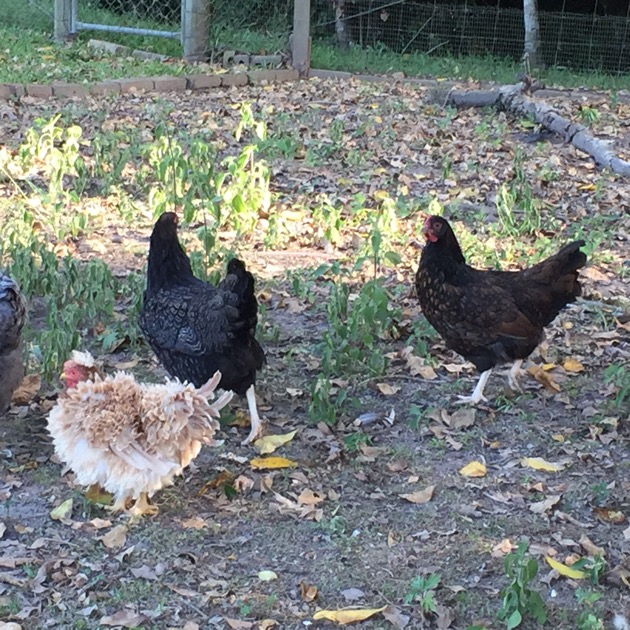
 Ginger frizzle Tricia with silver laced and gold laced Barnevelders Dora and Thora.
 Cora, a light Sussex.
 Farmyard crosses Lora and Flora.

 Flora, Lora, Thora, Cora and Dora.
 Jezebel, Miss Tammy, Patrick (losing her feathers) Kathleen and Nora.
 Annabel, a blue Australorpe.
Our older ladies free ranging to the side of the house.

We've already introduced the new chooks to bread soaked in milk, which they loved, and live worms, which they were confused by. There is much more in store for them in the coming weeks and months. Soon they'll be out free ranging with their older sisters, walking around on the grass, enjoying the sunshine and the freedom to go where they choose within their large secure garden.

To recap for all the new readers, we now have 12 chickens which give us enough eggs for ourselves and our family. We get our girls from Kate at Beautiful Chickens over at Mount Samson, just to the west of Brisbane. Kate's chickens are mostly pure breeds with a few farmyard crosses and they're healthy, wormed and vaccinated.

Our new girls are Flora - buff and white farmyard cross, Lora - farmyard cross that looks like a New Hampshire, Dora - silver laced Barnevelder,  Thora - gold laced Barneveldver and Cora - light Sussex. They have joined our older girls Nora - blue laced Barnevelder, Miss Tammy - silver laced Wyandotte,  Patrick - barred Plymouth Rock (named Patrick because I was convinced she was a boy when she was younger), Tricia and Kathleen - two ginger Frizzles, and Jezabel and Annabel - two blue Australorpes.  At the moment the two sets of girls are living in the same shed, separated by a wall with a door they can see through. During the day we let the older chooks out to free range and the younger girls out into the run just outside the coop.

And what of the garden, you ask? It's getting there. We're much slower this year. We've been slowed by age and the desire to enjoy the process. But even thought it's harder for us we still relish the opportunity we have to make the most of the land we live on. Sure we have aches and pains sometimes but we push through it and just get on with it. We also stop for tea, to watch the chooks, to sit and talk in the shade of the umbrella and to discuss the important topics of seasonal food, rainfall, soil fertility, compost, worms, bugs, mulch, trellises and sweet peas.  Hanno bought me a garden arch for my birthday, which is now at the entrance to the garden with sweet peas planted at the base. Soon those delightful plants will scramble up the arch and flower, hopefully for a few months. When they finish flowering, we'll plant cucumbers there.


The new arch way will soon hold a swag of sweet peas.


 Front bed planted up, back bed still needs a lot of work.


 Waiting to be planted - penstemon, roses and salvias.
Roses soaking in Seasol, they'll be planted out today after I chop off all that old wood.
View from the back door.

Yesterday I dug up two roses in the front garden and have them sitting in Seasol before planting them out in large pots today. I also have two small carpet roses - The Fairy - that will be grown in smaller pots among the vegetables. My other flowers are stocks, salvias, primroses, Japanese wind anemones and no doubt, self-sown Cosmos will appear as time goes on.

Our vegetables this year are snap peas, bok choy, several types of lettuce, turnips, kohl rabi, beetroot, ruby chard, green beans, butter beans, swedes, kale and Welsh onions. Soon there will be daikon, tomatoes and ginger and I've left in a mild pepper that won't grow during the cold months but won't die either. I'll cut it back a bit in spring and it till start producing chillies again.  Our herbs are parsley, sage, thyme, rosemary and basil, and we have raspberries, oranges, lemons, passionfruit, cumquats, loquats and bananas. We've just harvested 5.7 kg of rosellas that are now in the freezer waiting to be made into jam and tea. Those bushes were removed last week.

It a good combination having chickens with a vegetable garden. They each supply the other with some of their needs - the chickens give fertility to the garden in the form of manure, the garden gives green leaves and fruit to the chickens which boosts the nutrition level of their eggs. It's symbioses at its best and it plays out everyday right outside our backdoor. We are indeed two lucky ducks.
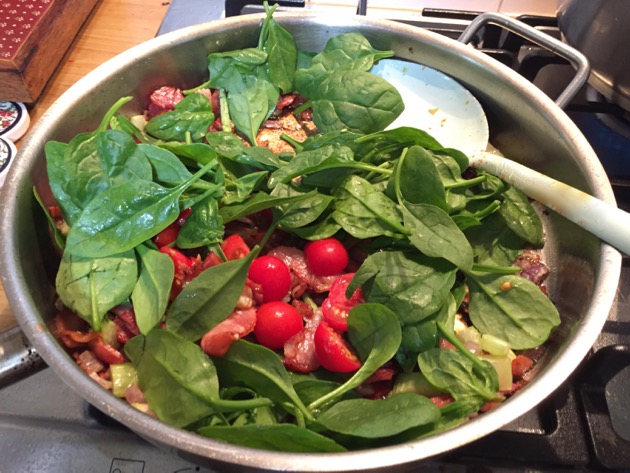
Pasta sauce in the making.

It will be a good day today. This morning we're driving over to see Kate at Beautiful Chickens to pick up five new ladies. Photos will be up next week when they've all settled in a bit. I hope you enjoy your weekend. Thanks for your visits this week. I'll see you next week. 

Michael Pollan and Wendell Berry - long conversation
Aurora Borealis and Aurora Australis shown from space
Giving the phatic finger to outback drivers
Make jam, be happy
Tool organiser ideas
Different ways to use vintage hankies
Last Words - a Welsh tale
Tilda's Spring Diaries Quilt, free pattern
Free Lego party printables and ideas
Craft closet makeover


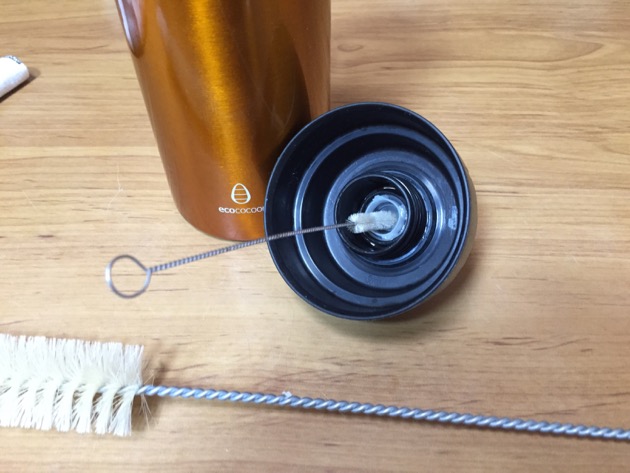
I was asked recently how I clean bottles. Of course I use a brush, I use brushes for much of my cleaning and cleaning bottles is no exception. Last year I added a Redecker champagne bottle brush and a straw brush to my collection.  The Redecker brush, made in Germany, is made to clean inside champagne flutes but I've found they also fit inside the narrow neck of most glass bottles. The brush looks like a narrow bottle brush but it has a longer than normal steel handle and a soft wool tip that helps a lot when cleaning in a small space.

The straw brush makes cleaning in small spaces much easier.

This is the woollen tip of the brush that helps when cleaning the bottom of bottles.


The other brush is a straw brush which I use to clean inside the tops of some drink bottles. You can get inside the mouth piece, both inside and out and then when I've scrubbed the area, I place the top in the dishwasher to finish off the job.  If you have glass straws or sippy cups, this brush will also clean them efficiently too, allowing you to get into the small tight spaces.

If you use cleaning brushes, don't forget to sanitise them frequently by either cleaning them in the dishwasher or soaking them overnight in water with a dash of peroxide added. If you care for your brushes and store them upside down so they can dry out between uses, they'll last a long time.

I bought my brushes from my wonderful sponsor Biome who have shops and a mail order business situated in Brisbane.  Champagne bottle brush.  Straw brush. Please let me know if the links don't work for you. If they don't work, don't click on the following links they won't work, go to google and add the following URLs to your search bar for the champagne brush: http://www.biome.com.au/kitchenware/12891-redecker-wire-champagne-bottle-brush-.html  and for the straw brush: http://www.biome.com.au/glass-straw/13722-straw-cleaning-brush-standard.html  I'm sorry for the inconvenience. I'm working with Google to fix the links.

I love cleaning brushes. If you are using an unusual one, please tell me about it.
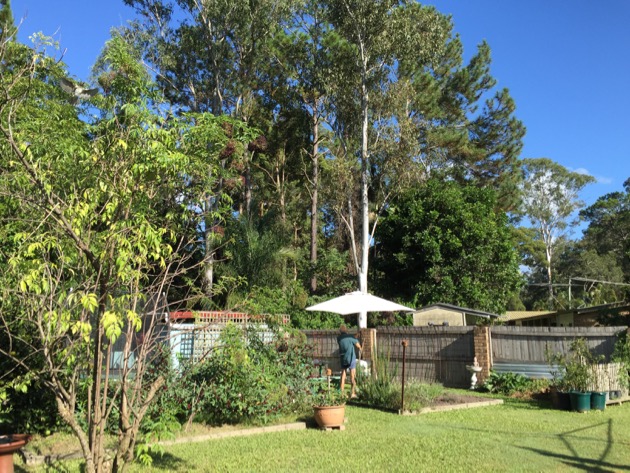

It was a late start this year but we've finally got the first plants in the ground. Hanno has been digging and enriching the soil for the past week, so most of the garden beds are ready to go and well equipped to help us produce a lot of organic vegetables, herbs and fruit in the months ahead. When we moved here 19 years ago, the clay soil over the entire property was rock hard.  Through a lot of work we've changed that clay into beautiful fertile soil simply by adding a lot of organic matter to it - mostly manures, compost and mulch. Every year Hanno builds on progress made in the previous year and between crops, more organic matter is added. By doing that the garden has remained fertile and productive.


We started off a week ago by digging up the Welsh onions. I sat under the sun umbrella in the garden and sorted through the onions, removing grass, seeds and weeds. I cut off the green tops and put them in a bag to use in the kitchen, then the onions were planted again in a new bed. They're growing really well now and have already put on new growth. We've added parsley, sage, rosemary cuttings and self-sown basil in a small area that will give us herbs for the next year. In another bed Hanno's planted kohlrabi, beetroot, turnip seedlings and swede seeds and yesterday, curly kale, Asian greens and ruby chard were added to another bed.

Sorting through the onions to keep them going for yet another year.


After they were cut in half, the bottoms were planted and the tops used for various meals in the kitchen.


The onions were rehydrated in a weak mix of seaweed concentrate and water before planting.
And here they are in their new position, and have already put on new growth.
Two bananas suckers planted in the vegetable garden.

When Shane was here recently he dug up one of our bananas and transplanted it to the vegetable garden.  We kept forgetting to water it in the old location and haven't had backyard bananas for a few years. Now it's got a place in the vegetable garden and with water and organic fertilisers, it should take off like a rocket.  The raspberries have been cut back to the ground to encourage a winter crop, the lemons and oranges are growing well and will be ready to harvest soon and we've just harvested 5.7kg of rosellas and removed the shrubs to make way for new vegetables and flowers. I'll write a post about them when I make up the jam and cordial. Have you grown rosellas this year?

We removed the two year old rosemary bush that was taking over its space and I took cuttings for planting in a few weeks time.
This rosemary cutting is a tip cutting about 4 inches long. I've stripped off the lower leaves, leaving only the top, which I cut back to reduce transpiration. I planted up a cutting I took a couple of months ago. This cutting will be ready in about 6 - 8 weeks.

It feels very good having vegetables growing in the backyard again. There was a time when we grew produce all year long but now we take it easy in summer and stop planting late in the year. We usually start planting again in March which is when the weather starts to cool down a bit.

So now part of the daily routine will be to check on the gardens and to water and weed when needed. It's a very pleasant part of the day when I'm out in the garden. I still need the umbrella to protect me from the sun but in a month or so, it will be cooler, the sun will be lower and I'll be able to do without the umbrella. I'd really love a pair of binoculars so I could watch the visiting birds more closely from my shaded vantage point, but for now I'll use my eyes and be content with what I've got.

Tell me about your garden or your garden plans.

♥︎

I'm coming to the end of my book publicity commitments and I can tell you the final four venues.  This week on Wednesday 20 April, I'll be at the Cooroy Library from 10am - 11.30am, next week on Wednesday 27 April, I'll be at the Noosa Library from 2pm - 3.30pm. I'll have books for sale at those events and I'm happy to sign books.  Then on Saturday 30 April I'll be at Rosetta's Books in Maleny from 10am till about 11am. It's a casual affair, I'll be drinking tea, talking to whomever comes in and answering questions. If you're around on that day and fancy a cuppa and a chat, I'd love to meet you there.  The final event will be at the Toowoomba Library in June and I'll remind you of that date when we're closer to the day.

The weather is cooler here, just right for spending time in the garden planting up some seedlings. Hanno has been adding manures and compost to the soil and slowly, the garden is taking shape. It's the time of year when the promise of vegetables relies on how much work we do. So we'll be watering, weeding, clipping and making many small steps towards another year of good harvests. We better get a wriggle on.
=== ♥︎ ===

Rose, of Greening the Rose, is blogging again, this time at a new Wordpress location. Call in and have a look, then stay for the interesting posts.

Coffee in Maleny with Morag last week.

Morag of My Permaculture Life usually has something interesting to say. Here she's blogging about Chia. Morag and I met for coffee last week. It was great to catchup with her, find out what she's working on and sharing some information about our book tour.
New app helps shoppers find free-range eggs
No backyard, no problem: how to grow your own vegetables in an apartment
Old pets are like sad, beautiful music. Is it selfish to enjoy them?
Christine's Garden
Wendell Berry discusses life
Ten of the best Australian playgrounds – in pictures
Exact measurements only: why we're so terrified to go off-recipe in the kitchen
Eggs, eggs and more eggs - recipes
Simple recipes for new cooks
Artisan bread baking tips: Poolish and biga

I hope you can take some time out for yourself and do something you love this weekend. See you next week. 
You can save quite a bit of money if you learn how to do some basic sewing. Sewing on buttons, mending a torn sleeve, taking up a hem, replacing a zipper and turning a collar are all skills that can be learned and put into practise when needed. By doing these minor repairs you'll be able to keep family clothing in service longer.

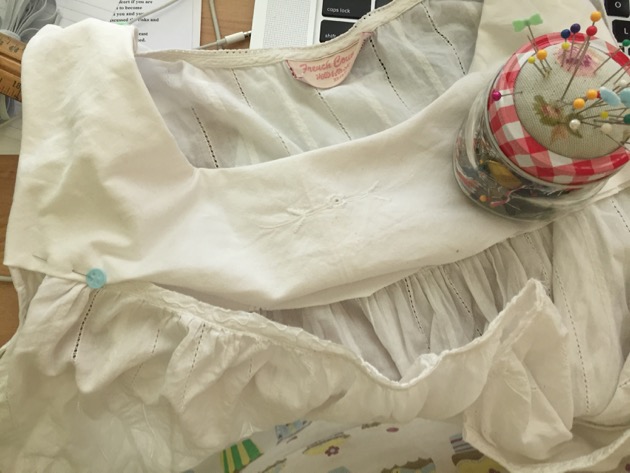
My favourite summer nightgown started fraying on the yoke a little while ago. There was a time when I would have seen that as a signal to go out and buy another one but I'm wiser now, I mended it and saved myself some money. I used a piece from an old cotton tablecloth that I'd used for other repairs.


This is the easiest kind of common sense sewing.  I just cut out the yoke and used it as a template to cut out the replacement fabric. I made it a double thickness so I could pin the bottom of the nightgown in between the two layers, tidied up the fabric where the new seam would be, pinned  and  sewed it together on the sewing machine. 

I had to make sure I had both sides of the new yoke sewn securely in place. I did that by pinning it together before I started sewing.


I guess it took about 30 minutes to complete this task; it would have taken me longer to drive to the shop. Saving money was the bonus and now I have my favourite nightgown to wear for another couple of years.


 The recipe for this elderberry tonic is in The Simple Home.

Another thing that took a small amount of my time was making elderberry tonic for Hanno. He picked up a nasty virus while we were away and even after three courses of antibiotics he couldn't shake it.  Two weeks of tonic and a fourth course of antibiotics has it almost under control. We've been harvesting elderberries from the tree in the backyard over the past few months and freezing them. I still have three bags of berries in the freezer so I'll make a few more batches of this tonic as we go into winter.


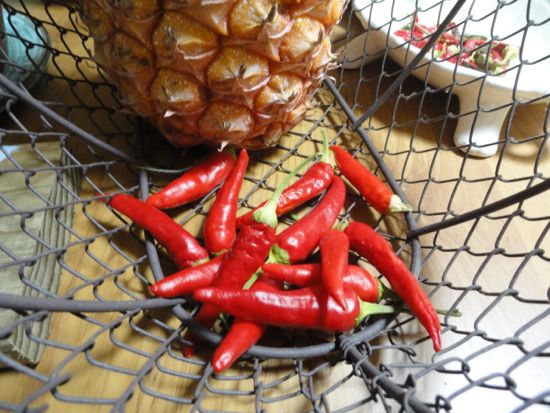
I also harvested all the chillies and will dry and crush them to use as chilli flakes in my cooking. This particular variety is too hot for us to eat as they are. Even Sunny has problems with them and she loves hot chilli. As chilli flakes I'll still be able to use them and they won't go to waste.

It was a month late but we got started on the new season vegetable garden this week. We have more planting to do this coming weekend, when I'll take some photos to show you what's happening out there. It's always an exciting time for us getting the year's garden underway. Soon we'll be harvesting to our heart's content.

It feels good to have the time to do these domestic odds and ends again. Pottering around the house and garden during the day, working on small tasks, keeping our little homestead going and being satisfied by the work rewards me with a rare kind of joy. It may not be rocket science but there is a warm complexity that swirls around each day. I don't pretend to understand it. I just know that life is enriched by working in my home and that warm complexity and a slow, simple, quiet life go hand in hand. And that's enough for me to know.

This is my latest monthly talk on ABC radio with David Curnow. This was broadcast over Queensland last night. Have a lovely day, my friends. ♥︎


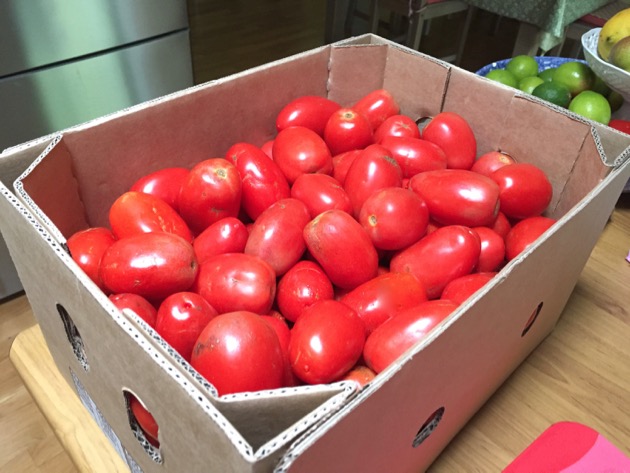
It's wonderful having the time to do a bit of preserving when the opportunity arises.  I bought a 10 kg box of tomatoes for $8 on Friday and on Saturday turned it into about four litres of tomato relish and two litres of tomato sauce.  If you want to try your hand at this, ask your greengrocer if they have any cheaper boxes of tomatoes, or fruits that you can turn into jam. The end of summer, going into autumn, is a good time to ask as the fruit is in season then, will be at its peak flavour and cheaper than at other times of the year. The abundance of produce at that time often encourages greengrocers to reduce the price to move the stock before it over ripens.


In addition to the tomatoes, you'll need added flavourings. I used onions, celery, chilli, oregano, salt, pepper and curry powder as well as vinegar and sugar.
Instead of dicing the tomatoes, I chopped them in a food processor.  Just a quick chop is all they need, you want to retain the texture too.

Clean jars can be sterilised in an oven on 160C for 15 minutes. Make sure the jars are still hot when you add the relish.


This is tomato sauce made for a special pasta dish in mid-winter.
After cooking and before freezing, I put it through a mouli to remove the skins.
The sauce was packed in a plastic tub for freezing.

Tomatoes are a good starting point if you have never done any preserving before. They're usually easy to buy, or grow, and they don't cost too much. If you can buy them at a cheaper price, you'll be able to add jars of good quality relish or sauce to your cupboard or freezer stockpile that you can use during the year.  Only high acid foods, or foods you can add lemon juice or vinegar to, are suitable for preserving in jars but adding the right amount of vinegar, and the sugar that helps balance out the vinegar, will give you the right acid level to keep the relish safe. If you're not sure of your recipe, always freeze large amounts of relish or store smaller amounts in the fridge in sterilised jars.

I'll be giving some of my jars away but most will be stored in the cupboard and then kept in the fridge after opening.  I have frozen the larger quantity of sauce in a plastic container to be used in the dead of winter on some homemade pasta. I'll probably make cheese to go in that meal too.

RECIPE: For every 1 kilogram of tomatoes, add 2 chopped medium onions and 2 sticks of chopped celery, 160 mls vinegar (I use malt vinegar) and ½ cup brown sugar.  Add salt, pepper, 1 tablespoon curry powder, chilli, oregano and any other spice you like. Add all your ingredients to a stockpot and boil for at least four hours on a slow heat until the relish has reduced and thickened. While still hot, add to sterilised jars, turn upside down and leave on the bench overnight to cool.

It will pay off for you to learn a few different ways to store food. We either work hard for the money to buy food or we work hard to grow food, wasting it shouldn't be an option. My next food storage projects are lime cordial that I hope to make today, and rosella jam and tea later in the week. We have rosellas growing in the backyard and will strip those bushes to make way for our winter vegetable garden. You'll find real comfort in eating your own summer foods in the middle of winter. What have you put away for eating later in the year?


Hanno setting up the sun umbrella yesterday so we could work in the garden in the shade.

I'm looking forward to going out this morning to have morning tea with Morag.  I hope you've had a good week and that you can relax on the weekend. See you all next week friends!
  • Eastern Eden: Poland’s primeval wildernesses
  • Some great dishcloths and a new (to me) blog It takes me a while to notice somethings and when I do I wonder what's wrong with me that it took so long. Selina has been commenting on my blog for ages, here it is. It's worth a look.
  • Eight acres
  • Creative ways to use running stitch
  • Woky Shoten - it's an fibre art form but what a wonderful way to darn
  • Our year without groceries
  • Zucchini slice 
  • Where the heart is: US photographer Robert Adams heads home – in pictures
  • RIP Merle
  • Failing to compare energy deals costing UK households over £400 a year
  • The Best $7.05 I've Ever Spent

When we were on the book tour, one question kept coming up in every town - it was about couples living on one income. Some people wanted to tell me how excited they were to be doing it and how enriched they felt by their change, some suffered the ignorance of family and friends who said it couldn't (and shouldn't) be done, and some wanted to take the plunge into a single income life but were unsure about the viability of it and their own capabilities. With every town we passed through, I became more convinced I had to address the issue when I came back. If couples can make this work, it's a great way to live. Even when I was working for a living and miserable because of it, I knew that life wasn't meant to be about working to earn the money to buy whatever I wanted. I also knew I didn't want to work until I dropped dead. There has to be a time when we stop selling our life hours for money, when we are rewarded for our toil, when we own our days and when we have control of our own lives.


I believe that work is one of the most important parts of life. It shapes our character and skills us for life. When we finish the work of school, we embark on the work that will give us the life we want to live, and that can be in the commercial workforce or work at home. The person who works at home has a career as a homemaker. That position may not have a wage attached to it but there are plenty of ways a homemaker can contribute significantly to the financial well-being and emotional growth of the family.

So let me get the unpleasant side of this out of the way right now - if someone makes a lifestyle choice they believe is good for them, then it's no one else's business. I know it's difficult for some people to see their friends break away from what is considered "normal" but everyone has the right to live as they choose. It's not the way life is generally lived now but it's not unfamiliar to me or many of the older readers, it's the way most people used to live. Although back then it wasn't really a choice, it was the way society was set up - it was "normal" then for couples to live on one income. It's also unnecessary for homemakers to criticise people who go out to work. Let's all stop the criticism and freely offer acceptance and kindness to the people we know.


If you make that choice for yourself, don't listen to any criticism; walk away. If you're sure your life is better with you or your partner working at home, then keep the faith and don't let anyone tell you it's wrong. And if you're the one doing the criticising, think about what you're doing. If the shoe was on the other foot, if you were being criticised for living the way you thought was right for you - how would you feel? This is not laziness, far from it, it's an attempt to live a self-contained, productive life in which work is the main component.


And to all those who are thinking of doing this, make sure you learn what you need to learn to make your transition easier. Make up a realistic budget, get rid of the excess you no longer need, look at everything you commonly buy and see if it's better done at home. That will cut your costs and probably give you better quality as well. Menu plan, don't waste any food, shop for grocery bargains, cook from scratch, make everything you can, mend, repair and recycle. By working side-by-side with your partner, one working for an income and one managing that income while focused on reducing the cost of living and raising the children, you will create a life built on your own values with family at the core.

Look at your home and start modifying it to better suit how you work. Organised cupboards that hold the items you need, in the places you need them, will support your work everyday. Start thinking about making up a routines chart so you get all your work done without missing essentials. Eventually, you won't need the chart, your days will run to their own sweet rhythm and you won't be wondering "what's next?". Pay your bills on time, get rid of the services you no longer need or want, and start paying off your debt. Life is easier when the mortgage is paid off so work towards that goal by sticking to your budget and not acquiring all the trappings that can add years to working life. It doesn't matter that you don't have the latest furniture or appliances but I encourage you to buy the best quality you can afford whenever you do purchase expensive items. It's much more economical to have something last for years, even if it costs more, that having to replace it frequently. A home can be made beautiful by using older furniture and painting it, and by making soft furnishings.


Simplify your mind as well as your home. Start making your own cleaners, learn how to sew and make bread. Grow a garden if you can, add chickens and bees if you have the opportunity to, expand your interests and incorporate those interests in your home. Be a role model for your children, help your friends and neighbours when you can, become the person you always wanted to be. Simplifying your life and doing the work you need in your home will change you more than anything else can. And despite what you might hear, it's an investment in yourself and your family, not a step backwards.


At the end of the day you'll feel content and satisfied that you used your time wisely that day. It's not an easy way to live, especially when you first start and you're not fully organised, but your days will be full of purpose and promise and you'll be living true to what you value. Life is never a one size fits all proposition. It's much more complex than that. So don't try to fit into a mould you know won't suit you, plan your transition and live the life you want for yourself. It will not be easy but if you do the work you need to do life will open up in many beautiful ways you never expected. 


Things I don't like now I'm older, items 1 - 20, or thereabouts:
Time goes faster, I get slower and weaker, my eyesight is worse, I don't sleep to a regular pattern anymore, I used to lift large bags of potting mix, now I can't. Packets are getting smaller. Prices are rising. People stare into their phones as they walk along the street; this is a recent revelation to me but I'm told it's been happening for years. I can't be bothered with most of the new things I see around me, small things irritate me and if one more person calls us "guys" or "you guys" again I will not be responsible for my actions. I'm easily irritated by stupidity, superciliousness and greed. 

Oh, I could go on, in fact I will. :- )

I've stopped going to restaurants because I think home cooking is much better - in every sense. Shopping malls are crowded. There is too much traffic. I know of no Australian politician worth their annual salary. Fashion is a pretentious, exploitative absurdity that is sucking the life out of many people. Foam is not food. My skin is like paper and now I have liver spots! Really! after all that dry papery skin, now liver spots! 

Although I dislike more things as the years progress, I am accepting of many more things. I'm satisfied with much less. And ... public transport is better than it used to be. I'm thankful our home is surrounded by trees. I'm more capable than I ever was but my need to prove it has all but disappeared. I look at my family and feel proud. I love sitting quietly, watching, when wild birds visit the backyard. I breath in a deep breath and feel grateful to be there. It is enough.

Jamie at his 5th birthday party on Saturday.

Life is easier as well as more difficult now. The physical is becoming more demanding, the psychological is much easier. Things are calmer. There is a real need in me to discover my past and know who I came from. The longer I live the more convinced I am that the mixture of DNA we carry determines what we become. I don't think you can escape it, I didn't. I'm grateful I have history to look back on and to help me join the dots together. 

Youth is over-rated, old age is under-rated and although there are times I wished I was stronger, I have never wanted to be younger. Don't take any notice of the blathering about old age in women's magazines, it's written by someone who hasn't experienced what they're writing about. One of the gifts of old age is self-confidence and the ability to accept what is. When I was younger I was convinced I would live till 110. Now I know how selfish that is. We all have our turn at life, and when that turn is finished, the next generation step up and have their turn. Right here and now I see the future and the past through my grandchildren. They are the reason to carry on for as long as possible, as well as the reason to stop when the time comes.

Newer Posts Older Posts Home


My books were all published by Pengiun, and are available at Amazon US, Amazon UK and Amazon Au

Search here

Total Pageviews

Translate


I'm Rhonda Hetzel and I've been writing my Down to Earth blog since 2007. Although I write the occasional philosophical post, my main topics include home cooking, happiness and gardening as well as budgeting, baking, ageing, generosity, mending and handmade crafts. I hope you enjoy your time here.

MY FAVOURITE PLACES

  • Grandma Donna's Place
  • Grandma Donna's YouTube
  • Grandma Donna's Instagram
  • This Simple Day
  • Nicole's Instagram

Give More

Give More

Popular posts last year

Making ginger beer from scratch

We had a nice supply of ginger beer going over Christmas. It's a delicious soft drink for young and old, although there is an alcoholic version that can be made with a slight variation on the recipe. Ginger beer is a naturally fermented drink that is easy to make - with ginger beer you make a starter called a ginger beer plant and after it has fermented, you add that to sweet water and lemon juice. Like sourdough, it must ferment to give it that sharp fizz. To make a ginger beer plant you'll need ginger - either the powdered dry variety or fresh ginger, sugar, rainwater or tap water that has stood for 24 hours to allow the chlorine to evaporate off. You'll also need clean plastic bottles that have been scrubbed with soap, hot water and a bottle brush and then rinsed with hot water. I never sterilise my bottles and I haven't had any problems. If you intend to keep the ginger beer for a long time, I'd suggest you sterilise your bottles. MAKING THE STARTER In a...
Image

NOT the last post

This will be my last post here.  I've been writing my blog for 18 years and now is the time to step back. I’ve stopped writing the blog and come back a couple of times because so many people wanted it, but that won’t happen again, I won’t be back.  I’ll continue on instagram to remain connected but I don’t know how frequent that will be. I know some of you will be interested to know the blog's statistics. 
Image

How to make cold process soap

I'm sure many of you are wondering: "Why make soap when I can buy it cheaply at the supermarket?" My cold process soap is made with vegetable oils and when it is made and cured, it contains no harsh chemicals or dyes. Often commercial soap is made with tallow (animal fat) and contains synthetic fragrance and dye and retains almost no glycerin. Glycerin is a natural emollient that helps with the lather and moisturises the skin. The makers of commercial soaps extract the glycerin and sell it as a separate product as it's more valuable than the soap. Then they add chemicals to make the soap lather. Crazy. Making your own soap allows you to add whatever you want to add. If you want a plain and pure soap, as I do, you can have that, or you can start with the plain soap and add colour, herbs and fragrance. The choice is yours. I want to add a little about animal and bird fat. I know Kirsty makes her soap with duck fat and I think that's great. I think t...
Image

Preserving food in a traditional way - pickling beetroot

I've had a number of emails from readers who want to start preserving food in jars but don't know where to start or what equipment to buy.  Leading on from yesterday's post, let's just say up front - don't buy any equipment. Once you know what you're doing and that you enjoy preserving, then you can decide whether or not to buy extra equipment. Food is preserved effectively without refrigeration by a variety of different methods. A few of the traditional methods are drying, fermentation, smoking, salting or by adding vinegar and sugar to the food - pickling. This last method is what we're talking about today. Vinegar and sugar are natural preservatives and adding one or both to food sets up an environment that bacteria and yeasts can't grow in. If you make the vinegar and sugar mix palatable, you can put up jars of vegetables or fruit that enhance the flavour of the food and can be stored in a cupboard or fridge for months. Other traditional w...
Image

Cleaning mould from walls and fabrics

With all this rain around we've developed a mould problem in our home. Usually we have the front and back doors open and that good ventilation stops most moulds from establishing. However, with the house locked up for the past week, the high humidity and the rain, mould is now growing on the wooden walls near our front door and on the lower parts of cupboards in the kitchen. Most of us will find mould growing in our homes at some point. Either in the bathroom or, in humid climates, on the walls, like we have now. You'll need a safe and effective remedy at some point, so I hope one of these methods works well for you. Mould is not only ugly to look at, it can cause health problems so if you see mould growing, do something about it straight away. The longer you leave the problem, the harder it will be to get rid of it effectively. If you have asthma or any allergies, you should do this type of cleaning with a face mask on so you don't breathe in any spores. Many peopl...
Image

Five minute bread

Bread is one of those foods that, when made with your own hands, gives a great deal of satisfaction and delight. It's only flour and water but it symbolises so much. I bake bread most days and use a variety of flours that I buy in bulk. Often I make a sandwich loaf because we use most of our bread for lunchtime sandwiches and for toast. Every so often I branch out to make a different type of loaf. I have tried sour dough in the past but I've not been happy with any of them. I'll continue to experiment with sour dough because I like the idea of using wild yeasts and saving the starter over a number of years to develop the flavour and become a part of the family. However, the loaf I've been branching out to most often is just a plain old five minute bread. By five minutes I mean it takes about five minutes actual work to prepare but it's the easiest of all bread to make and to get consistently good loaves from. If you're having people around for lunch or...
Image

This is my last post.

I have known for a while that this post was coming, but I didn't know when. This is my last post. I'm closing my blog, for good, and I'm not coming back like I have in the past.  I've been writing here for 16 years and my blog has been many things to me. It helped me change my life, it introduced me to so many good people, it became a wonderful record of my family life, it helped me get a book contract with Penguin, and monthly columns with The Australian Women's Weekly and Burke's Backyard . But in the past few months, it's become a burden. In April, I'll be 75 years old and I hope I've got another ten years ahead. However, each year I'll probably get weaker and although I'm fairly healthy, I do have a benign brain tumour and that could start growing. There are so many things I want to do and with time running out, leaving the blog behind gives me time to do the things that give me pleasure. On the day the blog started I felt a wonderful, h...
Image

What is the role of the homemaker in later years?

An email came from a US reader, Abby, who asked about being a homemaker in later years. This is part of what she wrote: "I am a stay-at-home mum to 4 children, ages 9-16. I do have a variety of "odd jobs" that I enjoy - I run a small "before-school" morning drop-off daycare from my home, I am a writing tutor, and I work a few hours a week at a local children's bookstore. But mostly, I cherish my blissful days at home - cooking, cleaning (with homemade cleaners), taking care of our children and chickens and goats, baking, meal-planning, etc. This "career" at home is not at all what I imagined during my ambitious years at university, but it is far more enriching. I notice, though, that my day is often planned around the needs of my family members. Of course, with 4 active kids and a husband, this is natural. I do the shopping, plan my meals, cook dinner - generally in anticipation of my family reconnecting in the evening.  I can't h...
Image

Every morning at home

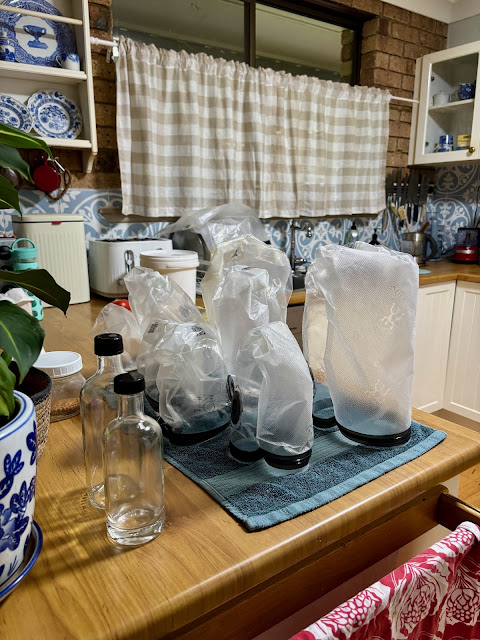
Every morning when I walk into my kitchen it looks tidy and ready for a day's work. Not so on this morning (above), I saw this when I walked in. Late the previous afternoon when I was looking for something, I came across my rolled up Zwilling vacuum bags and decided they had to be washed and dried. So I did that and although I usually put them outside on the verandah to dry it was dark by then. I turned the just-washed bags inside out and left them like this on a towel. It worked well and now the bags are ready to use when I bring home root vegetables, cabbages or whatever I buy that I want to last four or five weeks.
Image

You’ll save money by going back to basics

When I was doing the workshops and solo sessions, I had a couple of people whose main focus was on creating the fastest way to set up a simple life. You can't create a simple life fast, it's the opposite of that It's not one single thing either - it's a number of smaller, simpler activities that combine to create a life that reflects your values; and that takes a long to come together. When I first started living simply I took an entire year to work out our food - buying it, storing it, cooking it, preserving, baking, freezing, and growing it in the backyard. This is change that will transform how you live and it can't be rushed.  
Image


Trending Articles

NOT the last post

This will be my last post here.  I've been writing my blog for 18 years and now is the time to step back. I’ve stopped writing the blog and come back a couple of times because so many people wanted it, but that won’t happen again, I won’t be back.  I’ll continue on instagram to remain connected but I don’t know how frequent that will be. I know some of you will be interested to know the blog's statistics. 
Image

Every morning at home

Every morning when I walk into my kitchen it looks tidy and ready for a day's work. Not so on this morning (above), I saw this when I walked in. Late the previous afternoon when I was looking for something, I came across my rolled up Zwilling vacuum bags and decided they had to be washed and dried. So I did that and although I usually put them outside on the verandah to dry it was dark by then. I turned the just-washed bags inside out and left them like this on a towel. It worked well and now the bags are ready to use when I bring home root vegetables, cabbages or whatever I buy that I want to last four or five weeks.
Image

You’ll save money by going back to basics

When I was doing the workshops and solo sessions, I had a couple of people whose main focus was on creating the fastest way to set up a simple life. You can't create a simple life fast, it's the opposite of that It's not one single thing either - it's a number of smaller, simpler activities that combine to create a life that reflects your values; and that takes a long to come together. When I first started living simply I took an entire year to work out our food - buying it, storing it, cooking it, preserving, baking, freezing, and growing it in the backyard. This is change that will transform how you live and it can't be rushed.  
Image

Creating a home you'll love forever

Living simply is the answer to just about everything. It reduces the cost of living; it keeps you focused on being careful with resources such as water and electricity; it reminds you to not waste food; it encourages you to store food so you don't waste it and doing all those things brings routine and rhythm to your daily life. Consciously connecting every day with the activities and tasks that create simple life reminds you to look for the meaning and beauty that normal daily life holds.  It's all there in your home if you look for it. Seemingly mundane tasks like cleaning and cooking help you with that connection for without those tasks, the home you want to live in won't exist in the way you want it to.  Creating a home you love will make you happy and satisfied.
Image

Time changes everything

I've been spending time in the backyard lately creating a contained herb and vegetable garden. My aim is to develop a comfortable place to spend time, relax, increase biodiversity and encourage more animals, birds and insects to live here or visit. Of course I'd prefer my old garden which was put together by Hanno with ease and German precision. Together, we created a space bursting at the seams with herbs, vegetables and fruity goodness ready to eat and share throughout the year. But time changes everything. What I'm planning on doing now, is a brilliant opportunity for an almost 80 year old with balance issues. In my new garden I'll be able to do a wide range of challenging or easy work, depending on how I feel each day. It’s a daily opportunity to push myself or sit back, watch what's happening around me and be captivated by memories or the scope of what's yet to come.
Image

It's the old ways I love the most

I'm a practical woman who lives in a 1980’s brick slab house. There are verandahs front and back so I have places to sit outside when it's hot or cold. Those verandahs tend to make the house darker than it would be but they're been a great investment over time because they made the house more liveable. My home is not a romantic cottage, nor a minimalist modern home, it's a 1980’s brick slab house. And yet when people visit me here they tell me how warm and cosy my home is and that they feel comforted by being here. I've thought about that over the years and I'm convinced now that the style of a home isn't what appeals to people. What they love is the feeling within that home and whether it's nurturing the people who live there.
Image

Making ginger beer from scratch

We had a nice supply of ginger beer going over Christmas. It's a delicious soft drink for young and old, although there is an alcoholic version that can be made with a slight variation on the recipe. Ginger beer is a naturally fermented drink that is easy to make - with ginger beer you make a starter called a ginger beer plant and after it has fermented, you add that to sweet water and lemon juice. Like sourdough, it must ferment to give it that sharp fizz. To make a ginger beer plant you'll need ginger - either the powdered dry variety or fresh ginger, sugar, rainwater or tap water that has stood for 24 hours to allow the chlorine to evaporate off. You'll also need clean plastic bottles that have been scrubbed with soap, hot water and a bottle brush and then rinsed with hot water. I never sterilise my bottles and I haven't had any problems. If you intend to keep the ginger beer for a long time, I'd suggest you sterilise your bottles. MAKING THE STARTER In a...
Image

An authentic look at daily life here — unstaged and real

Most days Hanno was outside happily working in the fresh air. It may surprise you to know that I started reading my book,  Down to Earth , yesterday - the first time since I wrote it 13 years ago.  I had lent it to my neighbor, and when she returned it, I started reading, expecting to find surprises. Instead, I realised the words were still familiar—as if they were etched into my memory. As I flipped through the pages, I was reminded of how important it was for me to share that knowledge with others. The principles in Down to Earth changed my life, and I truly believed they could do the same for others. After just 30 minutes of reading, I put the book down, reassured that its message still holds true: we can slow down and reshape our lives, one step at a time.
Image