down to earth

  • Home
  • About Us
  • Down To Earth Book
  • Privacy Policy
There was some much needed rain here yesterday. Our small 5000 litre tank overflowed an hour after the rain started.  It was short lived but the tank is full, the larger tank is probably three-quarters full, and if there is no more rain, that will see us through the next few months. It's enough and enough is all we need.
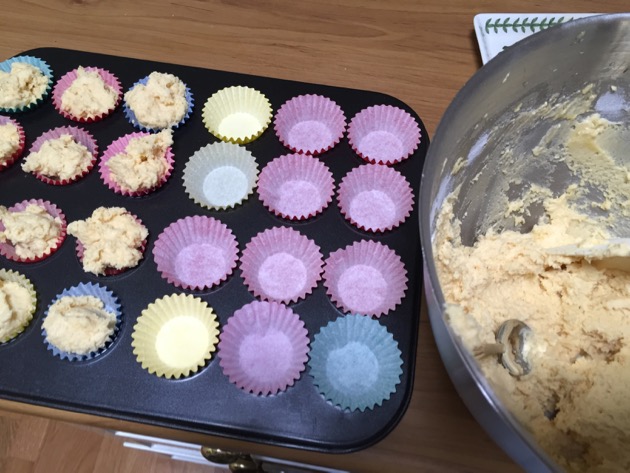
It's only now that I see these photos that I realise I didn't add enough milk to this cake batter.
They still tasted good - vanilla with lemon cream cheese frosting.

The rest of the day was spent sewing and knitting. It's such a satisfying way to spend time. Creating clothing out of wool and cotton fabric shows just how much we home producers can do for ourselves. We choose to do as much for ourselves as our time allows, using the materials we already have on hand. We create our own self-reliant, productive circle doing that by making use of what we have here, which helps us cut back the amount of waste we produce.


There is a feeling of accomplishment in being able to produce our needs without running to the shop to find bits and pieces. It often involves compromise and flexibility but I think that's part of the creative process too.  Being resourceful with materials pushes us to consider ideas that may not have occurred to us otherwise.

During the week I hope to finish off a scarf and make a new nightie for myself. I'll just cut the pattern from my old nightie, I have some very soft cotton lawn here and it should make a comfortable, pretty nightdress.

If you're wanting to get yourself into the routine of doing a bit more at home, or you want to rearrange your current routines, Becci has set us a wonderful challenge over at the forum. Read her Morning Routine Challenge here and the sister thread Morning Routine Challenge Chat Thread here.  Have you ever thought about helping out a charity with handmade goods? There are many charities who need various items that can be made at home and sent in. There's a thread about that on the forum too, with a list of charities that need help. It does my heart good to see the work being planned by the members.

Rose is also writing about routines and her thread Developing a weekly routine that works for you started last night. It's a good insight into how to develop your own routine based on what has been working for Rose for a long time.  She also has a very popular Christmas 2016 savings group. Read about that here.

Have you ever thought about making a raggy quilt?  Damac, one of our sewing moderators, is leading a raggy quilt-along. Read the thread to see what's involved and how to sign up. It won't cost anything to join in and you may be able to use some of the fabrics you already have at home. The raggy quilt tutorial thread has just gone up on the forum, so read through it, check your supplies and dive in. It's a great quilt for newbies and there are plenty of members joining in and following along.

On this Australia Day I recognise many great Australians who work for the good of their local communities and for our country. Most Australians know Stan Grant as a journalist and occasional commentator. Here he is with his commentator's hat on, saying things we need to hear. 


Summer is slipping by much faster than it used to. I have clear memories of the week between Christmas and New Year passing so slowly it felt like a month rather than a week. Now it feels like a day or two. I don't like the hot weather. The humidity saps the will to live from me and I yearn for cold mornings, pots of soup simmering on the stove and wearing my cardigan and shawl. Now, at the end of January, I can see that time will be here again soon. My energy will increase, new plans will form in my brain, we'll plant up a new garden and the ordinary tasks of a simple life will ease us through the cool days again.


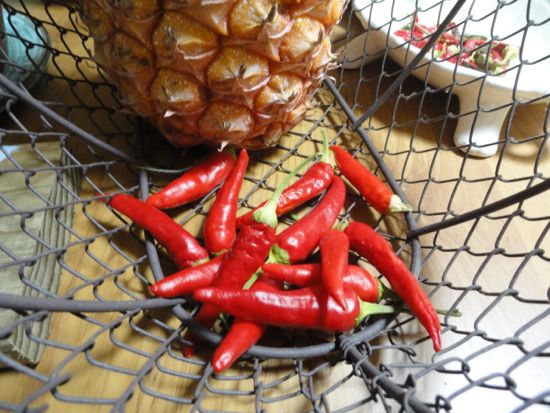
But today, while it's still hot outside, I'll have plenty to do to keep me out of mischief. I bake bread every two or three days, there is always a meal to serve at the kitchen table at noon, biscuits or cakes are baked for morning tea, drinks are made and of course we all know about the cleaning we all do. I'm not gardening now that the summer season is coming to an end because we let the garden die off, but I still water the herbs, chillies, fruit and all the pot plants. The time I will spend outside during the cooler months is now taken up with sewing some little dresses for Tricia's granddaughter, Alana and making the things I need for our home. Today I'll put the backing on a patchwork cover I made for the couch and I decided yesterday that I'll make a tea cosy using the leftover cotton wadding. I use an enamel teapot and although it doesn't need any help in staying warm in summer, in winter it's a different story.  As the weeks go on, new household linens will come to mind and I'll slowly produce the things I prefer to make rather than buy.


Doing these simple tasks reveals to me every day that what we have here is real life. It's not hidden behind fashion, stress or longing for someone else's life. I feel that this is where I should be and this is as good as it gets. Our life isn't fancy but it's productive and genuine, and after those years of mindless spending I can say that now we're settled, focused and happy.

But dwelling on those thoughts will just get in the way of having fun today because this is the last day we'll look after Jamie before he starts school on Wednesday. His Dad comes home tonight and Jamie will spend tomorrow, Australia Day, with Kerry and Sunny. So today we'll enjoy each other's company, make a batch of little cup cakes, practise ABCs and numbers, play games, laugh, draw and after lunch, watch a Lego movie. Today will be one of those days that we remember for a long time. I wonder what you're doing today. ♥︎

Going to see The Good Dinosaur at the movies with Opa.

This won't be a regular feature this year because I'm not reading online as much as I used to, I've gone back to books.  However, when I have enough links stored, I'll post them and hope you enjoy the read.

I hope you have a lovely weekend. ♥︎

Going off the grid
Home, sweet home: how to combat the ‘indoor pollution’ of scented candles
The busker - youtube
Men's mittens pattern
Recycling? A better goal is simply to have less stuff
We've hit peak home furnishings
Embroidery
Most retirees live frugally and die with large super balances
Early rhubarb jam - youtube

Before I write here today, and before I forget yet again, I want to thank everyone who takes the time to visit and comment, particularly those who have been here year in and year out. When I started this blog, I was hoping to share a way of life that wasn't written about much in those days; especially in the context of Home. However, I wasn't sure if I had the ability to consistently write in a clear and interesting way, and if what I had to say about a slower and simpler life would make sense, particularly to those much younger than me. Well, I'm pleased to say it seems to have made sense and over the years I've received hundreds of emails from people who have sent such gracious words of thanks. That is not a one sided gratitude because I too have been heartened by your visits and the comments you leave. And after all these years I'm grateful that it still feels right to be blogging. Reaching out to you in these posts keeps reminding me that even though we are all geographically isolated and living life on our own terms, we are not alone. Thank you friends.

Penguin is having a promotion of the Down to Earth ebook (not the hard cover) The special price of $4.99 will be available on all ebook vendors in Australia – so Amazon, Apple, Kobo, Google, Booktopia, eBook etc – between Feb 3 and Feb 24. And just a reminder, the new book, The Simple Home, will be published at the end of February.

The forum has started the year with a bang. There are interesting new threads, with hundreds of comments from people all over the world who want to learn more about how to get back to basics. These are three standouts:

Learn to Build and Implement a Home Journal with Me 
Sourdough Baking in 2016
So, you said you wanted to menu plan?

And finally I have a simple recipe for you. It always makes me smile when I read comments about my cooking because mine are such simple old recipes, I think everyone must know them. Here is another easy one that will help you use an excess of eggs or to just provide nutritious food for your family. It's an easy custard that uses no thickener apart from the eggs, so it's gluten-free.

 BAKED EGG CUSTARD 


6 eggs
1 litre milk
½ cup sugar
1 teaspoon vanilla extract
Sprinkling of nutmeg
  1. Place eggs, sugar and vanilla in a bowl and beat together with a hand mixer or whisk. 
  2. Heat the milk so it's hot but not boiling.
  3. Pour the milk into the egg mixture, and beat again until thoroughly combined.
  4. Pour the mixture into a loaf pan and put into bain marie. Fill bain marie with boiling water so it comes half way up the side of the loaf pan. (This allows the eggs to cook gently, which is essential.) Sprinkle on the nutmeg.
  5. Bake in a preheated oven at 160C for 45 minutes.
  6. It needs to be wobbly when it comes out of the oven. You may think the custard is too thin and isn't properly cooked but don't be tempted to continue cooking past 45 minutes; it will continue cooking after you remove it from the oven. 

Allow the custard to cool down before you serve it. The texture will improve even more if you leave it in the fridge overnight. When you serve it the following day it should be light, wobbly and delicious. It's the ideal light cold dessert for a hot summer day. Serve with either fresh or tinned fruit.


I'm often asked how to start living life more simply. My answer is to concentrate on whatever your energy is spent on right now - so if  you're actively engaged in paying down debt, develop more ways to save money and continue to reduce your debt. If you're an avid gardener, work out what you can grow in your own back yard, save money by doing it and provide fresh organic food for your table. If you've got sensitive skin or illness in your family, start by making some of your own cleansers and laundry products. If you're over worked and stressed out, start by slowing down and developing routines.


We'd already paid off our debt when we discovered the wonderful world of simplicity but I had two teenagers at home so my focus was on providing home cooked meals of good variety, taste and quality. Home cooking led me to move my shopping from the supermarket to the wider community, save money, grow more of my own food, menu plan and learn some traditional skills that I'd not thought about before.  I also rediscovered that home cooking presented the splendid repetitive ritual of meal times at the kitchen table. Meals shared with loved ones provides a much needed focus every day that also gives us a reason to sit and talk. Food binds us together, it provides many opportunities for hospitality and generosity, it teaches us about gratitude and daily chores and it comes to symbolise what is good about what we do.


I have about 30 home cooked main meals that I can produce without a recipe. Most of them are ordinary and simple and just the thing to keep us warm when it's cold and cool when it's hot. When I was developing my repertoire I thought my meals were just a collection from all over the place. Now I know they're my family's recipes, handled down to me via my mother and father's home cooking, and given to them by their mothers and grandmothers. It is only now that I realise they're mainly Irish and Swedish and a true reflection of both my grandmothers' heritage.


Family traditions and your own heritage is a great place to start home cooking or to expand on what you're already doing. Just start cooking some of the food you grew up eating. Of course you can modify it if you want to, but if you're anything like me, you'll want that authentic taste from the past when you sat at your parents' table and might not even have known what you were eating.


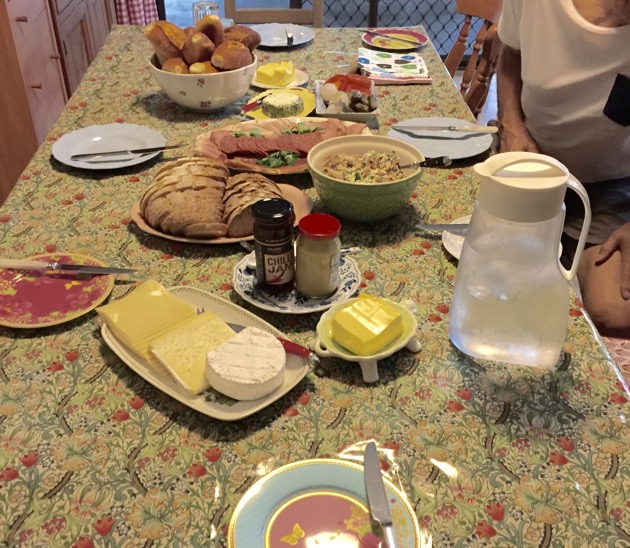
You'll probably find that real home cooking - and I'm not talking about tins of soup, cake mixes and gravy powder - real home cooking will lead you into a world of stocks, sauces, fresh vegetables, cheaper cuts of meat, fish, dairy foods, fermenting and learning how to use leftovers. I hope it will also lead you to sit down around the table and eat together, with no phones or ipads, so that real life can be talked about. That respect for the family mealtime was unquestioned when I was a girl but it seems to be gone for some of us now.  But that's okay, one of the skills you can learn with your home cooking is how to reestablish that evening ritual of laying a clean cloth and homemade napkins, setting the table with cutlery, water glasses and a jug and gathering the family around. That simple ritual of good food shared with the family will become one of the things you all look forward to after a day of school or work. Coming home to the aroma of home cooking and a table set for a meal is one of life's simple luxuries.


I often wish I could send a gift out to everyone who reads here, a gift that would make a real difference to their lives. I think I found it! My words are feeble so I'll dispense with them today and send instead this gift, a simple link to Wendell Berry. Get yourself a drink and settle in, but whatever you do, make sure you click the link below. Wendell Berry rarely gives filmed interviews but here is one that will stop you in your tracks and make you think deeply about your life. I had never heard of the interviewer, Bill Moyers, before but I liked how he handled the interview. He didn't try to do too much or try to ask the big questions. He just listened. And that is what we should all do. 

Wendell Berry on his hopes for humanity.


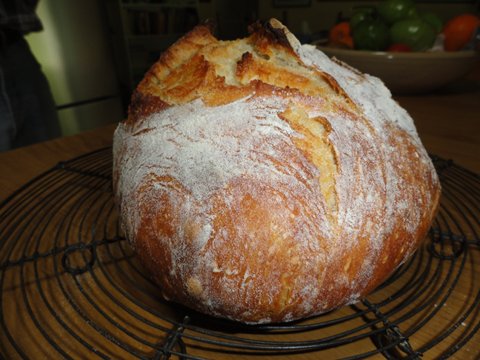
I'm happily back into my bread routine again. It didn't take much to kick start me into getting serious about it. The only shop breads I like now are the caraway seed rye from the German Bakehouse at $6.50 a loaf and their 100 percent rye which I think is about the same price.  All the others are either tasteless or contain artificial additives and preservatives. The only way for me to get good bread for a good price is to make it myself. I already had my flours, yeast, recipe and equipment, I just had to reorganise my thinking to streamline making, cutting and storing the bread. 


The secret to successful baking in the long term is to make it as easy as you can so that you've always got bread on hand and it doesn't take too much time making it. But after a decade of baking bread for my family every day, two things happened that made me rethink what I was doing: we started eating our main meal at lunchtime, and that reduced the amount of bread we needed, and I started writing another book and I had much less time. So when I came back to regular baking, it wasn't a daily task and I had to make sure a loaf remained appetising for two to three days.

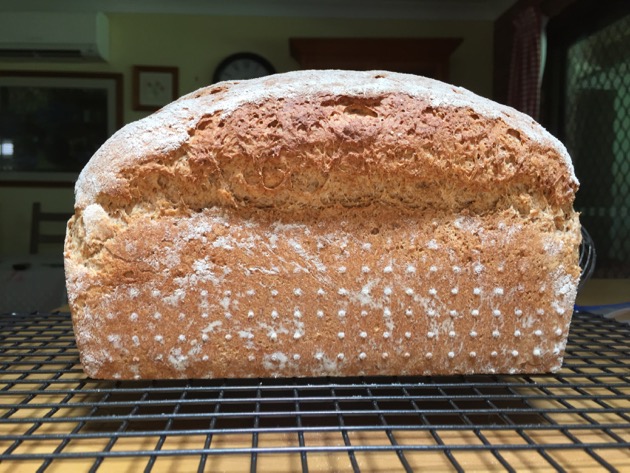
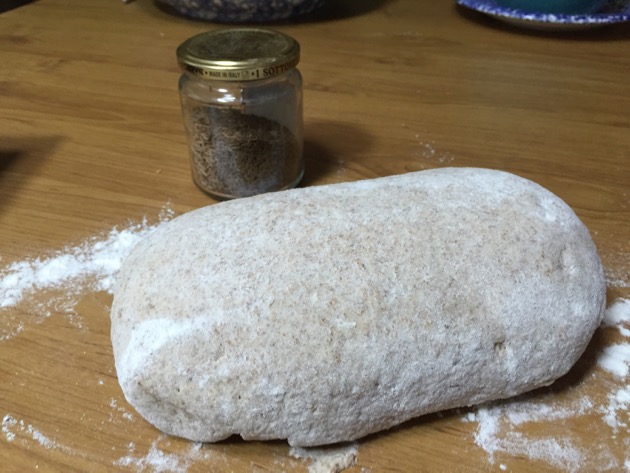
The bread above is a rye and spelt loaf. It costs between $2 and $3 to home produce it and the work involved in each loaf takes about 20 minutes. That includes loading the bread machine, kneading the dough, shaping, baking in the oven and slicing the loaf. I use a Sunbeam bread maker and Sunbeam slicer and would recommend them to anyone who wants to set themselves up as a home baker. You don't have to buy new, it doesn't have to be any particular brand; look around for clean secondhand. Or do what I did, start off making it by hand and add appliances if you want to and when you can afford it.

I'm using the same bread recipe as always, I just change the type of flour every so often to get a different taste. I love this loaf, it's 50 percent organic rye and 50 percent organic spelt so it comes out quite soft, with a good flavour and texture which is ideal for sandwiches or for toast. During the hot and humid weather it stores quite well for three or four days in the fridge but with Jamie here, we go through a loaf in about two days.


On the morning I need to bake, I activate two teaspoons of yeast in one teaspoon of sugar and warm water in a tea cup, then load the bread machine with the yeast, four cups of flour, 2 teaspoons of salt and enough water to make a slightly moist dough. I use the machine's dough cycle to mix the dough. All that takes five minutes. When the cycle finishes 90 minutes later, I take the dough out, knead it for a minute, shape it, place it in a bread tin and let it sit until it rises. That takes another five minutes. I keep an eye on the dough because I don't want it to over-rise, it's usually ready to bake in about 15 - 20 minutes. Ten minutes after the bread starts that second rise (the first one was in the bread machine) I turn the oven on to 220C to preheat. Having a hot oven helps the dough rise more in the oven, which gives the loaf a good texture. When the dough has risen enough but not too much, I place it carefully in the oven and turn the temperature down to 200C. About 20 - 25 minutes later, when I see the bread is golden brown and smell the aroma of baked bread, I take it out of the oven and leave the bread, in the tin, sitting on a cooling rack. About 30 minutes later, I remove the bread from the tin and allow it to cool completely on the rack. Doing that takes about a minute. When the bread is cold, I slice it with my slicer, place the cut loaf in a plastic bag - to keep the slices together, and place the sliced loaf in a plastic box with a lid and store it in the fridge. Another five minutes. The bread is now ready to eat. The entire process took about 3½ hours but I was actively working on the loaf for less than 20 minutes. That 20 minutes gives us fresh, healthy, sliced bread.

If you want to start making bread at home, do a little planning and research first to make is as easy as it can be. Find a reliable supplier of fresh flour, either online or close by, find a recipe you want to use that is tried and true. Set up your baking supplies so you've got everything you need and then start working on making the best loaf you can.  You probably won't do that the first time you bake, but it won't take long. Work out what you like and don't like about each loaf and improve your method every time you bake.

If this is something you want to do every day, or at least a few times a week, work out short cuts, experiment until you're baking the best bread you're capable of, and then develop your routine around it. Being able to produce good bread consistently is significant skill that will stand you in good stead, increase your confidence as a cook and help you provide healthy food for your family at a price you can afford.

ADDED LATER: This is a good online shop for flours, http://www.farmhousedirect.com.au


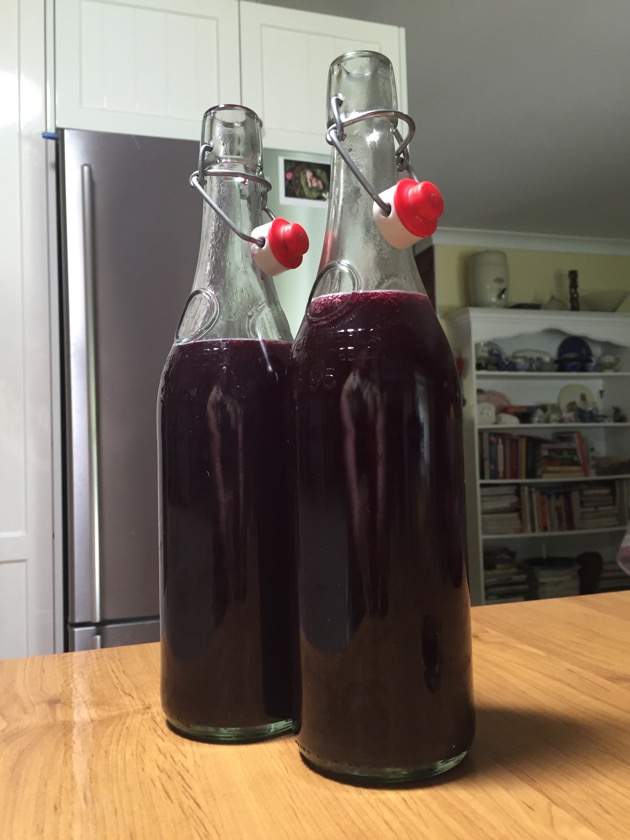
One of the pleasures of a slow summer is having the time to make cordial. Drinking homemade cordial on a hot day is one of joys of the season for us so I make sure our favourites are ready for the hottest days. I love ginger cordial, Hanno loves elderberry cordial, so they are our mainstays. Made with fresh ginger and elderberries from our tree in the backyard, I just add lemon and sugar and that's it. Cordial bought at the supermarket is generally a concoction of water, preservatives, artificial flavours and colours. Making your own is easy to do and a much healthier option. I make up the drink with a small amount of cordial syrup and add cold sparkling mineral water and ice. Hearing those ice cubes clinking in the glass is one of the things I love about summer.

Two bags of elderberries from the freezer, a lemon and lime, water and sugar. That's it.

We've been stripping the tree of elderberries for the past couple of months and freezing them. I have a good stockpile of frozen berries now. I want to have the syrup on hand in winter to help us through any viruses or colds we do get. Luckily it's a rare event.


To make the cordial, add the berries with no stems, to a saucepan add the rind and juice of a couple of lemons or a lemon and lime (use whatever you have) and just cover them with water.  Bring to the boil, turn down the heat, simmer for 15 minutes and leave the pot on the stove to steep for about 6 hours. Then drain the liquid off through a fine sieve, or a colander with a muslin cloth in it. For every 2 litres of liquid, I add 3 cups of sugar, return it to the heat, and stir until the sugar dissolves. The amount of sugar you add depends on your own taste and how sweet the fruit is.

You'll need about this amount of the cordial in a 200ml glass. We fill the glass with cold sparkling mineral water but you could use cold tap water too.

Pour the cordial into a sterilised bottle. It will keep for over a year in the cupboard but when you open it, store it in the fridge.

It's easy to make cordial using any fruit you grow in the backyard or if you see summer fruit on special at the shop, grab some and make it up. The cordial will keep perfectly well until you drink it so there's no problem making it up in summer and drinking it much later in the year. You could make cordial using any kind of berry, any citrus fruit, mangoes, pineapple, passionfruit or any fruit that you'll get juice from. The drier fruits, like berries and mangoes, are best cut up, boiled in water and steeped, before adding sugar to the strained liquid. With other juicier fruits, such as citrus, you squeeze the juice and add sugar syrup. Adjust the strength of the sugar syrup according to the taste and type of fruit, and your own taste for sweetness.

Normal sugar syrup is 1 kg sugar to 1 litre of water.
Weak sugar syrup is 500 grams sugar to 1 litre of water.

Juice whatever fruit you have and depending on what it is - the more mellow the flavour, the less sugar you'd add. So, for example, I'd use a normal strength sugar syrup for lemon cordial and a weak sugar syrup for orange cordial. So taste the fruit first and add the amount of sugar you think it needs. Sweet fruit will need less but keep in mind that the sugar not only adds sweetness, it is a preservative too.

If you haven't had homemade summer cordial yet, try to find some fruit during the week and make cordial this weekend.  It is one of those summer tasks that I'm sure will become a yearly ritual.


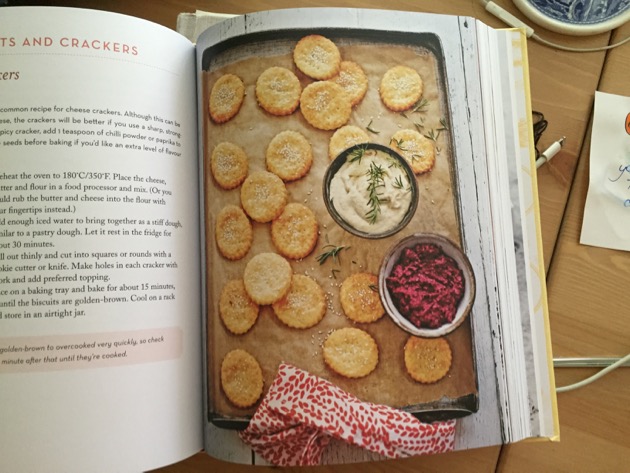
I received the most charming gift yesterday. It was a package of homemade biscuits, wrapped in cellophane and bubblewrap and carefully packed into an express courier bag.  A vintage-look postcard told me it was from Andrea, my Penguin publisher. My new book was her last project for Penguin. In The Simple Home you'll see a photo of a beautiful wooden embossed rolling pin and when I asked Andrea about it she said it was hers and she was hoping to use it when she left Penguin and had a short holiday before starting work again. It looks like she was good to her word, as usual, because the pattern you see on the biscuits was made with that rolling pin. Thanks Andrea. You're one very special lady. They are the best ginger biscuits I've ever tasted. 


Wendell Berry's thoughts on the good life.
This is a wonderful resource from Milkwood about foraging seaweed for home and garden use. Please check your local regulations to make sure you're allowed to take seaweed home.
How a food budget got us out of debt.
Kevin TV, local food - please note, there is some vision of hunting and dead animals in some videos.
Meals that mark life's milestones.
Making nitrate-free corned beef
A hopeful nature is a blog written by one of the women who came to my blogging workshops late last year.
Darn and Dusted - a gallery of darned fabrics

♥︎ =||= ♥︎

Enjoy your weekend, my friends. One week in and I can see many home projects ahead just waiting for their time. I'm working on a small patchwork today. What are your plans?

I feel a bit like a boat cast adrift. My routines haven't kicked in yet and I'm at a loss sometimes as to what I should be doing. I feel like the Queen Mary sailing into Sydney Harbour and just passing Fort Denison the pilot tells me not to dock at Circular Quay near the Harbour Bridge, but proceed up Parramatta River and find the smallest dock I can find to stay out of the way. And yes, I know this is all my own doing but it's taking a while to reorder my brain.  Letting go of the writing habit is difficult.

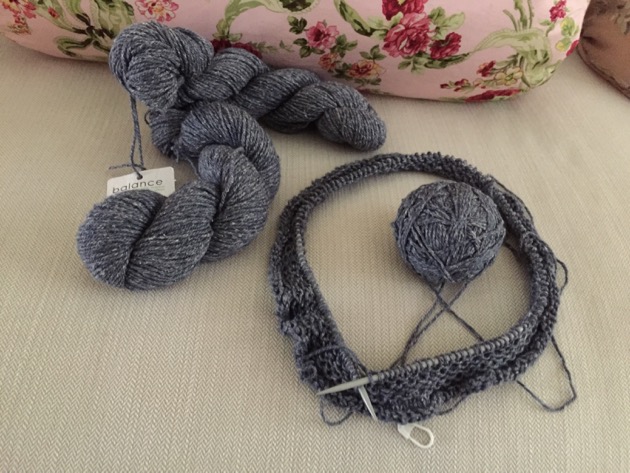
Of course it hasn't helped that I've pulled a muscle in my leg so I'm hobbling around and sitting down a lot. I decided to start knitting Tricia's cowl scarf to keep me out of trouble and that's been a real pleasure, but it's not enough. I've realised there are two habits I have to change - the writing itself, which was quite easy to stop, and thinking about writing, which is much more difficult. Transitions are tough. You're not one or the other but in that strange unfamiliar middle zone where old ways no longer work and it's easy to step on metaphorical snakes in the grass.


Well, I wrote all the above two days ago, my leg is fine now and I'm feeling more settled. I just have to get on with it. There is no use moping around like a 14 year old, I chose to stop writing and now I have to make it work.  In an attempt to get myself organised for the year, I started deep cleaning my kitchen benches and getting rid of junk in drawers that I've kept just in case. I feel good doing that and I'm rewarded with extra space and not having to look after things that have outlived their usefulness.


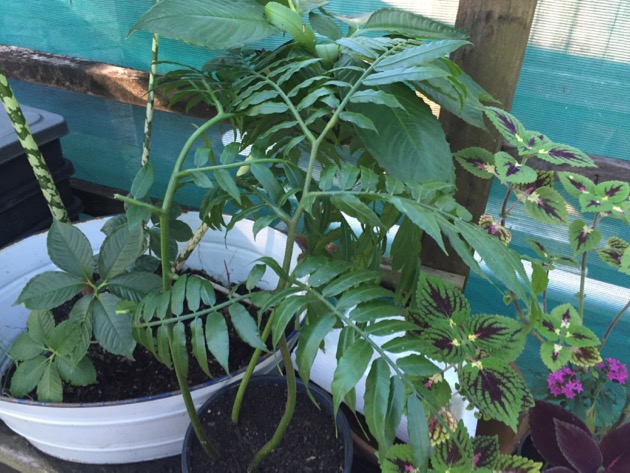
I spent some time outside this morning repotting some rare giant ferns (Angiopteris evecta). I've had them for a few years but moved them to another location on the front verandah and I think they got too much sun. It would only have been a brief hour of very early morning sun but it was still too much - they collapsed and I couldn't get them to rehydrate with normal watering. I took them out of their pot and sat them in a bucket of weak Seasol water. It took two days but they recovered.  Now I've divided them up into three separate plants, repotted them and when they start actively growing again, I hope to bring one into the lounge room.

Doing those tasks helps me move forward. Each day makes more sense than the one before it. The pieces are falling into place and the repetition of household chores gives structure to my days. Taking the time to organise myself for the months ahead and doing some physical reordering of my work spaces is pulling me back into familiar territory. Good old housework. There was a time when I could tell the time by what I was doing and that's starting to happen again. It looks like housework will save me again.

The past week has been a mix of tranquility, visitors and grandchildren, and now here we are, ready to begin a new year. I'm looking forward to a few weeks of rest now and then I'll be out, touring around and meeting people with my last book. I'm going to enjoy that final flourish in the commercial world but I'm ready to let go of it all and return to the quietness of my home.


While I rest after one of my busiest years, I'll be getting back to regular baking, making soap, slowing my mind with hand stitching and working to a routine sometimes and my natural rhythm at others. Life will pass slowly, I'll garden, fuss about, take my time, write, think, sit in the back yard, make scones with buttermilk, pour tea from a pot and get to know life again without the constant need to write. Writing has been part of my life since I was a teenager and while I think I'm ready to let it go, Hanno is doubtful.


At the start of this new year, I'm not going to think about resolutions. Instead I'll be living with the clear intention of enjoying every day. I'll follow my heart, work with the seasons and my inclinations and appreciate my work and home life in the slowest of slow lanes. I hope you'll continue to visit me as I slow down; maybe you can do it too. And in the words of Wendell Berry: Let’s be against sweeping changes and in favor of doing things in small steps. Let’s not discourage ourselves by trying for too much or subject ourselves to the tyranny of somebody else’s big idea.  Happy new year, my friends. ♥︎
Newer Posts Older Posts Home


My books were all published by Pengiun, and are available at Amazon US, Amazon UK and Amazon Au

Search here

Total Pageviews

Translate


I'm Rhonda Hetzel and I've been writing my Down to Earth blog since 2007. Although I write the occasional philosophical post, my main topics include home cooking, happiness and gardening as well as budgeting, baking, ageing, generosity, mending and handmade crafts. I hope you enjoy your time here.

MY FAVOURITE PLACES

  • Grandma Donna's Place
  • Grandma Donna's YouTube
  • Grandma Donna's Instagram
  • This Simple Day
  • Nicole's Instagram

Give More

Give More

Popular posts last year

Making ginger beer from scratch

We had a nice supply of ginger beer going over Christmas. It's a delicious soft drink for young and old, although there is an alcoholic version that can be made with a slight variation on the recipe. Ginger beer is a naturally fermented drink that is easy to make - with ginger beer you make a starter called a ginger beer plant and after it has fermented, you add that to sweet water and lemon juice. Like sourdough, it must ferment to give it that sharp fizz. To make a ginger beer plant you'll need ginger - either the powdered dry variety or fresh ginger, sugar, rainwater or tap water that has stood for 24 hours to allow the chlorine to evaporate off. You'll also need clean plastic bottles that have been scrubbed with soap, hot water and a bottle brush and then rinsed with hot water. I never sterilise my bottles and I haven't had any problems. If you intend to keep the ginger beer for a long time, I'd suggest you sterilise your bottles. MAKING THE STARTER In a...
Image

NOT the last post

This will be my last post here.  I've been writing my blog for 18 years and now is the time to step back. I’ve stopped writing the blog and come back a couple of times because so many people wanted it, but that won’t happen again, I won’t be back.  I’ll continue on instagram to remain connected but I don’t know how frequent that will be. I know some of you will be interested to know the blog's statistics. 
Image

How to make cold process soap

I'm sure many of you are wondering: "Why make soap when I can buy it cheaply at the supermarket?" My cold process soap is made with vegetable oils and when it is made and cured, it contains no harsh chemicals or dyes. Often commercial soap is made with tallow (animal fat) and contains synthetic fragrance and dye and retains almost no glycerin. Glycerin is a natural emollient that helps with the lather and moisturises the skin. The makers of commercial soaps extract the glycerin and sell it as a separate product as it's more valuable than the soap. Then they add chemicals to make the soap lather. Crazy. Making your own soap allows you to add whatever you want to add. If you want a plain and pure soap, as I do, you can have that, or you can start with the plain soap and add colour, herbs and fragrance. The choice is yours. I want to add a little about animal and bird fat. I know Kirsty makes her soap with duck fat and I think that's great. I think t...
Image

Preserving food in a traditional way - pickling beetroot

I've had a number of emails from readers who want to start preserving food in jars but don't know where to start or what equipment to buy.  Leading on from yesterday's post, let's just say up front - don't buy any equipment. Once you know what you're doing and that you enjoy preserving, then you can decide whether or not to buy extra equipment. Food is preserved effectively without refrigeration by a variety of different methods. A few of the traditional methods are drying, fermentation, smoking, salting or by adding vinegar and sugar to the food - pickling. This last method is what we're talking about today. Vinegar and sugar are natural preservatives and adding one or both to food sets up an environment that bacteria and yeasts can't grow in. If you make the vinegar and sugar mix palatable, you can put up jars of vegetables or fruit that enhance the flavour of the food and can be stored in a cupboard or fridge for months. Other traditional w...
Image

Cleaning mould from walls and fabrics

With all this rain around we've developed a mould problem in our home. Usually we have the front and back doors open and that good ventilation stops most moulds from establishing. However, with the house locked up for the past week, the high humidity and the rain, mould is now growing on the wooden walls near our front door and on the lower parts of cupboards in the kitchen. Most of us will find mould growing in our homes at some point. Either in the bathroom or, in humid climates, on the walls, like we have now. You'll need a safe and effective remedy at some point, so I hope one of these methods works well for you. Mould is not only ugly to look at, it can cause health problems so if you see mould growing, do something about it straight away. The longer you leave the problem, the harder it will be to get rid of it effectively. If you have asthma or any allergies, you should do this type of cleaning with a face mask on so you don't breathe in any spores. Many peopl...
Image

Five minute bread

Bread is one of those foods that, when made with your own hands, gives a great deal of satisfaction and delight. It's only flour and water but it symbolises so much. I bake bread most days and use a variety of flours that I buy in bulk. Often I make a sandwich loaf because we use most of our bread for lunchtime sandwiches and for toast. Every so often I branch out to make a different type of loaf. I have tried sour dough in the past but I've not been happy with any of them. I'll continue to experiment with sour dough because I like the idea of using wild yeasts and saving the starter over a number of years to develop the flavour and become a part of the family. However, the loaf I've been branching out to most often is just a plain old five minute bread. By five minutes I mean it takes about five minutes actual work to prepare but it's the easiest of all bread to make and to get consistently good loaves from. If you're having people around for lunch or...
Image

This is my last post.

I have known for a while that this post was coming, but I didn't know when. This is my last post. I'm closing my blog, for good, and I'm not coming back like I have in the past.  I've been writing here for 16 years and my blog has been many things to me. It helped me change my life, it introduced me to so many good people, it became a wonderful record of my family life, it helped me get a book contract with Penguin, and monthly columns with The Australian Women's Weekly and Burke's Backyard . But in the past few months, it's become a burden. In April, I'll be 75 years old and I hope I've got another ten years ahead. However, each year I'll probably get weaker and although I'm fairly healthy, I do have a benign brain tumour and that could start growing. There are so many things I want to do and with time running out, leaving the blog behind gives me time to do the things that give me pleasure. On the day the blog started I felt a wonderful, h...
Image

What is the role of the homemaker in later years?

An email came from a US reader, Abby, who asked about being a homemaker in later years. This is part of what she wrote: "I am a stay-at-home mum to 4 children, ages 9-16. I do have a variety of "odd jobs" that I enjoy - I run a small "before-school" morning drop-off daycare from my home, I am a writing tutor, and I work a few hours a week at a local children's bookstore. But mostly, I cherish my blissful days at home - cooking, cleaning (with homemade cleaners), taking care of our children and chickens and goats, baking, meal-planning, etc. This "career" at home is not at all what I imagined during my ambitious years at university, but it is far more enriching. I notice, though, that my day is often planned around the needs of my family members. Of course, with 4 active kids and a husband, this is natural. I do the shopping, plan my meals, cook dinner - generally in anticipation of my family reconnecting in the evening.  I can't h...
Image

Every morning at home

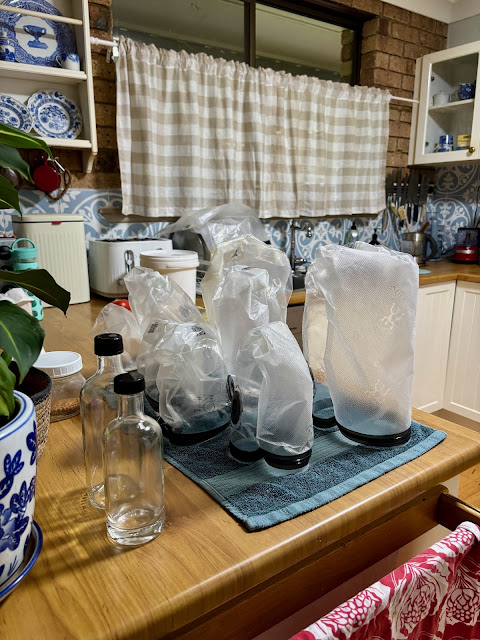
Every morning when I walk into my kitchen it looks tidy and ready for a day's work. Not so on this morning (above), I saw this when I walked in. Late the previous afternoon when I was looking for something, I came across my rolled up Zwilling vacuum bags and decided they had to be washed and dried. So I did that and although I usually put them outside on the verandah to dry it was dark by then. I turned the just-washed bags inside out and left them like this on a towel. It worked well and now the bags are ready to use when I bring home root vegetables, cabbages or whatever I buy that I want to last four or five weeks.
Image

You’ll save money by going back to basics

When I was doing the workshops and solo sessions, I had a couple of people whose main focus was on creating the fastest way to set up a simple life. You can't create a simple life fast, it's the opposite of that It's not one single thing either - it's a number of smaller, simpler activities that combine to create a life that reflects your values; and that takes a long to come together. When I first started living simply I took an entire year to work out our food - buying it, storing it, cooking it, preserving, baking, freezing, and growing it in the backyard. This is change that will transform how you live and it can't be rushed.  
Image


Trending Articles

NOT the last post

This will be my last post here.  I've been writing my blog for 18 years and now is the time to step back. I’ve stopped writing the blog and come back a couple of times because so many people wanted it, but that won’t happen again, I won’t be back.  I’ll continue on instagram to remain connected but I don’t know how frequent that will be. I know some of you will be interested to know the blog's statistics. 
Image

Every morning at home

Every morning when I walk into my kitchen it looks tidy and ready for a day's work. Not so on this morning (above), I saw this when I walked in. Late the previous afternoon when I was looking for something, I came across my rolled up Zwilling vacuum bags and decided they had to be washed and dried. So I did that and although I usually put them outside on the verandah to dry it was dark by then. I turned the just-washed bags inside out and left them like this on a towel. It worked well and now the bags are ready to use when I bring home root vegetables, cabbages or whatever I buy that I want to last four or five weeks.
Image

You’ll save money by going back to basics

When I was doing the workshops and solo sessions, I had a couple of people whose main focus was on creating the fastest way to set up a simple life. You can't create a simple life fast, it's the opposite of that It's not one single thing either - it's a number of smaller, simpler activities that combine to create a life that reflects your values; and that takes a long to come together. When I first started living simply I took an entire year to work out our food - buying it, storing it, cooking it, preserving, baking, freezing, and growing it in the backyard. This is change that will transform how you live and it can't be rushed.  
Image

Creating a home you'll love forever

Living simply is the answer to just about everything. It reduces the cost of living; it keeps you focused on being careful with resources such as water and electricity; it reminds you to not waste food; it encourages you to store food so you don't waste it and doing all those things brings routine and rhythm to your daily life. Consciously connecting every day with the activities and tasks that create simple life reminds you to look for the meaning and beauty that normal daily life holds.  It's all there in your home if you look for it. Seemingly mundane tasks like cleaning and cooking help you with that connection for without those tasks, the home you want to live in won't exist in the way you want it to.  Creating a home you love will make you happy and satisfied.
Image

Time changes everything

I've been spending time in the backyard lately creating a contained herb and vegetable garden. My aim is to develop a comfortable place to spend time, relax, increase biodiversity and encourage more animals, birds and insects to live here or visit. Of course I'd prefer my old garden which was put together by Hanno with ease and German precision. Together, we created a space bursting at the seams with herbs, vegetables and fruity goodness ready to eat and share throughout the year. But time changes everything. What I'm planning on doing now, is a brilliant opportunity for an almost 80 year old with balance issues. In my new garden I'll be able to do a wide range of challenging or easy work, depending on how I feel each day. It’s a daily opportunity to push myself or sit back, watch what's happening around me and be captivated by memories or the scope of what's yet to come.
Image

It's the old ways I love the most

I'm a practical woman who lives in a 1980’s brick slab house. There are verandahs front and back so I have places to sit outside when it's hot or cold. Those verandahs tend to make the house darker than it would be but they're been a great investment over time because they made the house more liveable. My home is not a romantic cottage, nor a minimalist modern home, it's a 1980’s brick slab house. And yet when people visit me here they tell me how warm and cosy my home is and that they feel comforted by being here. I've thought about that over the years and I'm convinced now that the style of a home isn't what appeals to people. What they love is the feeling within that home and whether it's nurturing the people who live there.
Image

Making ginger beer from scratch

We had a nice supply of ginger beer going over Christmas. It's a delicious soft drink for young and old, although there is an alcoholic version that can be made with a slight variation on the recipe. Ginger beer is a naturally fermented drink that is easy to make - with ginger beer you make a starter called a ginger beer plant and after it has fermented, you add that to sweet water and lemon juice. Like sourdough, it must ferment to give it that sharp fizz. To make a ginger beer plant you'll need ginger - either the powdered dry variety or fresh ginger, sugar, rainwater or tap water that has stood for 24 hours to allow the chlorine to evaporate off. You'll also need clean plastic bottles that have been scrubbed with soap, hot water and a bottle brush and then rinsed with hot water. I never sterilise my bottles and I haven't had any problems. If you intend to keep the ginger beer for a long time, I'd suggest you sterilise your bottles. MAKING THE STARTER In a...
Image

An authentic look at daily life here — unstaged and real

Most days Hanno was outside happily working in the fresh air. It may surprise you to know that I started reading my book,  Down to Earth , yesterday - the first time since I wrote it 13 years ago.  I had lent it to my neighbor, and when she returned it, I started reading, expecting to find surprises. Instead, I realised the words were still familiar—as if they were etched into my memory. As I flipped through the pages, I was reminded of how important it was for me to share that knowledge with others. The principles in Down to Earth changed my life, and I truly believed they could do the same for others. After just 30 minutes of reading, I put the book down, reassured that its message still holds true: we can slow down and reshape our lives, one step at a time.
Image