down to earth

  • Home
  • About Us
  • Down To Earth Book
  • Privacy Policy
We are the very happy owners of six new chickens. Kate from Beautiful Chickens brought them to us yesterday afternoon. We had the new wing of the chicken palace open for the first time with the red carpet down. The band played Waltzing Matilda. Ahem, I think I got a bit carried away there. They are such a beautiful bunch of girls. So healthy looking and not too flighty, I think that's always a good sign. If they're calm, it tells me that they were relaxed and comfy where they came from.  Kate has a beautiful setup of coops and runs on her property. The chickens have a lot of room to wander around, they have free access to fresh water and food. Everything is clean and the chooks are vaccinated. If you're thinking of buying some chickens, I recommend Beautiful Chickens to you. You can contact Kate on 0414550302. If you're looking for beautiful looking chickens that are excellent layers, ask Kate about her Isa X Faverolles. 
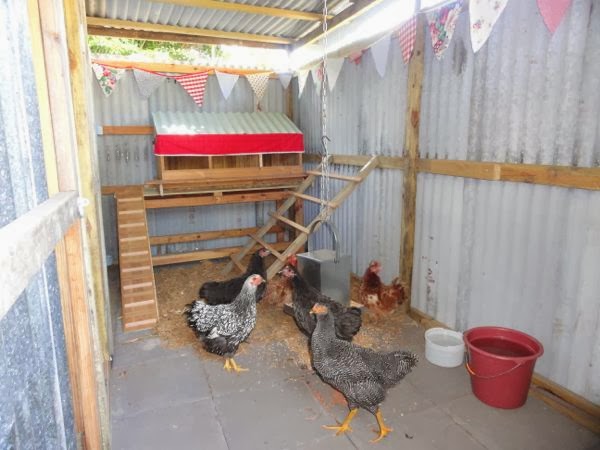
Don't you love all the chook furniture Hanno made. It's all from recycled materials. I hope it makes our girls very comfortable while they settle in.

I decorated the coop with bunting and hung a half curtain over the front of the nesting boxes. Chooks like privacy when they lay eggs. I've also hung a print of chooks and a rooster in the coop next to this one, I'll take photos of that today. I was going to put up some fairy lights too but the person who took down the lights after Christmas (and that person shall not be named here) lost the lights. He doesn't remember where he put them after Christmas and all attempts at finding them failed. We will get some lights in there soon. I wanted to have a set of battery operated lights so that if we have to go to the coop when it's dark, we'll have more than a torch.


In this photo you can see the difference between the two red Frizzles - Kathleen has a blonde chest and top knot and Tricia is red all over with a blonde topknot.


This is Lucy, our blind girl. We keep her away from the others. Hanno lets her stand on top of the feed bucket so she can feel the seeds and just has to bob her head down to eat.

In the new flock, we have two red frizzles - one with a blonde chest, one with a red chest. Two Australorps - one blue, one blackish blue. A barred Plymouth Rock and a magnificent silver-laced Wyandotte. All of them are young, the two Frizzles have just started laying. The Frizzles will be called Tricia (red chest) and Kathleen (blonde chest). The Australorps will be included in my bell series of names - the blue will be Jezebel and the black will be Annabelle. We already have two bell girls - Bluebell and Lulubell. The Wyandotte will be called Tammy but probably only the older folk or those who love country and western music will know why. :- )  The Plymouth Rock is Martha.

Nora (above) and Annie (below) were outside and they knew something was going on. 

We'll keep them safe and sound in their new home with the door closed until later today. That will teach them that this is where they live from now on. Usually we'd leave them locked in a bit longer to familiarise themselves with the smells and sounds of our backyard, but it's hot and we want them to get out into the fresh air. So about lunchtime, we'll let them out to meet their sisters, although they can see each other through a wire door in the coop. At the moment, they're drinking water and eating seeds and seem to be happily scratching through the straw. We checked them when Kate left and looked in on them again when it started getting dark and the older girls had gone to bed. They seem to be quite settled.

Kate had afternoon tea with us before her trip home and we talked about her doing a post or two about chickens here on Down to Earth. I am hoping the first one will be up fairly soon. It will be on how to prepare for your first flock of chickens and what you need to have in place when you bring your first chooks home.

It's a good feeling having a new flock of good quality chickens in the backyard. They've come at just the right time. We'll start planting seeds and seedlings in the next few days and it won't be long until we have a fully productive backyard again. It makes me feel very secure knowing we'll soon be able to pick fresh vegetables and collect many more golden yolked eggs every day. That, my friends, gives a feeling a satisfaction like no other.
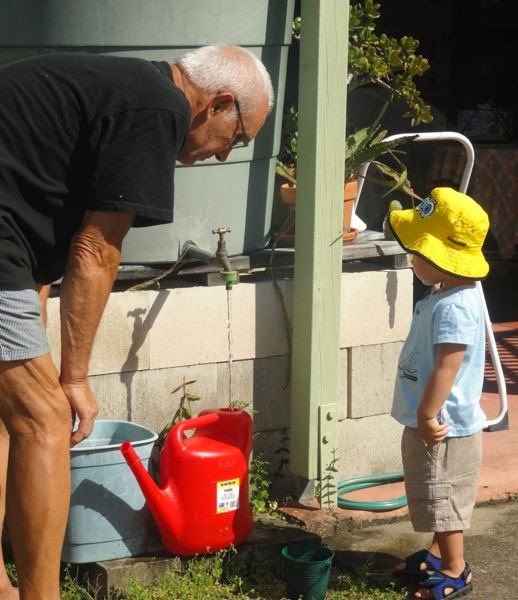

It's been a long, dry summer here. The temperatures haven't been nearly as high as those down south, we've had only two very hot spells, but the rains didn't come this year and that was worse than the hot weather. Summer is our wet season and when it passes with very little rain in January or February, then it doesn't look good for the rest of the year. Our average rainfall in February is 405mm, so far we've had 99mm. We have town water and tank water here. We installed two water tanks to use on the garden. They hold 15,000 litres/quarts. We have a smaller tank on the front verandah that holds 500 litres, that water usually keeps my ferns and plants alive. Our annual rainfall here is just under 2000mm, and about half of that falls in summer.


I believe that if you're growing a garden full of vegetables, then you need to be collecting water to enable you to do that. Water is a hidden cost in vegetable and fruit gardening but if you're serious about supplying some, or all, of your vegetables, then you should think carefully about how much it will cost you to grow them. If you don't harvest your own rain water, watering will be your biggest cost. In Australia the average water use for two people is 360 litres per day. Hanno and I use much less than that at around 200 litres between us and that costs us around $200 every three months. If we used town water on our garden, I suspect we'd use the average of 360 litres and that would cost us just under $400 per three months. We save that amount of money because we harvest our own water. We want to be as self-reliant as we can be so buying tanks and being thrifty with the water we do have is just part of gardening for us. If we can grow a lot of the food we eat, taking no water from the communal dam to do it, then we see that as sustainable gardening. Saving vegetable seeds, recycling household and garden waste into compost, home-made fertilisers and harvesting water is part of the closed system we try to maintain here.


And then the question of managing the harvested water comes into play. I used to be a bit obsessed with the rainwater. I'd check the water level by tapping on the side of the tanks and I'd water with miserly amounts of water on the vegetables. I was fearful of running out of water. A few years ago I decided to stop watering the front gardens all together. I'd planted up gardenias, wisteria, roses, camellias, magnolias and a few drought-hardy species like callistemons and sage. To my surprise, most of the larger plants survived and it was only the smaller roses and daisies that died. We never water the lawn. I don't care if that dies or not. Grass is so resilient, it always comes back after a bit of rain.

 
Over the years I changed my ideas about conserving our tank water. I realised that even though the tanks got low, they've never been completely empty and even in drought years, rain would often come when we needed it most. Instead of being miserly with it,  now I water almost every day and the garden has survived summer and the drought quite well. I no longer have that feeling that we'll run out of water. I changed from a glass half empty to a glass half full and I'm happier for it. I never waste water, but I am giving all my plants and particularly the vegetables, the water they need to thrive, not just survive. I don't know if there will be a time in the future when we run out of tank water but I'm not worrying about that till it happens. I have plants here that need the water we have, I have to live this day, not worry about next month or next year.


We're still practising all the water-wise techniques such as planting vegetables with similar water requirements next to each other, making sure the drips from hanging baskets flow into the garden, using thick mulch to conserve water already in the soil and water storage crystals in the ornamental plant pots.


Those tanks have been one of our wisest investments. I'm pleased we can share the water we harvest with our chooks and all the visiting birds that fly though here as well as the wildlife that live here. I'm grateful I have a husband who could rig up the system of pipes, drains and tanks that makes our water harvesting a success because without those tanks I doubt I'd be as enthusiastic about backyard food production as I am.  What is your watering setup at home?


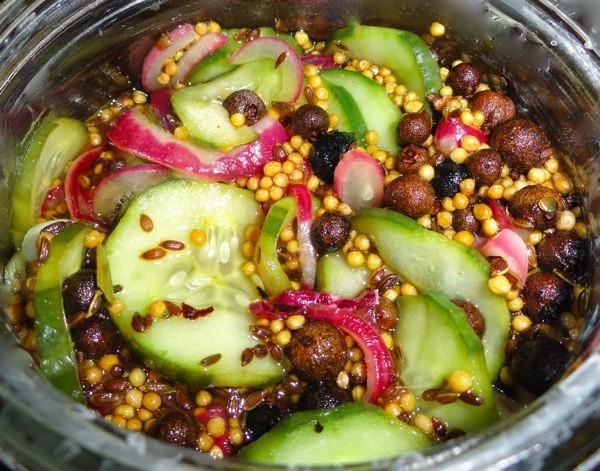
Bread and butter cucumbers.

Another week put to bed and now the weekend looms. I hope you take enough time over the next few days to rest and allow your stresses to float away. We all need to be ready and able for our work next week. Invest in yourself and your future work by resting enough to do it well.

How to save money on your food shopping - Jack Monroe
Fake food in UK
Wartime Farm - You Tube, six episodes one hour each.
Traditional crafts
How to make a besom broom and here is an associated video
Whole Larder Love veg boxes - if you're in Melbourne and wanting to buy fresh veg from a farmer, this is your link. Organic pork also available.
Why I'm bored with superfoods
The daily routines of famous writers

FROM THE COMMENTS DURING THE WEEK
Mindfully Making - have a look at the great outdoor oven Leanne's DH made.
cheapcooking
Greening the Rose


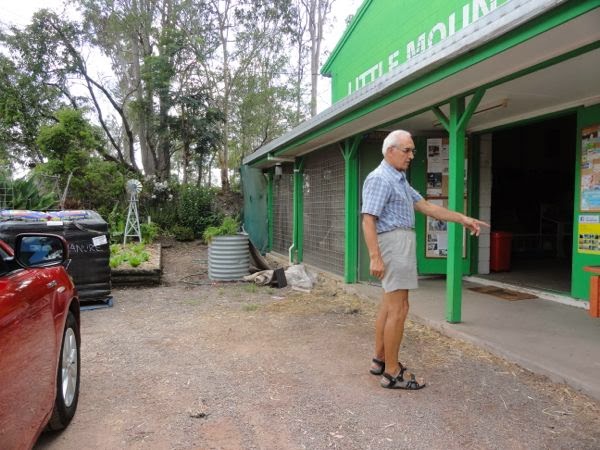
Hanno at the produce store. He's pointing out a little chicken tractor.

The plan was to go out for lunch at the surf club and to pick up a couple of odds and ends at Bunnings and the chemist. We also needed a new chicken feeder. I was going to take photos along the way to show our local area and to give my northern hemisphere friends a glimpse of sunshine and the south Pacific Ocean. The plan worked well at the Little Mountain produce store. I snapped Hanno walking into the store, put the camera in my bag and there it stayed until just now when I downloaded that one photo to the computer.  Oh well. My intentions were good.


The chickens will be here next Tuesday. I can hardly wait. They will be a group of Wyandottes, blue Australorpes, Isa x Faverolles, Frizzles, and splash Pekins. Kate, from Beautiful Chickens will bring them up and help settle them into the new chook B&B. The little house is ready out there. Hanno finished painting the exterior and soon, before it gets too hot, I'll go out and add the finishing touches, lay down some straw, fluff up the nests and install their feeder and water container. Just between you and me, I also have fairy lights and bunting. :- )  Shhhhh.

I'm so proud of Hanno. He did the renovations with as many recycled materials as he could find.  The floor is made up of cement pavers, bought new, but almost all of the rest, the corrugated iron sheeting, timbers and wire, were recycled. Oh, there is a new latch. Now we'll be able to separate the chickens properly and keep smaller or sick chickens in a quiet area. It also provides double the space for them when it's raining. Hanno still has to make a small run off the side of the coop but that can go up in the next week or so. It needs to have a roof and be completely enclosed - I've seen goannas (large lizards) climb up over the old wire fence in the past.

Here is my seed station (and morning tea). I work out what I'm about to plant here, then write up the labels and start planting in the bush house. Those three seed packets near the cup were brought over from Korea when Sunny's mum came over last September. I have Korean seeds for hollyhocks, salvia, dahlias and pansies. 

The seeds sown two weeks ago have germinated - with the exception of kale and daikon - and have now been moved out into the sunshine. A second planting happened two days ago and this afternoon, I'll sow more seeds. We want to eat the freshest food and the only way we can do that is to grow it ourselves. There is optimistic anticipation at this time of the year when we prepare for our annual vegetable planting. From 1 March, it will be full steam ahead and this year, I'm more motivated than ever before to make the most of the climate and the rich soil we've built up over the years. What we don't eat fresh will be shared, frozen or preserved in some way. Nothing will be wasted. Whether you have a garden like we do or a collection of pots, I hope you garden along with me so we can share photos of our fresh food. I'll have a Pinterest page up soon so we can do that.

I'm enjoying doing more in my home again. Many people would think I'm crazy saying that but it fills me with a feeling of satisfaction knowing I'm making the most of what we have. We have a wonderful life and it doesn't just happen by chance. We identify what we want and what we need to do, plans are made and then the day-to-day work carried out to make our plans happen.  And it is in the deliberate action of daily chores and what comes from them, that gives me that feeling of continuous contentment.

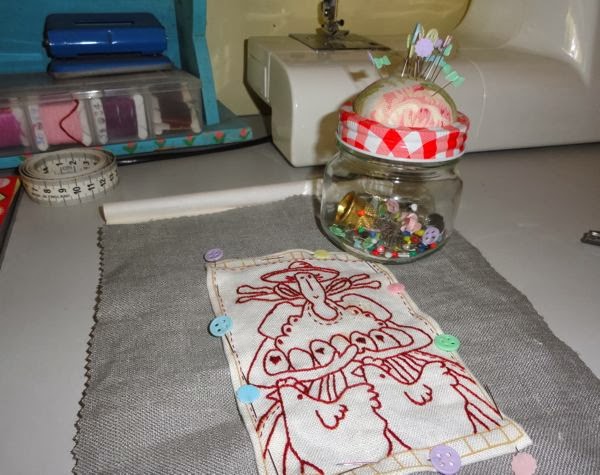
I've received the first typeset file of my new book and have to read it tomorrow to send back for printing on Friday.  Later this morning I'll settle in on the front verandah with a cup of tea to do that. When I send the manuscript back to Penguin, I'll do some writing for the new ebooks, then craft work - either sew on the embroidered pocket on my new apron or finish off a dishcloth, and finish of the decorating in the new chook house.

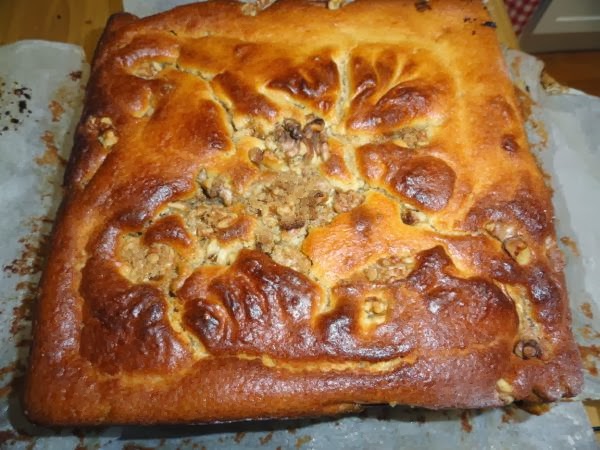
Apple and walnut cake

Before I go I want to thank everyone who took the time to tell me their thoughts about the ebooks I'm writing. That information is invaluable and I thank you sincerely for helping. I've made up my mind about the subject now and as soon as I made the decision, it was clear to me immediately that it was the right choice. More on that later. I'll go through all the other subjects and make a list of the suggestions. Over the next month or so, I'll write posts about as many of those subjects as I can. Hopefully that will sharpen me up a bit and help you move forward in your simple life.  Have a beautiful day, my friends.
It's been quiet here lately. Sunny and Jamie are over in Korea visiting Sunny's family. It's a wonderful opportunity for Jamie to spend time with his cousins, aunties, uncles, and Sunja, his beautiful Korean grandma. I want so many things for my grandsons, Jamie and Alex, and being at the heart of their families is just one of them. Hanno and I miss having Jamie here but we've been talking on the phone and have seen photos and videos. Hello Sunny, Jamie, Sunja and the rest of the family! We send our love to all of you.

 Jamie in Korea with his little snowman.

Hanno finished most of the chicken house renovations and although there is still some work to do on the exterior - painting the recycled corrugated iron and adding an enclosed run, the coop, roosts and new nesting boxes are all ready. I'm decorating the coop. I haven't yet decided if I'll put curtains on the nests but I probably will. There will also be fairy lights and bunting. :- ) One of the things I know Jamie would be excited about if he were here is that we're just about to get some new chickens. He would be right in the middle of that so when they arrive, I'll make sure I take plenty of photos of the girls, their new home, where they're sleeping and eating and drinking to send to him.  He has loved those chooks since he was tiny and from when he could walk, the first thing he did when he came to visit was feed the chooks bread and fruit.


In the meantime though, my days flow by in a gentle trickle. I have such a rich life, there is always something to do here. I haven't yet sewn the embroidered pocket on my new apron, I have the last bit of Johnathan's cardigan to finish, I want to knit a set of loose weave dish cloths and of course, in addition to my housework and writing, I have the on-going important work of raising seeds to be planted in our vegetable garden next month. This is all the gentle work of a simple home, the tasks change with the seasons but the work flows on, never ending.  I love that.  Working for the life I want at home is a creative and rewarding way to spend my time. You probably do something similar and feel the same about your home.


I started a new ebook recently. It's part of a series of six. I'm not sure of the title of the newest book yet but it's all about housekeeping, routines and green cleaning. Penguin expects the first book, The Simple Life - the pleasures and rewards of getting back to basics, to be published as a print book and ebook in late March. The ebooks will be on sale on Amazon and iTunes and all the usual places.

I wonder if I can pick your collective brains. In addition to that book, I've already written one on milk and making dairy products (various cheeses, yoghurt, ice cream etc) in the home kitchen using what is generally available, I've also written a kitchen garden ebook, and now the housekeeping one. My contract calls for six books in total so I wondered what other topics you'd like to see me write about. I was thinking one could be a book of my various food recipes, some published here, some new ones. Would that interest you? And one other topic - maybe baking - a step-by-step guide to various breads, fruit loaf, cakes, scones, crackers, biscuits. Something that will help you provide tasty and nutritious snacks for your family without going into those aisles at the supermarket. Give me some ideas of what you want. I thank you in advance for your help.


Although it's still summer, this February has been quite mild here, but not so for our friends down south and in the west. More homes have been lost in the bush fires and thousands of hectares of bushland burnt. That means lost habitat for our birds and wildlife. I hope the days of high temperatures will come to and end soon and we can all enjoy the start of autumn. I'm sure those of you in the snow are looking forward to sunshine, green grass and warm days. We've seen quite a few news reports this year of the heavy snow falls and floods in north America and Europe. It's been a tough season in many parts of the world. But soon the seasons will change again and we'll all get used to the changed conditions. In the meantime, stay safe everyone.
I want to let all my readers know that apart from occasionally linking to my sponsors, I never link to commercial sites. Never. I got an email from a woman yesterday who told me she's not reading my blog again because she got a virus from one of my links. I don't know how she got her virus but I know it wasn't from one of my links. I think she must have downloaded a virus, simply by going to a rogue site, and it showed up when she visited here.  All the links below are to medical and nutritional information. And please be assured, I appreciate your visits and always endeavour to provide a safe platform here.

= = = ♥.♥.♥ ===

I got lured in by red food the other day. I wanted to make salmon patties and when I looked in the stockpile cupboard, there was no pink salmon. I had a few cans of red salmon so I decided to use that instead. When I started preparing the patties, I realised I only had organic potatoes and I didn't want to use those in the patties, so I boiled a couple of red/orange sweet potatoes instead, then peeled a red onion. As food as I had the patties made and in the fridge, I took time out to look up red food on the web.


I knew there had been research done in recent years about the health benefits of phytochemicals - the part of food that gives it colour. If you're eating fruit and vegetables for the health benefits, the deeper the colour, the more of these phytochemicals you'll be getting.  And by the way, phytochemicals are never in vitamin supplements, they're only in food.  

This list of phytochemicals is from the Stanford University cancer research site.
  • Allicin is found in onions and garlic. Allicin blocks or eliminates certain toxins from bacteria and viruses.
  • Anthocyanins are found in red and blue fruits (such as raspberries and blueberries) and vegetables. They help to slow the aging process, protect against heart disease and tumors, prevent blood clots, and fight inflammation and allergies.
  • Biflavonoids are found in citrus fruits.
  • Carotenoids are found in dark yellow, orange, and deep green fruits and vegetables such as tomatoes, parsley, oranges, pink grapefruit, and spinach.
  • Flavonoids are found in fruits, vegetables, wine, green tea, onions, apples, kale, and beans.
  • Indoles are found in broccoli, bok choy, cabbage, kale, Brussel sprouts, and turnips (also known as “cruciferous” vegetables). They contain sulfur and activate agents that destroy cancer-causing chemicals.
  • Isoflavones are found in soybeans and soybean products.
  • Lignins are found in flaxseed and whole grain products.
  • Lutein is found in leafy green vegetables. It may prevent macular degeneration and cataracts as well as reduce the risk of heart disease and breast cancer.
  • Lycopene is found primarily in tomato products. When cooked, it appears to reduce the risk for cancer and heart attacks.
  • Phenolics are found in citrus fruits, fruit juices, cereals, legumes, and oilseeds. It is thought to be extremely powerful, and is studied for a variety of health benefits including slowing the aging process, protecting against heart disease and tumors, and fighting inflammation, allergies, and blood clots.
When I went back to the kitchen, I decided to make up a red meal. Red fruits and vegetables "Contain nutrients such as lycopene, ellagic acid, Quercetin, and Hesperidin, to name a few. These nutrients reduce the risk of prostate cancer, lower blood pressure, reduce tumor growth and LDL cholesterol levels, scavenge harmful free-radicals, and support join tissue in arthritis cases." Source. All brightly coloured fruit and vegetables are good for you and the medical advice is to eat a colourful variety every day, but my preference that day was for red food. 


As well as the red salmon, red onion and red sweet potato fish cakes, I made a salad of red vegetables - red capsicums/peppers, tomatoes, radishes and finished it off the chilli jam.  We also had coleslaw which was not red but had to be used. Dessert was watermelon. 

To make eight salmon patties, boil potatoes and mash them. You'll need about 2 cups. To the mashed potato, add the broken up salmon, finely chopped onion, two eggs, salt and pepper. Mix well together. Form into patties and cover with bread crumbs. Fry in a shallow frying pan until golden on both sides - about 15 minutes. Serve with a red, green or rainbow salad of your choice.

Does colour play a part in your food choices?

Red food recipes

I want to share a link to an interesting program that networks local growers and local food eaters together based on proximity. It's called RipeNearMe and it's free to join. You can find out what is ripe and ready to eat near you and also, if you have excess produce in your own yard, you can register to swap your homegrown food for other local produce. Seems like a great way to eat local/sustainable, share/receive surplus AND build community all at the same time. 

The concept is simple: you’re able to list any food that you grow yourself, or post produce growing in a public space. As a ‘grower’ you can add as much as you grow (there’s no limit, and it’s free) and determine whether you want to swap, sell or giveaway your spoils. Others do the same and everyone’s food gets pinned on the global map for some very interesting online foraging!

By default, when you list your food on RipeNearMe it has the status of "growing". That means you can add your mango tree (or whatever) when they’re not in season, leaving it set as "growing". If you live close to that mango and you know you want some when they ripen, you subscribe to it. When they are ripe and ready to harvest, you'll receive an email reminding you to get in touch with the grower. Or you can add your tomatoes as "growing" when you know you've got a good crop and change it to "ripe" when they're ready to pick. By then, hopefully, you'd have people close by subscribing to your tomatoes who would receive an email when they're ripe reminding them to contact you to buy (or barter). You can do the same thing when you're growing lemons, apples, macadamias, asparagus, peaches or lettuce. Honey, bees wax and eggs of all types may also be added.

Looking at it from the buyers' perspective, imagine having 50+ subscriptions within a few miles/kilometres of your home. What if you had an email every other week letting you know there’s some food (silverbeet, eggs, tomatoes, oranges, potatoes, honey, durians, etc) for you to collect from a neighbour?

This program is just starting off now and it needs help to get up and running. It needs people like you and me to support it by listing what we're growing. Without that, it won't work. So please think about supporting it. We are all self-reliant people and this is a hands-on program that will help us bypass the supermarkets and get the freshness that we all crave. Cutting out the transport of huge amounts of food will help us all and this can be the start of that. There is no doubt about it, this is not just about food, this is about building community and taking food out of the hands of big business.

Please note I have no commercial interest in this program.
We have friends visiting at the moment and have the joy of little feet in the house again. I hope you have joy in your life today as well. Thanks for visiting this week and thanks for your comments. The contact with folk near and far keeps the blog a changing feast for me. Stay safe.  xxx

Here is some Airedale cuteness for you - these are Jens and Cathy's dogs - Matilda when she was a puppy and Koda.

The elders of organic farming
Nearly half of America lives paycheck to paycheck
Maria Montessori's lists of age appropriate chores for children - Facebook
My Rose Valley
Hosting a craft swap party
Warrigal greens - Australian native spinach
10 vegetables and herbs you can eat and regrow
Homestead yields and cost analysis @ Reformation Acres

FROM THE COMMENTS HERE
Simply Crafty Life
The Provincial Homemaker
Thistlebear
I want to move our dependence further away from the shops and closer to food we grow ourselves or find locally. I am hoping to grow enough pumpkins to store for at least six months so we don't have to buy them. Pumpkin is one of those vegetables like garlic and onions that, if stored correctly, will last quite well for a long time without you having to do anything to it.  If I can grow enough for 12 months, I'll be a very happy gardner.


The seeds I had were taken from a very good pumpkin we bought on the back roads of Queensland somewhere. It was a Japanese pumpkin with dark orange firm flesh, dark green skin and a delicious flavour. One taste and I wanted to reproduce that pumpkin. After that meal, I took the pumpkin out of the fridge, removed all the seeds and washed them. I didn't dry them because I didn't want to store them - I wanted to see if I could grow its babies and store them year after year after year.

Hanno loves eating pumpkin but he hates their growing habits. Most pumpkins will take over a small garden if you let it but I thought that if I planted my pumpkin on the edge of the garden, during our down time, that would solve the problem. In December, I planted about five seeds in three pockets in our compost heap. It was late in the pumpkin growing season, I wished I'd planted earlier but that was when I did it. Theoretically, we can plant pumpkins all year but we go very close to one and two degrees at night here during winter so I didn't want to risk it. My hope was that this one planting, if I did it organically and with care, would supply us with a crop of top quality pumpkins that could be stored. Instead of having those vines meandering all over the garden, as much as I love the look of that, I could see "someone" snapping. No, this way was better.

Pumpkins, like all cucurbits, are prone to powdery mildew - a fungal disease that causes the fruit to fall off and the vine to eventually die. Planting them in a mound - either of soil or compost, or in the compost heap itself, is ideal. About five days after I planted them, up came the shoots, green and healthy. I removed several of the smaller ones. There is a knack to watering pumpkins successfully. Watering at night or late afternoon will encourage powdery mildew so I always water in the morning. When the vines have established and sent out long shoots, roots will form under some of the nodes. Water (and fertilise) at those points too. Pumpkins are hungry feeders so the nutrients these vines extracted from the compost allowed me to skip the fertilising but I did give them a couple of watering cans full of seaweed concentrate. If you plant them in garden soil, add some nitrogen fertiliser and sulphate of potash. The nitrogen will help the green growth and the potash will encourage flowers to form.

Male flower on a long stalk.
Female flower with the small unfertilised pumpkin under the flower.
This is the stamen of the male flower with petals removed.
Pollinating the female flower with the male.

Many people get concerned when the first flowers form without it being followed by a small pumpkin coming soon after.  Pumpkins always set male flowers first. These are the flowers on long stalks and can sometimes grow 10 or 12 inches and reach up above the leaves. The male flowers are there to encourage the bees to start visiting before the female flowers grow. Another difference is that the male flowers are closer to the where the vine started growing and the female flowers are always on the vines ends as they spread out in search of sunlight. When you look at the flowers together, and strip off the petals, you'll see distinct differences. The male flowers are tall and slim and have a long stamen in the centre which holds pollen.  The females have a shorter stem and the flowers are wider. Just under the female flower sits a tiny pumpkin. At their bulbous centre is a stigma that traps the pollen to fertilise that small pumpkin.


Pumpkins are naturally pollinated by bees and ants.  The flowers are only open for a short period so if they open before or after the bees arrive, and there are no ants, they might not be pollinated. You can pollinate by hand. Do this early in the morning. Find a healthy looking male flower and peel off the petals, leaving the stamen (like in the photo above). You'll often see some of the yellow pollen has dropped to the bottom of the flower.  Find a female flower, gently open the flower and rub the stamen over the centre of the female flower. Close the flower if you can, and go on to repeat this process on every female flower you want to pollinate, using the male flower for one or two flowers only.  I tend to pollinate two pumpkins on each vine, then I get a new male flower. If you pollinate all of them, you'll get smaller pumpkins.

In a week or so, if pollination is successful, the female flower will have fallen off and the pumpkins should be getting bigger. If they are, cut off the ends of each vine. That way you can keep the plants fairly well contained. If you have a small garden you might care to try the small bush variety Golden Nugget. It produces a large apple sized pumpkin on a bush. It can be grown in a container.

Depending on the variety, pumpkins generally need about 120 frost-free days to grow to maturity. They're ready to harvest when the stem goes corky and the vines start dying off. Cut the pumpkin from the vine leaving about six inches of stem attached. Dry in full sun for about two weeks, then store in a cool, dry, rodent-free place, not the fridge, for as long as they last. Most will last at least six months in ideal conditions.  The drying process is vital because it allows the pumpkin to fully ripen, it improves the flavour and it hardens the skin enough for long term storage.  Keep the stem attached during storage but if it falls off, seal the hole with bees wax and use that pumpkin next.

Are you a pumpkin or squash gardener? What are your secrets to a good crop of pumpkins?
I have been slowly getting back into my rhythm and routines and doing a lot more in the house. It's more like the first six or seven years of this simple life, before things got busy again. Most of us feel fulfilled by good choices and have to live with the consequences of the bad ones. I can't say that my writing and what came from it was a bad choice, but it took me to places unexpected and away from some newly discovered values.  One thing I have learnt by living as we do is that there are not too many things that can't be stopped or modified to remain on our chosen path. I think I did a lot of modifying in the past few years so that I could do everything I had to do, but I stopped doing some of the things I wanted to do. It's easier now. I've stepped back, made new choices and I'm feeling happy about where we're heading.


My plan now is to get back to that easy, benign routine I had back then. One thing lead into another, we got bread baked, beds made, laundry done, floors cleaned, gardening organised and still had time to sew, knit, preserve, visit, read or just sit watching the chickens in the garden. I have just started my ritual of opening and closing the bedroom window again. It used to be part of my routine to make the bed and open the window every morning. We have three windows in the bedroom and this is the one on the shady side of the house. The window can be open most of the year but I loved to open it in the morning to let in the fresh air and close it in the late afternoons of winter when the temperature dropped. That one simple act of opening and closing the window made me feel I was taking care of my home and us - especially in winter when closing it kept the warm afternoon air in and shut out the cold air of night. It was a silent confirmation of sorts that we could make things better and more comfortable here by carrying out these small daily acts of home life.

I'm not sure why I stopped opening and closing the bedroom window. It was probably busyness or being focused on writing but I'm glad I found my way back to it, particularly at this time of year when the temperatures are about to get colder. My life is made up of a lot of small activities that give me pleasure - taking hot bread form the oven, letting the chickens out at first light, sitting and thinking on the front verandah, sleeping in a bed with just-washed sheets that have dried in the sunlight. I have a lot to be thankful for. I'm pleased I remembered this, this small and unimportant bedroom window, and that opening and closing it still feels as good as it used to.

What are your small pleasures? Are they part of your routine?
We have seven chickens left. The last of our old girls died late last year and now, even though we miss those old characters, we've started building up our flock again so we'll have plenty of eggs. Kate at Beautiful Chickens has some girls ready for us and as soon as the chicken house renovations are complete, we'll pick them up. I can hardly wait.

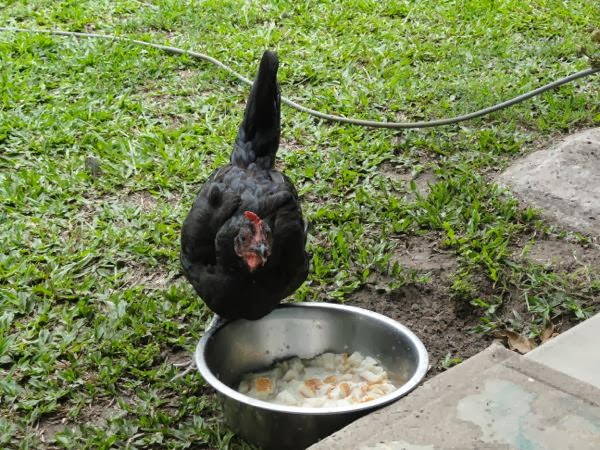
At the moment we have Lucy, an Old English game hen, she is our oldest chicken. She came to us when Shane and Sarndra moved from the country to the city and couldn't take their chooks with them. Lucy arrived with a flock of older chicks she'd hatched, many of them roosters, and now she's the only one left. Lucy is blind now so we've been hand-feeding her and moving her around the yard so she stays in the shade. Hanno puts her in a nest at night and gets her out every morning. He feeds her bread and milk with chicken pellets and greens thrown in for good measure. When Jamie is here, he hits the side of Lucy's metal bowl with a spoon so she knows where her food is.


This is Lucy.

Her Royal Chookness, Lulubelle.

Sitting on the recycled timbers going into their new home, Annie, Fiona, Blue Bell and Nora.

Blue Bell.

The others are Lulubelle, the Plymouth Rock chicken I was holding in my Women's Weekly article a couple of years ago. Lulubelle is still laying and keeps the other chooks in hand (or wing). We have Fiona, our crazy Araucana who lays the most beautiful light blue eggs and Annie, a New Hampshire. Today, we discovered that Annie and Fiona have been hiding a nest of six eggs and taking it in turns to sit on them. Hanno had a tree felled a couple of weeks ago and the top of the tree was still in the chicken run. It was in the cool darkness of all those leaves where they made their nest and we only discovered their secret when I saw Annie go in and Fiona shoot out of the branches. Late summer is often the time when chickens go broody and want to sit on eggs instead of have you take them. Fiona is quite aggressive when she's protecting her eggs and if you have a hen like this, it might serve you well to wear gardening gloves when you take the eggs from the nest.

There isn't much you can do if your chickens go broody. It's part of the natural behaviour of pure breed chooks. Even Lomans and Isa Browns occasionally go broody although most of them don't, the tendency to reproduce has been bred out of them over the years.  If you do have a broody the only thing you can do is to get them out of the nest whenever you see them in there, or lock them out of the nest area. We tend to let out girls sit on the nest for a short time and hope they snap out of it. Most of the time, they do.

Cora, blue laced Barnevelder.
The crazy princess Fiona.

Cora again.

The other chickens are two blue lace Barnevelders - Cora and Nora and a blue Australorp - Blue Bell. Nora has been laying for a couple of weeks but Cora has only just started laying and her eggs are still small. This is quite normal for a newly laying chicken - small eggs, sometimes they don't have a shell and sometimes they are double yolkers. All that sorts itself out when their hormones settle, then we look forward to about five eggs a week from each girl. The only non-layer is Lucy but she's raised chicks in the past so she's done her duty. 

We're getting to the end of summer now. We helped our chooks get through the very hot weather by having an extra water container on hand. Chickens will die without fresh water. They also like to stand in water  during hot weather so if you have a wide open bowl or a bin lid, upside-down, fill it with water so they can go there to cool down. It's also a good idea to have blocks of ice in the freezer for the very hot days. Just throw one into their bucket when the day starts getting hot and it will encourage the chickens to stay hydrated because they love drinking cool water.


This is the view looking from the front of the chicken coop over towards the back of our yard. The trees provide shade during the summer, then the pecan loses its leaves in winter giving the chooks much needed sunlight during the colder weather.

In the next couple of weeks we'll have to start looking for signs of mites and fleas. These often present in autumn. We use Diatomaceous Earth (DE) here. If we see the chooks pecking at their feathers or preening a lot, it generally means they have mites. We cover them in DE, especially under wings, around their comb and wattles and under the tail. This generally fixes things in a few days.  When the girls moult, which they usually do in autumn, it's a good idea to have a good clean out of the chicken house and nests - sweep up everything that's been laying around and put it on the compost heap. If you have one, use a pressure hose to clean the coop, if not, a hose will do. Don't forget the nests and roosts. When it's all completely dry, add straw or hay to the nests and floor, then throw a few cups of DE around the coop and in the straw and nests. That should keep things in check and the chickens comfortable for a few months.

Just one more tip. A few people have asked about worming chickens. It's not recommended to worm chooks any more - it's another chemical they can do without. A crushed garlic clove once a month in all the water containers - leave it there for three days then give plain fresh water again.  If you notice foamy diarrhoea and your chickens look thin and sick, they might have worms and you should treat them. You'll also have to clean out the coop again and replace all the straw.

This young chap is a native bush turkey. They roam freely in and out of the rainforest and often irritate gardeners by scratching through gardens. This fellow visits a couple of times a day, has a feed of pellets, wanders around with the girls for a while, then leaves again.

We couldn't do without our hens. In the past couple of weeks during the summer heat, and with two of our girls broody, we've only been getting about three or four eggs a week. When we have times like that it shows me how much we rely on our little ladies and their eggs.  Hanno went to the organic farmers market on Saturday and even though we could have bought eggs there, they're never as good as ours. I bet you find the same with your girls too. Nothing is as good as fresh eggs from your own back yard.  How many chickens do you have now?


The kids have gone back to school, the weather is cooling a little and time is marching on. 

I finished the final reading of my book yesterday so that's been sent back to Penguin; hopefully it will be published in late March.

I took the opportunity last week to make more lemon cordial and gave these two bottles to Cathy and Sunny. Hope you have a  wonderful weekend. Thank you for visiting over the past few days.


Table manners for children
Chinese tinned peached - lead
Growing food can help you meet the neighbours
Is it possible to make a living on a small farm?
Regrow your herbs and vegetables
Cleaner hall of shame
Live to work or work to live? Nickie asks this important question at Meadow Orchard
Crafts calculator - work out how to price your hand-made goodies
Nest curtains - more than just curtains
Wooden dolls a visitor from the woods @ Fairie Moon
Just when you start to worry about where we are headed, this comes along.

Miranda at Her Resolution
Meredith at Simple Living in the Loo
Jenny @ Half Grown Somethings
Newer Posts Older Posts Home


My books were all published by Pengiun, and are available at Amazon US, Amazon UK and Amazon Au

Search here

Total Pageviews

Translate


I'm Rhonda Hetzel and I've been writing my Down to Earth blog since 2007. Although I write the occasional philosophical post, my main topics include home cooking, happiness and gardening as well as budgeting, baking, ageing, generosity, mending and handmade crafts. I hope you enjoy your time here.

MY FAVOURITE PLACES

  • Grandma Donna's Place
  • Grandma Donna's YouTube
  • Grandma Donna's Instagram
  • This Simple Day
  • Nicole's Instagram

Give More

Give More

Popular posts last year

Making ginger beer from scratch

We had a nice supply of ginger beer going over Christmas. It's a delicious soft drink for young and old, although there is an alcoholic version that can be made with a slight variation on the recipe. Ginger beer is a naturally fermented drink that is easy to make - with ginger beer you make a starter called a ginger beer plant and after it has fermented, you add that to sweet water and lemon juice. Like sourdough, it must ferment to give it that sharp fizz. To make a ginger beer plant you'll need ginger - either the powdered dry variety or fresh ginger, sugar, rainwater or tap water that has stood for 24 hours to allow the chlorine to evaporate off. You'll also need clean plastic bottles that have been scrubbed with soap, hot water and a bottle brush and then rinsed with hot water. I never sterilise my bottles and I haven't had any problems. If you intend to keep the ginger beer for a long time, I'd suggest you sterilise your bottles. MAKING THE STARTER In a...
Image

NOT the last post

This will be my last post here.  I've been writing my blog for 18 years and now is the time to step back. I’ve stopped writing the blog and come back a couple of times because so many people wanted it, but that won’t happen again, I won’t be back.  I’ll continue on instagram to remain connected but I don’t know how frequent that will be. I know some of you will be interested to know the blog's statistics. 
Image

How to make cold process soap

I'm sure many of you are wondering: "Why make soap when I can buy it cheaply at the supermarket?" My cold process soap is made with vegetable oils and when it is made and cured, it contains no harsh chemicals or dyes. Often commercial soap is made with tallow (animal fat) and contains synthetic fragrance and dye and retains almost no glycerin. Glycerin is a natural emollient that helps with the lather and moisturises the skin. The makers of commercial soaps extract the glycerin and sell it as a separate product as it's more valuable than the soap. Then they add chemicals to make the soap lather. Crazy. Making your own soap allows you to add whatever you want to add. If you want a plain and pure soap, as I do, you can have that, or you can start with the plain soap and add colour, herbs and fragrance. The choice is yours. I want to add a little about animal and bird fat. I know Kirsty makes her soap with duck fat and I think that's great. I think t...
Image

Preserving food in a traditional way - pickling beetroot

I've had a number of emails from readers who want to start preserving food in jars but don't know where to start or what equipment to buy.  Leading on from yesterday's post, let's just say up front - don't buy any equipment. Once you know what you're doing and that you enjoy preserving, then you can decide whether or not to buy extra equipment. Food is preserved effectively without refrigeration by a variety of different methods. A few of the traditional methods are drying, fermentation, smoking, salting or by adding vinegar and sugar to the food - pickling. This last method is what we're talking about today. Vinegar and sugar are natural preservatives and adding one or both to food sets up an environment that bacteria and yeasts can't grow in. If you make the vinegar and sugar mix palatable, you can put up jars of vegetables or fruit that enhance the flavour of the food and can be stored in a cupboard or fridge for months. Other traditional w...
Image

Cleaning mould from walls and fabrics

With all this rain around we've developed a mould problem in our home. Usually we have the front and back doors open and that good ventilation stops most moulds from establishing. However, with the house locked up for the past week, the high humidity and the rain, mould is now growing on the wooden walls near our front door and on the lower parts of cupboards in the kitchen. Most of us will find mould growing in our homes at some point. Either in the bathroom or, in humid climates, on the walls, like we have now. You'll need a safe and effective remedy at some point, so I hope one of these methods works well for you. Mould is not only ugly to look at, it can cause health problems so if you see mould growing, do something about it straight away. The longer you leave the problem, the harder it will be to get rid of it effectively. If you have asthma or any allergies, you should do this type of cleaning with a face mask on so you don't breathe in any spores. Many peopl...
Image

Five minute bread

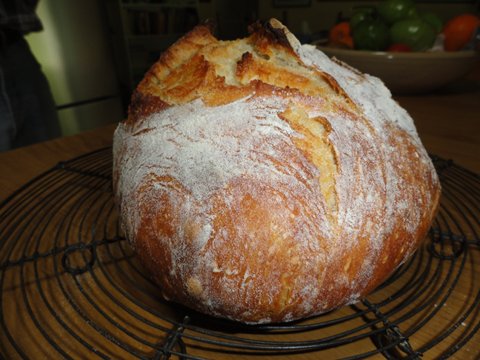
Bread is one of those foods that, when made with your own hands, gives a great deal of satisfaction and delight. It's only flour and water but it symbolises so much. I bake bread most days and use a variety of flours that I buy in bulk. Often I make a sandwich loaf because we use most of our bread for lunchtime sandwiches and for toast. Every so often I branch out to make a different type of loaf. I have tried sour dough in the past but I've not been happy with any of them. I'll continue to experiment with sour dough because I like the idea of using wild yeasts and saving the starter over a number of years to develop the flavour and become a part of the family. However, the loaf I've been branching out to most often is just a plain old five minute bread. By five minutes I mean it takes about five minutes actual work to prepare but it's the easiest of all bread to make and to get consistently good loaves from. If you're having people around for lunch or...
Image

This is my last post.

I have known for a while that this post was coming, but I didn't know when. This is my last post. I'm closing my blog, for good, and I'm not coming back like I have in the past.  I've been writing here for 16 years and my blog has been many things to me. It helped me change my life, it introduced me to so many good people, it became a wonderful record of my family life, it helped me get a book contract with Penguin, and monthly columns with The Australian Women's Weekly and Burke's Backyard . But in the past few months, it's become a burden. In April, I'll be 75 years old and I hope I've got another ten years ahead. However, each year I'll probably get weaker and although I'm fairly healthy, I do have a benign brain tumour and that could start growing. There are so many things I want to do and with time running out, leaving the blog behind gives me time to do the things that give me pleasure. On the day the blog started I felt a wonderful, h...
Image

What is the role of the homemaker in later years?

An email came from a US reader, Abby, who asked about being a homemaker in later years. This is part of what she wrote: "I am a stay-at-home mum to 4 children, ages 9-16. I do have a variety of "odd jobs" that I enjoy - I run a small "before-school" morning drop-off daycare from my home, I am a writing tutor, and I work a few hours a week at a local children's bookstore. But mostly, I cherish my blissful days at home - cooking, cleaning (with homemade cleaners), taking care of our children and chickens and goats, baking, meal-planning, etc. This "career" at home is not at all what I imagined during my ambitious years at university, but it is far more enriching. I notice, though, that my day is often planned around the needs of my family members. Of course, with 4 active kids and a husband, this is natural. I do the shopping, plan my meals, cook dinner - generally in anticipation of my family reconnecting in the evening.  I can't h...
Image

Every morning at home

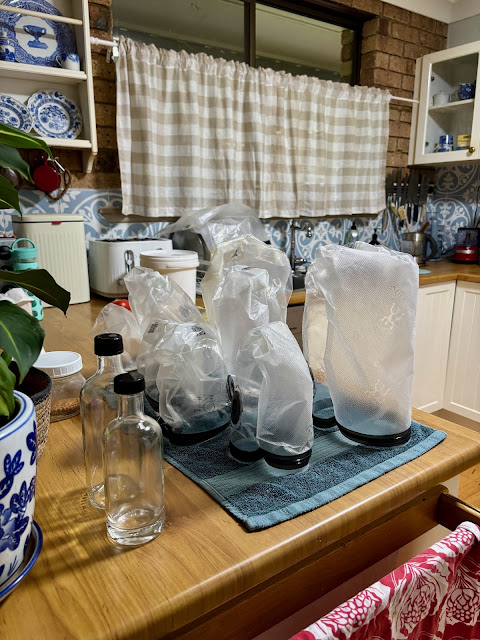
Every morning when I walk into my kitchen it looks tidy and ready for a day's work. Not so on this morning (above), I saw this when I walked in. Late the previous afternoon when I was looking for something, I came across my rolled up Zwilling vacuum bags and decided they had to be washed and dried. So I did that and although I usually put them outside on the verandah to dry it was dark by then. I turned the just-washed bags inside out and left them like this on a towel. It worked well and now the bags are ready to use when I bring home root vegetables, cabbages or whatever I buy that I want to last four or five weeks.
Image

You’ll save money by going back to basics

When I was doing the workshops and solo sessions, I had a couple of people whose main focus was on creating the fastest way to set up a simple life. You can't create a simple life fast, it's the opposite of that It's not one single thing either - it's a number of smaller, simpler activities that combine to create a life that reflects your values; and that takes a long to come together. When I first started living simply I took an entire year to work out our food - buying it, storing it, cooking it, preserving, baking, freezing, and growing it in the backyard. This is change that will transform how you live and it can't be rushed.  
Image


Trending Articles

NOT the last post

This will be my last post here.  I've been writing my blog for 18 years and now is the time to step back. I’ve stopped writing the blog and come back a couple of times because so many people wanted it, but that won’t happen again, I won’t be back.  I’ll continue on instagram to remain connected but I don’t know how frequent that will be. I know some of you will be interested to know the blog's statistics. 
Image

Every morning at home

Every morning when I walk into my kitchen it looks tidy and ready for a day's work. Not so on this morning (above), I saw this when I walked in. Late the previous afternoon when I was looking for something, I came across my rolled up Zwilling vacuum bags and decided they had to be washed and dried. So I did that and although I usually put them outside on the verandah to dry it was dark by then. I turned the just-washed bags inside out and left them like this on a towel. It worked well and now the bags are ready to use when I bring home root vegetables, cabbages or whatever I buy that I want to last four or five weeks.
Image

You’ll save money by going back to basics

When I was doing the workshops and solo sessions, I had a couple of people whose main focus was on creating the fastest way to set up a simple life. You can't create a simple life fast, it's the opposite of that It's not one single thing either - it's a number of smaller, simpler activities that combine to create a life that reflects your values; and that takes a long to come together. When I first started living simply I took an entire year to work out our food - buying it, storing it, cooking it, preserving, baking, freezing, and growing it in the backyard. This is change that will transform how you live and it can't be rushed.  
Image

Creating a home you'll love forever

Living simply is the answer to just about everything. It reduces the cost of living; it keeps you focused on being careful with resources such as water and electricity; it reminds you to not waste food; it encourages you to store food so you don't waste it and doing all those things brings routine and rhythm to your daily life. Consciously connecting every day with the activities and tasks that create simple life reminds you to look for the meaning and beauty that normal daily life holds.  It's all there in your home if you look for it. Seemingly mundane tasks like cleaning and cooking help you with that connection for without those tasks, the home you want to live in won't exist in the way you want it to.  Creating a home you love will make you happy and satisfied.
Image

Time changes everything

I've been spending time in the backyard lately creating a contained herb and vegetable garden. My aim is to develop a comfortable place to spend time, relax, increase biodiversity and encourage more animals, birds and insects to live here or visit. Of course I'd prefer my old garden which was put together by Hanno with ease and German precision. Together, we created a space bursting at the seams with herbs, vegetables and fruity goodness ready to eat and share throughout the year. But time changes everything. What I'm planning on doing now, is a brilliant opportunity for an almost 80 year old with balance issues. In my new garden I'll be able to do a wide range of challenging or easy work, depending on how I feel each day. It’s a daily opportunity to push myself or sit back, watch what's happening around me and be captivated by memories or the scope of what's yet to come.
Image

It's the old ways I love the most

I'm a practical woman who lives in a 1980’s brick slab house. There are verandahs front and back so I have places to sit outside when it's hot or cold. Those verandahs tend to make the house darker than it would be but they're been a great investment over time because they made the house more liveable. My home is not a romantic cottage, nor a minimalist modern home, it's a 1980’s brick slab house. And yet when people visit me here they tell me how warm and cosy my home is and that they feel comforted by being here. I've thought about that over the years and I'm convinced now that the style of a home isn't what appeals to people. What they love is the feeling within that home and whether it's nurturing the people who live there.
Image

Making ginger beer from scratch

We had a nice supply of ginger beer going over Christmas. It's a delicious soft drink for young and old, although there is an alcoholic version that can be made with a slight variation on the recipe. Ginger beer is a naturally fermented drink that is easy to make - with ginger beer you make a starter called a ginger beer plant and after it has fermented, you add that to sweet water and lemon juice. Like sourdough, it must ferment to give it that sharp fizz. To make a ginger beer plant you'll need ginger - either the powdered dry variety or fresh ginger, sugar, rainwater or tap water that has stood for 24 hours to allow the chlorine to evaporate off. You'll also need clean plastic bottles that have been scrubbed with soap, hot water and a bottle brush and then rinsed with hot water. I never sterilise my bottles and I haven't had any problems. If you intend to keep the ginger beer for a long time, I'd suggest you sterilise your bottles. MAKING THE STARTER In a...
Image

An authentic look at daily life here — unstaged and real

Most days Hanno was outside happily working in the fresh air. It may surprise you to know that I started reading my book,  Down to Earth , yesterday - the first time since I wrote it 13 years ago.  I had lent it to my neighbor, and when she returned it, I started reading, expecting to find surprises. Instead, I realised the words were still familiar—as if they were etched into my memory. As I flipped through the pages, I was reminded of how important it was for me to share that knowledge with others. The principles in Down to Earth changed my life, and I truly believed they could do the same for others. After just 30 minutes of reading, I put the book down, reassured that its message still holds true: we can slow down and reshape our lives, one step at a time.
Image