down to earth

  • Home
  • About Us
  • Down To Earth Book
  • Privacy Policy
We planted our garlic in March and true to form, it was ready for harvesting in late September. We bought our garlic from Green Harvest, a hard-necked variety called Glenlarge - it is suited to warmer weather and it's the best garlic we've grown so far.  Hanno said the larger cloves, generally from the outside of the garlic bulb, produce the biggest and heaviest bulbs. You can still plant the smaller bulbs but they won't grow as big as the others, so don't think you've done anything wrong. We grew ours over our colder months and hopefully this crop will see us through until next September.  I've already put aside the biggest and best bulbs for planting in March.
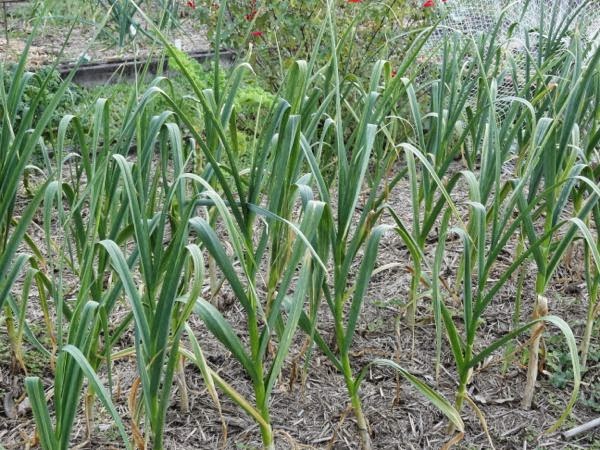
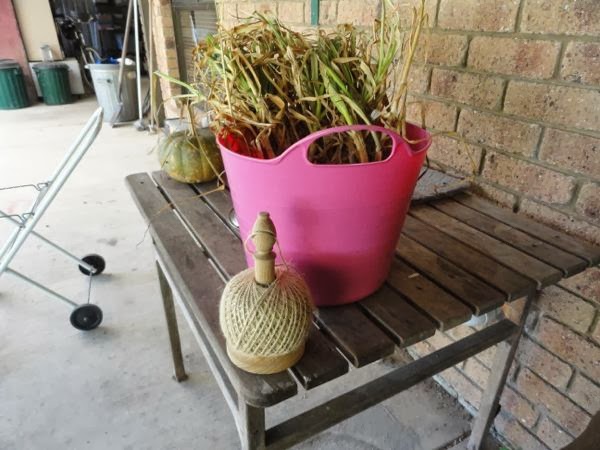
Above and below  - our 2013 garlic crop.

Garlic is one of the easiest plants to grow in the vegetable patch. You plant them, 6 - 8 inches apart, in a sunny site and add plenty of organic matter to the soil pre-planting. Break the bulb apart and plant the cloves pointy end upwards, down to about the first knuckle on your finger**, water in with seaweed tea. Depending on your climate, the green shoots will appear two to four weeks after planting.  When the green shoots appear, start fertilising every month with a foliar spray of comfrey tea or seaweed and fish concentrate. Keep watering regularly if it doesn't rain but don't over-water them, too much water will rot them in the ground. As the time for harvest approaches, ease off the watering. They're ready to harvest when the green tops start turning brown and shrivelling up. Don't pull the garlic out of the ground, dig them out with a spade to loosen the soil.

** Added later: I just read this again and wanted to clarify this first knuckle planting. What I mean is that you push your fore finger into the planting soil to the level of your first knuckle. Place the clove, pointy side up, in the hole and cover with soil. The point of the clove should be just below the surface of the soil.


When you harvest, treat them gently because they must be in excellent condition to store them for a long time. Place the crop on a table for a couple of days, undercover, and remove clumps of dirt and any obvious material that would prevent them from drying out - you'll clean them properly a bit later. Divide the harvest up into bunches and hang them to dry out for about three weeks, depending on your climate. If it's humid it may take a bit longer.


Every time you handle the garlic, be gentle and don't drop them. When they've dried out, take down all the bunches and lay them out on a table where you can work on them for a while. You'll need a small pair of scissors - I use an old pair of embroidery scissors because I can cut in around the root without cutting into the garlic flesh. 


Take the first garlic and remove all the dirt, then rub it with your fingers to remove the outer loose papery skin. You don't want to take all the paper off because it protects the bulb while it's in storage. Cut the top off about an inch or so above the bulb. This will help the paper stay on the garlic. Cut the roots off the bottom and generally tidy the bulb up as much as you can without removing too much of the paper. When you're happy with that one, go on to the next.


Don't break the garlic bulb up, they will store better as whole garlics. Store them in a dark, dry space, not the fridge, it's too humid. The place you choose to store your garlic will have the biggest effect on how long it lasts. I have mine in a wire basket at the bottom of my pantry alongside the potatoes and onions. You could also hang them in a mesh bag or plait/braid them and hang them in a cool dry place.

If you don't get a year out of your garlic, it might we worth your while to experiment with two separate crops using two different varieties - an early and a late garlic.  No matter what you use though, take the opportunity to use some of your garlic fresh on the day you pick it. Fresh garlic has a more subtle flavour than older garlic. I used two fresh whole garlics cut through the middle and baked with some roast lamb. It was so delicious and definitely worth growing for the wide variety of health benefits and recipes you can make with it.
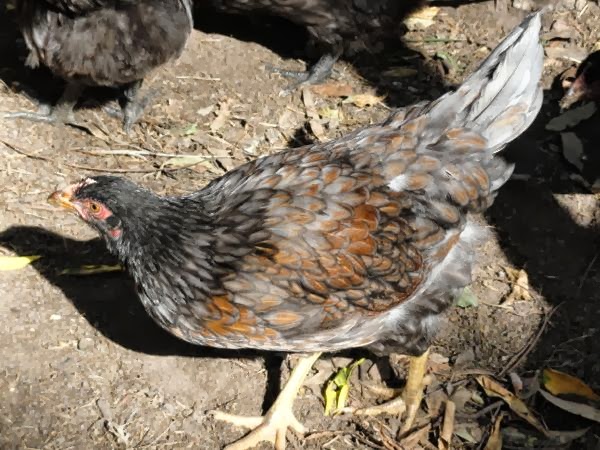

I didn't tell you when it happened, but a couple of weeks back, our strange hen-rooster died. She was the black chook that over the course of a year, grew one white feather, rooster tail feathers and a red collar. I don't think she ever laid an egg during her six years with us. When she died we were left with two New Hampshires, one Rhode Island Red, one black Australorp, one lavender Araucana, one Old English Game hen and a Plymouth Rock. We needed to build up our flock again.

Chickens are a vital part of our setup here. They supply us with more than enough fresh eggs, high nitrogen manure for the garden and compost heap and they're the best form of backyard entertainment going. I can't imagine us ever being without chickens.

Introducing our new girls: two blue Australorps and two blue laced Barnevelders. They're gangly pre-teens right now, although one looks like she might be laying, but they'll grow into beautiful birds that we'll enjoy watching for many years.


This last photo is of our older girls as they watched the new arrivals carefully.

Early yesterday morning Hanno put some big boxes in the boot of our car and we set off towards Brisbane. We picked up our girls at Samford (there will be more on that later), put four little chickens in the boxes and travelled back home again. I was hoping for a couple of silver laced Wyandottes as well, but they're still small chicks and at the moment they'd make a tasty meal for the pythons that live here. We'll pick them up when they're a bit bigger. Now we have the happy task of getting to know these little ladies who will spend their lives with us eating lots of grain and fresh vegetables in our backyard.


Wiki defines food security as: the availability of food and one's access to it. 

Food security is being able to access enough food to feed yourself and your family. The lower your income, the more you're at risk of not being food secure and while you would think the higher one's income is the less likely they'd be threatened, that's not the case. If there was a food emergency, war, national disaster or weather catastrophe, the rich and the poor would suffer. The people who would have the least concern are those who produced their own food or prepared enough food to live through the disaster. No matter what group you fall into, planning for food security is an important task that we should all take seriously, particularly those of us who are homemakers, mothers, fathers or caregivers. If one of your responsibilities is to provide food for yourself and others, you need to think about this.


When thinking about your own personal food security, the first thing you have to know is how many people are you feeding on a regular basis and, if there was a food shortage in the shops for any reason, would that number of people change. None of us know whether we'll be lucky enough to never experience food shortages so you'll have to work on guesstimates and the likelihood of you having to provide for more people.  I look at it this way. We have Kerry, Sunny, Jamie, Jens and Cathy living within a 15 minute drive from us. If something happened to the food chain, I know we'd pool our resources. Don't think about food only. You also have to consider water, for drinking and personal hygiene. We are fortunate to have tanks that hold 15,000 litres of fresh rain water, but a catastrophe could happen at any time and if it happened during a dry season, we wouldn't have very much water in the tanks. So not only should you consider what would happen if disaster strikes and you're fully prepared with ample water and food, you also need to think about what happens if you're not so fully resourced when the disaster happens.

I doubt it's possible to write a guide that would suit the wide variations in lifestyle, climate and ability of the people who read here. All I can do is to write about what we do, it will be similar for many of you, and encourage you to think about your own situation and work out a plan.


We've all seen it. On trips to the supermarket to stock up, more and more food is being imported from foreign countries. When food comes from a place far away I believe there are two main problems. One, you have no idea how that food was grown and even if our laws prohibit certain practises, our laws don't apply in any other country. Two, we have no control over the food until we buy it. The supply of food could stop at any moment and for a variety of reasons such as weather problems - either drought or floods, war,  or political reasons.
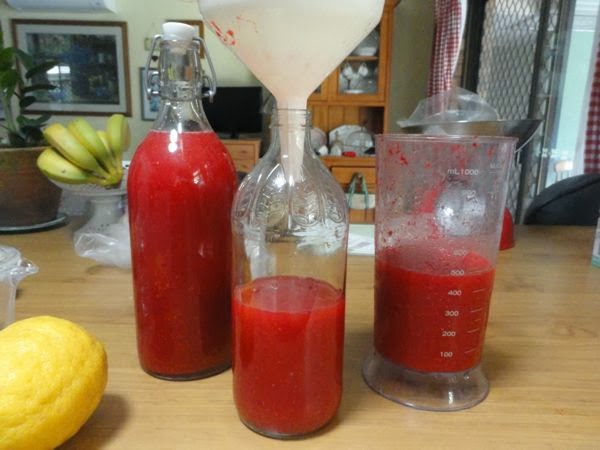
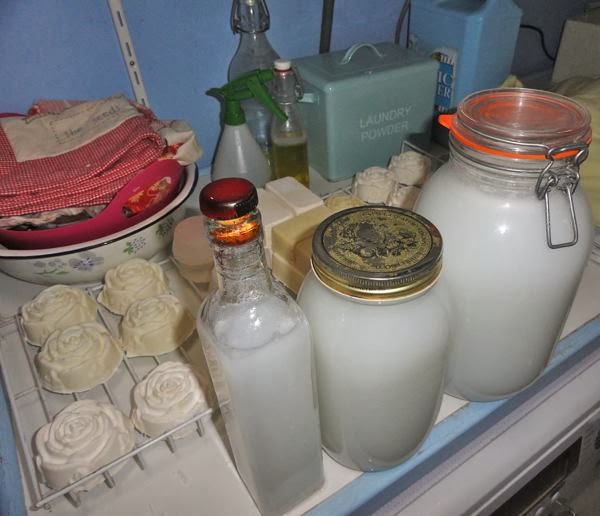

Our solution to both those problems is to grow as much fresh food as we can here and get whatever else we need from local markets. Of the products that come from from further away - olive oil, salt, rice, spices etc, we keep backups. It's worthwhile to work out where all your food comes from so you have something to work with when any of your products are in short supply or stop. We can buy local beef, chicken, pork and fish. Our lamb comes from Victoria. If the supply chain was compromised, we'd stop eating lamb.


We get our milk from the local dairy, and from that milk I've taught myself to make cheese. I don't make cheese often because we have many local cheese makers, but I know how to do it if I need to. In an emergency situation, if there was a problem keeping up the supply of milk, or if the power went off and we couldn't store it, I'd make cheese. That's one of the things you need to think about too - what could you live without? We could live without lamb long-term, but not milk, therefore I've made sure that I could make cheese. We also have backups in the cupboard in the form of powdered milk, condensed milk and evaporated milk.


Today I've written about emergency food supplies. I know there are many of you who have huge food stocks in case of an emergency. I would use my stockpile as our emergency food, along with any food we had growing at that time and what was in the freezer. I tend to think of emergency food in terms of the nutrients they contain. So instead of thinking I have 50 jars of beans, I think of the food pyramid instead and make sure I have protein, carbohydrates and fats - the ingredients to make nourishing food. It's not enough to have the ingredients though, you also have to know how to cook it and you'll need somewhere to cook if the gas and electricity are out - so have means to start a fire and cook on it.


Know where you can forage for food too. In most areas there are local foods growing that are there for the picking. Here where I live avocados, macadamias and mangos are often grown in parks or along the street. I know that at certain times of the year, I can go and pick them. I know there are wild apple trees and blackberries growing on the outskirts of Armidale. I live 15 minutes away from the Pacific Ocean. We have fishing lines. These are the things you should think about in your own area - what is available for the taking? If you don't know, ask around. One day, it might save your life.


I hope this has encouraged you to think about your emergency food supplies and if you have none, to start thinking about who you need to feed and how to do it in an emergency. If an emergency doesn't happen, you can keep the food rotating by using it as you would your stockpiled food. Keep adding to it at the back and take it from the front. Later in the week I want to write about day-to-day food, about growing food to eat fresh, and how to store food to eat later.  I'd love to know what you're doing with your emergency food. Do you have any, what is it, where is it and how do you rotate it so it doesn't go off after a few years?


What a week we've had here. So busy, but productive and exciting as well. Our vegetable garden is starting to wind down with the early hot weather arriving so we've been trying to do a bit of seasonal work here in addition to our normal work. We hope to get another three or four chickens as two of our old girls died recently and we have another two the same age, and therefore not laying. If you know of anyone from Gympie to Brisbane who has some laced Wyandottes, Barnevelders or bantam sussex, I'd love you to pass on their contact number to me. Thanks.

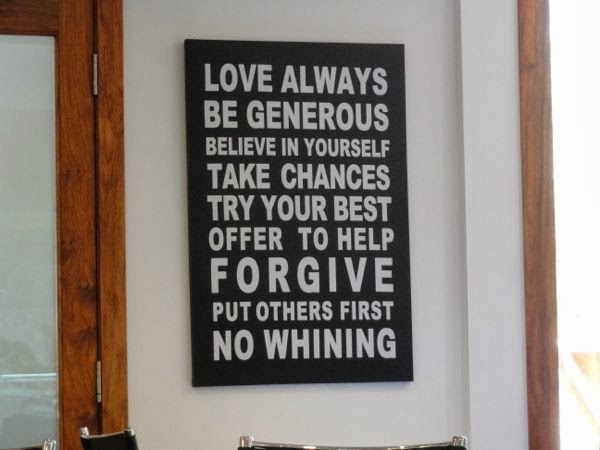
This has just appeared on the wall of our favourite local restaurant, Daisy's Place.

Again, thanks for the support during the week. I hope I don't sound smug saying that I wasn't surprised that you were there to help me deal with the haters. I know the vast majority of us here are focused on a more positive life experience. If you want to continue commenting here, all you need to do is to get a google account such as a gmail account, and you'll be able to use that account to log into all google's various programs, such as this blog.  Google "google account" for more details. You can also comment using your LiveJournal, Wordpress, Typepad, OpenID or AIM password. When you have one of these accounts, simply choose the account from the drop down menu under my comment box and make your comment. I think you only have to do that once because the system will remember you. :- )

I hope you have time to relax after the week's work. I'll see you next week!

Savvy kids know how to budget
20 happy facts
Six copies of the delightful NZ magazine Sweet Living to read online.
Literacy and numeracy: which country tops the league?
Why bees are disappearing
What Australians are eating and drinking
You've never tasted eggs ... Matthew Evans
Farm Folk City Folk
Blood orange syrup - blood orange also makes a beautifully pink orange tasting icing/frosting for your cakes.
Choosing curtains for your chickens yes, curtains LOL
Handling contagious illness in your chicken coop

From the comments here during the week
A good eater
The skipping girl
The wooden cottage

Thank you all for the support and love shown here and in so many emails yesterday. I've said it before but I feel I'm surrounded by true friends here. Don't worry for me, I'm disappointed more than upset about those kinds of comments. ; - ) I still haven't had the time to sit and think about food storage so I have this recipe to share that is a firm favourite here, as well as a handy tip. 

This is another one of those really simple-to-make cakes, just like the whole orange cake. You just put all the ingredients in the food processor and process it. This time it's buttermilk banana cake.  I modified my old banana cake recipe for the food processor and it works very well indeed. This cake will stay moist for three days. We finished ours off on the fourth day and it was just starting to feel a bit old. I should have cut it in half and frozen a portion because we didn't have any visitors during that time to help us polish it off. I'll remember to do that next time.

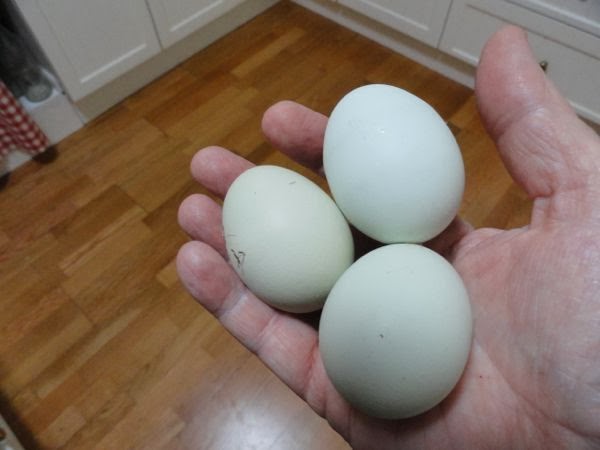
I used three of Fiona's beautiful blue eggs.


Ingredients
  • 125g or ½ cup of butter - it needs to be soft at room temperature
  • 250g or one cup sugar - this can be half brown and half raw or white sugar
  • 3 fresh eggs 
  • 1 teaspoon vanilla extract
  • 3 ripe bananas - very ripe bananas are just the thing for this cake
  • 125ml or ½ cup buttermilk
  • 1½ cups self raising flour
  • ½  tsp bicarb
Method
  1. Put the first four ingredients into the processor and process for one minute. 
  2. Add the rest of the ingredients and process for 30 seconds. 
  3. Transfer the batter into the prepared cake tin - I used a round one but you could use a bar tin.
  4. Bake at 170C or 340F for about 45 minutes or until a toothpick inserted into the cake comes out clean and dry.  Don't over bake. A moist cake will be taken out just at the right moment. As soon as you can smell the cake baking, start checking with your toothpick.
  5. Cool on a cake rack and add icing - I just mixed a small amount of butter with icing sugar and butter milk.


This is one of those easy cakes that will become a family favourite. If you need a good celebration cake for a birthday, add walnuts or pecans and maybe some cream cheese frosting. That would take this delicious everyday family cake into make a great celebration cake as well.

KEEPING PEAS OR SMALL FROZEN FOOD WELL PACKED
I forget where I found this tip now but I've been using it for a few months now and it's a great way to keep frozen peas well wrapped in the freezer.


Cut the top off a juice or large plastic bottle, leaving a shoulder underneath.


Cut the corner off the pea packet.


               Thread the pea packet through the bottle top and fold the plastic around the sides.


Screw the lid on and place it in the freezer.

Every time you take more peas out, you'll be able to make the packet smaller and seal it again. And doing that will protect the peas until you use them all.  :- )


I haven't had a break from writing yet to think about the next post on food security. It will come, hopefully this week, but in the meantime I thought I would bring you up to date on what's been happening here at home lately.

Before I get into that, I have to tell you that I'm not allowing anonymous comments anymore. I don't mind constructive criticism but when I get comments about my hairdo and glasses (from an anonymous "stylist" LOL), well, it made me realise that life's too short to even read anything from people who only want to criticise. I've also had hate comments in the past. Strange that I've never had criticism from anyone who left the link to their own blog or website, hmmmm. I want to share and be a part of my community here and those comments get in the way of that. The lovely Tania over at Ivy's Nest has had a similar problem and all she was doing was writing about her new house cow. There are some very unhappy people out there who want to make others as miserable as they are.  I'm sorry it's come to this but getting an ID doesn't take long and it's simple to do. I've kept anonymous comments going for the past six years but now it's time to get an ID if you want to comment here.

Our garlic just after harvest.

We've been very busy here these past few weeks. We decluttered our wardrobes and gave the charity shop a few bags of clothes. We also gave away, to a local family via Gumtree, a large cupboard we had no need of. When that went, we reorganised the living room. Hanno cleaned and reorganised the pantry yesterday. As usual, Hanno is always working along side me keeping our home maintenance on target. We're a great team. We harvested our year's garlic crop a couple of week's ago, they've been drying out since then. Yesterday I cleaned them up and now they're safely stored away. I'll write up a post about growing and storing garlic soon. It's easy to grow and worthwhile having your own crop because organic garlic is expensive and a lot of the other garlic is from China. :- |

This is the view along the front verandah.

We also replaced our seating out on the front verandah and got rid of the very old (antique) cane lounge and chairs. Now we're luxuriating on a new-to-us cane lounge we bought on Gumtree for a fraction of the new price. It's so comfortable out there now I go and sit there as much as I can. It's a great place to read and knit and it's where Hanno and I have our morning tea. Do you have a special place to sit and read?

I'm still clicking away on the needles. Right now I'm knitting a Miss Marple scarf in organic cotton, in Diligence, a dark grey, for my friend Kathleen. She is visiting her family in Texas soon and seeing as it's almost winter there, I thought a nice scarf would help keep her warm.  This organic cotton is beautifully warm without being scratchy. My other project is for Johnathan, my nephew Danny's little boy. Johnathan turned one last week. Happy birthday Jono! His cardigan is also organic cotton, in Mercy, a pale blue. I just love knitting that EcoYarns cotton. It's my favourite of all the yarns.

From the road, the fence going up.
From the house, the finished fence.
The chook fence.

We had to replace some of our fences lately. A few weeks ago we had a local company come in and replace the side fence at the front of the house and later, the old chook fence. The front fence had been up for almost 15 years and had become rickety and unsafe. The chook fence had needed replacing for many years. In the past, Hanno would have done that sort of maintenance but it's too much for him now so we got the locals in. Still, it was an expensive exercise and we had to save up till have had enough to have it done.

Today we're having family lunch at Daisy's Place, our favourite local restaurant. It is our birthday gift to Sunny to take her, Kerry, her mum Sunja, Jamie and his cousin Jooa to lunch. I love Sunny like a daughter and I'm so thankful she is part of my family. It will be a real pleasure to celebrate her birthday with her mum here. Although we celebrate Sunny's birthday on 8 October, the day she was born, in Korea, it's the custom to celebrate on a different day each year, according to the full moon. They have many beautiful customs in Korea. I've been reading quite a bit about Korea lately, a country with thousands of years of traditions that are so different to our own.


I think our garden is nearing the end of its 2013 season. The chickens got in there yesterday and ate about half the new seedlings Hanno planted the day before. We still have a lot growing, and will continue harvesting for a while, but I doubt we'll plant too much more this year. I think it's going to be a long hot summer.

So, that's a bit of what's been happening in here. I hope everything is going well for you at home too. I send warm wishes to you.

When I was a young girl it was common for suburban backyards to have a vegetable garden and fruit trees; my grandma grew peaches in her backyard and my parents grew plums. They all lived in Sydney. Occasionally there would be a flock of chickens kept for eggs and meat, and maybe a meat rabbits or pigeons. I was born in the late 1940s so the second world war was still a fresh memory and the majority of people had lived through the Great Depression. People were much more self-reliant then; they had to be. There were still shortages in food after the war, and for many people, providing for themselves was just a continuation of what they'd always done. These were the days before supermarkets, people shopped for food either every day or every second day and very little food was wasted. Now, if something happened in the food chain that supplies supermarkets, most people wouldn't know how to feed themselves. Sudden unemployment also has the potential to impact on food security. We should all be learning as much as we can about our food, where it comes from, and if that source of food stopped, how we could replace it.


Climate change, peak oil, water shortages and population increases have all played a part in increasing the price of food. Unemployment, natural disasters, wars and terrorist attacks also impact on food security. No one knows what the future holds but I can't see any imminent improvements in the weather, oil prices, water supplies or population figures. I think things will get worse before they get better; but food security is something we should all be dealing with now. I have no doubt that eventually we'll learn how to live in a more sustainable way. We have no choice. The trick will be to live well during the transition and not, when food becomes much more expensive, get dragged into the changes, resenting every step along the way.

Most countries have a food security policy and while I think that's a good thing, I like the idea of being responsible for ourselves, being prepared for anything and, if possible, helping others in our communities.


As you know, we changed how we live over a decade ago and have not had one moment's regret. I can't say all of it was easy, but as a whole, the change was fairly trouble-free and straight-forward and I wish we'd done it much earlier. Our decision to simplify life also gave us the chance to learn about our food and water supply and to reduce the risk of food insecurity by learning about small scale food production, cooking, food hygiene, food storage, heirloom seeds, pure breed chickens, aquaponics, bees, water harvesting and many other concepts that make up the huge topic of food security.


Our path took us back to backyard vegetable gardening, chickens and stockpiling - all things we'd done on a small scale in the past and then stopped for some reason. But this isn't the only way to go. Community gardens, allotments, farmers markets, bartering, eating seasonly and locally can all play a big part in a transition towards food security. We still rely on our community to supply things like milk, honey, fruit and vegetables, depending on the season, and we shop at supermarkets for things such as tea, coffee, oil, sugar, salt. Our system is heavily reliant on the work we do for ourselves to produce food but as we age, I can see us becoming more reliant on our community when less comes from our own efforts in our backyard. I hope we can be a bigger part of the community system then and teach others what we know.


I guess the best way to move towards a more sustainable future and food security, is to assess what we can do right now and what we'll be capable of in five or ten years. You may need to learn how to grow some food at home while you're still doing all your shopping in the community. What you learn now can help sustain you and your family in the future. And its not all about growing and buying local food, it's also about cooking from scratch, harvesting water, saving seeds, keeping pure breed chickens and doing it all as cheaply as we can. And if you can do nothing, being okay with that and relying on your family and government to support you. Hopefully your situation will change in the future and you'll be able to do more.


Over the next week or two, I'd like to start off with the two systems of food security I know well - the backyard model and the community model. I'd also like you to discuss what your experience is and hopefully we can all help and learn along the way. I believe this collaborative approach will be the way of the future. I hope we can start right here to reduce vulnerability in our own homes and to work towards sustainability and building resilient and strong communities.

Further Reading
Australia' National Food Plan
Food insecurity in Melbourne'
Giant underground water reserves found in Kenya
Dwindling water supplies in US
Hello everyone. I've been working diligently during the week and made great progress. I'll be back with you on Monday with some posts that I hope you find interesting. In the meantime, have a great weekend and make sure you take time out to relax.  See you soon. :- )

Special offer $20 organic veg and fruit box from Aussie Farmers Direct, via Slow magazine, check the banner ad at the top of their page - Australia only, not Tassie

Ignoring the corporate ladder to concentrate on work/life balance

Malcolm Rands of Ecostore with his interesting and inspiring TED talk

What a great idea - home cooks and hungry Londoners matched up

Jack Monroe's creative recipes for one pound a serve

Getting started on tools and building

How to build truss benches with plans

How to make a tree swing

Australian Organic Week - Australian Organics

Buttered side up

From comments here during the week

inge brown
saffron threads
just cats

Making raspberry cordial.

I haven't said nearly as much about partial self-sufficiency as I wanted to yet but today I have to post this short note to let you know I won't be back until Friday. I have the first deadline for my book on Thursday so all my brain power is absorbed in delivering the best I can for the book. I'm pleased to tell you that this book and ebook will be available for sale world-wide so hopefully, in March next year, you'll be able to read what I'm writing now.

Next week I want to focus on a subject that every one of us deals with every day: food. Food security is a big issue now and I believe we all need to be as skilled as we can be in regards to our food. I would like us to share our thoughts on the various aspects of food, as well as write about buying, growing and storing it. I have an excellent recipe for moist banana cake and a good freezing hint to share as well.

Enjoy your week. I hope to see you on Friday. : - )
I've been meaning to mention the wonderful comments that come in. I read every one of them and many of them make me smile. I would love to have enough time to respond to every comment but I try stay off the internet as much as possible. It's captivating and I think it robs me of time to do other things. But I do appreciate every comment and that you take the time to write what you're thinking. Whether they be long comments, explaining this and that, or very short ones just saying hello, I feel they're all like a very loud "hello Rhonda, I'm out here living the good life too!" When I read them I know I've connected with other like-minded souls and I know we're not alone. I love that, thank you.

I hope you have a lovely weekend. Take some time out for yourself and relax. The work will still be there when you go back to it.

Michael Pollan - In Defence of Food - you tube
Sugar Mountain Farm
The Amish and Mennonite home - you tube
Colourful crochet washcloths at Little Woolie
Loving a new job - Way up north. Sweden
Great vintage wall paper ideas - A sort of fairy tale
A million in super is not enough (pfffft)
Tiger Bread recipe - Pencil and Fork
Alicia Paulson's Pinterest page

For all the Sydney bakers

Fresh Bake show in Sydney, 12 - 13 October 2013. Thanks to Vikki for sending this info in.
Finally we have a bread show for enthusiasts that bake at home. There will be plenty of expertise on the day to demonstrate and reveal secrets of not only sourdough baking but cakes, pastries, the whole works.

There are 30 exhibitors and Graham from sourdough.com will be demonstrating. Tickets available here.

From comments here during the week
Greening the Rose
Simply Free
Every dayish things
When I first started living as I do now, I made lists of skills I wanted to reacquaint myself with or learn anew. It was not until I'd been working in this new way that I discovered that simple life has a way of telling you what you need to learn next. You learn something new, and then you see that it is connected to many other things, and often you must know about them too. All too often, I started learning about a new process and it opened up much more than I expected and lead me to on to a more comprehensive lesson and a deeper understanding. So I threw out my lists and just went where I was taken. For instance, when I enlarged the vegetable garden, I had to learn how to harvest properly and when the food was inside the house, how to sort out what to use fresh, what to freeze, what to ferment and what to put into jars.  It seems simple but unlike the common monocultures that make up specialist farms, I wasn't harvesting an acre of lettuce. I was picking the outside leaves of spinach and silverbeet, florettes of broccoli, 12 radishes, two carrots, a turnip, six lemons, two tomatoes and half a basket of beans. What do you do with that!


Freezing wasn't just freezing. I had to learn about blanching, make up a blanching times chart, learn how to package vegetables to retain quality, and learn, through trial and error, how to store food in a freezer. Fermenting was the same. It wasn't just collecting a couple of recipes for ginger beer and sauerkraut, I had to read books about fermenting, learn about fungus and moulds and then put that into practice in a way that added value to the food we grew and bought.


Baking was certainly not as straight-forward as I expected it to be. I had to find a reliable supplier of good flour and yeast, learn about water-flour ratio, temperature and kneading, then put it all into practise. I had to make my fair share of mistakes and not be disheartened, or waste too much.

There was trial and error involved in making cleaners too. I'd make up a recipe and see if it worked the way I needed it to. If not, I'd modify it, try it again and keep modifying until I had a product I could use again and again. Once made, they also had to store well and be able to do the job after sitting on the shelf for a while.


I spent hours outside monitoring electric and water meters, recycling various items, making compost, sorting out worm farms, sowing seeds, working out the best way to water them while nurturing them to seedling stage. We've saved seeds, peeled loofahs, broken open rosellas, plaited garlic and watched on while crops were damaged by the wind and rain. We planted some plants in full sun and some on the shady side of a trellis or tall plant, I helped position Hanno's shade tunnels, stood back and watched while he built a greenhouse.  We realised early that to make a success of what we wanted to grow, we had to create microclimates, extend growing periods and go beyond what we read to see how far we could push it in our backyard.


There were many hours given to mending and knitting. When I started knitting again, I undid so many stitches, but it taught me the valuable lesson of patience and that some tasks take the time they take. Over the years I felt a need to teach as many as I could the various old and new skills I'd become familiar with. This lead me to volunteering in my community and travelling out to various places to meet so many of you, to talk about this life and hopefully encourage and support others in their own transition.


We still have a lot we can do here. There is always work to do, we're not perfect and we have to always be mindful of what we're doing. The one thing I always have to watch is that tendency to slip back to convenience. I want these changes to be permanent for us. I want to continue here, living as we do now for as long as I can. I don't want to go back to mindless consumption, this is much better.


The most difficult part of this for me was the initial change of mindset and then maintaining that mindset even when it was easier not to. There are so many distractions, so many temptations. I carry on because I have been made happy again living this way, I am convinced that having everything you want is not good for the soul, I believe hard work builds character and I know that I have to give back some of what I've taken. I can't return those dozen pairs of shoes, the dresses, all the computers and TVs, but I can care for the land I live on, teach what I know to others and motivate people to live their best life. I know that the rampant consumerism we live with is killing the earth and I know that it will eventually change us. But how can you tell third world countries that they can't have the things we've had for the past 50 years because it's bad for the planet? How do you convince friends and neighbours that we should all be living with less? How do I look Jamie and Alex in the eye if I don't? They and their children will bear the consequences of what we've done. My way of answering those questions is to continue along our simple path and to show rather than preach. I want Jamie and Alex to see us living here, doing our work, making the place right for us. If we can start repairing past damage, hopefully those ripples will move out into the world.


But the message I'm really trying to give to you is to use your common sense, don't rely on others, read books, do your own research, push your own envelope and find out what works for you in your climate and in your home. Look after yourself and your family, know everything you need to know to do that and don't expect everything to be easy. Because this isn't just a few recipes for laundry liquid and orange cake; it's much deeper than that. If we're all going to make a small difference by living cleaner, greener, healthier, thriftier and by being more aware, we'll have to change our ideas about what success is, stop buying everything we want, localise our lives, connect with our communities and work hard.  And that is easier said than done.

How are you coping with the transition from old ways to new?

... to be continued.

Tracey September 24, 2013 7:47 am  Congratulations Tracey. I'm sure you'll enjoy Slow. It's a very good magazine. Please email your postal address to me and I'll have the magazine sent to you.

As you can see, there is no follow-up post about partial self-sufficiency today. I'm working to a book deadline at the moment with only a couple of weeks before I send it in. I've been making my notes about the points I want to raise in the next post but I'm also writing the book, doing my house work, looking after my family and a few other things.  I need down time to sit, think and read as well. Generally, the thing that gets dropped is the blog. So please be patient, I certainly haven't forgotten about my place here with you, but over the next couple of weeks, I might be missing a few days. I hope to see you here tomorrow. :- )
Newer Posts Older Posts Home


My books were all published by Pengiun, and are available at Amazon US, Amazon UK and Amazon Au

Search here

Total Pageviews

Translate


I'm Rhonda Hetzel and I've been writing my Down to Earth blog since 2007. Although I write the occasional philosophical post, my main topics include home cooking, happiness and gardening as well as budgeting, baking, ageing, generosity, mending and handmade crafts. I hope you enjoy your time here.

MY FAVOURITE PLACES

  • Grandma Donna's Place
  • Grandma Donna's YouTube
  • Grandma Donna's Instagram
  • This Simple Day
  • Nicole's Instagram

Give More

Give More

Popular posts last year

Making ginger beer from scratch

We had a nice supply of ginger beer going over Christmas. It's a delicious soft drink for young and old, although there is an alcoholic version that can be made with a slight variation on the recipe. Ginger beer is a naturally fermented drink that is easy to make - with ginger beer you make a starter called a ginger beer plant and after it has fermented, you add that to sweet water and lemon juice. Like sourdough, it must ferment to give it that sharp fizz. To make a ginger beer plant you'll need ginger - either the powdered dry variety or fresh ginger, sugar, rainwater or tap water that has stood for 24 hours to allow the chlorine to evaporate off. You'll also need clean plastic bottles that have been scrubbed with soap, hot water and a bottle brush and then rinsed with hot water. I never sterilise my bottles and I haven't had any problems. If you intend to keep the ginger beer for a long time, I'd suggest you sterilise your bottles. MAKING THE STARTER In a...
Image

NOT the last post

This will be my last post here.  I've been writing my blog for 18 years and now is the time to step back. I’ve stopped writing the blog and come back a couple of times because so many people wanted it, but that won’t happen again, I won’t be back.  I’ll continue on instagram to remain connected but I don’t know how frequent that will be. I know some of you will be interested to know the blog's statistics. 
Image

How to make cold process soap

I'm sure many of you are wondering: "Why make soap when I can buy it cheaply at the supermarket?" My cold process soap is made with vegetable oils and when it is made and cured, it contains no harsh chemicals or dyes. Often commercial soap is made with tallow (animal fat) and contains synthetic fragrance and dye and retains almost no glycerin. Glycerin is a natural emollient that helps with the lather and moisturises the skin. The makers of commercial soaps extract the glycerin and sell it as a separate product as it's more valuable than the soap. Then they add chemicals to make the soap lather. Crazy. Making your own soap allows you to add whatever you want to add. If you want a plain and pure soap, as I do, you can have that, or you can start with the plain soap and add colour, herbs and fragrance. The choice is yours. I want to add a little about animal and bird fat. I know Kirsty makes her soap with duck fat and I think that's great. I think t...
Image

Preserving food in a traditional way - pickling beetroot

I've had a number of emails from readers who want to start preserving food in jars but don't know where to start or what equipment to buy.  Leading on from yesterday's post, let's just say up front - don't buy any equipment. Once you know what you're doing and that you enjoy preserving, then you can decide whether or not to buy extra equipment. Food is preserved effectively without refrigeration by a variety of different methods. A few of the traditional methods are drying, fermentation, smoking, salting or by adding vinegar and sugar to the food - pickling. This last method is what we're talking about today. Vinegar and sugar are natural preservatives and adding one or both to food sets up an environment that bacteria and yeasts can't grow in. If you make the vinegar and sugar mix palatable, you can put up jars of vegetables or fruit that enhance the flavour of the food and can be stored in a cupboard or fridge for months. Other traditional w...
Image

Cleaning mould from walls and fabrics

With all this rain around we've developed a mould problem in our home. Usually we have the front and back doors open and that good ventilation stops most moulds from establishing. However, with the house locked up for the past week, the high humidity and the rain, mould is now growing on the wooden walls near our front door and on the lower parts of cupboards in the kitchen. Most of us will find mould growing in our homes at some point. Either in the bathroom or, in humid climates, on the walls, like we have now. You'll need a safe and effective remedy at some point, so I hope one of these methods works well for you. Mould is not only ugly to look at, it can cause health problems so if you see mould growing, do something about it straight away. The longer you leave the problem, the harder it will be to get rid of it effectively. If you have asthma or any allergies, you should do this type of cleaning with a face mask on so you don't breathe in any spores. Many peopl...
Image

Five minute bread

Bread is one of those foods that, when made with your own hands, gives a great deal of satisfaction and delight. It's only flour and water but it symbolises so much. I bake bread most days and use a variety of flours that I buy in bulk. Often I make a sandwich loaf because we use most of our bread for lunchtime sandwiches and for toast. Every so often I branch out to make a different type of loaf. I have tried sour dough in the past but I've not been happy with any of them. I'll continue to experiment with sour dough because I like the idea of using wild yeasts and saving the starter over a number of years to develop the flavour and become a part of the family. However, the loaf I've been branching out to most often is just a plain old five minute bread. By five minutes I mean it takes about five minutes actual work to prepare but it's the easiest of all bread to make and to get consistently good loaves from. If you're having people around for lunch or...
Image

This is my last post.

I have known for a while that this post was coming, but I didn't know when. This is my last post. I'm closing my blog, for good, and I'm not coming back like I have in the past.  I've been writing here for 16 years and my blog has been many things to me. It helped me change my life, it introduced me to so many good people, it became a wonderful record of my family life, it helped me get a book contract with Penguin, and monthly columns with The Australian Women's Weekly and Burke's Backyard . But in the past few months, it's become a burden. In April, I'll be 75 years old and I hope I've got another ten years ahead. However, each year I'll probably get weaker and although I'm fairly healthy, I do have a benign brain tumour and that could start growing. There are so many things I want to do and with time running out, leaving the blog behind gives me time to do the things that give me pleasure. On the day the blog started I felt a wonderful, h...
Image

What is the role of the homemaker in later years?

An email came from a US reader, Abby, who asked about being a homemaker in later years. This is part of what she wrote: "I am a stay-at-home mum to 4 children, ages 9-16. I do have a variety of "odd jobs" that I enjoy - I run a small "before-school" morning drop-off daycare from my home, I am a writing tutor, and I work a few hours a week at a local children's bookstore. But mostly, I cherish my blissful days at home - cooking, cleaning (with homemade cleaners), taking care of our children and chickens and goats, baking, meal-planning, etc. This "career" at home is not at all what I imagined during my ambitious years at university, but it is far more enriching. I notice, though, that my day is often planned around the needs of my family members. Of course, with 4 active kids and a husband, this is natural. I do the shopping, plan my meals, cook dinner - generally in anticipation of my family reconnecting in the evening.  I can't h...
Image

Every morning at home

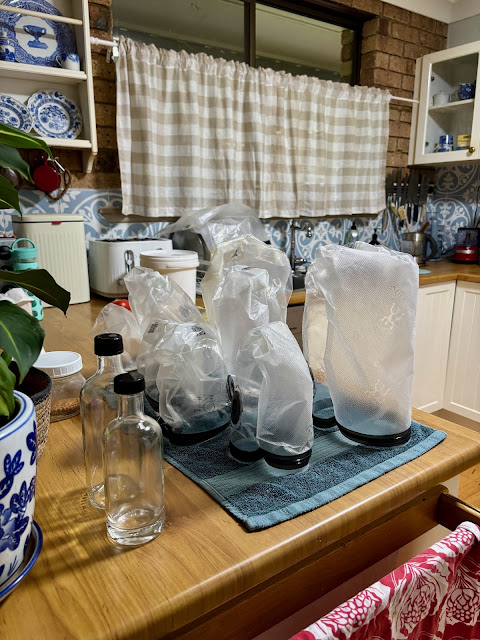
Every morning when I walk into my kitchen it looks tidy and ready for a day's work. Not so on this morning (above), I saw this when I walked in. Late the previous afternoon when I was looking for something, I came across my rolled up Zwilling vacuum bags and decided they had to be washed and dried. So I did that and although I usually put them outside on the verandah to dry it was dark by then. I turned the just-washed bags inside out and left them like this on a towel. It worked well and now the bags are ready to use when I bring home root vegetables, cabbages or whatever I buy that I want to last four or five weeks.
Image

You’ll save money by going back to basics

When I was doing the workshops and solo sessions, I had a couple of people whose main focus was on creating the fastest way to set up a simple life. You can't create a simple life fast, it's the opposite of that It's not one single thing either - it's a number of smaller, simpler activities that combine to create a life that reflects your values; and that takes a long to come together. When I first started living simply I took an entire year to work out our food - buying it, storing it, cooking it, preserving, baking, freezing, and growing it in the backyard. This is change that will transform how you live and it can't be rushed.  
Image


Trending Articles

NOT the last post

This will be my last post here.  I've been writing my blog for 18 years and now is the time to step back. I’ve stopped writing the blog and come back a couple of times because so many people wanted it, but that won’t happen again, I won’t be back.  I’ll continue on instagram to remain connected but I don’t know how frequent that will be. I know some of you will be interested to know the blog's statistics. 
Image

Every morning at home

Every morning when I walk into my kitchen it looks tidy and ready for a day's work. Not so on this morning (above), I saw this when I walked in. Late the previous afternoon when I was looking for something, I came across my rolled up Zwilling vacuum bags and decided they had to be washed and dried. So I did that and although I usually put them outside on the verandah to dry it was dark by then. I turned the just-washed bags inside out and left them like this on a towel. It worked well and now the bags are ready to use when I bring home root vegetables, cabbages or whatever I buy that I want to last four or five weeks.
Image

You’ll save money by going back to basics

When I was doing the workshops and solo sessions, I had a couple of people whose main focus was on creating the fastest way to set up a simple life. You can't create a simple life fast, it's the opposite of that It's not one single thing either - it's a number of smaller, simpler activities that combine to create a life that reflects your values; and that takes a long to come together. When I first started living simply I took an entire year to work out our food - buying it, storing it, cooking it, preserving, baking, freezing, and growing it in the backyard. This is change that will transform how you live and it can't be rushed.  
Image

Creating a home you'll love forever

Living simply is the answer to just about everything. It reduces the cost of living; it keeps you focused on being careful with resources such as water and electricity; it reminds you to not waste food; it encourages you to store food so you don't waste it and doing all those things brings routine and rhythm to your daily life. Consciously connecting every day with the activities and tasks that create simple life reminds you to look for the meaning and beauty that normal daily life holds.  It's all there in your home if you look for it. Seemingly mundane tasks like cleaning and cooking help you with that connection for without those tasks, the home you want to live in won't exist in the way you want it to.  Creating a home you love will make you happy and satisfied.
Image

Time changes everything

I've been spending time in the backyard lately creating a contained herb and vegetable garden. My aim is to develop a comfortable place to spend time, relax, increase biodiversity and encourage more animals, birds and insects to live here or visit. Of course I'd prefer my old garden which was put together by Hanno with ease and German precision. Together, we created a space bursting at the seams with herbs, vegetables and fruity goodness ready to eat and share throughout the year. But time changes everything. What I'm planning on doing now, is a brilliant opportunity for an almost 80 year old with balance issues. In my new garden I'll be able to do a wide range of challenging or easy work, depending on how I feel each day. It’s a daily opportunity to push myself or sit back, watch what's happening around me and be captivated by memories or the scope of what's yet to come.
Image

It's the old ways I love the most

I'm a practical woman who lives in a 1980’s brick slab house. There are verandahs front and back so I have places to sit outside when it's hot or cold. Those verandahs tend to make the house darker than it would be but they're been a great investment over time because they made the house more liveable. My home is not a romantic cottage, nor a minimalist modern home, it's a 1980’s brick slab house. And yet when people visit me here they tell me how warm and cosy my home is and that they feel comforted by being here. I've thought about that over the years and I'm convinced now that the style of a home isn't what appeals to people. What they love is the feeling within that home and whether it's nurturing the people who live there.
Image

Making ginger beer from scratch

We had a nice supply of ginger beer going over Christmas. It's a delicious soft drink for young and old, although there is an alcoholic version that can be made with a slight variation on the recipe. Ginger beer is a naturally fermented drink that is easy to make - with ginger beer you make a starter called a ginger beer plant and after it has fermented, you add that to sweet water and lemon juice. Like sourdough, it must ferment to give it that sharp fizz. To make a ginger beer plant you'll need ginger - either the powdered dry variety or fresh ginger, sugar, rainwater or tap water that has stood for 24 hours to allow the chlorine to evaporate off. You'll also need clean plastic bottles that have been scrubbed with soap, hot water and a bottle brush and then rinsed with hot water. I never sterilise my bottles and I haven't had any problems. If you intend to keep the ginger beer for a long time, I'd suggest you sterilise your bottles. MAKING THE STARTER In a...
Image

An authentic look at daily life here — unstaged and real

Most days Hanno was outside happily working in the fresh air. It may surprise you to know that I started reading my book,  Down to Earth , yesterday - the first time since I wrote it 13 years ago.  I had lent it to my neighbor, and when she returned it, I started reading, expecting to find surprises. Instead, I realised the words were still familiar—as if they were etched into my memory. As I flipped through the pages, I was reminded of how important it was for me to share that knowledge with others. The principles in Down to Earth changed my life, and I truly believed they could do the same for others. After just 30 minutes of reading, I put the book down, reassured that its message still holds true: we can slow down and reshape our lives, one step at a time.
Image