down to earth

  • Home
  • About Us
  • Down To Earth Book
  • Privacy Policy
My brain wasn't working properly yesterday. Now that I've rested, I remembered that Tim at Slow magazine has given me a copy of the current edition to give away.  Australian readers only please.  Just leave a comment about Slow and I'll pick numbers out of a hat. It will close tomorrow - my Wednesday morning.  Good luck!
- - - ♥ - - -


Once upon a time, self-sufficiency was a goal of mine. That was in the days before I'd thought about what it meant. When I did think about it, I knew I couldn't live that way without giving up a lot of things I didn't want to give up. I didn't want to live without tea or coffee, and although I can easily grow both tea and coffee here, I don't want the palaver of processing them to the drinkable stage. Besides, we have excellent Montville organic coffee here, there is good Australian tea, so I prefer to tap into my community to buy those two commodities; I want to be part of my community, not cut off from it. I don't want to give up salt either, or meat. We could probably run a lot more chickens here if we wanted to but I know I couldn't kill a chicken, or a pig. I don't want Hanno to do that either. He has had to kill a chicken or two over the years when they were injured, and it upset him. I can look at photos of animals being killed for food, I watched on as my grandmother killed her own chooks when I was younger, but I don't want to do it myself. We'll be happy to collect eggs from our girls and be content with that.


When I finally came to this way of living I knew would have to learn a lot but if I did I could live in an environmentally-sound manner, stretch my dollars, cut out a lot of the chemicals I once foolishly accepted with no questions asked, grow food in the backyard and home-produce bread, jams, relishes, sauces, soap, laundry liquid and all my cleaners. And while I admire those who can live a self-sufficient lifestyle, we will live as close to it as we can while making certain choices that make it impossible for us. We have chosen partial self-sufficiency.


The common idea most people have of a self-sufficient or partially self-sufficient lifestyle is that it's full of productive work, animals, fences, vegetable gardening, making wine, cheese, soap and bread. And that's a fair summation of what can go into it. One thing there is no doubt about is that you have to learn a lot of new skills. When we decided to live this way we decided there would be take-away, no supermarket bread, no over-priced soft drinks or convenience foods. You do all those things for yourself and if you don't know how, you learn. You learn to cook, garden, preserve, make jams and sauces and a hundred other things. So why would you live like this if there is more work? There are many answers to that but the one that seems to be glaringly obvious is we all need to learn how to look after ourselves. If you're looking for other reasons, there are many out there to choose from. Take your pick: climate change, peak oil, economic uncertainty, job loss, divorce or loss of a partner, retirement, or just plain common sense - it makes sense to do it. Now, and especially in the future, everyone should be skilled and self-reliant.  We should aim at supplying as much as we can for ourselves. I doubt many of us could live a genuine self-sufficient lifestyle but I think partial self-sufficiency is there for most of us. The choices we all make to suit the way we live will be different for all of us, but that's fine. We should be a diverse group with differing skills and goals.


Times are changing, most of us acknowledge that, and although we might disagree on the whys and whens and hows, change is coming. I think it's already started. The many simple living and environmentally focused blogs and books that have been published in the past few years bear testament to a change. I've been told by numerous people that when the global economic crisis ends, things will return to normal, that rampant spending and unlimited economic growth will return and we'll all prosper. I don't believe there is such a thing as unlimited economic growth and even it it was a common belief in the past, those days are over. There is a good and a bad element to this for me and Hanno. We won't be here to see it. We'll be here through the transition, but I doubt we'll still be here when the changes that many people predict will be the current 'normal'.


There are many dire predictions about our post-carbon, global warming, peak oil, economic deflated world. There are also the more personal scenarios to think about. If all that is happening in the outer world, what is happening in your home? No matter what happens, it will help us all to be prepared and more capable than we are now. We've been dumbed down. We have morphed into helpless beings who can't cook, make a fire or recognise the night sky. We need to get back to being more capable and skill ourselves so we can take care of ourselves, regardless of what happens.


So what does that mean for all of us? For me and Hanno it means staying the same while we continue to learn as much as we can. Human society has lived through many changes, we can see this one through too. When you think back on the changes in the last couple of centuries - the industrial revolution, the world wars, the great depression - each of these altered daily life and challenged ideas of what normal was, yet we lived through each of them. People adapt, they change what they think is normal. They learn to get by, they reskill themselves and work towards different goals.  That is my goal now - learning to adapt for the future normal and helping as many others as I can. I hope we can learn this together and pool our resources so that many more of us can lay claim to being capable and prepared for the what the future holds.

What are your thoughts on preparing for the future? What are you planning to do?

... to be continued
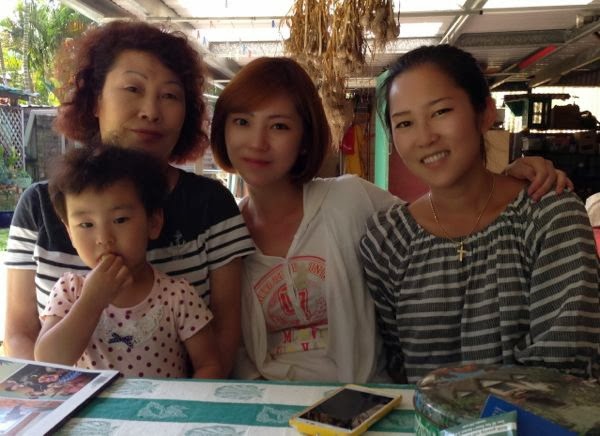
We had a wonderful family lunch yesterday with Kerry, Sunny, Sunny's mum Sunja, sister Sungji and niece Jooa. We all had a great time and I felt honoured to have Sunny's family here in our home. They are lovely people and it's a great comfort to Sunny to have them here. Sunja is staying for a month, while Sungji and Jooa will fly back to Korea during the week.


 Some gifts for Hanno's birthday. 

Our lunch was buttermilk fried chicken with potato salad, garden salad, pasta salad and beetroot. Drinks were lemon cordial and beer, dessert was chocolate cake with vanilla ice cream from here.  It's an excellent recipe for chocolate cake and it's all done by hand, no mixer needed.


Before everyone left we went out to the garden to pick vegetables. It is such a wonderful thing for us to be able to share what we grow with others. Sunny has planned a Korean pork belly BBQ, with fresh vegetables.

I've half written a post about self sufficiency that I'll finish off today and post tomorrow. I'm exhausted at the moment and need to take a day off. I'll spend today knitting and reading and hopefully feel better tomorrow.  See you then.


I know I've said this before, but I have the most wonderful readers here. Thank you for making Hanno's day yesterday with all the birthday messages. He sat down and read every one of them. He sends his thanks to all of you who wrote. Thanks from me as well. :- )

I hope you have a good weekend. If you're busy, please take some time out for yourself. Even if it's only 20 minutes for a coffee and a break, it makes a difference. xx

- - - ♥ - - -

Good grief, some companies will do anything for a sale. Nestle going up the Amazon.
Cats doing yoga. I like Duke's pose on the second photo the best. LOL
Loving the unexpected at Coal River Valley
This cosy corner
Josh Byrne's Backyard Permaculture garden from scratch - YouTube
If you didn't watch River Cottage from the first episode, here it is, on Youtube
Localism is the cornerstone of environmentalism
The Food Think Tank thanks to Erin for sending this.
Educated rank free time above money
How does the body clock work?

From the comments here during the week
Economies of Kale
Through my kitchen window  Take a look at the "dog" and the chocolate cake recipe. It looks like a good one. Of course I'll have to test it out. 
My Cretan Life 

Happy birthday Hanno!


Hanno is 73 years old today. An oldie but a goodie. I took this photo of him last week at the Brisbane Writers Festival while we were waiting for our coffee.

I have no doubt that I'd be living a very different life if Hanno was not my husband. I think I'd still be living sustainably according to simple values, but my life would be not as rich as it is now. He makes that possible. We make a good team. My failings are his strengths and I am strong where he is weak. We make our simple life work well because we're not shy of hard work, and we focus our work on shared values and goals.

Now, before you think it's all too good to be true, we argue about our differences, we're not afraid to tell each other exactly what we feel and I have to tell you that he has made some big mistakes. I, on the other hand, have been on the verge of perfect for quite a few years. Ahem. ;- )  What keeps us together is love and respect, with a healthy dash of tolerance thrown in for good measure.

I think people, in general, get a raw deal in today's world. We no longer have that casual respect that we used to have for everyone else, whether we knew them or not. I think it's shameful how certain parts of the media generalise and criticise those in the spotlight. Women are attacked for not fitting someone else's view of how they should look and dress. But I want to focus on men here. When I see how men are portrayed in advertising now I think it's demeaning and rude. Many advertisements show men as being really stupid. That kind of one-size-fits-all thinking shames all of us. I know not all men are wonderful, but there are many good men out there and we need to acknowledge that.

I wish we lived in a kinder world where people don't want to show themselves as being better than those around them. I want all of us to be understanding and considerate because when I see men devalued, I feel that somehow devalues Hanno and all the other good men too. I don't want men who read here to feel disrespected. I want your father, husband or partner to feel proud of who they are and what they do as family men and workers. I want my sons and your sons to feel the same. I want Jamie and Alex to grow up in a world where we're all treated equally and fairly.  As a woman, I want that same social acceptance for myself and other women too. Surely we all want the same thing.

But let me stop this rant and get down from my soapbox. Hanno birthday Hanno. I hope we have another 20+ years ahead of us. Let's blow the budget today and go out for lunch.


So, you've decided on the location of your garden, you know north from south and you know where the shade is during the day, let's get some plants in the ground. Climate plays a major role in what you can plant. I'm sure you've read on my blog and at the forum about various gardeners envious about what others can grow. That is just something you have to get used to. Your climate will dictate what you grow and when you grow it. It doesn't matter how much you want to grow something, if your climate isn't right for it, forget it. We live in a mild sub-tropical climate here and we can grow food all year if we want to. But I long to grow apples, walnuts and apricots and they need a colder climate. I just have to accept that I can't grow them and get on with it. I concentrate on what I can grow and I buy apples, walnuts and apricots. If you have a look in my right side bar, you'll find planting guides for Australia, the UK and the USA. Let them guide you, don't plant out of season unless you've created a great microclimate that you know will work out of season.


If you're working with virgin soil it makes sense to know the pH of the soil. This just means finding out if your soil is acidic or alkaline. Most vegetables like a slightly acidic soil between 6 and 7, or slightly higher. We live near a pine forest and that makes our oil more acidic than most but it hasn't been a problem here and it's great for growing blueberries.  Don't get too caught up on soil pH. Buy a testing kit if you want to but if you're adding compost and organic matter, the problem will slowly fix itself.  Testing pH without a kit. If you do test, don't bother amending your soil unless it's highly acidic or highly alkaline because as you add compost over the weeks, it will begin to amend the soil.

We grew this black kale two years ago and the plant was taller than me.

There's often a lot of talk about soil types because soil can be sandy, loam or clay or you might have pockets of all of them. No matter what soil type you have, all of them will be improved by adding organic matter. Organic matter is simply decomposed kitchen scraps, straw, shredded newspaper, in fact any vegetable matter that was once alive. Compost is organic matter and if you're going to get serious about backyard food production, you'll need to make compost. Not only is it a great soil conditioner and gentle fertiliser, it's the best way to help you to deal with your kitchen scraps and retain moisture in the soil.  Here is a post about making compost.  Start your compost heap straight away because it will take a while for it to mature and be useable.


EDGING AND PLANTING
You can edge your garden with anything like bricks, pavers, blocks, sleepers, logs or whatever you have on hand that will do the job. Place your edging around the area that will become your garden and remove all the weeds. If the ground is very dry, it might be a good idea to water the garden well the day before you do your weeding. If you have a lot of compost or organic matter, spread it over the surface of the garden. If you have any old horse, cow, sheep, goat or chicken manure, spread that over the garden too. If you have no manure, buy some if you can because it will make a big difference to your garden. If you have garden lime, a handful per square metre is a good addition to most acidic soils. When the garden has been dug and the compost and manures added, dig the garden over. Then water it in and spread out some straw, hay or sugar cane mulch. Leave it to settle for about a week. Don't let the it dry out too much, if your soil needs it, water it again during that week. When the soil has settled, plan where you will plant your seedlings and seeds, pull back the mulch while you plant and then replace the mulch to protect your soil and the plants. If you sow seeds, pull the mulch back and leave it to one side until the seedlings have emerged. When they're growing well, replace the mulch.


The above paragraph is what you should do if you have a lot of organic matter and compost. Most of you won't have that, so do this instead. Place your edging as above, or just dig the spade in to cut an edge on the garden - you don't want any grass growing into your garden. You will need some organic matter so if you don't have any, buy a bag of compost from the garden shop. Work out where your seedlings will be planted and, with a trowel, dig a small planting hole for each plant bigger than it needs to be. Place a couple of trowels full of compost into each hole, plant your seedling or seed, and cover with compost. Get a stick for each planting space and mark where you've planted. Water the plant in and cover the entire garden surface with mulch. Water it again.

Tomatoes receive different treatment and I've written about that here: Growing tomatoes.

SUCCESSION PLANTING
If you want to maximise your harvests and continuously pick from your garden, you'll have to master your version of succession gardening. This means you plant your chosen vegetables and before they're ready to harvest, you've already got a followup in the ground or ready to plant. On every seed packet, and online, there will be information about how long that seed will take to grow to maturity, use that to work out how frequently you need to sow seeds ready for the followup planting.  For instance, radishes are one of the fastest growing vegetables. Sow a couple of lines of radishes and if everything goes well, you'll be eating them in about 4 or 5 weeks. Before that five weeks is up, you need to followup the first planting with another row, possibly three weeks after the first planting and two weeks before you harvest your first radishes. You'll have to work out a schedule for all your plants so you have those follow ups ready, or buy the seedlings when you're ready to get them in the soil.

When we plant tomatoes here, we plant one crop and sow seeds for the next crop a few days after the planting. That gives us plenty of time to get our next tomato seedlings ready to plant out. When the first crop starts producing tomatoes, you can plant out your second seedlings so that when the first plants are finished, the second planting are just starting to produce.  The details of these plantings will be different in each area depending on how warm your climate is.

BTW, it's a general rule that you plant root vegetable seeds in the garden bed and plants that will grow above the ground can be planted as seedlings. If you grow root vegies as seedlings, what usually happens is when you transplant them, you twist the root by not having the hole deep enough, and it will grow as a twisted root. It doesn't effect the flavour, it just looks a bit odd.


Try to find a gardening book or blog about a garden in a climate similar to yours. Read all you can about gardening. Build up your skills and your knowledge. Talk to other gardeners. Gardeners are a very generous lot, they'll share what they can with you.


VARIOUS POINTS TO REMEMBER
  • Never let your seedlings dry out. When first planted in the garden, they may need watering every day.
  • If you're planting seeds, don't let them dry out and don't add fertiliser until the first leaves appear. Seeds contain everything they need within the seed to grow to first leaf stage, then you can help it along.
  • When choosing seedlings, buy short stocky plants, not tall and straggly.
  • Plant your seedlings as soon as you can.
  • Some seeds benefit from being soaked for 24 hours before planting. Parsley, carrots, beans, peas, corn, beetroot can all be soaked. Don't leave them in the water longer than 24 hours.
  • When you plant beans or peas, plant them into moist soil and don't water again until you can see they are healthy and established - about a week. These plants hate being over watered and will die if they get too much water.
  • Position plants with similar water and fertilising requirements close to each other.
  • If you can afford it, buy a bottle of seaweed concentrate and water the seedlings in with that mixed up according to the instructions. It will help them establish faster and lessen transplant shock.
  • When applying the mulch, make sure it doesn't touch the stems of the plants. Move it back a little with your hands. The exception to this is tomatoes. If you have mulch touching the stems and keep it moist, tomato roots will grow into the mulch and you'll increase your yield of tomatoes.
  • After a couple of days, apply a weak (half strength) organic liquid fertiliser to the seedlings. Apply half-strength but twice as often as suggested in the instructions.
  • You can make all your own fertilisers and save money in the process. My home made fertiliser posts are here and africanaussie has just done a post about no smell comfrey fertiliser here.
  • If you're planting fruiting plants such as tomatoes, beans, capsicums etc, add a small amount of sulphate of potash to the planting hole. It will help them produce more flowers, and therefore more fruit.
  • Don't over-fertilise fruiting plants with nitrogen. They will grow a lot of leaves and no fruit.
  • If it's still cold when you plant, you may need to protect the seedlings with cloches - old soft drink bottles. Just cut the pouring end off the bottle and use the base as a mini-glass house.  Don't leave it on in hot weather. The sun will burn the plants.
  • If you have children or pets, fence off the garden.
  • Be careful when you plant your seedlings. They're very delicate and can be easily damaged. Bugs will be attracted to weak and damaged plants so make sure yours are looked after.
  • Ask your gardening neighbours what bugs are in your area and what they do to deter or kill them. Only use organic methods. Two organic insecticides you can use sparingly are Dipel (Bacillus thuringiensis) for caterpillars and pyrethrin for most other bugs. Dipel is applied to the plant leaves and the bugs die after eating the leaf. Pyrethin has to make contact with the bug and is generally sprayed on. Both are available at most plant centres.
  • Record what you do in the garden. This is a great way to learn about gardening.
I hope this gets you on the road to growing your own food. This is a vital skill and something you can pass on to your children. Don't be put off by not knowing much when you start. We all start somewhere and I am still learning after many decades as a gardener. No one knows it all. I hope I've remembered everything to help you get going.  I just wrote this out as I remembered it.

If you have any questions, go to the forum and ask there. I'll be over during the day and if I'm not there, I know the other gardeners will be willing to help you.  Happy gardening everyone!

If you're extremely impatient, don't start a garden because nature is slow, gardening takes time and it can't be rushed. However, if you're fast and do 10 things at once and want to learn the character and wisdom of patience and tenacity, gardening is the best place to start. Gardening will teach you that for every hour you put in you have to be thankful for what you get, and that is a good lesson for all of us to learn. Sometimes you'll get slow growth, sometimes grasshoppers, sometimes your crops will grow perfectly for a couple of months and a storm will wipe them out. But as the years pass and you get better at it, you'll probably celebrate abundant harvests and you'll have more than enough. 

Let's be clear about this from the start. Vegetable gardening is hard work and it doesn't always go as planned. But the main point for all new gardeners is this: you MUST enrich your soil before you start planting. If you plant seeds or seedlings in soil that is virgin soil, or soil that hasn't been worked for years, they won't die but they probably won't grow well either, and they certainly won't thrive. This is how I look at it. If it's hard work to setup a new garden, why not maximise your chances of success by enriching the soil and doing it right from the start. Really, you will quadruple your chances of success with this one step. No amount of fertilising later will replace the benefits of planting into good rich soil.  Enriching your soil before you start is important.

I could really stop writing this now because if you enrich your soil, plant heirloom seeds or seedlings, use common sense and water your plants, almost all of you would have success. But let's take it slow and keep going, afterall, I do want to support and encourage all of you who want to grow food to do exactly that.  Following is part of a post about starting a new vegie patch I wrote back in 2007. It's pointless to rewrite is but I'll will add to it.

As a society we've moved away from viewing the earth as the source of our food. We've become reliant on whatever is presented for sale at the supermarket and while it's appealing to have that convenience, those supermarket vegetables do not contain the nutrients that will be ever-present in your own back yard produce. Growing vegetables and fruit is also a very worthwhile skill to have. Who knows what the future will bring. There may come a time when you will need, and not just want, to grow your own vegies. 

Not everyone can grow, or will want to grow, a vegetable garden but for those of you who do, you’ll find it to be a great way to connect with nature and the seasons. If you have some space that will be suitable for growing food, I encourage you to set out on this journey of discovery and full-flavoured organic food. If you live in your own home, a vegetable garden and a few fruit trees is a wonderful investment in your future health and will enable you to reduce the amount you spend on fresh food. If you live in rented accommodation, growing herbs, vegetables and fruit in containers is an activity that will provide a source of cheap organic food that can be a rewarding and enlightening pastime. And whether you own or rent, using your land to produce food will give you a better return on your investment and the money you pay out to live where you live.


Organic growing is back to basics gardening the old fashioned way. If you decide to grow organically, the food you produce will be healthy, with no synthetic chemicals or poisons added, and it will be the freshest food possible. I often wonder how old those supermarket vegetables are and where they’re from, but something tells me I don’t want to know the answer. One thing is certain, the fresher the food when you eat it, freeze it or preserve it, the better it is for you. And remember, the look of something is no guide - some supermarket produce looks perfect but it may have been in storage for months. When you start growing your own food you'll soon realise that an orange with a few marks on the skin or a carrot that is twisted still tastes so much better than what you can buy at the shop. Perfect looking vegetables and fruit usually means they've had a lot of help from fertilisers and poisonous insect sprays.


WHAT IS THE FIRST SIMPLE STEP TO BACKYARD VEGIES?

Where will you plant?  Vegetables need about eight hours of full sun to grow to maturity. If you're in the sub-tropics or the tropics, vegetables, particularly the fruiting types like tomatoes, capsicum/peppers, cucumber and many of the green leaf vegies, will usually cope well with shade at some point during the day, as long as they've had the majority of hours in full sun.  When you choose your spot, work out where the shade will move to during the morning and afternoon. You can do that by poking a long stick in the ground and watching the shadow move during the day. Use that knowledge to work out where to plant tall or trellis plants such as corn, beans, or cucumbers. These plants will shade those behind them so position your plantings to give maximum sun for all or if you want to provide shade for some delicate lettuce, plant them on the shade side of your taller crops.


Work out what you are capable of growing - in relation to space and climate. If you have a small backyard or a unit, you’ll be looking to smaller crops, vegetables that will grow well in containers, sprouting and mushrooms. If you have a reasonable sized backyard with a sunny area for a vegie patch, you could plant almost anything that is suited to your climate. So, work out what you like to eat and grow the vegetables that are expensive to buy or the ones that are best fresh – like corn, lettuce, celery, peas, tomatoes, cucumbers and potatoes.

You also need to locate the patch close to a hose or a tap so you can water the garden when it doesn’t rain. If you have a water tank, your vegetables will benefit from the rainwater, so make sure the tank hose can reach the vegetable garden. If you don't have a tank, look into what rebates you're offered in your part of the country and take advantage of them. It is quite an easy exercise to harvest the rain from your roof to be used later on your vegetables and fruit. It is the ultimate in recycling.

CONTAINER VEGETABLES
You can grow a wide range of vegetables in containers. Try to pick up some polystyrene boxes from the greengrocer or supermarket. You could also use plastic garbage containers or buckets, as well as conventional plant pots. Make sure whatever you use has adequate drainage holes, if they don’t, poke or drill some in. Fill the container with good quality potting mix, if you have compost or aged cow/horse manure, use about a third compost, manure to two thirds potting mix. Don’t be tempted to save money by using garden soil as it won’t drain properly and your vegetables won’t grow.


SEEDLINGS
How do you choose what to grow in the first year? Sit down and make a list of what fruit and vegetables you eat. If you stick to the rule about not planting too much in the first few years, you'll have to pick just a few from that list. Think about what are the most expensive or hardest to get, and grow those. Or, if you eat a lot of salad, grow lettuce and tomatoes, if you eventually want to preserve your excess vegetables, grow what you want to preserve - such as tomatoes, cucumbers, beetroot etc. Make sure you have a planting guide for your area because it doesn't matter how much you want something, it won't grow if it's not the right season. So, with your growing guide and your list of what you eat, make your choice. Don't choose more than four or five different things in that first year. I want you to keep on gardening and if it's too difficult, you'll give up.


SEEDS
When you think about it, a seed is an amazing thing. Given the right conditions, it contains everything necessary to grow into whatever species it happens to be. It’s a dried up hard packet of potential life. How good is that! Usually, the most thrifty way to grow vegetables is to grow from seeds. The most frugal seeds are those you save from last year’s harvest or swap with someone in your neighbourhood. You could also swap seeds online. It used to be common practice for families to have a collection of seeds they grew from each year. It was also common to swap seeds with family, friends and neighbours. The good thing about heirloom or open pollinated seeds is that every year you plant and grow them in your garden, then save the seed for the following year, the more they modify themselves to suit your climate and soil.

I buy seeds from here but you should find a supplier close to where you live because the seeds will have been grown in conditions similar to your own. 

Or, you might find some at your local hardware store or plant nursery. Make sure the seeds you buy are open pollinated varieties of vegetables or herbs, and they should be fresh (check the use by date). Here are two excellent online resources with photos and information about heirloom open pollinated tomatoes:
http://www.reimerseeds.com/heirloom-tomato_798.aspx
http://www.heirloomtomatoes.bizland.com/varieties.htm
Do some research on what tomatoes will suit you and then buy them from a place close to you.

Use some of the seeds you buy to plant in your own garden and swap the rest to get the other vegetable seeds you need. You’ll be able to build up a big bank of seeds doing this and your new seeds will only cost you a stamp and a trip to the post office.

In the old days all seeds were open pollinated but as a result of pressure to produce standardised fruit and vegetables several decades ago, some seed companies started to hybridise. In effect what they did was to breed vegetables for specific purposes and size. In the case of tomatoes, old-fashioned tomatoes  were no good for supermarkets. They had delicate skin that didn’t travel or store well and when trying to weigh a pound of tomatoes, two tomatoes where often well over a pound. So seed companies developed tomatoes with tougher skin (for transport) that were smaller and generally would weigh up as four to a pound. The problem was that when they were reinventing the tomato wheel, they forget to include the taste factor. When you taste a home grown open pollinated tomato it will taste like tomatoes used to taste, it’s a hundred times better than a supermarket tomato. Aside from the superior taste, open pollinated vegetables are capable of passing on exactly the same characteristics to each generation. If you use seeds from hybrid vegies, sometimes the seeds will be sterile and sometimes they’ll not grow to type. You might be expecting a medium sized sweet tomato and you’ll get a small bitter one. Hybrid vegies can throw back to any of the types used to create it. So in essence, every year you will need to buy new seeds instead of being able to save and grow the seeds from open pollinated vegies.

Another advantage to growing open pollinated seeds is that they will modify themselves to suit your growing conditions. According to the Seed Savers website: “Food plants, grown organically, that have adapted themselves to your garden over generations of seed saving, will perform noticeably better in your kitchen than generalized hybrid plants, grown by chemical methods far away from your region, and subject to transportation and storage.”

I hope this has convinced you to start off with heirloom or open pollinated seeds. Don’t worry if you can only find hybrids when you start, but in the future, when you can afford it or when you want to eat food like your great-grandma did, go the open pollinated route.


THE COST OF GARDENING
Don't run out and buy the best of everything until you know that you love to garden and will continue. In the first season, you can make do with borrowed gear or old garden tools from the recycle shop. Even when you decide to carry on your garden, these older tools are usually much better quality that newer ones that are made in China.

It's probably wise in the first year to buy seedlings. At our local market we can buy good seedlings at around six seedlings for a dollar. At the nursery or Bunnings, a punnet (usually six) costs between $2.50 - $3.95.  If you have a local market, check them before you buy them elsewhere. Check your prices before you buy. Try to buy open pollinated seeds early on so you can save your seeds from season to season. It cuts the cost quite a bit. Make sure you water well and use mulch. Water costs a lot of money because it's a precious resource, don't waste it.

You can use bales of hay, straw or sugar cane mulch as a fairly cheap all round mulch. Those mulches will keep the water in the soil, will protect the soil from the sun, will help regulate the soil temperature and can be dug in if it's still sitting on the soil surface at the end of the season. It creates very good organic matter in the soil when dug in. We use organic sugar cane mulch here. It costs a bit more but we prefer to grow organic vegetables.

Make your own fertilisers. There are posts on my blog showing how to do that.

The garden is a great place to recycle egg cartons, newspaper, cardboard and kitchen scraps. Use what you have on hand and think of new and ingenious ways of developing your garden without buying everything you need.


When you start, don’t be over ambitious. There will be a lot to learn and there is a lot work involved in bringing your crops to harvest. Vegetable gardening is not for wimps. Go slow to start and add a couple of new vegies every year until you’ve reach your vegetable growing goal.

I think the most important piece of information I can give you about gardening is that you feed the soil, not the plant. If you dig a garden plot and plant vegetable seedlings in it, without enriching the soil in any way, you'll get vegetables, but they'll be small and miserly. You must - I repeat, you must build up your soil with organic matter before you start plating. The more organic matter you have in your garden beds, the more abundant your harvests will be.

This post is too long so tomorrow I'll finish off with how to dig, how to enrich the soil, the importance of compost and how to plant those first seedlings.  In the meantime, save all your newspapers and set up a small covered container in your kitchen to save fruit and vegetables scraps.  See you tomorrow.


There have been a lot of questions about my book this week. It's a bit complicated but let's see if I can explain. At the moment, the copyright for the print book and the ebook is for Australia and New Zealand only - that means you can only buy it in Australia and NZ. However, you can buy the print book here and some book shops will send it internationally. Some international readers have said they bought it at Fishpond and some at Book Depository.  Book Depositary offer free delivery on all their books, Fishpond have offers on free international delivery every so often.

During September, Penguin is selling my ebook for $4.99. That is for Australia and NZ only.

However, I'm about to sell the international rights of both books to Penguin and when that goes through and other negotiations happen, the books will be available for sale everywhere. We are probably talking about next year some time.

I am now writing another small book on simple living that will be published in Australia and internationally next March. That will be a print book (a Penguin Special) and an ebook. It will be followed by a short series of small ebooks on particular subjects.

Thank you for your visits this week and for taking the time to reach out and leave a comment. There seems to be quite a few new readers here at the moment; I warmly welcome all of you. I hope you have a wonderful weekend with those you love. Don't forget to take care of yourself.

I meant to add as well: One of my sponsors, Biome, is moving their city store and having a closing sale yesterday and today.  They're at 215 Adelaide Street and sell a wide range of organic and ecologically sound products. All prices are 25% off today before their move. I am happy to recommend Biome to you. In all the dealings I've had with them I've found them to be helpful, knowledgable about their products and very supportive.


- - - ♥ - - -

River Cottage Australia - first bit is missing but all the rest of the eight programs are there. - YouTube
The difference between winning and succeeding - John Wooden. TED talk
Cutting back on libraries!
DIY - stool makeover
Hand painted linen tea towels
Free mermaid glove pattern @ Ravelry
Knitting Love at Pinterest
For those of you with little girls - paper doll cutouts from Alice Cantrell

Jill @ gentle thoughts of homemaking
Anh @ anhsfoodblog.com
Monica @ tropical tomatina
After a fairly poor season in the garden last year due to cloudy weather and too much rain, this year it's ideal, although a bit drier than we prefer. We've scaled back a bit this year and haven't planted potatoes but they've been replaced with mushrooms in a box in the bush house. This year we're taking it slow because energy levels and injuries have slowed the main gardener down a bit. We're still growing as much as we can though and only what we eat. The good thing is that everything that was sown, has blossomed and we have a thriving patch that we're eating from every day.

Behind that leaf, the first of the Lebanese cucumbers.
 The last of the winter strawberries - we bought these "Joy" runners from Green Harvest.
We polished off this bowl before the day was out.

 Waiting for leaves and damaged strawberries to be thrown over the fence.

We have a lot of parsley growing and I use it nearly every day. Sunny is a big fan of parsley too, so we make sure we have enough to share. Recently our flat leaf parsley went to seed, we're still eating the side leaves but Hanno planted a new seedling last weekend.


This is a mixed bed of silverbeet, daikon radish, various types of lettuce, onions, parsley and ruby chard.
 Bok choi is eaten by all of us - including Sunny and the chickens.


Daikon radish - I was told this was in short supply in the shops over recent months. Lucky we had plenty here.
 Above and below - purple topped turnip.


And here at her favourite resting place is our old cat, Hettie Waintrope, private investigator (retired). She's 16 years old now and doesn't do much except eat and sleep. She loves sleeping here under the elder tree during the day. I'm going to harvest these elder flowers on the weekend to make elder cordial - a summer essential.

Hanno will harvest our year's supply of garlic tomorrow or Friday. It will dry out for a while and then be stored in the kitchen. I have one garlic head left from last years crop. We'll plant up another crop in February/March next year, using cloves harvested from this year's crop. The never-ending cycle continues.  That is the same bed the strawberries have been growing in so apart from pineapple sage, parsley and a chilli bush, the bed will be empty. But not for long. It will be dug over, manures, compost and worm castings added and seeds sown for corn, beans, daikon, cucumbers and more lettuce. He'll also plant up a stand of sunflowers in another bed so we'll have those nutritious seeds on hand for us and the chooks.

If you have a garden, or a backyard with the potential for a garden, I encourage you to try your hand at growing some food. No matter how much money you have, you cannot buy the freshness of vegetables from your own yard. You'll know exactly what's gone into growing them and what has been added. Here we use only organic methods and have been producing fruit and vegetables this way, on and off, for over 30 years. Another good reason to grow your own is that you'll be getting the full measure of the land you live on if you make it productive. If you're not sure how to start, leave a comment and let me know. If there are a few of you, I'll do a post about starting a vegetable garden from scratch.

There is nothing to compare with walking out into the fresh air every afternoon to pick fresh vegetables for the evening meal. Whatever is left over is shared, frozen or put up in jars. It's an enriching pastime and a wonderful way to live. Are you a new gardener? Have you been growing vegetables for a long time? What have you planted this year?


I've had a busy time of it while these blog pages remained silent. There were a few changes in our home and my wardrobe, a couple of large bags taken to the charity shop and spring cleaning. We're just on the verge of opening the windows again after a fairly short, but cold, winter.

 Hanno trimming the climbing rose growing through the wisteria.
 We're having this rickety old fence replaced today.
Sometimes I feel like I'm living in parallel universes. Here at home the days are slow, considered, productive, simple, plain and natural but when I go out into the multiverse it's so different. I look around and remember things as they used to be - the changes on Brisbane's roads in the past ten years are incredible. Now there are tunnels going under the city and river, and streets and landmark houses have disappeared to facilitate those changes. I went to Brisbane twice in the past week, both times to talk about how we live and my book at the State Library, the venue for the Brisbane Writers' Festival. The traffic was fierce and noisy, people were rushing around, most places were crowded and chaotic. I saw unfamiliar faces everywhere. I was happy to get home, to sit down and have a cup of tea. If I had to choose my parallel universe, I'd choose this slow and simple one, not the one that starts at the end of our street.

Having written that though, I enjoyed the festival. We were spoilt in the green room with good coffee and a view over the city like no other. One day I spoke to a woman who'd written 300 books and the next to our ex-deputy prime minister, Tim Fisher. I met Tia at the masterclass and felt reassured to have one of the forum ladies at my side. I think it was Maria who gave me some of the most delicious home made marmalade and a chicory plant. Thanks Maria!

And I really liked Antonia Kidman. I didn't know much about her until her publisher sent me her book The Simple Things. She was quiet and friendly and sounds like a very hands-on, practical and dedicated mum. She has six children, so she is certainly busy, but she's also focused on her career, which I admire.


So now I'm back here, at home, in my natural environment. I'm at my best here.  I'm now concentrating on some new books for Penguin. I'm about to sign a contract to assign world rights to Penguin for Down the Earth, my book, and with the new ebooks I'm writing now, the first one being a Penguin Special and an ebook combo, I feel I'm living a dream life. I have the productive work of a homemaker to do every day here at home and that is balanced by the stimulating intellectual work of writing.

I plan on writing my blog about two or three times a week, in addition to my weekend reading posts. I have to cut back a little while I'm writing the books because I need time away from the computer and writing. I need to continue with my tasks and focus on what I do each day because it's easy to let things slip when there is so much to do.

When I'm out and about I'm often asked about what should be part of simple life and how to structure each day. There is no real answer to that but it's given me an idea for a new series. I've been rethinking my ideas on self sufficiency and food security and the new series will be built around those two important pillars. I am going to endeavour to write about part-time self sufficiency in the city, suburbs and on a larger block. I hope you'll be back to read some of it.

It's great to be back with you.


Just a quick few lines to let you know I'll be back soon - either tomorrow or Wednesday, I'm not sure yet. I'm trying to get some seasonal work and organisation completed before I'm head down with writing again. 

At the authors' table after the event with Antonia Kidman, signing books.

I did my last session at the Brisbane Writers Festival yesterday.  Hanno came along, it was a beautiful day and we both thoroughly enjoyed ourselves. I have some lovely photos of our vegetable garden to show you - it's really thriving in this warmer weather and producing an abundance of fresh organic food for us. I hope to finish off my outside work either today or tomorrow with a cleanup of the bush house and some seed planting.

I also have an idea for some cooking posts to encourage the new cooks out there and, of course, I'll be writing about the variety of activities that happen here in our home. Having a break away from the blog has been good for me but I'm so ready to return. See you soon.


If you want to smile today, really smile, deep down to your bones, watch this - youtube
Got too many tomatoes?  Try fermented tomato paste.
One of my food mentors is Sandor Katz who wrote the book Wild Fermentation. I've just discovered he's doing a fermentation workshop for Milkwood in February next year. I won't be there, even though I'd love to be, but I thought I should let you know in case you can attend. Details are here.
72 ideas to simplify your life
What learning how to sew can do for you.
A beautiful vegan baking blog
Marmalade pull apart bread
Some fruits are better than others
Pinterest's 10 ten pantry-larders

From the comments during the week
A desirable world
Peaceful living in the city
sugar spice salt sour

You'll notice I have an Amazon book hub in my side bar again. I used to have one a few years ago but got rid of it when I was writing my book as I had no time for reading. It's back now because it's a good way for me to earn credit points when people go through here to buy their books. I use those points to buy books for us to read. So if you are buying a book, I'd appreciate it if you used my Amazon point to buy it. It takes a while to build up the points, but as I'm growing older, I'm becoming more patient. The waiting is good for me.

I'll be at the Brisbane Writers' Festival for a masterclass on simple living today and back again on Sunday for a panel discussion. Please come over and say hello if you're there, and if you want me to sign your book, bring it along.

I hope you have a lovely weekend.  ♥


I'm pleased to be able to share Greg's book Changing Gears with you. I've just drawn numbers out of a hat - I'm old school - and the winner of the book is number 4 - suburbandigs. Congratulations Michael. Please email me with your postal address. 

Thanks everyone.

Newer Posts Older Posts Home


My books were all published by Pengiun, and are available at Amazon US, Amazon UK and Amazon Au

Search here

Total Pageviews

Translate


I'm Rhonda Hetzel and I've been writing my Down to Earth blog since 2007. Although I write the occasional philosophical post, my main topics include home cooking, happiness and gardening as well as budgeting, baking, ageing, generosity, mending and handmade crafts. I hope you enjoy your time here.

MY FAVOURITE PLACES

  • Grandma Donna's Place
  • Grandma Donna's YouTube
  • Grandma Donna's Instagram
  • This Simple Day
  • Nicole's Instagram

Give More

Give More

Popular posts last year

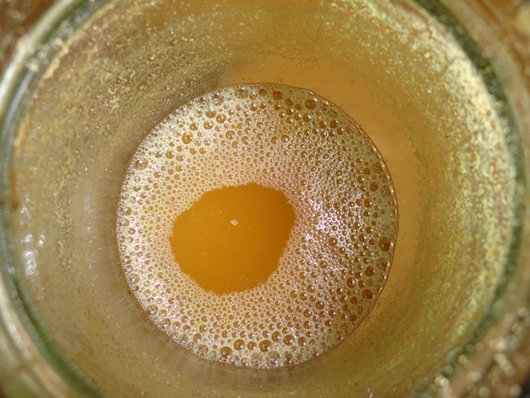
Making ginger beer from scratch

We had a nice supply of ginger beer going over Christmas. It's a delicious soft drink for young and old, although there is an alcoholic version that can be made with a slight variation on the recipe. Ginger beer is a naturally fermented drink that is easy to make - with ginger beer you make a starter called a ginger beer plant and after it has fermented, you add that to sweet water and lemon juice. Like sourdough, it must ferment to give it that sharp fizz. To make a ginger beer plant you'll need ginger - either the powdered dry variety or fresh ginger, sugar, rainwater or tap water that has stood for 24 hours to allow the chlorine to evaporate off. You'll also need clean plastic bottles that have been scrubbed with soap, hot water and a bottle brush and then rinsed with hot water. I never sterilise my bottles and I haven't had any problems. If you intend to keep the ginger beer for a long time, I'd suggest you sterilise your bottles. MAKING THE STARTER In a...
Image

NOT the last post

This will be my last post here.  I've been writing my blog for 18 years and now is the time to step back. I’ve stopped writing the blog and come back a couple of times because so many people wanted it, but that won’t happen again, I won’t be back.  I’ll continue on instagram to remain connected but I don’t know how frequent that will be. I know some of you will be interested to know the blog's statistics. 
Image

How to make cold process soap

I'm sure many of you are wondering: "Why make soap when I can buy it cheaply at the supermarket?" My cold process soap is made with vegetable oils and when it is made and cured, it contains no harsh chemicals or dyes. Often commercial soap is made with tallow (animal fat) and contains synthetic fragrance and dye and retains almost no glycerin. Glycerin is a natural emollient that helps with the lather and moisturises the skin. The makers of commercial soaps extract the glycerin and sell it as a separate product as it's more valuable than the soap. Then they add chemicals to make the soap lather. Crazy. Making your own soap allows you to add whatever you want to add. If you want a plain and pure soap, as I do, you can have that, or you can start with the plain soap and add colour, herbs and fragrance. The choice is yours. I want to add a little about animal and bird fat. I know Kirsty makes her soap with duck fat and I think that's great. I think t...
Image

Preserving food in a traditional way - pickling beetroot

I've had a number of emails from readers who want to start preserving food in jars but don't know where to start or what equipment to buy.  Leading on from yesterday's post, let's just say up front - don't buy any equipment. Once you know what you're doing and that you enjoy preserving, then you can decide whether or not to buy extra equipment. Food is preserved effectively without refrigeration by a variety of different methods. A few of the traditional methods are drying, fermentation, smoking, salting or by adding vinegar and sugar to the food - pickling. This last method is what we're talking about today. Vinegar and sugar are natural preservatives and adding one or both to food sets up an environment that bacteria and yeasts can't grow in. If you make the vinegar and sugar mix palatable, you can put up jars of vegetables or fruit that enhance the flavour of the food and can be stored in a cupboard or fridge for months. Other traditional w...
Image

Cleaning mould from walls and fabrics

With all this rain around we've developed a mould problem in our home. Usually we have the front and back doors open and that good ventilation stops most moulds from establishing. However, with the house locked up for the past week, the high humidity and the rain, mould is now growing on the wooden walls near our front door and on the lower parts of cupboards in the kitchen. Most of us will find mould growing in our homes at some point. Either in the bathroom or, in humid climates, on the walls, like we have now. You'll need a safe and effective remedy at some point, so I hope one of these methods works well for you. Mould is not only ugly to look at, it can cause health problems so if you see mould growing, do something about it straight away. The longer you leave the problem, the harder it will be to get rid of it effectively. If you have asthma or any allergies, you should do this type of cleaning with a face mask on so you don't breathe in any spores. Many peopl...
Image

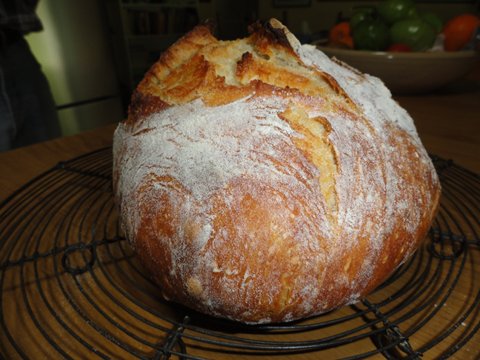
Five minute bread

Bread is one of those foods that, when made with your own hands, gives a great deal of satisfaction and delight. It's only flour and water but it symbolises so much. I bake bread most days and use a variety of flours that I buy in bulk. Often I make a sandwich loaf because we use most of our bread for lunchtime sandwiches and for toast. Every so often I branch out to make a different type of loaf. I have tried sour dough in the past but I've not been happy with any of them. I'll continue to experiment with sour dough because I like the idea of using wild yeasts and saving the starter over a number of years to develop the flavour and become a part of the family. However, the loaf I've been branching out to most often is just a plain old five minute bread. By five minutes I mean it takes about five minutes actual work to prepare but it's the easiest of all bread to make and to get consistently good loaves from. If you're having people around for lunch or...
Image

This is my last post.

I have known for a while that this post was coming, but I didn't know when. This is my last post. I'm closing my blog, for good, and I'm not coming back like I have in the past.  I've been writing here for 16 years and my blog has been many things to me. It helped me change my life, it introduced me to so many good people, it became a wonderful record of my family life, it helped me get a book contract with Penguin, and monthly columns with The Australian Women's Weekly and Burke's Backyard . But in the past few months, it's become a burden. In April, I'll be 75 years old and I hope I've got another ten years ahead. However, each year I'll probably get weaker and although I'm fairly healthy, I do have a benign brain tumour and that could start growing. There are so many things I want to do and with time running out, leaving the blog behind gives me time to do the things that give me pleasure. On the day the blog started I felt a wonderful, h...
Image

What is the role of the homemaker in later years?

An email came from a US reader, Abby, who asked about being a homemaker in later years. This is part of what she wrote: "I am a stay-at-home mum to 4 children, ages 9-16. I do have a variety of "odd jobs" that I enjoy - I run a small "before-school" morning drop-off daycare from my home, I am a writing tutor, and I work a few hours a week at a local children's bookstore. But mostly, I cherish my blissful days at home - cooking, cleaning (with homemade cleaners), taking care of our children and chickens and goats, baking, meal-planning, etc. This "career" at home is not at all what I imagined during my ambitious years at university, but it is far more enriching. I notice, though, that my day is often planned around the needs of my family members. Of course, with 4 active kids and a husband, this is natural. I do the shopping, plan my meals, cook dinner - generally in anticipation of my family reconnecting in the evening.  I can't h...
Image

Every morning at home

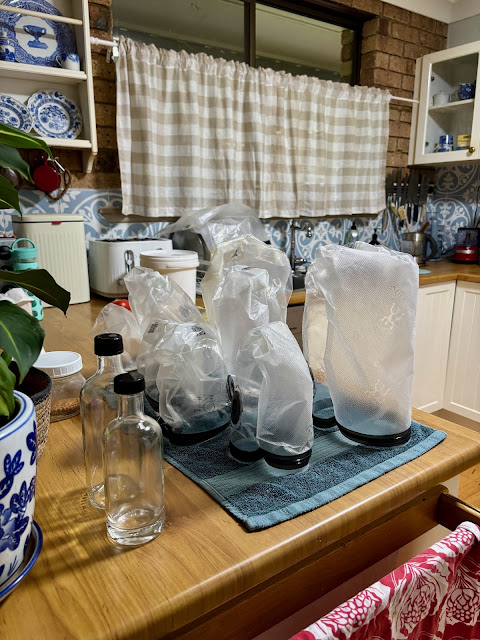
Every morning when I walk into my kitchen it looks tidy and ready for a day's work. Not so on this morning (above), I saw this when I walked in. Late the previous afternoon when I was looking for something, I came across my rolled up Zwilling vacuum bags and decided they had to be washed and dried. So I did that and although I usually put them outside on the verandah to dry it was dark by then. I turned the just-washed bags inside out and left them like this on a towel. It worked well and now the bags are ready to use when I bring home root vegetables, cabbages or whatever I buy that I want to last four or five weeks.
Image

You’ll save money by going back to basics

When I was doing the workshops and solo sessions, I had a couple of people whose main focus was on creating the fastest way to set up a simple life. You can't create a simple life fast, it's the opposite of that It's not one single thing either - it's a number of smaller, simpler activities that combine to create a life that reflects your values; and that takes a long to come together. When I first started living simply I took an entire year to work out our food - buying it, storing it, cooking it, preserving, baking, freezing, and growing it in the backyard. This is change that will transform how you live and it can't be rushed.  
Image


Trending Articles

NOT the last post

This will be my last post here.  I've been writing my blog for 18 years and now is the time to step back. I’ve stopped writing the blog and come back a couple of times because so many people wanted it, but that won’t happen again, I won’t be back.  I’ll continue on instagram to remain connected but I don’t know how frequent that will be. I know some of you will be interested to know the blog's statistics. 
Image

Every morning at home

Every morning when I walk into my kitchen it looks tidy and ready for a day's work. Not so on this morning (above), I saw this when I walked in. Late the previous afternoon when I was looking for something, I came across my rolled up Zwilling vacuum bags and decided they had to be washed and dried. So I did that and although I usually put them outside on the verandah to dry it was dark by then. I turned the just-washed bags inside out and left them like this on a towel. It worked well and now the bags are ready to use when I bring home root vegetables, cabbages or whatever I buy that I want to last four or five weeks.
Image

You’ll save money by going back to basics

When I was doing the workshops and solo sessions, I had a couple of people whose main focus was on creating the fastest way to set up a simple life. You can't create a simple life fast, it's the opposite of that It's not one single thing either - it's a number of smaller, simpler activities that combine to create a life that reflects your values; and that takes a long to come together. When I first started living simply I took an entire year to work out our food - buying it, storing it, cooking it, preserving, baking, freezing, and growing it in the backyard. This is change that will transform how you live and it can't be rushed.  
Image

Creating a home you'll love forever

Living simply is the answer to just about everything. It reduces the cost of living; it keeps you focused on being careful with resources such as water and electricity; it reminds you to not waste food; it encourages you to store food so you don't waste it and doing all those things brings routine and rhythm to your daily life. Consciously connecting every day with the activities and tasks that create simple life reminds you to look for the meaning and beauty that normal daily life holds.  It's all there in your home if you look for it. Seemingly mundane tasks like cleaning and cooking help you with that connection for without those tasks, the home you want to live in won't exist in the way you want it to.  Creating a home you love will make you happy and satisfied.
Image

Time changes everything

I've been spending time in the backyard lately creating a contained herb and vegetable garden. My aim is to develop a comfortable place to spend time, relax, increase biodiversity and encourage more animals, birds and insects to live here or visit. Of course I'd prefer my old garden which was put together by Hanno with ease and German precision. Together, we created a space bursting at the seams with herbs, vegetables and fruity goodness ready to eat and share throughout the year. But time changes everything. What I'm planning on doing now, is a brilliant opportunity for an almost 80 year old with balance issues. In my new garden I'll be able to do a wide range of challenging or easy work, depending on how I feel each day. It’s a daily opportunity to push myself or sit back, watch what's happening around me and be captivated by memories or the scope of what's yet to come.
Image

It's the old ways I love the most

I'm a practical woman who lives in a 1980’s brick slab house. There are verandahs front and back so I have places to sit outside when it's hot or cold. Those verandahs tend to make the house darker than it would be but they're been a great investment over time because they made the house more liveable. My home is not a romantic cottage, nor a minimalist modern home, it's a 1980’s brick slab house. And yet when people visit me here they tell me how warm and cosy my home is and that they feel comforted by being here. I've thought about that over the years and I'm convinced now that the style of a home isn't what appeals to people. What they love is the feeling within that home and whether it's nurturing the people who live there.
Image

Making ginger beer from scratch

We had a nice supply of ginger beer going over Christmas. It's a delicious soft drink for young and old, although there is an alcoholic version that can be made with a slight variation on the recipe. Ginger beer is a naturally fermented drink that is easy to make - with ginger beer you make a starter called a ginger beer plant and after it has fermented, you add that to sweet water and lemon juice. Like sourdough, it must ferment to give it that sharp fizz. To make a ginger beer plant you'll need ginger - either the powdered dry variety or fresh ginger, sugar, rainwater or tap water that has stood for 24 hours to allow the chlorine to evaporate off. You'll also need clean plastic bottles that have been scrubbed with soap, hot water and a bottle brush and then rinsed with hot water. I never sterilise my bottles and I haven't had any problems. If you intend to keep the ginger beer for a long time, I'd suggest you sterilise your bottles. MAKING THE STARTER In a...
Image

An authentic look at daily life here — unstaged and real

Most days Hanno was outside happily working in the fresh air. It may surprise you to know that I started reading my book,  Down to Earth , yesterday - the first time since I wrote it 13 years ago.  I had lent it to my neighbor, and when she returned it, I started reading, expecting to find surprises. Instead, I realised the words were still familiar—as if they were etched into my memory. As I flipped through the pages, I was reminded of how important it was for me to share that knowledge with others. The principles in Down to Earth changed my life, and I truly believed they could do the same for others. After just 30 minutes of reading, I put the book down, reassured that its message still holds true: we can slow down and reshape our lives, one step at a time.
Image