down to earth

  • Home
  • About Us
  • Down To Earth Book
  • Privacy Policy
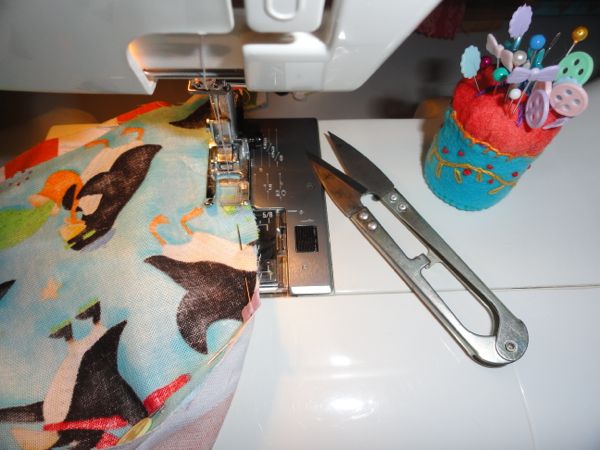
We had a lovely weekend here with Shane and Alex visiting, and Jamie here for his regular two weekend days while Kerry and Sunny work. Sarndra took the chance to have some down time at home, sewing. All us mums need that when we can get it. Alex and Jamie are the same size now with Alex being slightly taller. They're not quite at the playing together stage, they have problems sharing their favourite toys, but that's normal and it will pass. It was lovely seeing them playing, chasing each other and kicking the football. I am a very proud grandma.

We celebrated father's day in Australia yesterday. I hope all our dads had a wonderful day.


 At the Maleny market.
The boys visited Maleny Dairies but there are no tours on Sundays. Still, they saw the beautiful Guernsey cows and the goats so they were happy. If you're looking for a good family day trip from Brisbane or the Sunshine Coast, a trip to Maleny, stopping off at the dairy on the way, is a great way to spend some time with the family.


I have a very busy time coming up over the next couple of weeks so I'm not sure when I'll be able to blog.  I'll post the winner of the Changing Gears book tomorrow but the rest of the time, tomorrow and the coming days, I'll be tending to seasonal work, sewing and mending, but mainly I'll be thinking and writing. I'll be at the Brisbane Writers' Festival on Friday and Sunday so I have some preparation for that as well. As soon as I can be here, I'll be back.  


I'm looking forward to a seeing Shane and Alex this weekend. We'll be looking after Jamie too so having the two boys here together will be wonderful. I hope you're doing something you love over the next few days.

My simple living masterclass at the Brisbane Writers' Festival is booked out now, it's on next Friday. If you read my blog and have booked a place, please introduce yourself when you're there. I'm also doing a panel discussion about simple life with Antonia Kidman on Sunday 8 September from 10am till 11 am. Tickets are $12 - $16 and you can book online here. I hope to see you there.

- - - ♥ - - -

'Stories of Simplicity: Reimagining the Good Life' - there are many stories here about people who are living simply
Australian Food Sovereignty Alliance
An older farm wife - Youtube
What's killing the bees?
How to be a gardener - the productive garden on You Tube
Kinfolk
Fatale
Another feather: here are some beautiful photos taken at a baking workshop.
Nigel Slater's coleslaw recipe
We've been talking a lot about food security and home-grown produce lately and here is an organisation trying to do something about it. They need $25,000 to make a documentary, $12,5000 is already pleadged. Can you help? 

From the comments during the week
Winkels Crazy Ideas
Domestic Felicity
Maas Journal

I had the pleasure of meeting Greg Foyster and Sophie Chishkovsky last year when they cycled from Melbourne, via Tasmania, to North Queensland. It was a 6,500 km trip. Greg, is a writer by profession, and he has written a book about the trip called Changing Gears. I was asked to read it a couple of months ago and that is something I hesitate to do if I know the author. I get a bit anxious about telling the truth about a book that doesn't inform, inspire or impress me. I didn't have to worry in this case. I loved the book. In fact, I told Greg I'd take a couple of weeks to read it but when I started the book and put it down, I kept thinking about it and had to keep reading. I finished it in a few days. 


I love and admire Greg and Soph because they were crazy enough to think about doing a trip like this and for continuing to pedal kilometre after kilometre when they were starting to question why they were doing it. They're back in Melbourne now, we've kept in touch, and they're still on their simple living path. I won't tell you anything about Greg's story, except to say that I was surprised by how funny it is, and you can read my endorsement below. I don't think my sheets are as white as he says they are but if they are, it's all due to homemade laundry liquid. ; - )

Greg and his publisher, Affirm Press,  have given me a book to give away. Just comment on why you'd like to win the book and we'll draw the winner out next Tuesday morning, my time. Make sure you leave a link or email address so I can contact you if you win.

If you don't win the book, do yourself a favour and buy a copy. It will be published on 1 September and will be available at most good independent book shops, your local Dymocks and online at  booktopia.com.au

Endorsements for Changing Gears

“Greg Foyster raises questions many of us have asked ourselves about work, spending, values and commitment. Looking for a way to live well within an ethical framework, he and his girlfriend Sophie hit the road to cycle up the east coast of Australia. They were looking for others who had moved from a life of stress and overconsumption to a gentler and simpler way of living. What they found was self-belief, self-reliance and the beginnings of a better life. If your lifestyle clashes with your values, if you want to change how you live but need a push to get you there, this is a must-read book for you.” Rhonda Hetzel, author of Down to Earth

”Until humanity figures out what to do about climate change, we need heroes like Greg Foyster and Sophie Chishkovsky who put their lifestyles on the line to inspire us to change.” Colin Beavan, author of No Impact Man

”Greg is funny, insightful and sometimes painfully honest. But Sophie is hilarious!” Tanya Ha, author of Greeniology 2020

”This book is honest, edgy, raw and confrontational. Greg shares his truth in an uncut, heartfelt and mind-digested way. In the saddle of his pushbike we share a personal journey that’s uncovering community for what it is… A compelling ride to the future we are all creating.” Costa Georgiadis, host of Gardening Australia

“From advertising to dumpster diving. A fascinating account of one couple’s journey to live by their principles.” Craig Reucassel, The Chaser and The Checkout

Pedal-Powered Book Tour

Greg said they want to promote the book in a low-impact way, so from September 20 until November 20 they’re embarking on a Pedal-Powered Book Tour. It’ll be a 2000-kilometre journey from Melbourne to Sydney over 60 days, visiting bookstores along the way. Go along and meet them and take a nice piece of banana cake or some muffins to fuel the next leg of their journey. Here’s the current itinerary:
  • 12.30pm Friday 20 September at The Sun Bookshop in Yarraville for a talk and signing
  • 6pm Wednesday 25 September at The Bookshop at Queenscliff for pizza and wine and a talk  and signing
  • 7pm Thursday 26 September at Bookgrove Ocean Grove for a talk and signing
  • 9am Saturday 28 September at Torquay Books for a talk and signing
  • 12pm Thursday 3 October at Collins Ballarat (Sturt St) for a talk and signing
  • 11am Sunday 6 October at New Leaves Woodend for a talk and signing
  • 12pm Monday 7 October at Aesop’s Attic in Kyneton for a signing
  • 2pm Wednesday 9 October at Stoneman’s Bookroom in Castlemaine for a signing
  • 12pm Saturday 12 October at Dymocks Bendigo for a signing
  • Wednesday 16 October in Shepparton
  • Thursday 24 October in Wangaratta
  • Saturday 26 October in Albury
  • Wednesday 30 October and Thursday 31 October in Canberra
  • Saturday 2 November in Cooma
  • Wednesday 6 November in Bega
  • Friday 8 November in Moruya
  • Saturday 9 November in Bateman’s Bay
  • Sunday 10 November in Ulladulla
  • Tuesday 12 November in Nowra
  • Friday 15 November in Wollongong
  • Monday 18 November to Wednesday 30 November in Sydney
For regular updates on the book tour, visit the book page on Greg and Soph's blog, or the Changing Gears Facebook page.


Recently, The Guardian ran an article about single-use plastic bags and the proposal that people will be charged for them in New York City. Ireland started charging in 2002 and have subsequently reduced the use of plastic bags by 90 percent. Here in Australia, we have towns and cities where individual shops and supermarkets charge if you don't bring your own bags and have to use plastic. In my local area, there are a few shops that have been doing this for a few years now.

I congratulate all those who are taking a stand against this destructive use of plastic. Our oceans are filling with plastic garbage that is killing marine life and birds, our land fill dumps are filling with these bags that take hundreds and hundreds of years to decompose. I cringe when I see plastic bags blowing along the streets and on the beaches.  It shames us all.

What is so difficult about taking your own bags with you when you shop? Whether it is a custom made bag or one you make yourself, you need to have those bags with you when you shop, and you need to use them. I have a very small handbag - only one - and in it I have a large shopping bag, an envirosax, that rolls up to almost nothing. I can easily store it in my handbag and on the rare occasion when I need a shopping bag, I always have one with me. It's not difficult.


We also have hessian shopping totes, some homemade bags and those ghastly green shopping bags that I refuse to buy now. We have our collection of shopping bags stored in the boot of the car so when we're out shopping, the bags are already there with us. The main problem now is that many shop assistants are so used to giving out plastic bags, you have you have yours ready so they don't half pack a bag and have to unpack it - with huffing sounds and rolling eyes. :- )

This is one small thing we can all do, quite easily, that will make a difference in our own neighbourhoods.  These bags are often blown away in the wind and some of them end up in the oceans where they are killing turtles, dolphins, sharks, whales and fish. Please do your part in reducing the number of bags in circulation. We don't need them. 

Robyn has a wonderful tutorial with step by step instructions at the forum on how to make a very strong tote bag from an old pair of jeans.  And here is a tutorial for how to make a shopping tote bag in under and hour.  How do you carry your grocery shopping home?


If you have extra milk in the fridge, or can get some, particularly if it's non-homogenised, or better still, raw milk, this is an easy and quick cheese to make. I used the delicious local Maleny milk. The one I have right now is homogenised, but it still suits my purpose. Both these recipe are quick and easy. The cheese will take you about 30 minutes altogether, but you're only actively working on the cheese for about five minutes. If you have a food processor, the biscuits/crackers will take about ten minutes for the grating, mixing rolling out and cutting. Add another 30 minutes to let the dough rest in the fridge. It's a great snack for the family or when visitors drop by. Served with a cold cordial or ginger beer, it's ideal on a summers day.

The jar is filled with the whey I harvested from the cheese.

Farmer's Cheese - this is a fresh cheese, similar to ricotta 
  • 2 litres/quarts of fresh milk
  • ¼ teaspoon sea salt 
  • Lemon juice, about two lemons - you can use ½ cup white vinegar too but I think the taste is better with lemon juice
How to ...
  1. Place the milk and salt into a saucepan over medium heat. When the milk starts forming bubbles around the outside rim, remove it from the heat.
  2. Add the lemon juice and stir. Let it sit for ten minutes.
  3. Line a colander with cheesecloth or loose weave muslin, pour the curdled milk in and let the colander sit over a jug to catch the whey.
  4. Allow it to sit for two hours then gather the cloth around it and squeeze the last of the whey out. Don't throw the whey out, it's wonderful in all kinds of baking. Whey will keep in the fridge in a sterile jar for months.
  5. Store the cheese in the fridge.
Easy Cheese Crackers - this is a modified version of the common recipe for cheese crackers found in many places on the internet.
  • 125 grams grated cheddar cheese
  • 125 grams grated Parmesan cheese
  • 4 tablespoons butter, at room temperature
  • 1 cup plain/all purpose flour
  • 2 tablespoons ice water
How to ...
  1. Place cheese, butter and flour in the food processor and mix OR rub the butter and cheese into the flour with your fingertips, as you would when making scones. 
  2. Add enough iced water to bring the dough together as a stiff dough - similar to a pastry dough.
  3. Let it rest in the fridge for about 30 minutes.
  4. Roll out to a thin biscuit and cut with a cookie cutter.
  5. Bake on a baking tray for about 15 minutes, or until the biscuits are golden brown. 
  6. Cool on a rack and store in an air-tight jar.
If you want a spicier cracker, you can add chilli powder or paprika to the dough if you like.


The sharp flavour of the biscuits/crackers goes really well with the smooth and creamy cheese. I was going to make up some ginger beer yesterday afternoon too. It's been fermenting for about 10 days on the kitchen bench but I was too tired and put it off another day. It would have been the perfect accompaniment. This is really a delicious snack that contains no added preservatives, or artificial colours or flavours.  I'll write about the ginger beer soon. :- )

Decluttering Challenge
This is the final week of the decluttering challenge and it's gone really well. Today I'm freeing myself of more clothes, shoes and old magazines. There is a wonderful thread with 130 posts at the forum about this challenge. The challenge will finish at the end of this week but it's not too late to join. Imagine what you could do in a week!


- - - ♥ - - -

I made soup yesterday. A big pot full of beef, barley, lentils, herbs and root vegetables. I started out by making bone broth and then thickened with the grains and vegetables. This is winter cooking at its best. Not only does it fill us up with good wholesome food, there is enough in one pot for at least three days. While it is cooking, it fills the house with the smell of real food.  It feels so good to do this sort of rewarding work in your own home.  I love doing it, I love the thought of it and I love knowing it's so good for us. I've not always been this lucky. 

I still work outside the home on occasion but the majority of my work is home-based. One of the things that this season of life has brought is the wonderful work of looking after grandkids. We care for Jamie two weekends a month when Kerry and Sunny are working.

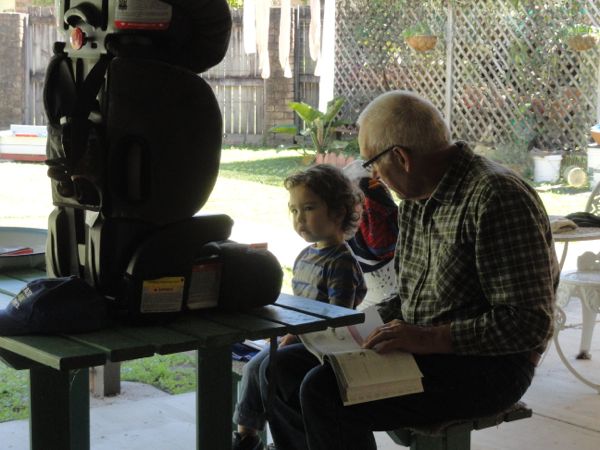
 Working out how to install the new car seat in the car.
 As soon as Jamie arrives in the mornings, he goes to visit the chooks with Opa.


Looking after grandkids is not the same as looking after your own children. You don't have that memory of yesterday's tantrum, haven't changed 50 nappies/diapers this week, haven't tried to get them to eat something new, and failed. No, when we see our two, it's just the pure joy of seeing them, looking forward to the time we have together and feeling grateful because I belong to this family.

My grandmother taught me how to wash up - the order of it all, that glasses go first, then cutlery and cleanish plates, followed by mixing bowls, dinner plates and finally, saucepans. I still do it that way all these years later. Hanno has been showing Jamie how to dig the garden and when I look out at them from the kitchen window, I wonder if what he learns while he's here will stay with him over the years. Maybe he'll forget it before he remembers it again, I did that. I remembered it all when I most needed it.

Work helps shape the people we become. When we spend the majority of our waking hours working at a particular job, it influences our thoughts, it regulates our actions and often it helps us slow down. I think this slow and methodical way of working is difficult for quite a few people but if you can manage it, it will bring a kind of gentle rhythm to your days that will help you get through the work. Caring for babies and toddlers, and the work you do in your backyard, can help you slow down because if you look at it carefully, natural systems are always slow. Nature always takes its own time and nothing will hurry it.


When I work during the day making the bed, baking our bread, peeling vegetables, cleaning the stove or the fridge, I feel that everything is as it should be. How could it be otherwise when I am doing such useful work. And when things aren't right, when I'm worried about something or someone I know is gravely ill or has died, I tie on my apron and start work and I know I can continue on. If I was everyone's grandma, I would make sure that every child carried out domestic tasks everyday. I would  show boys and girls how to look after themselves and others. Children learn respect, loyalty, generosity, kindness, tenderness and compassion when they take part in the day-to-day running of the house. Hopefully they'll learn what you teach them; they will definitely learn what they see.

Domestic work can remind us of where we come from and it's capable of carrying traditions forward. The food you cook, the way you garden, and sewing and knitting in traditional ways are most likely to be the places where memories of your culture thrive, or survive. House work fills bellies, helps us sleep soundly and keeps the family safe, clean and tidy. Carrying out that work with grace and sensitivity protects your family and demonstrates the love and respect you feel for them. Chores will come and go and responsibilities will change over time, but I hope there never comes a time when those in my family, or yours, don't have to do the work of family and home. It helps makes us what we are.

- - -  ♥  - - - 

Brisbane Writers' Festival
On Friday 6 September, from 10am till 1pm, I'll be conducting a masterclass called A practical guide to simple living. It will be held at the State Library, the cost is $80 - $90. There are three places left. To book online, go here and go down the page a little to find the date.

Another week has come and gone and now the time approaches for many of us to slow down and relax. Remember, you can't be at your best unless you look after yourself. This is not being soft or lazy, it's an important part of active life. 

Thanks for your visits. I hope to see you again next week. xx

The top ten biggest wastes of money
Is it easier to go to Tesco?
Simplify your world
Is your computer stupid?
Complexity and the ten thousand hour rule
Birthday greetings now sent by Twitter and Facebook

From comments here during the week

Gentle thoughts on homemaking
Simply pottering around
Socks ahoy
When the GFC started in 2008 I remember writing that although many people would lose jobs and there would be a lot of heartache, it might also put a lid on consumer spending for a while.  It did that and there were job losses and suffering but now, five years later, even though we've been told the crisis is over, businesses are still closing and caution is in the air. There is no such things as unlimited economic growth and it looks like what we've got now might be the new normal. But I'm no economist, I have no idea what will happen in the future, I just don't want us to go back to indiscriminate spending and debt.


If we believe our politicians, Australia got through the crisis better than most other countries. However, we have problems with the car industry, food farming and retail at the moment and we are told the mining boom is coming to an end. I'm thankful that we were already well and truly into our simple lives for a few years before the GFC hit. We had already seen for ourselves that moderation and prudence brought its own rewards and it wasn't a big stretch for us to cut back even further, just in case.


When we first made our change we looked at what we could live without. We gave up a second car, pay TV and a few other things and I can honestly say I've never missed them, not for a minute. I think we give possessions and the services we get used to more importance than they should have. Doing without hasn't made me feel deprived. I feel strengthened by it; we needed to make changes and now I feel that we could do almost anything.


When we first started living as we do, I was surprised by how much we could save simply by making a few changes and adjustments. Now that I look back on it, I see the most difficult part was deciding to do it. After that, the biggest and best changes came after we cut back all the obvious excess, and then saved more by changing the way we shopped, stockpiling and making a lot of what we used to buy. Through all of this, we've never felt deprived, we've never missed what we gave up, we never wanted to go back. This frugal economy suits us.

When I see what is around me now, the life Hanno and I have built here, I'm proud that we made every change we thought was necessary. Shopping has been replaced by home production, stress has been replaced by contentment, waste has been replaced by sustainability, and anxiety about the future has been replaced by the certainty that we have all we need. We have enough.

I know now that when we made all these changes, it wasn't only physical changes we made, it was also a change of mindset. We have happily gone from being rampant spenders to being frugal stewards of our land and I can't see that changing. There are conflicting messages about the end of the GFC with many "experts" telling us that the good times won't return any time soon. As far as I can tell, the good times are here now. Hanno and I might not have the money (or the inclination) to spend like we did in the past, but we're happier. Even if the economy boomed, we wouldn't change how we live; we would never go back.  How have you faired over the past few years? Have you changed for good?

The cost of everyday luxuries
Australia facing new collapse


Our vegetable garden is getting there. It's been slow this year. Hanno had several health set backs and is still consulting specialists - he has an appointment today. But through it all he's kept the garden going. Some days he'd do some weeding, some days he'd just water what was growing but in the past few weeks his strength and drive have returned and the vegetable garden has moved ahead.


The main crop, the one we're both sweating on, is the garlic. I used garlic in today's main meal and we're down to one and a half heads left of last year's harvest. If it lasts another two weeks, the new crop will come in just in time. We're picking strawberries at the moment. Big, red, juicy organic strawberries.  It's one of the fruits that tastes so much better having been grown in the back yard, rather than in a field with thousands of others. If you have no room to grow fruit trees at your place, strawberries may be within your reach. They grow well in the garden but also love to be grown in containers, hanging baskets and plumber's pipe with holes cut in the side. If you're never grown fruit before, find two or three virus-free strawberry plants, plant them into rich soil, give them full sun and stand back. Hopefully, you'll be rewarded for your efforts.

The constant guardians - Lulubelle and Mary.
Daikon, wombok and tomato, with kale in the background.

I doubt we'll grow potatoes in this year, but that's okay, they'll be there for us again next year. I asked Hanno the other day how long he wants to keep the vegetable garden going and said he's happy to work on it for another few years. But we're making changes to make the work easier when we can. Recently we bought a compost tumbler; it's supposed to make a batch of compost in about six weeks. We move the tumbler with a handle so there is no shovelling to turn the heap over. It seems like a step in the right direction.


Daikon and beetroot.

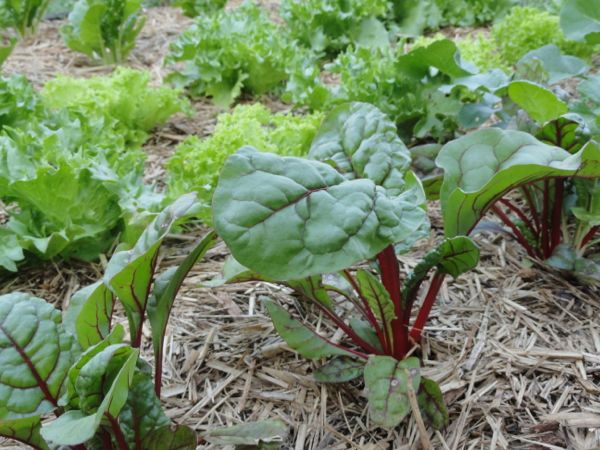
At the moment we're growing, bok choi, daikon, wombok, green beans, beetroot, rainbow chard, silverbeet, tomatoes, garlic, strawberries, chillies, corn, kale, cucumbers, lettuce, parsley - curly and flat leaf, Welsh onions, leeks and last year's solo eggplant is flowering again. We have two capsicum/pepper plants from last season that look healthy but have no leaves. I'll cut them back and see what happens. Hoepfully, they'll spring back to life again for us. I've planted sweet peas and a Buddleia in pots at the front of the garden and hopefully, they'll bring in the bees, butterflies and other pollinators.

Bok choi.


Right now is a good time to grow vegetables in our region. There are few bugs around, the air is warm enough to encourage growth, but not humid, which brings powdery mildew and its cousins. So we'll be content with this smaller garden for now and shop at the local market when we need to. I hope you've discovered the joys of vegetable gardening. It is one of life's true gifts to get your hands into soil and connect with nature.

What fresh feasts will be on your table this season?

The August decluttering challenge continues with three items going today. I am finally giving away my red dress. I kept it for years, even after I stopped wearing it, because I thought I might like it again. Then I decided that wouldn't happen but because the side of the dress has a lot of buttons right down the side as a design feature, I decided to keep it so I could remove the buttons, then it would go. Well, it's been waiting to have those buttons removed for about five years. The buttons are still there, so is the dress. It goes today. Also going are two pairs of shoes. The challenge is still going strong over at the forum. If you want to join in for the last two weeks, you can write your own blog post about it and leave the link to your blog in the comments here, or you can join in the forum thread here.
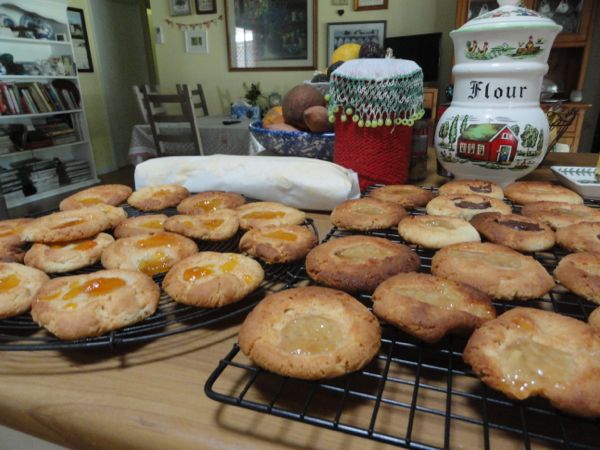

We had a slow and relaxed weekend. The weather is changing from the cool of late winter to warmer days and nights. It's been a short winter this year and not as cold as it usually is here. I have the feeling it will be a long hot summer.

One of the joys of living where we do is that the weather is often perfect for six months of the year. Spring and Autumn are ideal, summer is too humid and winter, although nothing by European and North American standards, is cold. Spring is almost here. Hanno worked out in the garden most of the weekend. He dug a huge hole to plant the new lemon tree and unfortunately hit a lot of clay. He added gypsum to break it up a bit, filled the hole with compost, chicken manure, garden soil a good sprinkling of organic fertiliser and then built a fence around it so the chickens can't scratch at the root ball. It's in a sunny part of the chick run so when it's fully grown there'll have more shade in there. It's growing alongside a native fig, a pecan tree and another Eureka lemon. Now we have to keep the water up to it over summer and make sure it gets away to a good start. You can never have too many lemons.

Summer Memories

Those chooks are so entertaining. I went out very early to let them out and, as usual, Fiona was first out of the coop into the run, followed by all the others, with Lucy last. It's always in that order. Hanno had dropped one of his gardening gloves in the run and it was laying there, just one glove - natural coloured linen and canvas, nothing too drastic. Yet those chickens carried on like they had a 15 foot python in the backyard. They cackled and squawked and ran in and out wanting a better look at the glove. None of them touched it. Only Lucy, the mother hen, stood back and watched the carryings on with me. They only settled down when I picked the glove up and removed it. They know every inch of their territory and just one thing out of place sends them into a flap - literally.


In the front garden, Hanno pruned back a lot of the ornamental plants and trees. I'm growing old roses now, I have two bushes in, and have just picked the first flower for my desk. It's a very pale pinky-white - a shrub rose called Summer Memories. The other one is a David Austin rose called Claire Rose. They're growing beautifully at the moment but we'll have to help it through summer with extra water this year and hopefully they'll grow well after that. We also have a rose climber called Cecile Brunner which is a tiny pink rose. My mother grew it in her garden and it really loves the weather here. It's on the arbour out the front twinning itself through the wisteria. I'm also trying to cultivate hydrangeas this year. I bought them about 12 years ago, have not been successful in my plantings, but have kept them going as cuttings in the bush house. Now they're in a space just off the front verandah that gets morning sun and remains in shade the rest of the day. I hope it works. I have a feeling they like it there.


Hanno and I both see the garden - front and back - as an important part of our home. The trees provide shade and habitat for wildlife and birds, and although the garden is not grand, it suits our house well. And of course, the back yard provides us with fruit, vegetables and eggs, as well as ample space for grandsons to run around like crazy clowns or build roads in the sand pit.


I go out into the garden early now the weather is warmer. Just after sunrise, when the birds are calling out for the first time that day, I wander around, looking and thinking, watering this and that, clipping, moving and imaging what will come next. I understand now why gardening is such a popular pastime for retired folk. Not only is there a lot of gentle and robust work to be done, there is life and the potential for growth and change and as you grow older, it's wonderful being a part of that.

What's happening in your garden?


I did the last of my library sessions at the Noosa Library yesterday. It's been a real pleasure to go out to these libraries and talk about my simple life. Most of the people who came along didn't know me so it was great to be able to talk to people who are just starting out on their own simple life adventure. But what I really loved was meeting the many blog readers who came along to say hello. That made me so happy. Thanks for taking the time and for saying hello. These sessions were really successful, with most of them booked out. The library has booked me for more talks next year so I'll have to start thinking about that to make up another set of useful and thought-provoking sessions. If you have any ideas, send me an email. 

Thanks for your visits during the week. I appreciate your thoughts, good wishes and ideas coming in through the comments. Have a lovely weekend and don't forget to look after yourself. (I mean it.)

Hanno, Kerry and Jamie spent the day together at Australia Zoo on Wednesday. Pictured here is Jamie standing on top of one of the huge crocodiles they have there.

When I went on my book tour, well over a year ago now, I walked into the foyer of Penguin in Melbourne, and heard someone speak my name. It was Kate from Foxs Lane! We had a brief chat and went our separate ways. Now I see she has published her book. It's called Vantastic and it looks like a great read. If you want to smile today, and keep smiling, go and have a look at Vantastic, the film. I haven't done a lot of blog reading lately but I'm really pleased I found Kate again, just as Vantasic arrived. Check all three links, they're not the same. :- )

Making do with what you've got - withchinthekitchen

How to make sauerkraut - cityhippyfarmgirl

The true story of a seven year marriage

Is there really organic honey?

From the comments here this week:
moleymakes

red dirt momma

dylan's dress


At one of my library talks recently I was asked "do you make bread every day?" It was half way between an accusation and a cry for help, as in, please, say no! Well, I have to come clean, I don't make bread every single day, but I make bread most days - probably six days a week. I don't see having bread left over as a problem, it's just the opportunity to create something else with it. Apart from toast, croutons and feeding it with warm milk (powdered) to the chooks during winter, there are so many uses for stale bread.  


I know there are many of you who are trying your hand at bread for the first time, so I thought it would be a good idea to share some of these links for uses for stale bread. When you use stale bread to make something else it doesn't have to be the best piece of bread or, if you're making breadcrumbs, even the same type of bread. But if you're using plain bread and sweet bread, make sure you keep them to their own recipes. If you're new to bread making and you don't like the taste of your bread, if it's not too far off the mark you may be able to save it by turning it into something like bread and butter pudding. Making a pudding out of it will add extra flavour and if your bread's downfall has been that it looks okay but it hasn't got much taste, then go for the pudding option and add more flavour when you make your next loaf.

  • Bread and butter pudding or Banana bread and butter pudding
  • Italian bread salad
  • Bread cases
  • Bread sauce
  • How to make and freeze breadcrumbs
  • Scroll down the page to find Orangette's Nanny's cinnamon toast snacks. I can vouch for these. Delicious!
  • Nigel Slater's French toast
  • 15 unexpected hacks from chicken soup to broken glass
And now it's over to you. What do you do with your stale bread that's not already on the list?


Newer Posts Older Posts Home


My books were all published by Pengiun, and are available at Amazon US, Amazon UK and Amazon Au

Search here

Total Pageviews

Translate


I'm Rhonda Hetzel and I've been writing my Down to Earth blog since 2007. Although I write the occasional philosophical post, my main topics include home cooking, happiness and gardening as well as budgeting, baking, ageing, generosity, mending and handmade crafts. I hope you enjoy your time here.

MY FAVOURITE PLACES

  • Grandma Donna's Place
  • Grandma Donna's YouTube
  • Grandma Donna's Instagram
  • This Simple Day
  • Nicole's Instagram

Give More

Give More

Popular posts last year

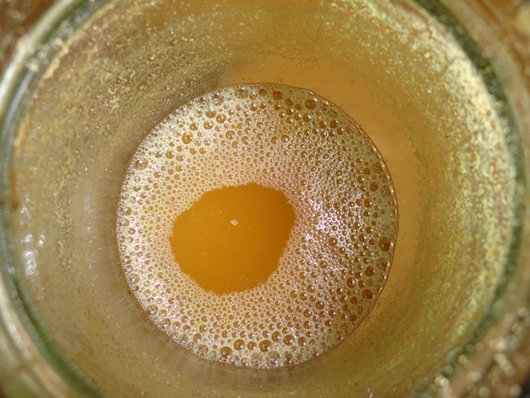
Making ginger beer from scratch

We had a nice supply of ginger beer going over Christmas. It's a delicious soft drink for young and old, although there is an alcoholic version that can be made with a slight variation on the recipe. Ginger beer is a naturally fermented drink that is easy to make - with ginger beer you make a starter called a ginger beer plant and after it has fermented, you add that to sweet water and lemon juice. Like sourdough, it must ferment to give it that sharp fizz. To make a ginger beer plant you'll need ginger - either the powdered dry variety or fresh ginger, sugar, rainwater or tap water that has stood for 24 hours to allow the chlorine to evaporate off. You'll also need clean plastic bottles that have been scrubbed with soap, hot water and a bottle brush and then rinsed with hot water. I never sterilise my bottles and I haven't had any problems. If you intend to keep the ginger beer for a long time, I'd suggest you sterilise your bottles. MAKING THE STARTER In a...
Image

NOT the last post

This will be my last post here.  I've been writing my blog for 18 years and now is the time to step back. I’ve stopped writing the blog and come back a couple of times because so many people wanted it, but that won’t happen again, I won’t be back.  I’ll continue on instagram to remain connected but I don’t know how frequent that will be. I know some of you will be interested to know the blog's statistics. 
Image

How to make cold process soap

I'm sure many of you are wondering: "Why make soap when I can buy it cheaply at the supermarket?" My cold process soap is made with vegetable oils and when it is made and cured, it contains no harsh chemicals or dyes. Often commercial soap is made with tallow (animal fat) and contains synthetic fragrance and dye and retains almost no glycerin. Glycerin is a natural emollient that helps with the lather and moisturises the skin. The makers of commercial soaps extract the glycerin and sell it as a separate product as it's more valuable than the soap. Then they add chemicals to make the soap lather. Crazy. Making your own soap allows you to add whatever you want to add. If you want a plain and pure soap, as I do, you can have that, or you can start with the plain soap and add colour, herbs and fragrance. The choice is yours. I want to add a little about animal and bird fat. I know Kirsty makes her soap with duck fat and I think that's great. I think t...
Image

Preserving food in a traditional way - pickling beetroot

I've had a number of emails from readers who want to start preserving food in jars but don't know where to start or what equipment to buy.  Leading on from yesterday's post, let's just say up front - don't buy any equipment. Once you know what you're doing and that you enjoy preserving, then you can decide whether or not to buy extra equipment. Food is preserved effectively without refrigeration by a variety of different methods. A few of the traditional methods are drying, fermentation, smoking, salting or by adding vinegar and sugar to the food - pickling. This last method is what we're talking about today. Vinegar and sugar are natural preservatives and adding one or both to food sets up an environment that bacteria and yeasts can't grow in. If you make the vinegar and sugar mix palatable, you can put up jars of vegetables or fruit that enhance the flavour of the food and can be stored in a cupboard or fridge for months. Other traditional w...
Image

Cleaning mould from walls and fabrics

With all this rain around we've developed a mould problem in our home. Usually we have the front and back doors open and that good ventilation stops most moulds from establishing. However, with the house locked up for the past week, the high humidity and the rain, mould is now growing on the wooden walls near our front door and on the lower parts of cupboards in the kitchen. Most of us will find mould growing in our homes at some point. Either in the bathroom or, in humid climates, on the walls, like we have now. You'll need a safe and effective remedy at some point, so I hope one of these methods works well for you. Mould is not only ugly to look at, it can cause health problems so if you see mould growing, do something about it straight away. The longer you leave the problem, the harder it will be to get rid of it effectively. If you have asthma or any allergies, you should do this type of cleaning with a face mask on so you don't breathe in any spores. Many peopl...
Image

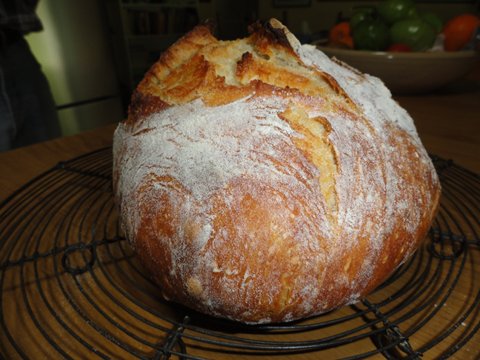
Five minute bread

Bread is one of those foods that, when made with your own hands, gives a great deal of satisfaction and delight. It's only flour and water but it symbolises so much. I bake bread most days and use a variety of flours that I buy in bulk. Often I make a sandwich loaf because we use most of our bread for lunchtime sandwiches and for toast. Every so often I branch out to make a different type of loaf. I have tried sour dough in the past but I've not been happy with any of them. I'll continue to experiment with sour dough because I like the idea of using wild yeasts and saving the starter over a number of years to develop the flavour and become a part of the family. However, the loaf I've been branching out to most often is just a plain old five minute bread. By five minutes I mean it takes about five minutes actual work to prepare but it's the easiest of all bread to make and to get consistently good loaves from. If you're having people around for lunch or...
Image

This is my last post.

I have known for a while that this post was coming, but I didn't know when. This is my last post. I'm closing my blog, for good, and I'm not coming back like I have in the past.  I've been writing here for 16 years and my blog has been many things to me. It helped me change my life, it introduced me to so many good people, it became a wonderful record of my family life, it helped me get a book contract with Penguin, and monthly columns with The Australian Women's Weekly and Burke's Backyard . But in the past few months, it's become a burden. In April, I'll be 75 years old and I hope I've got another ten years ahead. However, each year I'll probably get weaker and although I'm fairly healthy, I do have a benign brain tumour and that could start growing. There are so many things I want to do and with time running out, leaving the blog behind gives me time to do the things that give me pleasure. On the day the blog started I felt a wonderful, h...
Image

What is the role of the homemaker in later years?

An email came from a US reader, Abby, who asked about being a homemaker in later years. This is part of what she wrote: "I am a stay-at-home mum to 4 children, ages 9-16. I do have a variety of "odd jobs" that I enjoy - I run a small "before-school" morning drop-off daycare from my home, I am a writing tutor, and I work a few hours a week at a local children's bookstore. But mostly, I cherish my blissful days at home - cooking, cleaning (with homemade cleaners), taking care of our children and chickens and goats, baking, meal-planning, etc. This "career" at home is not at all what I imagined during my ambitious years at university, but it is far more enriching. I notice, though, that my day is often planned around the needs of my family members. Of course, with 4 active kids and a husband, this is natural. I do the shopping, plan my meals, cook dinner - generally in anticipation of my family reconnecting in the evening.  I can't h...
Image

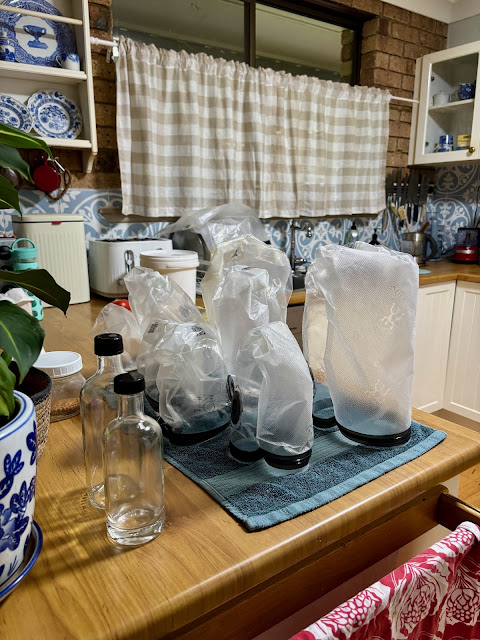
Every morning at home

Every morning when I walk into my kitchen it looks tidy and ready for a day's work. Not so on this morning (above), I saw this when I walked in. Late the previous afternoon when I was looking for something, I came across my rolled up Zwilling vacuum bags and decided they had to be washed and dried. So I did that and although I usually put them outside on the verandah to dry it was dark by then. I turned the just-washed bags inside out and left them like this on a towel. It worked well and now the bags are ready to use when I bring home root vegetables, cabbages or whatever I buy that I want to last four or five weeks.
Image

You’ll save money by going back to basics

When I was doing the workshops and solo sessions, I had a couple of people whose main focus was on creating the fastest way to set up a simple life. You can't create a simple life fast, it's the opposite of that It's not one single thing either - it's a number of smaller, simpler activities that combine to create a life that reflects your values; and that takes a long to come together. When I first started living simply I took an entire year to work out our food - buying it, storing it, cooking it, preserving, baking, freezing, and growing it in the backyard. This is change that will transform how you live and it can't be rushed.  
Image


Trending Articles

NOT the last post

This will be my last post here.  I've been writing my blog for 18 years and now is the time to step back. I’ve stopped writing the blog and come back a couple of times because so many people wanted it, but that won’t happen again, I won’t be back.  I’ll continue on instagram to remain connected but I don’t know how frequent that will be. I know some of you will be interested to know the blog's statistics. 
Image

Every morning at home

Every morning when I walk into my kitchen it looks tidy and ready for a day's work. Not so on this morning (above), I saw this when I walked in. Late the previous afternoon when I was looking for something, I came across my rolled up Zwilling vacuum bags and decided they had to be washed and dried. So I did that and although I usually put them outside on the verandah to dry it was dark by then. I turned the just-washed bags inside out and left them like this on a towel. It worked well and now the bags are ready to use when I bring home root vegetables, cabbages or whatever I buy that I want to last four or five weeks.
Image

You’ll save money by going back to basics

When I was doing the workshops and solo sessions, I had a couple of people whose main focus was on creating the fastest way to set up a simple life. You can't create a simple life fast, it's the opposite of that It's not one single thing either - it's a number of smaller, simpler activities that combine to create a life that reflects your values; and that takes a long to come together. When I first started living simply I took an entire year to work out our food - buying it, storing it, cooking it, preserving, baking, freezing, and growing it in the backyard. This is change that will transform how you live and it can't be rushed.  
Image

Creating a home you'll love forever

Living simply is the answer to just about everything. It reduces the cost of living; it keeps you focused on being careful with resources such as water and electricity; it reminds you to not waste food; it encourages you to store food so you don't waste it and doing all those things brings routine and rhythm to your daily life. Consciously connecting every day with the activities and tasks that create simple life reminds you to look for the meaning and beauty that normal daily life holds.  It's all there in your home if you look for it. Seemingly mundane tasks like cleaning and cooking help you with that connection for without those tasks, the home you want to live in won't exist in the way you want it to.  Creating a home you love will make you happy and satisfied.
Image

Time changes everything

I've been spending time in the backyard lately creating a contained herb and vegetable garden. My aim is to develop a comfortable place to spend time, relax, increase biodiversity and encourage more animals, birds and insects to live here or visit. Of course I'd prefer my old garden which was put together by Hanno with ease and German precision. Together, we created a space bursting at the seams with herbs, vegetables and fruity goodness ready to eat and share throughout the year. But time changes everything. What I'm planning on doing now, is a brilliant opportunity for an almost 80 year old with balance issues. In my new garden I'll be able to do a wide range of challenging or easy work, depending on how I feel each day. It’s a daily opportunity to push myself or sit back, watch what's happening around me and be captivated by memories or the scope of what's yet to come.
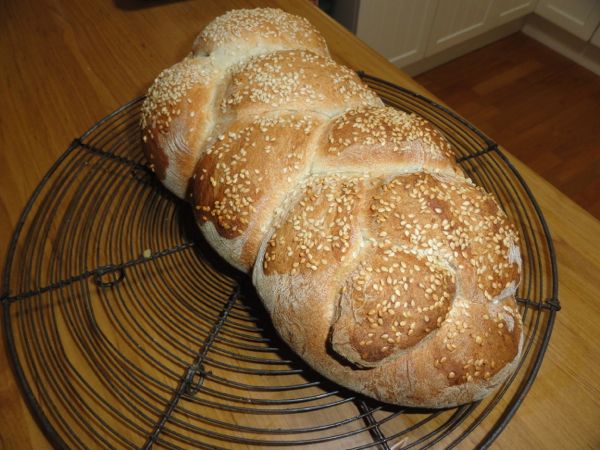
Image

It's the old ways I love the most

I'm a practical woman who lives in a 1980’s brick slab house. There are verandahs front and back so I have places to sit outside when it's hot or cold. Those verandahs tend to make the house darker than it would be but they're been a great investment over time because they made the house more liveable. My home is not a romantic cottage, nor a minimalist modern home, it's a 1980’s brick slab house. And yet when people visit me here they tell me how warm and cosy my home is and that they feel comforted by being here. I've thought about that over the years and I'm convinced now that the style of a home isn't what appeals to people. What they love is the feeling within that home and whether it's nurturing the people who live there.
Image

Making ginger beer from scratch

We had a nice supply of ginger beer going over Christmas. It's a delicious soft drink for young and old, although there is an alcoholic version that can be made with a slight variation on the recipe. Ginger beer is a naturally fermented drink that is easy to make - with ginger beer you make a starter called a ginger beer plant and after it has fermented, you add that to sweet water and lemon juice. Like sourdough, it must ferment to give it that sharp fizz. To make a ginger beer plant you'll need ginger - either the powdered dry variety or fresh ginger, sugar, rainwater or tap water that has stood for 24 hours to allow the chlorine to evaporate off. You'll also need clean plastic bottles that have been scrubbed with soap, hot water and a bottle brush and then rinsed with hot water. I never sterilise my bottles and I haven't had any problems. If you intend to keep the ginger beer for a long time, I'd suggest you sterilise your bottles. MAKING THE STARTER In a...
Image

An authentic look at daily life here — unstaged and real

Most days Hanno was outside happily working in the fresh air. It may surprise you to know that I started reading my book,  Down to Earth , yesterday - the first time since I wrote it 13 years ago.  I had lent it to my neighbor, and when she returned it, I started reading, expecting to find surprises. Instead, I realised the words were still familiar—as if they were etched into my memory. As I flipped through the pages, I was reminded of how important it was for me to share that knowledge with others. The principles in Down to Earth changed my life, and I truly believed they could do the same for others. After just 30 minutes of reading, I put the book down, reassured that its message still holds true: we can slow down and reshape our lives, one step at a time.
Image