down to earth

  • Home
  • About Us
  • Down To Earth Book
  • Privacy Policy
We had lunch with Kerry, Sunny and Jamie yesterday. It's such a gentle pleasure to sit around a table and share food with loved ones. The sun was shining outside on a warm end of winter day and we had clinking ice cubes in our lemon cordial glasses. A sign of things to come when summer really hits.


I cooked roast pork with baked potatoes, pumpkin, baby parsnips, red cabbage and peas, and followed that with fresh fruit salad and ice cream. Food is always more than food. It's a way of bringing the family together, a reconnection that shows us all that everything is going well, or an early warning that it isn't. You can often get the words that say that over the phone but it's usually the face-to-face meetings that show it unreservedly, and they are made better over a meal, or at least a cup of tea. Yesterday, the conversation was easy, we all enjoyed the shared food and while the warm breeze drifted through the kitchen, Jamie was learning that this is how his family is.


The kitchen table is a powerful symbol of family life. Over the years in my family, we've sat at tables just like mine and talked about dying grandmas, visiting aunties and uncles and the thousand other things that made up our lives then.  I remember my grandma's table, shiny and waxed, holding gem scones, pikelets, corned beef sandwiches and tea. I remember my mother's table - yellow laminex surface with chrome edging, laden with cold drinks, beers and strange cocktail mixes, with chips and fruit cake at Christmas time, when the neighbours visited. We sat together at our kitchen table with a meal at the end of every day, and then, at various times during the year, it would become the centre of joyous hospitality or quiet with tea when sadder times came calling. 

I discovered a lot about my family, and life in general, sitting and listening at the kitchen table. Way back then I don't recall feeling frightened or alarmed at any of the adults talking quietly in the kitchen, nor during the happy and more boisterous occasions. It showed me that adults were vulnerable too and how comfort was sought and given during those times. It showed me the beginnings of hospitality. So in addition to being a focal point in our day-to-day lives where we shared our meals, this humble piece of furniture also became a sewing centre, ironing board, homework desk, games table, it held baby baths, folded washing and a hundred other things. And then during those special times, everyone knew the kitchen table was the place to be during a celebration or when we had to say a sad goodbye.

What happens at your kitchen table?


There will be readers who will gag at these old-fashioned recipes, as well as those who, even though the ingredients are quite cheap, still can't afford to buy them, but there will also be many who are struggling to feed the family each week and if that is you, then I hope these recipes help in some way. I've gone off eating sausages as much as we used to but I do eat them occasionally, mainly because they're tasty and cheap and if I don't think about what I'm eating, I'm fine. I'm sharing this recipe because I remember many times in the past when I was trying to stick to my budget with Hanno and two teenaged boys to feed and another quiche or salad just wasn't going to do it on that particular day. Some men just need to eat meat and I'm not going to go into the whys and wherefores of that, I just know it to be a fact.


This will do a small family of two or three for two meals, just increase the number of sausages if there are more of you. We started with ten sausages. Mine were skinny beef sausages, but they could also be fat ones, pork or chicken sausages. The rest of the ingredients are really dependent on what you have on hand - either in your fridge, pantry, stockpile or garden.


Cook all the sausages in a frying pan on the first night - this will save on the time and electricity/gas to cook them on the second night. Look in your pantry, fridge, stockpile and garden and see what vegetables and herbs you have to use. I think the success of this meal will depend on how many vegies you have because they tend to fill up the plate and provide variety and colour. If you have no fresh vegetables but have tins of beans and tomatoes in the cupboard, you could use those instead. another option would be if you have potatoes and fresh eggs - you could serve the sausages with eggs and potato wedges.


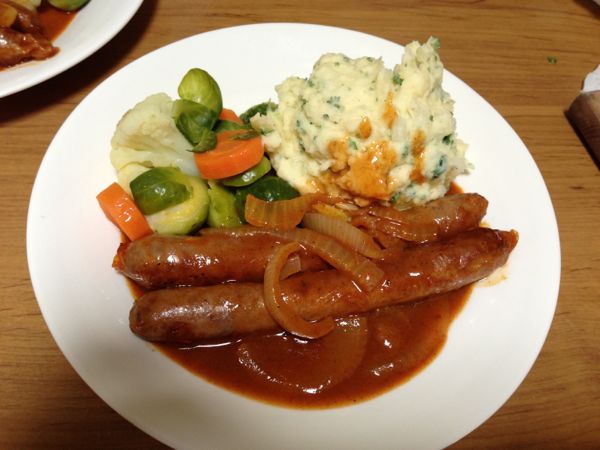
On the first night we had sausages with onion gravy, mashed potatoes with finely chopped onion and parsley, brussel sprouts, cauliflower and carrots. It's winter here so we enjoyed the hot food but if it were summer, a salad, potato salad, coleslaw, homemade pickled beetroot or tomato relish would all be delicious served alongside the sausages.

ONION GRAVY
Pour off some of the dripping in the pan if there is too much there. Add one sliced onion and fry until soft. Add a tablespoon of plain flour, salt and pepper, then stir this until it's brown. If you have paprika, adding a level teaspoon will add a rich colour to the gravy. When the flour mix is coloured, add about a litre/quart of water and stir until the gravy thickens. Allow to simmer on the stove while you serve the sausages and vegetables, then top with hot gravy.

Put the leftover sausages and gravy in a bowl, in the fridge for tomorrow night's dinner.

CURRIED SAUSAGES
The following night, chop the sausages into bite sizes pieces and leave to one side. Add a small amount of oil to the pan and cook one onion until it's slightly browned, then add the vegetables you have on hand, add a tablespoon of curry powder and another of plain flour and stir in. Then add about a litre/quart of water and allow the sauce to thicken. Add the sausage pieces and simmer for 30 minutes to allow the curry flavours to develop. I added ½ cup washed rice to the meal so I didn't have much washing up to do but you could also boil or steam some rice separately to serve with it.

Please note: if you have small children who won't like curry, leave the curry powder out and add paprika instead. You'll still get a good flavour.


I love having a treat after a meal like this - a meal when I feel I've saved money and stayed within my budget. Right now it's strawberry season here so fresh strawberries and cream is the logical (to me) ending to a meal such as this. Just because we're on a budget, it doesn't mean we can't eat the best fruit we can find or create a favourite dessert. Don't be afraid to treat yourself. You deserve it. : - )

Thanks to everyone who suggested radio stations for me to try. I've already listened to Jack Monroe on BBC4. I'll set up NPR and Radio National when I have a chance later in the week.


I'm continuing the decluttering challenge many of us started last Monday. The declutterers at the forum are posting about what they're doing and what they're moving out. It's quite inspiring. If you want to join in, we're decluttering five items on Monday and one item each week day until the end of the month. If you want to blog about what you're decluttering, leave a link for us in the comments and we'll follow it. Here is last Monday's post about it.

The drawer in its original condition.
After a quick clean and tidy.
This is what is being moved out. It wasn't too bad although there are a couple of things there I don't recognise.

Yesterday, after lunch, I decided to clean out one of the gadget drawers in the kitchen. This is the drawer that sits under my kitchen linens drawer, under the oven. It holds things I use, but not often. So it's the mandolin, tomato press, grater, canning tools, rings, lids and those sorts of things. It didn't take long to remove everything, wipe the drawer out, replace the useful items and separate what I didn't need any more. I'm sure there is a reason I kept one of the steel racks from my old oven but I can't think of it now. Whatever the reason, now it will be used to dry soap or as a rack in the bush house to keep wet pots off the wooden benches.

It feels good to have the drawer clean and tidy, ready for service again.

Yesterday I thought I was going to write most of the day but I ended up in my bush house, repotting ferns and plants in hanging baskets. I take the baskets out of the bushouse in spring and hang them on the front verandah. They give the house a cooler feeling when the temperatures start to climb again. So I repotted some king ferns and a few olds and ends and hung them out the front. We rarely sit out there in winter, favouring the back verandah with the sun streaming in during the colder weather.  I love sitting outside to have morning or afternoon tea. We can sit there together in the fresh air, talking about our plans and hopes, while we enjoy a break.


Also after lunch, I juiced two buckets full of lemons. I harvested two litres/quarts of juice last week, now these two buckets have given two more large bottles for the freezer, as well as a litre/quart to use during the week. That lemon tree of ours has served us well over the almost 16 years we've lived here. It was one of the first things we planted here, it's in the chook run so we never have to fertilise it, and although it gives a huge crop of lemons in winter, it generally has a few lemons on it all through the year. I'm guessing we'll get another two or three good years from the tree before it will start producing less and less lemons. If it keeps on producing prolific crops, I'll happily accept it and have more than enough lemons and cordial to share.

LEMON CORDIAL

To make lemon cordial, or any fruit cordial, you start by making a sugar syrup. This is just equal quantities of water and sugar - so 1 cup sugar to 1 cup of water. I use 2 kg/4.4lbs sugar to 2 litres/quarts water and make up a quantity of the syrup - boil till the sugar dissolves and allow to cool. It keeps in the fridge for about six months. Then just mix it with the juice as needed.  I use equal amounts of syrup to juice and then dilute the drink right down with water and this is done according to your taste.


The two plastic bottles will go in the freezer, the glass bottle in the fridge for use during the week. Kerry, Sunny and Jamie are coming over for a family lunch tomorrow so I'll probably make a batch of cordial then. The forecast tomorrow is for 28C/82F and it's still winter! 

Hanno went to the market yesterday and bought another Eureka lemon tree.  It will be planted up in the corner of our property, near the bananas. I can't imagine not having a lemon tree now. They're good for so many things. But soon it will be summer, and that's always lemon cordial time here. I'm looking forward to it with an abundance of juice ready to go.

Just a little request here at the end. Now that I've discovered that I can use my smartphone as an internet radio, I've been trying to find a couple of stations to listen to in the kitchen when I'm working there. I don't want music stations, I like talk, but not talk-back. Something similar to the wonderful Radio National in Australia would be ideal. They have all sorts of interesting broadcasts about lifestyle, books, philosophy, parenting, history, food etc. Do you have anything to recommend?


Vivian is back from her family holiday and she's having a mini sale at EcoYarns this weekend. Most of the yarns with wool content will be on sale. I noticed there are new buttons in now too and, if you're a spinner, several new tools, such as a yarn meter, and winders.

I am knitting Johnathan a summer cardigan in Vivian's softest pale blue organic cotton at the moment. I love using it.  And Tricia is knitting herself a beautiful darm brown cardigan with the Trekeiske Organic Merino. It's so soft and warm.
The master's apprentice. This is where Jamie leaves his spade.

I'll be busy with my writing most of the weekend. I'm hoping to have Sunday afternoon off to relax and prepare for next week. I hope you have the chance to relax too, even if you're busy, especially then. You need it. Whatever you do ever the weekend, I hope you enjoy yourself and spend time with the people you love. I'll see you next week. 

- - - ♥ - - -

If you're buying packet cake mix this week, read this first.
How to be self-sufficent in the city
Learning to live a self-sufficient life
Ben Hewitt
How to eat off the land in August
Sort through the recipes at tinnedtomatoes
The English Kitchen
The Pace of Modern Life
Delicious Vietnamese summer rolls

From the comments here this week
Dusty Country Road
Bread and Butter
Gladys in the Garden


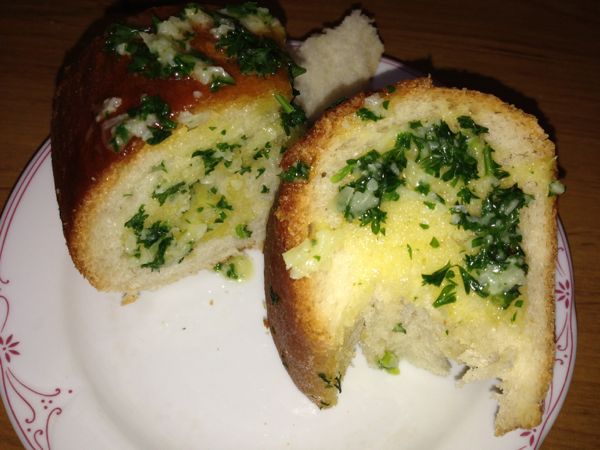
Homemade garlic and herb bread.

Bread is part of our daily lives here. I make it most days and sometimes we buy a good rye loaf from our German baker. I'm happy to say though that I make good rye bread, so the loaf we buy from them at six dollars is only purchased when, for one reason or another, it can't be made at home. Very early on in my simple life I wanted to bake bread instead of buy it. It is possible to buy good bread but it's expensive and supermarket bread contains so many additives, I don't think it's worth eating. The following is a typical ingredient list for Australian packaged white or wholemeal supermarket bread:

  • Wheat Flour, Water, Baker's Yeast, Vinegar, Iodised Salt, Canola Oil, Wheat Gluten, Soy Flour, Emulsifiers (481, 472e, 471), Vitamins (Thiamin, Folate). 

So one of the first things I taught myself how to do was to bake our bread. It took about three months to get a loaf that I was happy with every day. I tried many recipes, reworked, adjusted and finally had a recipe that gave consistent good results.  I've kept tweaking it over the years and I'm happy to share that recipe with you. I know many are learning how to bake for the first time and others struggle, as I did, to get a decent loaf. Bread and soap making are the two subjects I'm asked about most at my library talks. Try this recipe and if it doesn't work, try it again the following day. If it works the second time, it just means you missed something the first time. The amounts must be accurate and you need a warm temperature in the kitchen to proof the dough.

This loaf can be made in a bread machine or completely by hand. I use the machine to knead the dough when I'm busy. One thing a machine is good at is kneading, and the machine keeps a steady warm temperature so that the dough rises well. When all that is done, I take the dough out of the machine and bake the loaf in the oven. The how to guide to making bread by hand is in this early post from 2007. Little has changed, except the recipe. I've developed this new simpler recipe that makes a good loaf, even for beginners. 

This bread contains gluten. I never make gluten-free bread. Gluten is one of the proteins in wheat flour. To make this bread successfully, you need to develop the gluten. That just means it must be kneaded for a long time. The machine will take over an hour to knead and proof the dough. If you do it by hand, you must knead vigorously for at least ten minutes. 


You need fresh ingredients for bread to rise. Use fresh flour and fresh yeast, not those that have been sitting at the back of the cupboard for six months.

BREAD RECIPE
  • Approx. 300 mls/10oz warm water - start off with 280mls/9.5oz water, and add more if the dough needs it. Make sure the water isn't too hot. It will kill the yeast.
  • 2 teaspoons dried/instant yeast *
  • 1 teaspoon sugar (optional) this helps the yeast to activate
  • 400 grams of high protein/baker's flour - it can be white, wholemeal, grain or rye. The only difference this will make to the recipe is the amount of water the different flours will need.
  • 1 teaspoon salt
If you've had problems in the past getting bread to rise, use a heaped teaspoon of bread improver to the above recipe and see if that makes a difference. 

* I never use any other type of yeast so please don't ask me about fresh yeast. I don't know.

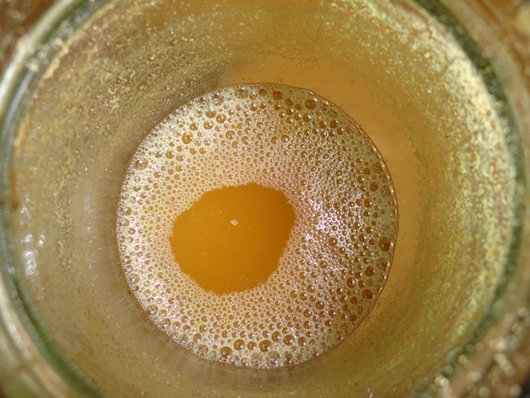
Before loading the bread machine, add 280mls/9.5oz warm water to a cup and add the yeast and sugar. Stir it until it's dissolved. Give the yeast five minutes to activate and if the mixture looks milky or bubbly, the yeast has activated. There is a photo of this in the 2007 link. If the yeast doesn't activate, wait another five minutes. If it still hasn't activated, it must be dead/old yeast. You'll have to buy a fresh batch before you make bread.

Load the flour and salt into the machine then add the yeast water. Turn the machine on to the dough setting and let it start mixing. Keep an eye on it because you'll probably have to add more water. Let the dry ingredients mix and the add the rest of the water if it needs it. You may even have to add more water. It will depend on the weather and the type of flour you use. You're aiming to make the dough moist but not really sticky. When the dough starts the kneading process, it should turn into a nice smooth dough.

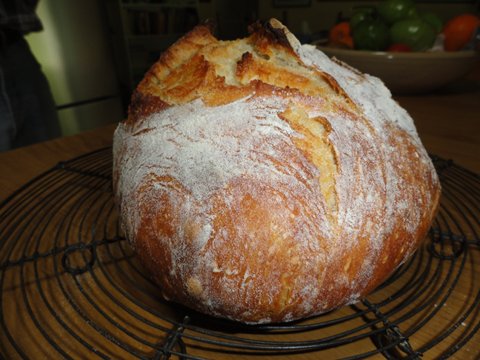
Last week's bread.
Uncut and cut.
Shaping the dough. You roll it into a spiral.
Last week's garlic bread.
I forgot to take a photo before I cut it. Oops.
This is the shaped loaf in the bread tin, sitting in the bread machine to rise.

When the dough cycle has finished. Take the dough out, shape it and put it in your bread tin. Let it sit with a clean tea towel over the top to almost double in size. If you kitchen is cold, you may want to do this by placing the bread tin into the top of the bread machine while it's still turned on. The warmth of the machine will help the dough rise (see above).  When the dough has risen, just before you put it in the oven, add seeds, polenta, oats or whatever you want to add, slash the top with a VERY sharp knife and put the loaf into a very hot oven - 220C/430F. Five minutes after it's in, turn the oven down to 200C/390F. Bake for 20 - 30 minutes or until the loaf is golden and cooked.

Turn the loaf out onto a cake rack to cool.


I made this no knead Dan Lepard's Movida loaf for the first time yesterday but it wasn't a great success. I think I added too much water. The resulting loaf couldn't be cooked free form so I added it to a bread tin for baking. The bread itself was fine but I think I still prefer my loaf above because I have two periods when I load the bread machine and then get it ready for the oven and don't have to worry about coming back in ten minutes when I'm busy doing something else.

If you've had trouble in the past with your baking, I hope you try this recipe and tell me how it goes for you.  Happy baking everyone!

I APOLOGISE! I read the first lot of 13 comments, highlighted them all to publish them but then clicked the wrong button and deleted instead. I'm sorry to everyone who commented. I invite you to add your comment again if you have the time.


I think a lot of people let the idea of perfection get in the way of living. When you expect perfection you raise the bar so high, most of the time you don't live up to it and you're left disappointed. I don't think anything is perfect in day to day living, and it's not meant to be. I'm far from perfect. I'm as flawed as the next person and happily accepted that many years ago. If I was living with the expectation of being perfect or carrying out my tasks perfectly, I'd probably be too scared to try most of the things I have tried.

I do try to do my best though. I try for that in every thing I do. When I write this blog, I try my best. Not so it's the best blog or to outshine any other bloggers. I do it because I want it to be the best I'm capable of. Some days I get it right, some days I don't, but I'm okay with both.


My guess is that this topic wouldn't mean much except that it stops some people from trying new things. They're scared of failure. They don't want to make mistakes. I think mistakes are one of the greatest learning tools. They show you you've done something wrong and if you stop and think about it, often they show you how to fix the mistake as well. Whenever I make a mistake I know that what I did wrong, and what I did to fix it, will be cemented into my brain forever. And although I don't like making mistakes, when I do, I gratefully accept the lessons they have to teach me.


When I first started this blog, in the first few months, I occasionally used material I'd written for a book proposal. I sent it off to three publishers and they all said no to me. But I believed in what I had written, turned that book proposal into this blog and a few months later, Penguin came knocking and offered me a book contract. If I had my choice of book publishers, I would have chosen Penguin, but I didn't send my proposal to them because I didn't think I was that good. Now I have one published Penguin book and am in the process of writing another. It's a good lesson in trying your best in everything you do. When all the ducks are lined up, your best if often exactly what others want.

Mini packs of green beans - servings for two - blanched and ready for the freezer.

So instead of concentrating on perfection, concentrate on giving, on love, on generosity, self-reliance, family tradition, home skills and understanding. You never know, the end result might just be close to perfect.


Decluttering update:
Buried deep in the back of the bathroom cupboard, hair dye! (circa 1998), some disgusting looking orange bath bombs (ugh), two old hair brushes and a hair clip.  They're all going to the rubbish bin, except for the hair clip.

I hope you're continuing along with me. Do your updates in the comments here if you're linking to your blog, or at the forum if you don't have a blog or want to join in the discussions about decluttering.

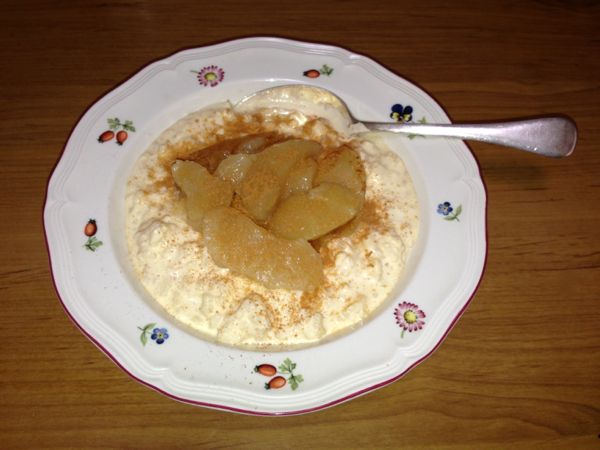
Now that we are eating our main meal at noon, it can be a bit of a free for all later in the day when we're hungry again. The idea is to have something light and sometimes that is fruit or yoghurt, at other times, particularly if the noon meal has been soup, we need something more.  Hanno loves milk rice and rice pudding so I came up with a variation on that theme and yesterday cooked apple and cinnamon milk risotto.


It's simple made using the normal risotto making technique but you can cheat at the end if you like. I did.

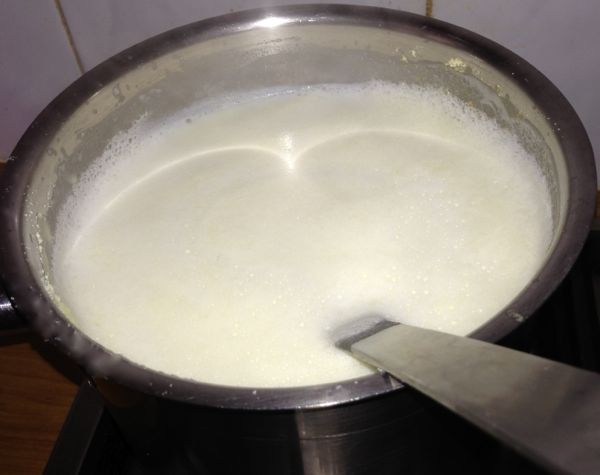
  1. Start off by bringing four cups of milk to the boil and then keep it hot. 
  2. In a separate pan, melt about a tablespoon of butter, and add two peeled and thinly sliced apples. Stir this until the apples start to caramelise slightly. Then pour in ¾ cup risotto (Arborio) rice and stir the rice so it's coated with the butter. 
  3. Add sugar or honey to taste, two level tablespoons is enough for us.
  4. Add a splash of vanilla extract and then two ladles of the hot milk. Stir this until the rice has been absorbed into the milk. It will take three or four minutes. 
  5. Then add one ladle of hot milk and repeat the stirring until the milk has been absorbed. If you've been stirring all this time, the starch will have been released form the rice and you'll have a nice creamy looking rice, but it won't be cooked yet. 
  6. Here is the cheat bit - if you don't have the time to stand at the stove stirring, place a lid on the pan and put it in the oven about 175C/350F for about 30 minutes or until the rice is cooked. Or you can stay at the stove stirring in the same way you'd make a traditional risotto, until the rice is cooked.
Serve this with stewed apples on top - I used a can of Ardmona Australian pie apples and two fresh Australian apples to help our apple farmers. Then sprinkle lightly with cinnamon and serve warm. It's a delicious winter pudding and very nice too, cold,  the following morning for breakfast.

Decluttering update
Today's item for my bins, this time the rubbish bin, is a pair of old slippers. They should have gone a few years ago.

Don't forget to link to your blog here in the comments if you're blogging about your decluttering. If not, and you want to talk about it, or get some advice, go here to the forum.  Many ladies have joined in on the forum thread so there is plenty of motivation to keep going right through the month.


Decluttering is a difficult task for most of us. If you've gone through your life with little money, then it is a real challenge giving away, or selling, items you've saved for. If you've had a lot of money to spend over the years, you'll probably be struggling under the weight of all those shopping trips, and again challenged by the choice of what should go. A reader emailed recently and said she struggles with decluttering items that are unused or no longer needed because it conflicts with the frugal principle of using everything up. Almost all of us have things in our lives we have emotional attachments to. The aim when you declutter is to know what you own, understand why you have an attachment to certain items and to decide if it enriches your life and keep it, or whether it should go.

We have different styles in our homes too. Some of us love the clean uncluttered lines of the minimalist home while others, even after they've decluttered, want certain mementoes around them. It suits their style and there is a certain comfort in seeing the things you love. If I have a style, my guess it would be Swedish mixed with crazy book lady. I'm playing it safe there because that could cover anything. But let's not make light of this topic, because many people really suffer by surrounding themselves with "stuff" and feel they have no option but to keep it.

I can't tell you what you need to get rid of. You are the only one who knows what is clutter and what isn't but there are a few stumbling blocks we all have to manoeuvre around and in the end it might just come down to your answer of the question: Can I live without this? I should tell you though that everything I kept in previous decluttering sessions because "I might need this in the future.", I didn't.

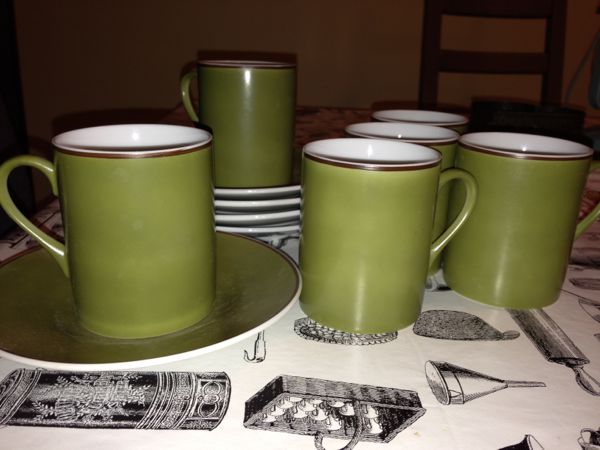
My mum's coffee cups, bought by me as a gift to her in the 1960s. One saucer missing.

But let's start at the beginning. Why declutter in the first place?  If you do it, and not everyone does, I think you do it for different reasons, depending on your age. At my age, many people want to clear out an accumulation of years of shopping, misguided purchases, gifts received, inherited items, children's possessions left behind when they move out and if there has been the death of a spouse, clearing the psychological hurdle of giving away their clothes, shoes and books. But no matter what your reason, decluttering clears your home of the possessions you no longer need or want so you have less to look after. It lets new life into your home and removes the weight of all those unwanted possessions.

One of the most practical reasons for decluttering is to know what you own. If you go through your possessions and know what is in boxes at the back of the cupboard, you won't double up on your buying or buy too many of one thing. There are only so many glasses or coffee cups you need, even if you see them on at a sale "too good to miss". So decluttering to remind yourself of what you have is something that can save you money. But in the end, nothing is compulsory and if you like your home the way it is, maybe now is not the time for you to declutter.

If you do need more space, focus on one small area at a time. When you go through your items there will be some that you can't get into the giveaway box fast enough and others that you're not sure about. Maybe it was a gift or an inheritance and you feel disloyal getting rid of it. Maybe you bought it and paid a lot of money for it. When you come across one of those items, ask yourself: "Do I really need this?", "Do I love this?", "Do I use this or is it in the cupboard most of the time?". If you're really stuck and don't know, honestly ask yourself: "If the house was on fire, would I grab this as I ran out the door?"

Over at the forum we have a section that deals with this topic. Everyone will have to deal with it at some point and many of us declutter frequently. If you need help or advice, please go to the forum and Becci and Alison, or the other members, will help you based on their own considerable experience. Becci is currently leading members through home zones, decluttering as they go. There is a post on how to declutter and many other threads full of advice from people who have decluttered, and survived.

I don't think you can go past the forum for good advice and the support of people who are decluttering along side you but I am doing a month long declutter here in my home, it's not too drastic but it will force you to think about it every day of the month.  My aim is to find five items today and put them in one of two boxes:
  • Op Shop bin
  • Family
I don't want to sell anything, I just want these items gone. If you do want to sell what you want to get rid of, it might be wiser to go to the forum and ask for advice about doing a deep declutter. My decluttering challenge is for those who may not have done anything like this before, or who have already decluttered and want to keep on top of it. The beauty of this method, although it is relentless, is that you have time to pick and choose, and then think about your choices as you go. My boxes will stay in the garage till the end of the month, and then leave my life for good.

If you want to join in and don't have a blog, I've started a forum thread about this (click to go there). You can ask advice there or tell us all about what you're getting rid of.  If you do have a blog and want to join this challenge and show your own photos, add a link to your comment below and we can travel over to read about what you're doing. Don't forget to leave a link to your own blog in the comments if you're joining the challenge.

A bag containing clothes that is on its way to the op shop bin out to the garage.

To do this, each Monday during August, select five items to declutter and place them in your boxes. Then, on Tuesday, Wednesday, Thursday and Friday, select one item on each day and add it to your boxes. Continue in the same way until the last day 31 August. The next day - the weekend - you can take your boxes to the op shop bin or wherever they have to go, and come home with empty bins.
These are my first five items:
  1. An Old Timer pen knife I bought 30 years ago for Hanno - I'll ask Kerry if he wants it. Hanno is currently cleaning some rust off it.
  2. Coffee cups I bought for my mother in the 1960s - I'll ask Sunny if she would like to have them. (Tick, Sunny took them last night and was very happy to have them.)
  3. Small bag of old clothes - to the op shop bin.
  4. Stack of old magazines - to the op shop bin.
  5. Sorted through my seeds and have thrown the old ones into the compost.
Every day during the week, I'll be adding one item to my bins. Next weekend, I'll find five more items to add to the bins on Monday, then continue with one item a day during the week after that. Those bins will sit in the garage until the end of the month and then I'll take one bin to the op shop and I'll find out who wants what in the family bin. At the end of the month I will have 40 items I will have severed all ties with and they will leave here never to return.  Are you joining me? 

During the week, Dawn, a very generous reader, sent me a copy of a New Zealand magazine called Good. 

The undeniable fact that I have the most obliging and interested readers hit home for me again this week. The petition we all signed about SPC Ardmona struggling to keep Australian grown, tinned fruit and tomatoes on our supermarket shelves has gained almost 1400 signatures. I sent the petition link to our prime minister, our Productivity Commission and to SPC Ardmona managing director Peter Kelly. Peter was pleased with the support and he made our email available to the SPC Ardmona staff. I hope it helps keep our Australian farmers producing some of the best fruit in the world. If you haven't already signed the petition, it's not too late.

I'm at the Maroochydore library today talking about my favourite subject, The Simple Life. If you're over there, please introduce yourself. I've had a few questions about bread during my talks and it seems to still be giving some folk trouble. So next week I'll write about one of the favourite subjects here - bread. I'll do another beginners loaf and see if we can get the new bakers on the road to trouble-free wholesome bread. Another subject for next week - Perfection. It seems like a good thing but it's not what it seems.

I started writing my new ebook for Penguin earlier this week and it looks like it might be out this year. And good news, this one is for international release! So I'll be busy writing most of the weekend but I hope you have a beautiful time with those you love.  Thank you for your comments this week. As ever, I, and many others, appreciate your input here.

= = = ♥  = = =

And just to remind me, yet again, that my readers are not only interesting and obliging but also generous, Dawn sent me a copy of a magazine previously unknown to me - Good magazine. What a beauty it is!   It's full of great articles about slowing down, crafts, ethical clothing, good food and much, much more. Thanks Dawn! Here's a sample - What's success for you? 
The murmuring cottage
To follow up on the Jack Monroe link last week - the ten pound weekly menu
An inspirational woman  
Joe Blow next to King Richard?
I love this post about abundance and generosity from Not Quite Amish. What do you think?
Tweeting death
Our beautiful wildlife

From the comments here this week
Greg from Our Simple Lives
Fran at Francis Lee Studios
DC at Frugal in Norfolk

One thing I really love about the simple life is that it encourages me to slow down and be mindful. I've stopped working on automatic plot and multi-tasking and now I concentrate on what I'm doing.  Focusing on my work has its own way of slowing me down. I don't think about what I'll do when I finish, I don't think about tonight or tomorrow, my mind slows right down and it's just me in a room with what I'm doing. I feel in control, enjoy the work and when it's finished, I have a feeling of satisfaction and achievement.

I can slot house work in with my paid work better, if I work to a routine. I find that if I set myself up with a couple of easy daily chores early in the morning, it seems to keep me going the entire day. If I don't do those two set things, I flounder, going from this to that and not quite doing anything well. What is working well for me at the moment it to have a pencil and paper next to the computer when I write my morning post. As I think of them, I create a list of tasks that I want or need to do that day. If I don't finish my list, it's fine, they just get added to the following day's list. But there is always one constant, I always start my day with those two easy tasks - I make the bed and I get bread on the rise. When those two things are complete, I know I've set my day up well and the flow of my list directs me throughout the day.


This was one of the many surprises that came my way when I left paid work behind and returned to my home; supposedly the place where I would be boring and bored. Instead of boredom, I found that many household tasks are easy and quick and often they just flow into each other.


I still work for money but it's at a much slower pace now. I work from home, writing books, blogging and organising talks and workshops when the need arrises. The rest of the time I tend my home, look after my husband, myself and occasionally our grandson, and home produce as much as I can. I cook too. I bake, cook from scratch every day, make drinks, ferments and preserves. I look for new horizons so my work remains interesting. My biggest challenge at the moment is to increase my knowledge about food storage and to cut down on food and water wastage. But that's a story for another time.

So all through the day, I wash up, cook, bake, sweep and wipe, set the table, look after who ever is here, take breaks, sit and knit, or read and think, and all that is done around my writing work. One thing flows into the other, I don't feel pressured, I get work done and at the end of the day, I have a few pages to edit and edit again. Working in this way, I've been able to continue working in a commercial sense as well as feel like a full-time homemaker.


I never tire of cooking. It seems like a unique gift that I give to others every day. When I cook for my family, when I introduce Jamie to a food he may not have had before, when I bake a celebration cake or create a simple soup using backyard produce, that all comes from the heart. Giving from the heart is always meaningful and significant, and the giving comes back to me too in many wonderful ways.


These small things I do each day, when I make the bed, mop a floor, boil an egg, plant seeds, peel vegetables, mend a shirt, write a blog post or a book page, the willingness to do them and to give them, all come easily when life is so rich. They are activities I take part in every day, fluffing up our nest, doing this and that, putting plain and simple ingredients together to create something special, and they are given willingly with the intention of creating cohesion, harmony and strength in our family. People rarely forget if you make them feel wanted, comfortable and loved. I'm sure there are many people who think that a hefty bank balance makes a family strong but I think a family who works for each other and who give freely of themselves form the strongest families and create the most permanent of ties.

Do you feel what I feel or do you struggle with your work?


Sometimes plans just don't work out. Yesterday I wrote a post on Irish soda bread and fresh pea and herb soup. A couple of hours later I checked the forum and came across Tessa's thread about how SPC Ardmona was petitioning the Australian Productivity Commission to place tariffs on imported tinned fruit and tomatoes. Just this year, three fruit processors have closed their doors. The iconic Rosella, Mondella Farms and Windsor Farm Foods. SPC Ardmona is one of the last, if not the last, Australian companies to process Australian fruit and tomatoes in tins. 

I felt I had to do something, so I wrote an additional post.


I decided I'd set up a petition at change.org to support Australian fruit and tomato farmers and SPC Ardmona. I got the petition underway, then decided to email SCP Ardmona to let know what was happening. But something stopped me in my tracks. When I rang their head office to ask for their email address, I heard the woman say: "@ccamatil.com". SPC Ardmona is owned by Coco-Cola. That made me stop and think about what I was doing. Do I continue and ask my friends and readers to support a non-Australian company? I decided that without doubt, I would. It might be an American company but the factory is processing fruit grown in Australia by Australian farmers, the factory is employing Australians, the company is listed on the Australian stock exchange, it and its employees are paying taxes, it is keeping many Australian farmers going and keeping Australian fruit on the shelves of our supermarkets. We all need to support that. If we don't, it's all lost.

If you've signed the petition, I thank you sincerely; there have been 739 signatories in under 24 hours. But signing the petition is one thing, we need to make every effort to help SPC Ardmona and our fruit farmers not only survive, but prosper. The next time you do your shopping, please search out SPC fruit and tomatoes and buy a couple of tins for your stockpile. That is what will really help our farmers - if we leave the imported tins on the shelves, showing the supermarkets where our loyalty lies and that we prefer to support our local people. Buy a couple of cans to stock up now and then in the future, only buy Australian; that will help us get back on track. If you're Australian, it will also help if you let your local federal MP know about your concerns and that you've signed the petition. Ask what they're doing to support Australian farmers and the local food industry.

If you're reading this in another country, you should support your local fruit and vegetable growers as well. But if you don't have the climate to grow things like peaches, pears and tomatoes, please consider the SPC Ardmona brand if you see it on your supermarket shelf. It's top quality Australian produce, and you can't get much better than that.

If you haven't yet signed the petition and you're Australian, please click here to sign. Ask your family, friends and work mates to sign too.

Additional reading
http://www.theaustralian.com.au/business/canned-fruit-growers-facing-perfect-storm/story-e6frg8zx-1226667134245
http://www.weeklytimesnow.com.au/article/2013/05/01/568525_latest-news.html

Newer Posts Older Posts Home


My books were all published by Pengiun, and are available at Amazon US, Amazon UK and Amazon Au

Search here

Total Pageviews

Translate


I'm Rhonda Hetzel and I've been writing my Down to Earth blog since 2007. Although I write the occasional philosophical post, my main topics include home cooking, happiness and gardening as well as budgeting, baking, ageing, generosity, mending and handmade crafts. I hope you enjoy your time here.

MY FAVOURITE PLACES

  • Grandma Donna's Place
  • Grandma Donna's YouTube
  • Grandma Donna's Instagram
  • This Simple Day
  • Nicole's Instagram

Give More

Give More

Popular posts last year

Making ginger beer from scratch

We had a nice supply of ginger beer going over Christmas. It's a delicious soft drink for young and old, although there is an alcoholic version that can be made with a slight variation on the recipe. Ginger beer is a naturally fermented drink that is easy to make - with ginger beer you make a starter called a ginger beer plant and after it has fermented, you add that to sweet water and lemon juice. Like sourdough, it must ferment to give it that sharp fizz. To make a ginger beer plant you'll need ginger - either the powdered dry variety or fresh ginger, sugar, rainwater or tap water that has stood for 24 hours to allow the chlorine to evaporate off. You'll also need clean plastic bottles that have been scrubbed with soap, hot water and a bottle brush and then rinsed with hot water. I never sterilise my bottles and I haven't had any problems. If you intend to keep the ginger beer for a long time, I'd suggest you sterilise your bottles. MAKING THE STARTER In a...
Image

NOT the last post

This will be my last post here.  I've been writing my blog for 18 years and now is the time to step back. I’ve stopped writing the blog and come back a couple of times because so many people wanted it, but that won’t happen again, I won’t be back.  I’ll continue on instagram to remain connected but I don’t know how frequent that will be. I know some of you will be interested to know the blog's statistics. 
Image

How to make cold process soap

I'm sure many of you are wondering: "Why make soap when I can buy it cheaply at the supermarket?" My cold process soap is made with vegetable oils and when it is made and cured, it contains no harsh chemicals or dyes. Often commercial soap is made with tallow (animal fat) and contains synthetic fragrance and dye and retains almost no glycerin. Glycerin is a natural emollient that helps with the lather and moisturises the skin. The makers of commercial soaps extract the glycerin and sell it as a separate product as it's more valuable than the soap. Then they add chemicals to make the soap lather. Crazy. Making your own soap allows you to add whatever you want to add. If you want a plain and pure soap, as I do, you can have that, or you can start with the plain soap and add colour, herbs and fragrance. The choice is yours. I want to add a little about animal and bird fat. I know Kirsty makes her soap with duck fat and I think that's great. I think t...
Image

Preserving food in a traditional way - pickling beetroot

I've had a number of emails from readers who want to start preserving food in jars but don't know where to start or what equipment to buy.  Leading on from yesterday's post, let's just say up front - don't buy any equipment. Once you know what you're doing and that you enjoy preserving, then you can decide whether or not to buy extra equipment. Food is preserved effectively without refrigeration by a variety of different methods. A few of the traditional methods are drying, fermentation, smoking, salting or by adding vinegar and sugar to the food - pickling. This last method is what we're talking about today. Vinegar and sugar are natural preservatives and adding one or both to food sets up an environment that bacteria and yeasts can't grow in. If you make the vinegar and sugar mix palatable, you can put up jars of vegetables or fruit that enhance the flavour of the food and can be stored in a cupboard or fridge for months. Other traditional w...
Image

Cleaning mould from walls and fabrics

With all this rain around we've developed a mould problem in our home. Usually we have the front and back doors open and that good ventilation stops most moulds from establishing. However, with the house locked up for the past week, the high humidity and the rain, mould is now growing on the wooden walls near our front door and on the lower parts of cupboards in the kitchen. Most of us will find mould growing in our homes at some point. Either in the bathroom or, in humid climates, on the walls, like we have now. You'll need a safe and effective remedy at some point, so I hope one of these methods works well for you. Mould is not only ugly to look at, it can cause health problems so if you see mould growing, do something about it straight away. The longer you leave the problem, the harder it will be to get rid of it effectively. If you have asthma or any allergies, you should do this type of cleaning with a face mask on so you don't breathe in any spores. Many peopl...
Image

Five minute bread

Bread is one of those foods that, when made with your own hands, gives a great deal of satisfaction and delight. It's only flour and water but it symbolises so much. I bake bread most days and use a variety of flours that I buy in bulk. Often I make a sandwich loaf because we use most of our bread for lunchtime sandwiches and for toast. Every so often I branch out to make a different type of loaf. I have tried sour dough in the past but I've not been happy with any of them. I'll continue to experiment with sour dough because I like the idea of using wild yeasts and saving the starter over a number of years to develop the flavour and become a part of the family. However, the loaf I've been branching out to most often is just a plain old five minute bread. By five minutes I mean it takes about five minutes actual work to prepare but it's the easiest of all bread to make and to get consistently good loaves from. If you're having people around for lunch or...
Image

This is my last post.

I have known for a while that this post was coming, but I didn't know when. This is my last post. I'm closing my blog, for good, and I'm not coming back like I have in the past.  I've been writing here for 16 years and my blog has been many things to me. It helped me change my life, it introduced me to so many good people, it became a wonderful record of my family life, it helped me get a book contract with Penguin, and monthly columns with The Australian Women's Weekly and Burke's Backyard . But in the past few months, it's become a burden. In April, I'll be 75 years old and I hope I've got another ten years ahead. However, each year I'll probably get weaker and although I'm fairly healthy, I do have a benign brain tumour and that could start growing. There are so many things I want to do and with time running out, leaving the blog behind gives me time to do the things that give me pleasure. On the day the blog started I felt a wonderful, h...
Image

What is the role of the homemaker in later years?

An email came from a US reader, Abby, who asked about being a homemaker in later years. This is part of what she wrote: "I am a stay-at-home mum to 4 children, ages 9-16. I do have a variety of "odd jobs" that I enjoy - I run a small "before-school" morning drop-off daycare from my home, I am a writing tutor, and I work a few hours a week at a local children's bookstore. But mostly, I cherish my blissful days at home - cooking, cleaning (with homemade cleaners), taking care of our children and chickens and goats, baking, meal-planning, etc. This "career" at home is not at all what I imagined during my ambitious years at university, but it is far more enriching. I notice, though, that my day is often planned around the needs of my family members. Of course, with 4 active kids and a husband, this is natural. I do the shopping, plan my meals, cook dinner - generally in anticipation of my family reconnecting in the evening.  I can't h...
Image

Every morning at home

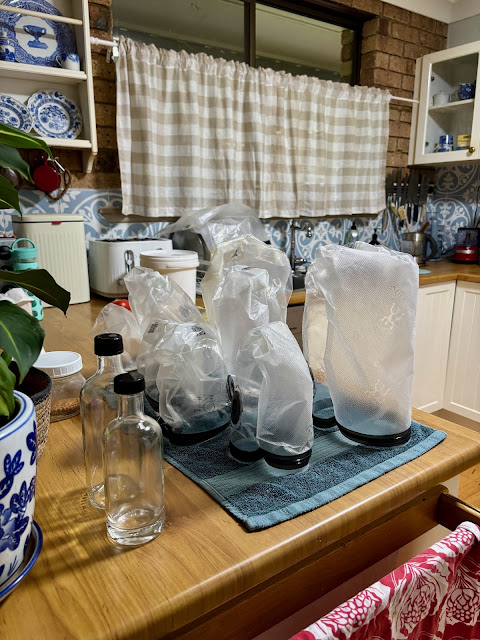
Every morning when I walk into my kitchen it looks tidy and ready for a day's work. Not so on this morning (above), I saw this when I walked in. Late the previous afternoon when I was looking for something, I came across my rolled up Zwilling vacuum bags and decided they had to be washed and dried. So I did that and although I usually put them outside on the verandah to dry it was dark by then. I turned the just-washed bags inside out and left them like this on a towel. It worked well and now the bags are ready to use when I bring home root vegetables, cabbages or whatever I buy that I want to last four or five weeks.
Image

You’ll save money by going back to basics

When I was doing the workshops and solo sessions, I had a couple of people whose main focus was on creating the fastest way to set up a simple life. You can't create a simple life fast, it's the opposite of that It's not one single thing either - it's a number of smaller, simpler activities that combine to create a life that reflects your values; and that takes a long to come together. When I first started living simply I took an entire year to work out our food - buying it, storing it, cooking it, preserving, baking, freezing, and growing it in the backyard. This is change that will transform how you live and it can't be rushed.  
Image


Trending Articles

NOT the last post

This will be my last post here.  I've been writing my blog for 18 years and now is the time to step back. I’ve stopped writing the blog and come back a couple of times because so many people wanted it, but that won’t happen again, I won’t be back.  I’ll continue on instagram to remain connected but I don’t know how frequent that will be. I know some of you will be interested to know the blog's statistics. 
Image

Every morning at home

Every morning when I walk into my kitchen it looks tidy and ready for a day's work. Not so on this morning (above), I saw this when I walked in. Late the previous afternoon when I was looking for something, I came across my rolled up Zwilling vacuum bags and decided they had to be washed and dried. So I did that and although I usually put them outside on the verandah to dry it was dark by then. I turned the just-washed bags inside out and left them like this on a towel. It worked well and now the bags are ready to use when I bring home root vegetables, cabbages or whatever I buy that I want to last four or five weeks.
Image

You’ll save money by going back to basics

When I was doing the workshops and solo sessions, I had a couple of people whose main focus was on creating the fastest way to set up a simple life. You can't create a simple life fast, it's the opposite of that It's not one single thing either - it's a number of smaller, simpler activities that combine to create a life that reflects your values; and that takes a long to come together. When I first started living simply I took an entire year to work out our food - buying it, storing it, cooking it, preserving, baking, freezing, and growing it in the backyard. This is change that will transform how you live and it can't be rushed.  
Image

Creating a home you'll love forever

Living simply is the answer to just about everything. It reduces the cost of living; it keeps you focused on being careful with resources such as water and electricity; it reminds you to not waste food; it encourages you to store food so you don't waste it and doing all those things brings routine and rhythm to your daily life. Consciously connecting every day with the activities and tasks that create simple life reminds you to look for the meaning and beauty that normal daily life holds.  It's all there in your home if you look for it. Seemingly mundane tasks like cleaning and cooking help you with that connection for without those tasks, the home you want to live in won't exist in the way you want it to.  Creating a home you love will make you happy and satisfied.
Image

Time changes everything

I've been spending time in the backyard lately creating a contained herb and vegetable garden. My aim is to develop a comfortable place to spend time, relax, increase biodiversity and encourage more animals, birds and insects to live here or visit. Of course I'd prefer my old garden which was put together by Hanno with ease and German precision. Together, we created a space bursting at the seams with herbs, vegetables and fruity goodness ready to eat and share throughout the year. But time changes everything. What I'm planning on doing now, is a brilliant opportunity for an almost 80 year old with balance issues. In my new garden I'll be able to do a wide range of challenging or easy work, depending on how I feel each day. It’s a daily opportunity to push myself or sit back, watch what's happening around me and be captivated by memories or the scope of what's yet to come.
Image

It's the old ways I love the most

I'm a practical woman who lives in a 1980’s brick slab house. There are verandahs front and back so I have places to sit outside when it's hot or cold. Those verandahs tend to make the house darker than it would be but they're been a great investment over time because they made the house more liveable. My home is not a romantic cottage, nor a minimalist modern home, it's a 1980’s brick slab house. And yet when people visit me here they tell me how warm and cosy my home is and that they feel comforted by being here. I've thought about that over the years and I'm convinced now that the style of a home isn't what appeals to people. What they love is the feeling within that home and whether it's nurturing the people who live there.
Image

Making ginger beer from scratch

We had a nice supply of ginger beer going over Christmas. It's a delicious soft drink for young and old, although there is an alcoholic version that can be made with a slight variation on the recipe. Ginger beer is a naturally fermented drink that is easy to make - with ginger beer you make a starter called a ginger beer plant and after it has fermented, you add that to sweet water and lemon juice. Like sourdough, it must ferment to give it that sharp fizz. To make a ginger beer plant you'll need ginger - either the powdered dry variety or fresh ginger, sugar, rainwater or tap water that has stood for 24 hours to allow the chlorine to evaporate off. You'll also need clean plastic bottles that have been scrubbed with soap, hot water and a bottle brush and then rinsed with hot water. I never sterilise my bottles and I haven't had any problems. If you intend to keep the ginger beer for a long time, I'd suggest you sterilise your bottles. MAKING THE STARTER In a...
Image

An authentic look at daily life here — unstaged and real

Most days Hanno was outside happily working in the fresh air. It may surprise you to know that I started reading my book,  Down to Earth , yesterday - the first time since I wrote it 13 years ago.  I had lent it to my neighbor, and when she returned it, I started reading, expecting to find surprises. Instead, I realised the words were still familiar—as if they were etched into my memory. As I flipped through the pages, I was reminded of how important it was for me to share that knowledge with others. The principles in Down to Earth changed my life, and I truly believed they could do the same for others. After just 30 minutes of reading, I put the book down, reassured that its message still holds true: we can slow down and reshape our lives, one step at a time.
Image