down to earth

  • Home
  • About Us
  • Down To Earth Book
  • Privacy Policy

Tessa posted a very interesting article over at the forum this morning about SPC Ardmona petitioning the Australian Productivity Commission to place tariffs on imported tinned tomatoes and fruits. They need the next 200 days so they can regroup and have a breather. My heart breaks when I see orange trees being burnt down and grape vines left to rot. When I grew up, many homes grew their own fruit. Now this doesn't happen so much and up until now, we've brought fresh and tinned Australian fruits and tomatoes. Now they're hard to find, you have to check every label before you put it in your trolley and I'm sick of it. Our politicians should know how important it is for us to eat our locally grown fruit and vegetables, if they don't know, please tell them.

I've just started a petition at change.org to support SPC Ardmona in their petition, in the hope it will give them the breathing space they need to reorganise and for us, the Australian shoppers, to get them back into profit again. If you're an Australian, please help, they need your voice and your signature.

CLICK HERE TO SIGN THE PETITION

UPDATED: I wrote to SPC Ardmona telling them of our support for them and our fruit farmers and just received this reply.  Thanks to everyone who have signed the petition so far. I'm sure you join me in sending the best to the SPC Ardmona workers, and to the farmers who supply the fruit they process.

Dear Rhonda,
Thank you for getting in touch with us about your endorsement of our ‘Australian Grown and Made’ efforts.

You are absolutely right, we must continue to eat local food! So it’s always good to hear from our consumers (and influential bloggers) that we are on the right track with the products we are producing and the way we are marketing them.

SPC Ardmona is doing everything possible to ensure we make Australian made and grown products. Our policy and practice is to ensure that all our peaches, pears, apricots, plums, baked beans and tomatoes are 100% Australian grown and made.

We are going out of our way to make this happen. Aside from our fruit products, our SPC “Aussie Made” Baked Beans have seen us double our Navy Bean intake from Australia to make them 100% Australian grown and made (despite incurring a significant cost premium to do so).

We believe it is the right thing to do by Australian consumers and Australian growers.

Our focus is firmly on supporting our Australian farmers and industry and the endorsement and support of our consumers is what will see us succeed in these endeavours. It’s times like this that the combined voice, strength and actions of the community become more important than ever. The message to consumers is clear; buy Australian sourced, made and produced products wherever you can. You can make the difference.

I have shared your email with our employees who I know will appreciate the support.

Please keep up the great work in spreading our message far and wide.

Peter Kelly
Managing Director
SPC Ardmona 


The Irish folk who read here, and maybe those from the UK too, will know of Maura Laverty, but I have just discovered her. Sadly Maura died many years ago but her books live on. Currently I'm eagerly awaiting her book Full and Plenty, published in 1960, to arrive. She is my new inspiration.  This is from Full and Plenty:

Cooking is the poetry of housework. But it is satisfying in twenty other different ways as well. There is a grand warm companionable feeling to be got out of the thought that every time you baste a roast or beat an egg or do any other little ordinary kitchen job, you are making yourself one in the the Grand Order of Homemakers, past, present and to come.

Perfect. Lovely. True.


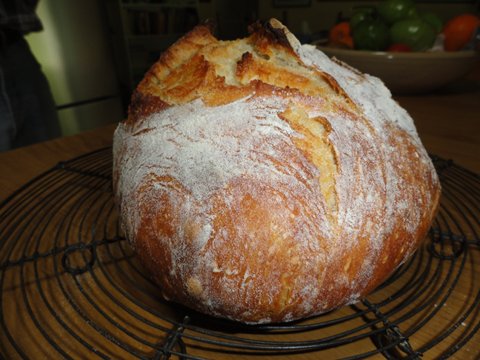
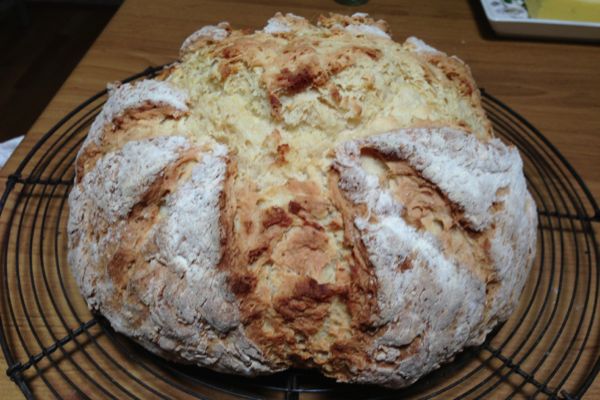
It was cold here yesterday, with an overcast sky, so I made soda bread to honour Maura. I followed her recipe, it's very similar to my own and although I didn't use her winter buttermilk recipe in this soda bread; I will make it and try it in a future loaf. I used commercial buttermilk. I think soda bread is absolutely delicious made on buttermilk, but if I didn't have any, I'd use whey instead. I always have a jar of whey in the fridge.  Using either of them will give your soda bread an extra lift that plain milk just doesn't give.

We had warm soda bread for lunch, along with fresh green pea and herb soup. Jamie was here with us and when we went out to pick the peas, we tried not to eat too many of them out in the garden. It's such a temptation. We're growing sugar snap peas and have an over abundance of them, so this was a good reason to thin them out. We used the peas and the pods in the soup to avoid waste.

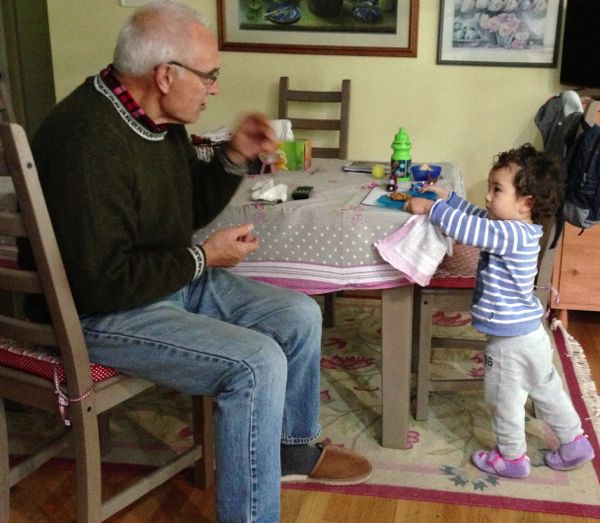
We've been teaching Jamie a few of our most simple chores lately. Saturday was his first day setting the lunch table - just knives and forks with a glass of water for everyone. It's simple and doable for him, and he really loved helping and working with his family. Pea picking is another simple chore for him. All it requires is for the pea pod to be picked from the vine without too much of the vine coming with it. I showed him how I run my thumb nail over the stem and although he can't do that, it loosened the pods enough for him to pick them and put them in the harvest basket.


I cook quite a few vegetable soups using this technique - I boil onion, the vegetable - this time peas but it could also be pumpkin, potato, asparagus, leeks, carrot, cauliflower etc., salt and pepper in plain water. You could use homemade chicken stock if you had it but I think it's a waste of the stock as it masks the flavour of the vegetables you're using. So my recipe today is:
  • about 2 litres/quarts water
  • fresh peas, including the pods, topped and tailed
  • one large onion, chopped
  • salt and pepper to taste
  • cream to finish it off, optional
Place all the above in a saucepan and bring to the boil. With the lid on, simmer for about five minutes or until the peas have turn bright green. Take off the heat, add mint and parsley, blitz in a food processor or with a stick blender, taste to adjust seasonings. After adding the soup to a bowl, drizzle in a circle of cream or a blob of sour cream.

Delicious, and I'm sure Maura would approve of it alongside her soda bread. And another good thing about soda bread is that later in the day, around about afternoon tea time, you can make up a couple of slices with homemade jam and cream. Along with a cup of tea, there is nothing better on a cool Sunday afternoon. No dinner required, thank you.

I'm really happy to tell you that I'll be at the Brisbane Writers Festival this year. It's on at several venues, mainly at the State Library, from 4 - 8 September. I'll be there on Friday 6 September and Sunday, 8 September.


On the Friday, I'll be doing a three hour masterclass on simple living. I'll be creating a special presentation for this to condense what we did at the workshops into a three hour format. I'm really looking forward to doing it because it will make me focus on the most important points as well as strategies to get people started and keep them going.

I'll be back again on Sunday to do an hour long discussion with Antonia Kidman on The Simple Life. We'll be talking about changes we can all make to live richer and fuller lives.

The Brisbane Writers Festival is always a fun event in our capital city that draws in many authors and interesting people from all walks of life. I'd love to see you there and if you do come along, please come over and introduce yourself to us; Hanno will be with me.
It's been busy here all week with Hanno's health issues, two talks out in the community and starting work on my new writing projects. It will probably get busier next week. I won't have a lot of time for relaxing this weekend, we'll have Jamie here and I'll be writing, but I'll take plenty of breaks as I go along. I hope you have the chance to slow down and relax over the weekend. See you again next week!

Cheap food era is over
The face of modern poverty - thanks to Nickie for sending in the link
Diary of an 1892 farmer's wife
Eek, what's in organic sausages?
Sourdough starter from scratch
Classic play
Which password manager is the most secure?
Crocheted rose clock

From my comments
Sunny corner farm
Roots and Seeds
Wendy at Musings
I spent some time sorting out my silver cutlery recently. It was all over the place. When we're here alone, Hanno and I use few knives and forks but we often have visitors and then we need quite a few. I don't have to have everything matching but it's nice to achieve it every so often. I didn't have one full set in the drawer we use every day. We had some in there and the rest all thrown into a bottom drawer. So I sorted out both drawers, divided up the daily use and the occasional use items and then started cleaning it all.


I hand-washed the stainless steel utensils, the silver plated ones went into the kitchen sink with a sheet of aluminium foil, water, bicarb and salt. It sat in there for about an hour and most of the silver came out bright and shiny. I had to hand clean about a dozen forks and spoons but the rest of them were fine without any extra treatment. Some of the really old utensils will never shine again but I've kept them anyway. Now I have a set to serve six people in the daily use drawer and the rest is divided into sets and wrapped in zip lock bags in the bottom drawer. If we need more, they're clean and ready for use.

How do you organise the tasks you only have to do once a year or six months? Are they entered on your calendar, do you do them at the same time every year?  Please share your secrets with us.

♥ - - - ♥ - - - ♥ - - - ♥


I'm talking about writing for publication at the Reality Bites Literary Festival today. It's booked out but if you've already made a booking, please come over and introduce yourself. Tomorrow I'll be at the Kawana Library giving a talk about simple living. Again, if you will be at the library, please introduce yourself. I love meeting the people who read here. 

It seems we're continuing our run of bad luck with health issues. Yesterday I drove Hanno to the hospital at 6am because he'd been up all night with a bleeding mouth. He had a tooth out in the afternoon and the tooth socket kept bleeding all night. Hanno's on warfarin and I don't think the dentist took that into consideration when he performed such a drastic extraction.  We were in emergency all morning and after the doctor injected adrenalin into the socket, finally, it stopped the bleeding. The doctor, Cheyne, and medical student, Zoe, took very good care of Hanno. Both were thoughtful and gentle and Zoe did a lot of fussing around to make him comfortable. It makes such a difference when hospital staff take their time with you.

I'm pleased to report that he's had a good night's sleep and I hope he'll be feeling much better today.

I'm running late and a bit behind today. I've started on my next writing project and I don't want to fall behind on that today, especially now I'm in the important mapping out and organisation stage. So today's post will be a short one but I hope you find it interesting.

It's THE CASE OF THE CHANGING CHICKEN 

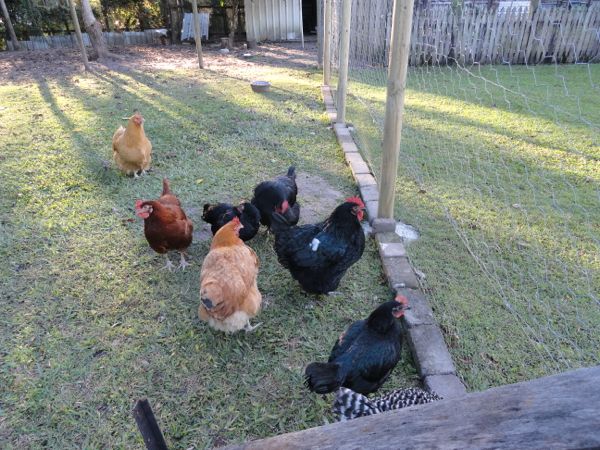
Our chooks are all different ages but one of our old girls is about 7. She's an old cross breed, mainly Australorp with a touch of Leghorn (I think). She's always been a strange one. I don't think she's ever laid an egg, I've certainly never seen her on the nest, and she thinks of herself, even though the others don't, as the top chook. She sleeps on the top roost and she tries to boss the other girls around, but they rarely listen.

Here (above and below) she is with her one white feather.


And here she is, white feather gone but with a red feather necklace and the beginnings of her rooster tail.

About 18 months ago, she grew one white feather on her side. When it first appeared, I thought that if she grew a few more she'd look like a magpie. But it was only ever the one feather. Strange.  The white feather lasted for a bit over a year and then it disappeared and red feathers grew around her neck. Very odd. Now her tail is turning into a rooster tail!

What next?

Have you ever had this happen to one of your chickens?  Or do your chooks do other weird things. I'd love to know.
While most of the comments posted here make great reading, I am very interested in the number that commented on the family, friends and community reaction to us as homemakers. It seems there is quite a bit of negative reaction.  I'm not sure why, but I never have anyone say similar things to me now. Possibly my family and friends don't because, even if they felt it, they'd not want to hurt my feelings. And from those I don't know so well? Who knows. Generally the reaction I get is that people love what I'm doing and they're trying to do the same. But I am a bit of a hermit so maybe I'm not meeting enough people.


No matter what the reason, I'm told that homemakers are looked down on and thought of as a bit lazy; they're at home all day not contributing much to family or community. The comments here confirm it. At best it seems we're seen as quaint and old fashioned, but who wants that. Most of you know how I feel about it. I think homemakers are the backbone of the nation. We are the ones who soothe shattered nerves when our workers and students come home. We make life more comfortable with warm food to fill bellies and clean sheets on the beds. We are the ones who stretch grocery dollars to make sure we get value for money and keep healthy food on the table. We balance the books, make do on little, mend, recycle and work away quietly to create a happy home. But we do a lot more than that. You all know what that is and I'm not going to re-write the sentiments of last week's post.

Maybe we cop this criticism because we don't speak up and let others know what we do in the home.  The type of homemaking we do is not the same as it was in the past; our work is not piecemeal, we have a full and holistic program for our homes. We work to routines and plans, just like a business does. Let your friends and family know there is a new form of homemaking now and it involves not only housekeeping but also choosing healthy food for the family, stretching the dollars, making sustainable choices for our family such as green cleaning, recycling and reducing waste. Explain home production to them. I'd like everyone who hears criticism of their role to defend it and their right to do whatever they want to do.


I am here to proudly say that as an intelligent, educated woman with many choices to do what I want to do, I choose to call myself a homemaker and author. I think I'm fortunate and privileged to do both. But whether you work solely in the home, or you combine outside work and home work, I think we can all stand proud. We stabilise and strengthen home and community life. Who else does that? We help run school P & Cs, we fundraise, we volunteer, we look after parents and children, and each other. And yes, we do the housework so that our husbands, wives, partners and children come home to warmth and comfort. We create safe havens.


When you talk about your role in the home, do it with grace. None of us want to listen to some arrogant so-and-so standing in judgement on us. Don't do that to anyone else either, don't criticise anyone's work. Work is work and whether you work at home or outside the home, no one should criticise how and where you choose to work.

Knowing we have our critics, you have to have a good measure of self-belief to do this but I want us to stand up and be proud of what we do, despite what others think. I want us to publicly talk about our role in the home, what we do, and that what we give to our family and our communities strengthens and sustains them. Make sure you tell your children why you've chosen your role as homemaker and explain to them how you see your work in the home as your job.


Let's start talking out loud. Let's explain to those who don't know, that homemaking has changed significantly. Explain what you love about your work. Explain the satisfaction and the happiness. Tell them you pick fresh greens in your backyard and collect eggs. Tell them about your cooking, sewing and knitting. Tell them you make green cleaners and offer to share your recipes. We might pick up a few converts. Hopefully most of those you talk to will understand what you're doing, and why. But if they still criticise, just walk away. There is no telling some people. Change is often slow but I think a new understanding is coming. It's up to us to help it along.

Never believe that a few caring people can't change the world. For, indeed, thats all who ever have.
Margaret Mead.
Hello everyone! We've had a couple of special visitors staying with us these past few days, my nephew Daniel and his son Johnathan. Johnathan is just 9 months old so it was lovely to welcome a new family member to our home and to give Danny a much needed break.

- - - ♥ - - - 


There seems to have been a sharp rise in the number of products labelled "organic" on supermarket shelves in the past couple of years. Often I am asked if the weekly shopping should include organic fruit, vegetables, meat and chicken, as well as the newer products we're seeing now - butter, cheese, wine and tinned goods. I don't want to advise anyone as to what they should buy. We're all so different, we have different meeds, tastes and incomes and we all know that "organic" comes at a price.

I know I'm lucky to live in Australia and to pinpoint it more closely, in the hinterland of the Sunshine Coast. Not only do we have a beautiful climate and adequate rainfall here to grow a wide variety of backyard food, year-long, we also have a lot of producers' markets and small local markets. Within a short distance from where I live there is an organic supermarket and butcher and a food co-op with a lot of organic produce such as milk, cheese, grains, flour, dried fruit, chocolate, tea and coffee. Just up the road we have a dairy and whenever I drive past on that back road, I see those healthy goats and Guernsey cows roaming freely over rolling hills. It's not organic but it's local and fresh.

So for me, it's not a question of where do I find it? - it's easy to find. The question here is do I buy it?


Like most of us, I didn't really question "organic"when I first came to this way of living. To me then, it was premium and what I wanted to buy. But in the years since, I've thought a lot about what "organic" means and if I should tweak my budget, and go without other things, to buy mainly organic food.

The answer for me now, is no. When I have a choice, I prefer to buy fresh and local.


The term "organic" means different things in different places. Here in Australia, producers apply for organic certification and then have to undergo a series of inspections and, all things going well, they get their certification and operate according to those standards. There are also producers who say they're organic, and might very well be, but are not certified. I think there is a diverse understanding of the term as well. Some people think that organic produce has been grown without the use of fertilisers and insecticides. But there are a number of "natural" fertilisers and a short list of acceptable insecticides used to grow organic produce. We use pyrethrum spray here - it's made from daisies and it's an acceptable insecticide for organic growers. We think of the fruit and vegetables we grow here as being organic but we use homemade fertilisers, Dipel and pyrethrum. They're all seen as acceptable but we don't have to follow any standards, we are simply making what we believe are the right choices to produce our own healthy food.

Now when I think of organic food I think not only of the synthetic chemical means of production but also elements that include social factors and logistics as well. Now it's not a question of whether my tomatoes have been sprayed, it's much more than that. Is food organic if the people producing it are paid next to nothing? Is food still organic is it's been flown from one side of the world - from place of production to place of sale? Shouldn't food miles play a part in what is seen as "organic"? Can I still consider my food organic if my apples, potatoes, onions, or whatever, have been stored for months in a cold room? I have had a shift in thinking and now I don't just rely on a label to tell me something is organic, I also include my own questions about origin, transportation, means of production and the workers who produced it.


When we buy our food, I think we should not only look at the health component, which takes in whether is was grown organically or not, we should also consider how far it's travelled from point of production to your door, how it's packaged, and where that packaging came from. We should consider the means of production and the workers who produced it. "Organic" means more than chemicals and price. It also means social justice and sustainability.

We need to think about animals slaughtered for our food. I want the eggs and meat I eat to come from creatures that have lived a decent life. I'd rather never eat those products again if it meant I was supporting and helping to perpetuate cruelty in the form of caged poultry, gestation pens or whatever else.


Crikey, it sounds like I'm trying to complicate buying a bag of potatoes and a pork chop but what I'm hoping to do is to start a conversation about how we choose the food we buy. For me, genuine "free range", fresh and local is premium now and it outweighs organic from another country, or even another state. I know I'm lucky to live where there is a wide variety of healthy food, in addition to our backyard produce, but that variety and choice brings important decision-making with it. I'd love to know your thoughts on this. Do you question how healthy and ecologically-sound organic produce is? Do you buy it if it's from another country? Have you, like me, replaced "organic" with fresh and local? Do you factor in the problem of animal cruelty or transport and food miles?  I look forward to reading your comments.
If you've been wondering where I am, I'm still here, busy with visiting relatives. I'll be back with you next week. In the meantime, I hope you enjoy your weekend and can sit back and take it easy. Thanks for your visits and comments this week.

No impact man's how tos
The contrary farmer
The daily spud - this week's must-read
My zero waste
Summer camp
Is life too exciting? Jump on a train I love this. In a time when attention spans have reduced to the flicker of a fairy's wing, along comes something like this.
Learn to stash cash
World population data sheet

FROM THE COMMENTS HERE
Frugal confessions
A time to create
Mish Mash
There is something quite magnificent about taking on the role of homemaker. Whether you're older or younger, male or female, there because you choose it or just filling in time until an outside job comes along, homemaking has the potential to change you in profound ways. When I first came back to my home, I hadn't thought much about housekeeping. I guess I looked on it in the same way our society views it - mundane, monotonous and menial. I eventually dived into my housework with open arms and since that day I've felt honoured and fortunate to be able to call myself a homemaker.


So what is it that deeply divides opinion? How can one group see it as a beautiful and significant way to live and others view it with absolute dread. Why do some see it as a great help to the family finances and others as not contributing to the family at all?

When I first started housekeeping here in my own home, I realised that I'd never really understood the role of the homemaker. I'd seen my mother working in our family home, stretching every dollar to make ends meet. She cooked and did the housework, my father went to work at two jobs and eventually mum got an outside job as well. A lot of people my age saw their mothers go off to work for the first time and I suppose it devalued the work the mothers did at home. Instead of seeing my own mother's move into the paid workforce for what it was - a financial move towards a better life, as a teenager, I thought she wanted to work outside the home because it was more exciting.


No one ever told me about the feeling of control you get when you work in your home as if it's your own small business. We're told that housekeepers don't do much, that they have no power, but in my opinion, the opposite is true. Working full time at home I have the time to make the most of what we have. I can shop for grocery bargains and stockpile them, I can grow food in the backyard, make my own cleaners, sew, mend and recycle. I know that I have to balance my budget, keep the utilities connected, the fridge full and the vegetable garden productive. Homemakers have to be multi-skilled. Healthy food, clean clothes and a comfortable home enable those living there to make the most of the time they are away from home, working or studying. A good home sets workers and students up for success, and that is good for the nation. There is no doubt about it, choosing homemaking as a career is a radical choice.


When I rise early in the morning I feel that I have the freedom to do a wide variety of things. I'm often invited to take part in various things around the place but I feel at my best if I stay and work here on this land. I write my blog, let the chickens out, feed the cat, look at the sky to check the weather, have breakfast, make bread or bake cakes, organise our main meal which we eat at midday, clean up, wash up and make the bed. I do those things almost every day. Sometimes, I make cleaning products, knit, sew, mend, garden, work in the community, preserve food in jars or freeze it for later. And although it might look as though my days just repeat what happened the day before, it feels fresh every day. I get to decide when I sit down and rest. I decide if I want to sit in the garden or work in it. I will work all day or takes frequent breaks, it all depends on how I feel and how much work I will do on that particular day. And all these decisions are mine. I'm not told by a boss when to have morning tea or lunch. I can wear whatever I like, and that pleases me no end because most days I'm here at home I look like a moving scarecrow. Home is the best place to wear out those old clothes.


Homemaking seems to fit simple life like a glove. It doesn't matter if you're a full time homemaker like me or if you do it in tandem with a paid job. Homemaking supports the role of the breadwinner because it allows them to come home to good food, a clean home and happy children.  Sometimes the breadwinner is the homemaker and in that case the skills of homemaking come into their own. Following routines, meal planning, stockpiling, freezing food for later and budgeting help the part-time homemaker like nothing else can. And when it all comes together, when I hear someone say they enjoyed the meal I cooked, or the cake was delicious, or "grandma, biscuit peas", well then I know I'm where I should be. When I go outside and sit watching the garden, seeing what birds are flying in to visit, or watch the antics of the chooks, I don't want to be anywhere else.


Ours is simple work but that doesn't mean it's less important than paid work. It all has its place and it's all important in its own way.  Recently, I've heard a couple of women say that they want my life but the truth is it's all here for the taking, my life is in every home. Everyone can do what I'm doing, all it takes is the will to do it, the mindset to stick to it and the skills to make it happen. And remember, it's all small steps - the will, the mindset and the skills. This is here to fill a lifetime, it's not the 100 metre sprint.
“I believe that the very purpose of our life is to seek happiness. That is clear. Whether one believes in religion or not, whether one believes in this religion or that religion, we all are seeking something better in life. So, I think, the very motion of our life is towards happiness.” 
Dalai Lama in The Art of Happiness

I often wonder what we're here for. I'm sure you do too. What is the purpose of life? We're all born into a variety of situations, grow up, become educated along the way, develop friendships and learn what we think we need to know. Then we reach an age when we're independent and we go out into the world. When we start our adult lives, what is it we hope for?  Well, for me, I wanted to be happy. I didn't know how I would find happiness, or how long it would last, but it was what I hoped for. I didn't realise then how difficult happiness would be to find. Or how easy.


One of the stumbling blocks along the way seems to be, and was for me, thinking that "stuff" makes us  happy. I guess that is quite common in a society that has been made wealthy on the back of commerce. I must be a slow learner, or was it that I was distracted by the difficult stages of life - motherhood and raising children, establishing a career and trying to balance it all with some alone time for reading and self development. I wish I'd known then that I was able to cultivate happiness while I was doing all that, but I still believed that happiness was bought and I just had to buy the 'right' things, and I'd be set. Just one more dress, just the right pair of shoes, or maybe it was a new car. Who knew. I just knew that when I bought the right thing or when I moved to my ideal house, it would make me happy. I kept thinking that happiness was outside myself and that it was made up of "things".

Now that I look back on that time, I realise that I did have periods of pure happiness after my sons were born and I remember quite a few days when I was happy. But it was mostly on celebration days, or holidays, or something out of the ordinary. Domestic life was a struggle for me. It was like I couldn't focus on the two main areas of my life at the same time - my paid work and my home life. I knew both were important but I could never seem to get the balance right.

I think it's odd to have found enduring happiness when I least expected it; in the place I thought it would never be - in my home. Happiness was here all along. I just didn't recognise it. Or maybe I was too busy to take notice.  I have an ember of contentment within me all the time now and it takes very little for it to ignite. I realise now that happiness was never "out there" it was inside. Inside my home and inside my heart. I didn't go out and buy it, it found me. When I knew that, and felt it, I never looked back.

I know now that to be happy, one must look for the good parts of life, but not in a pollyanna-ish way. Happiness is part of a positive mindset and if you don't have that, you won't see the potential for happiness. I know too that happiness is not one thing, and that it is rarely anything big. Pure happiness comes in fragments that we collect throughout the day and when we take the time to look back, we realise that what we have is happiness, or at least the makings of it.

I think we give ourselves the best chance of happiness and contentment by slowing down and living simply and according to our values; by examining what it is that we think is important and then fashioning a life that reflects it. By doing that we often have to teach ourselves how to do various tasks and to home produce items we used to buy. That, in turn, builds confidence and when we know we're much more capable of looking after ourselves and our family, we take on new projects and become more connected with our domestic tasks. Self belief is a powerful thing.

I am made happy now by knowing I can work here in my home doing meaningful work. I love the mundane work of ordinary life and I love writing my blog and books. But it is a careful balancing act. I want to live my life, not just write about it, so I get away from the computer as often as I can and I work at all the things that I want in my life - family, friends, good food, gardening, knitting, sewing, reading and, of course, thinking, with a cup in my hand and gazing out into the greenish-grey of an Australian backyard. Yep, you could say I'm one happy gal.  What about you?


Unfortunately I've just cancelled the workshops in Samford, Long Jetty, Mudgee and Lismore. There were not enough bookings to go ahead in any of the locations. I had a few emails from people saying they'd love to come but couldn't afford it, and others complaining they were too expensive, so I'll do a breakdown for you. We have to cover the event with public liability insurance (not cheap), we pay for the venue, catering for lunch, morning tea, continued refreshments during the day, accommodation, travel and the ingredients to make laundry liquid and natural soap, which participants take home with them. We also want to earn a small amount for the time and effort we put in. With the travel involved, most of the workshops take four days of our time, as well as the time it takes to organise them. While I think $195 is a lot of money, I think it gave value for money. Certainly, the Blackheath workshops were a great success and I had no complaints from the ladies who attended them.

I am passionate about spreading the word about simple living to as many people as I can. We have lost so many life skills and some of us need to put the time in to help others learn, or re-learn, them. When I have a chance, I'll sit down and work out a new model. If we cut out the catering we'll lower the price. If you have any ideas about this, please email me.

That was the bad news, now for the good news.

I'm about to start writing more books for Penguin. I haven't signed the contract yet but I know what I'm doing now. There will be a series of six, low-priced ebooks, for sale internationally, about simple living and the main activities we all deal with on a daily basis. I'm working on them now. When the ebooks are finished, I'll start work on another print book. It's a topic close to my heart and something all of us will go through, unless we die first. Ageing. This will be a book for everyone who wants to live to their full potential, who wants to prepare for older life on a low budget and who wants to remain as independent and active as possible, long into older age.

There is such a celebration of youth in our culture, and while there is nothing wrong with that, youth doesn't last long. If we live a full life, we're only young for a short time. As life unfolds, there are so many things to interest us. Instead of trying to look and act younger, it's much better to embrace the person you are, to accept the passage of time and realise that age is only one small part of what defines us. I feel happy to be still here and privileged to have a voice that some listen to. It is up to those of us who are in that position to lead the way, wrinkles and all.

I hope you're enjoying your weekend.
Newer Posts Older Posts Home


My books were all published by Pengiun, and are available at Amazon US, Amazon UK and Amazon Au

Search here

Total Pageviews

Translate


I'm Rhonda Hetzel and I've been writing my Down to Earth blog since 2007. Although I write the occasional philosophical post, my main topics include home cooking, happiness and gardening as well as budgeting, baking, ageing, generosity, mending and handmade crafts. I hope you enjoy your time here.

MY FAVOURITE PLACES

  • Grandma Donna's Place
  • Grandma Donna's YouTube
  • Grandma Donna's Instagram
  • This Simple Day
  • Nicole's Instagram

Give More

Give More

Popular posts last year

Making ginger beer from scratch

We had a nice supply of ginger beer going over Christmas. It's a delicious soft drink for young and old, although there is an alcoholic version that can be made with a slight variation on the recipe. Ginger beer is a naturally fermented drink that is easy to make - with ginger beer you make a starter called a ginger beer plant and after it has fermented, you add that to sweet water and lemon juice. Like sourdough, it must ferment to give it that sharp fizz. To make a ginger beer plant you'll need ginger - either the powdered dry variety or fresh ginger, sugar, rainwater or tap water that has stood for 24 hours to allow the chlorine to evaporate off. You'll also need clean plastic bottles that have been scrubbed with soap, hot water and a bottle brush and then rinsed with hot water. I never sterilise my bottles and I haven't had any problems. If you intend to keep the ginger beer for a long time, I'd suggest you sterilise your bottles. MAKING THE STARTER In a...
Image

NOT the last post

This will be my last post here.  I've been writing my blog for 18 years and now is the time to step back. I’ve stopped writing the blog and come back a couple of times because so many people wanted it, but that won’t happen again, I won’t be back.  I’ll continue on instagram to remain connected but I don’t know how frequent that will be. I know some of you will be interested to know the blog's statistics. 
Image

How to make cold process soap

I'm sure many of you are wondering: "Why make soap when I can buy it cheaply at the supermarket?" My cold process soap is made with vegetable oils and when it is made and cured, it contains no harsh chemicals or dyes. Often commercial soap is made with tallow (animal fat) and contains synthetic fragrance and dye and retains almost no glycerin. Glycerin is a natural emollient that helps with the lather and moisturises the skin. The makers of commercial soaps extract the glycerin and sell it as a separate product as it's more valuable than the soap. Then they add chemicals to make the soap lather. Crazy. Making your own soap allows you to add whatever you want to add. If you want a plain and pure soap, as I do, you can have that, or you can start with the plain soap and add colour, herbs and fragrance. The choice is yours. I want to add a little about animal and bird fat. I know Kirsty makes her soap with duck fat and I think that's great. I think t...
Image

Preserving food in a traditional way - pickling beetroot

I've had a number of emails from readers who want to start preserving food in jars but don't know where to start or what equipment to buy.  Leading on from yesterday's post, let's just say up front - don't buy any equipment. Once you know what you're doing and that you enjoy preserving, then you can decide whether or not to buy extra equipment. Food is preserved effectively without refrigeration by a variety of different methods. A few of the traditional methods are drying, fermentation, smoking, salting or by adding vinegar and sugar to the food - pickling. This last method is what we're talking about today. Vinegar and sugar are natural preservatives and adding one or both to food sets up an environment that bacteria and yeasts can't grow in. If you make the vinegar and sugar mix palatable, you can put up jars of vegetables or fruit that enhance the flavour of the food and can be stored in a cupboard or fridge for months. Other traditional w...
Image

Cleaning mould from walls and fabrics

With all this rain around we've developed a mould problem in our home. Usually we have the front and back doors open and that good ventilation stops most moulds from establishing. However, with the house locked up for the past week, the high humidity and the rain, mould is now growing on the wooden walls near our front door and on the lower parts of cupboards in the kitchen. Most of us will find mould growing in our homes at some point. Either in the bathroom or, in humid climates, on the walls, like we have now. You'll need a safe and effective remedy at some point, so I hope one of these methods works well for you. Mould is not only ugly to look at, it can cause health problems so if you see mould growing, do something about it straight away. The longer you leave the problem, the harder it will be to get rid of it effectively. If you have asthma or any allergies, you should do this type of cleaning with a face mask on so you don't breathe in any spores. Many peopl...
Image

Five minute bread

Bread is one of those foods that, when made with your own hands, gives a great deal of satisfaction and delight. It's only flour and water but it symbolises so much. I bake bread most days and use a variety of flours that I buy in bulk. Often I make a sandwich loaf because we use most of our bread for lunchtime sandwiches and for toast. Every so often I branch out to make a different type of loaf. I have tried sour dough in the past but I've not been happy with any of them. I'll continue to experiment with sour dough because I like the idea of using wild yeasts and saving the starter over a number of years to develop the flavour and become a part of the family. However, the loaf I've been branching out to most often is just a plain old five minute bread. By five minutes I mean it takes about five minutes actual work to prepare but it's the easiest of all bread to make and to get consistently good loaves from. If you're having people around for lunch or...
Image

This is my last post.

I have known for a while that this post was coming, but I didn't know when. This is my last post. I'm closing my blog, for good, and I'm not coming back like I have in the past.  I've been writing here for 16 years and my blog has been many things to me. It helped me change my life, it introduced me to so many good people, it became a wonderful record of my family life, it helped me get a book contract with Penguin, and monthly columns with The Australian Women's Weekly and Burke's Backyard . But in the past few months, it's become a burden. In April, I'll be 75 years old and I hope I've got another ten years ahead. However, each year I'll probably get weaker and although I'm fairly healthy, I do have a benign brain tumour and that could start growing. There are so many things I want to do and with time running out, leaving the blog behind gives me time to do the things that give me pleasure. On the day the blog started I felt a wonderful, h...
Image

What is the role of the homemaker in later years?

An email came from a US reader, Abby, who asked about being a homemaker in later years. This is part of what she wrote: "I am a stay-at-home mum to 4 children, ages 9-16. I do have a variety of "odd jobs" that I enjoy - I run a small "before-school" morning drop-off daycare from my home, I am a writing tutor, and I work a few hours a week at a local children's bookstore. But mostly, I cherish my blissful days at home - cooking, cleaning (with homemade cleaners), taking care of our children and chickens and goats, baking, meal-planning, etc. This "career" at home is not at all what I imagined during my ambitious years at university, but it is far more enriching. I notice, though, that my day is often planned around the needs of my family members. Of course, with 4 active kids and a husband, this is natural. I do the shopping, plan my meals, cook dinner - generally in anticipation of my family reconnecting in the evening.  I can't h...
Image

Every morning at home

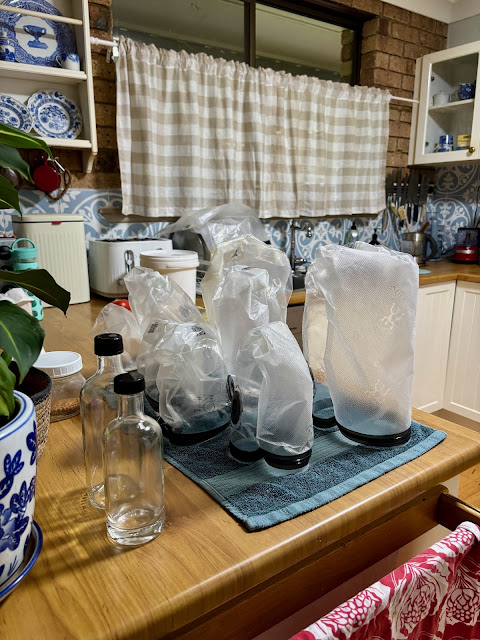
Every morning when I walk into my kitchen it looks tidy and ready for a day's work. Not so on this morning (above), I saw this when I walked in. Late the previous afternoon when I was looking for something, I came across my rolled up Zwilling vacuum bags and decided they had to be washed and dried. So I did that and although I usually put them outside on the verandah to dry it was dark by then. I turned the just-washed bags inside out and left them like this on a towel. It worked well and now the bags are ready to use when I bring home root vegetables, cabbages or whatever I buy that I want to last four or five weeks.
Image

You’ll save money by going back to basics

When I was doing the workshops and solo sessions, I had a couple of people whose main focus was on creating the fastest way to set up a simple life. You can't create a simple life fast, it's the opposite of that It's not one single thing either - it's a number of smaller, simpler activities that combine to create a life that reflects your values; and that takes a long to come together. When I first started living simply I took an entire year to work out our food - buying it, storing it, cooking it, preserving, baking, freezing, and growing it in the backyard. This is change that will transform how you live and it can't be rushed.  
Image


Trending Articles

NOT the last post

This will be my last post here.  I've been writing my blog for 18 years and now is the time to step back. I’ve stopped writing the blog and come back a couple of times because so many people wanted it, but that won’t happen again, I won’t be back.  I’ll continue on instagram to remain connected but I don’t know how frequent that will be. I know some of you will be interested to know the blog's statistics. 
Image

Every morning at home

Every morning when I walk into my kitchen it looks tidy and ready for a day's work. Not so on this morning (above), I saw this when I walked in. Late the previous afternoon when I was looking for something, I came across my rolled up Zwilling vacuum bags and decided they had to be washed and dried. So I did that and although I usually put them outside on the verandah to dry it was dark by then. I turned the just-washed bags inside out and left them like this on a towel. It worked well and now the bags are ready to use when I bring home root vegetables, cabbages or whatever I buy that I want to last four or five weeks.
Image

You’ll save money by going back to basics

When I was doing the workshops and solo sessions, I had a couple of people whose main focus was on creating the fastest way to set up a simple life. You can't create a simple life fast, it's the opposite of that It's not one single thing either - it's a number of smaller, simpler activities that combine to create a life that reflects your values; and that takes a long to come together. When I first started living simply I took an entire year to work out our food - buying it, storing it, cooking it, preserving, baking, freezing, and growing it in the backyard. This is change that will transform how you live and it can't be rushed.  
Image

Creating a home you'll love forever

Living simply is the answer to just about everything. It reduces the cost of living; it keeps you focused on being careful with resources such as water and electricity; it reminds you to not waste food; it encourages you to store food so you don't waste it and doing all those things brings routine and rhythm to your daily life. Consciously connecting every day with the activities and tasks that create simple life reminds you to look for the meaning and beauty that normal daily life holds.  It's all there in your home if you look for it. Seemingly mundane tasks like cleaning and cooking help you with that connection for without those tasks, the home you want to live in won't exist in the way you want it to.  Creating a home you love will make you happy and satisfied.
Image

Time changes everything

I've been spending time in the backyard lately creating a contained herb and vegetable garden. My aim is to develop a comfortable place to spend time, relax, increase biodiversity and encourage more animals, birds and insects to live here or visit. Of course I'd prefer my old garden which was put together by Hanno with ease and German precision. Together, we created a space bursting at the seams with herbs, vegetables and fruity goodness ready to eat and share throughout the year. But time changes everything. What I'm planning on doing now, is a brilliant opportunity for an almost 80 year old with balance issues. In my new garden I'll be able to do a wide range of challenging or easy work, depending on how I feel each day. It’s a daily opportunity to push myself or sit back, watch what's happening around me and be captivated by memories or the scope of what's yet to come.
Image

It's the old ways I love the most

I'm a practical woman who lives in a 1980’s brick slab house. There are verandahs front and back so I have places to sit outside when it's hot or cold. Those verandahs tend to make the house darker than it would be but they're been a great investment over time because they made the house more liveable. My home is not a romantic cottage, nor a minimalist modern home, it's a 1980’s brick slab house. And yet when people visit me here they tell me how warm and cosy my home is and that they feel comforted by being here. I've thought about that over the years and I'm convinced now that the style of a home isn't what appeals to people. What they love is the feeling within that home and whether it's nurturing the people who live there.
Image

Making ginger beer from scratch

We had a nice supply of ginger beer going over Christmas. It's a delicious soft drink for young and old, although there is an alcoholic version that can be made with a slight variation on the recipe. Ginger beer is a naturally fermented drink that is easy to make - with ginger beer you make a starter called a ginger beer plant and after it has fermented, you add that to sweet water and lemon juice. Like sourdough, it must ferment to give it that sharp fizz. To make a ginger beer plant you'll need ginger - either the powdered dry variety or fresh ginger, sugar, rainwater or tap water that has stood for 24 hours to allow the chlorine to evaporate off. You'll also need clean plastic bottles that have been scrubbed with soap, hot water and a bottle brush and then rinsed with hot water. I never sterilise my bottles and I haven't had any problems. If you intend to keep the ginger beer for a long time, I'd suggest you sterilise your bottles. MAKING THE STARTER In a...
Image

An authentic look at daily life here — unstaged and real

Most days Hanno was outside happily working in the fresh air. It may surprise you to know that I started reading my book,  Down to Earth , yesterday - the first time since I wrote it 13 years ago.  I had lent it to my neighbor, and when she returned it, I started reading, expecting to find surprises. Instead, I realised the words were still familiar—as if they were etched into my memory. As I flipped through the pages, I was reminded of how important it was for me to share that knowledge with others. The principles in Down to Earth changed my life, and I truly believed they could do the same for others. After just 30 minutes of reading, I put the book down, reassured that its message still holds true: we can slow down and reshape our lives, one step at a time.
Image