down to earth

  • Home
  • About Us
  • Down To Earth Book
  • Privacy Policy
I've been thinking a lot about the recent workshops I've presented along with Hanno and Tricia and if I had to come up with one word to describe my feelings about the workshops, it's motivating. After both the Lockyer Valley workshop and the Blackheath workshop, I came away motivated and sure that what we're doing here it right for us, right for our community and a small step in the right direction towards repairing some of the environmental damage we've done in the past. I doubt we'll ever make up for our share of the damage our indiscriminate shopping has done but I swear I'll never stop trying to. I also felt a recommitment to the way we live after both workshops because of the people I spoke with and knowing that we'll all working in a similar way towards shared goals.

The two workshops were very different. Lockyer Valley was organised by a strong community group, originally formed to help oppose a gas pipeline snaking through the small communities in their valley. I'm very pleased to report that the pipeline didn't go ahead. The Lockyer Valley is a beautiful area just west of Brisbane that has a strong tradition of fresh food production. But now many of the primary producers are going out of business or moving to other work when it's available. Often it isn't. The workshop brought those people together to share ideas that may be beneficial for all of them and encouraged talks about a way forward. The group applied to the local council for a grant to pay for the workshops.

We held a community forum at the end of the workshop to create a list of actions to take into the future. There is a possibility they'll form a small simple living group and share ideas and skills. Carol Stephens, who leads the group, told me that many farmers are frugal by necessity rather than choice and they're in that situation when the general cost of living is rising. It makes life difficult. Carol said the pressures of falling commodity prices despite the rising cost of food in the supermarkets, rising production costs and increasingly unpredictable weather patterns all contribute to make primary production dangerously unsustainable. Farmers and family farms have always been the backbone of Australia and now that network of farmers is fragile.

One thing we can all do to help our farmers is to insist on buying Australian fruit, vegetables and meat. If you can travel out into these small rural communities on a weekend, stay, buy fresh produce there and that money will stay in the community. It's a small gesture but our farmers need our support and it is worth doing. We should also be asking our local members of parliament to address the problem of unclear food labelling in Australia. I want to see food labels that clearly indicate what has been produced in Australia and what is Australian owned. What is so difficult about that? A label that tells me a product has been processed in Australia from imported ingredients doesn't tell me anything. The government must do something about labelling now that benefits our farmers and the consumer, not the multi-national corporations that are filling more and more of our food shelves.


The more recent Blackheath workshop was full of people who were committed to living simply and who wanted to meet like-minded people. I organised that one and participants paid a fee to attend. I talked about various aspects of simple living, how Hanno and I work to save water, electricity and money, how we pay our bills and try to cut down on what we can. All of us want to live well on less and this little hall was a good place to talk about how we all try to do that. There was a calm and friendly atmosphere at Blackheath - similar to friends at a picnic. When I sat with those knitters, there was no other place I would have preferred to be. We shared recipes, stories and our hopes and, I think, we all thoroughly enjoyed the contact with others who share a similar outlook on life. I know I certainly did.

So when I drove back home from those workshops - both of them a long way from home, I had a chance to think about that time I spent out in those communities. And I have to tell you I came home feeling really motivated and inspired to keep going, keep blogging about what we're doing and keep writing about what this simple life is all about. Because it's different for each of us, there is no must-use recipe, there is no right way. These workshops are important and I must try to do more of them. They show me, as well as everyone who comes along to them, just how diverse, empowering and enriching simple life can be. And when we're all working alone in our homes far away from anyone who understands what we're doing and why we're doing it, the fond memory of those connections we made with like-minded people will see us through.

I'm going to start writing a new book soon and so I'm hoping to fit a few workshops in before that. There has been interest in Lismore and Brisbane so they may be possibilities. I also think Orange, Wagga, Canberra or Mudgee, as well as Dalby and Warwick in south-west Queensland might also be possible. If you're interested in attending a workshop, and you think others in your region may be interested, please let me know.

Below is the program of talks I'll be giving at the Sunshine Coast Libraries soon. The talks are free but you have to book. You can do that here.


Title
Date
Time
End Time
Library
Registered
Max
Living simply
living smart
9/07/2013
10:00 AM
11:30 AM
Coolum Library
14
25
Living simply
living smart
10/07/2013
10:00 AM
11:30 AM
Nambour Library
25
35
Living simply
living smart
11/07/2013
10:00 AM
11:30 AM
Maleny Library
14
40
Living simply
living smart
17/07/2013
10:00 AM
11:30 AM
Cooroy Library
15
40
Living simply
living smart
26/07/2013
10:00 AM
11:30 AM
Kawana Library
13
25
Living simply
living smart
31/07/2013
2:00 PM
3:30 PM
Beerwah Library
12
30
Living simply
living smart
2/08/2013
10:00 AM
11:30 AM
Maroochydore Library
19
40
Living simply
living smart
6/08/2013
10:00 AM
11:30 AM
Caloundra Library
32
40
Living simply
living smart
15/08/2013
1:00 PM
2:30 PM
Noosa Library
20
55

Additional Reading
Report on food labelling law and policy (Australia).

Just before I travelled to Blackheath, I received this email from "Mary". I asked if it was okay to use it in a post because I think it shows how empowering simple life can be. Mary wrote:

I first began reading your blog while pregnant with my first child back in 2009. I remember the amazement I felt back then that there was someone out there living my dream and felt inspired by you. Since then I have taught myself to cook from scratch, bake and grow at least the herbs, lettuce and spinach I use regularly. (Due to rheumatoid arthritis I can't maintain a full vegetable garden) I began stock piling and began teaching myself to knit and sew. As time has passed I found the tv on less and less and look forward to the quiet in the evening after my children are on bed. My life has become a lot simpler and as a result I am a lot happier, for 15 years I suffered from depression but since really living this simple lifestyle the depression has cleared, I still have bad days but I get through them and continue walking the path of my life. A simple life and getting back to basics and being true to myself cured what 15 years of medication could not. 

It is now 4 years later. I gave birth to my second child five months ago and then six weeks ago my partner was made redundant. I can honestly say that if I had not discovered your blog all that time ago I would be homeless and hungry right now. My disability payment barely covers rent and bills and we are only surviving right now because we only live on the basics and had built a stockpile. I have enough food to feed my family for a month right now and we are eating quite well. Vegetables and meat from the freezer and pantry (canning and preserves) baking sweet treats for my son and drinking water and tea. It is the skills I've learnt from your blog and book (your book was my 30th birthday present and the only thing I wanted) and the inspiration to cook from scratch and stockpile that is allowing us to be comfortable and not too stressed with our circumstances right now.

Mary, I wonder if you agree with me that the depression may have lifted because you took control of your life. I think that when you have a compelling purpose and plan for your days, you have structure. Maybe that structure helped you through. Whatever the reason, it's wonderful. I know when I took control of my home, I felt empowered by it. There is nothing like that feeling. Sometimes it feels like you're running a small business and that you're the CEO and work staff all rolled up into one. You know your decisions can make or break your family and in your case, you set your family up for success while working through your health problems.

I'm sorry to read that your partner lost his job but there is no better way to face that situation than with a stockpile, the knowledge you have and the ability to make do with very little. You've done really well. I'm proud of you.

Often people think this kind of living is for those who are retired and have the extra time for it. I think Mary proves it's for all ages and for many circumstances and how making a series of simple changes can be life changing.

If you have some tips for Mary, please add them to your comment. There may be something she's not yet tried that will make a real difference to her situation. Thank you.

I can't help myself. It's winter here. I have to do a knitting post.

I'm starting to see myself as a dishcloth queen. When I travel around, I ask people if they knit and if they do, if they knit dishcloths. It surprises me that not everyone does this kind of knitting. One of the many aspects of simple life is to home produce what you can in the time you have available. We had some beginners knitting and crochet sessions at the Blackheath workshops and I hope that will start those ladies off on a lifelong supply of dishcloths. 

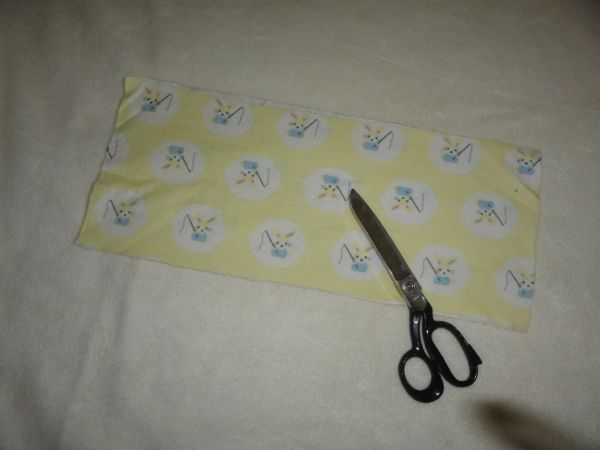
This knitting is portable, easy and empowering. Since I started knitting dishcloths, I haven't bought Chux or any other dishcloths from the supermarket. They are expensive here costing about $4.50 for a pack of 10 or $6.50 for a pack of 20. If you're buying them and not washing them and reusing, they're costing you somewhere between 35 to 45 cents each. Why would you want to spend that kind of money on something you're going to throw away? Over the years I've saved a lot of money not buying into this commercialisation of dishcloths.  I use pure cotton dishcloths for washing up and facecloths, and rags for the dirty cleanup jobs when you usually need to throw the cloth away. The rags are simply old bed sheets and towels that are on their last legs but are cut into eight inch squares cleaning rags to extend their life.

I use knitting cotton to make my cloths. I usually use plain cotton but sometimes I'll use organic cotton if I'm making some as a gift or facecloths for a baby. Any sort of 100 percent cotton is suitable and you can use whatever size needless you have on hand. I usually use needles anywhere between a 4 and a 6mm. Cotton is the best option because it dries fairly fast, it can be easily washed with the weekly wash and when dried in the sun, the sun will disinfect your clean cloth beautifully. I have about 20 cloths in my kitchen basket so I have plenty to use and replace every day or two. When the cloth is dirty, I hang it over the side of the wash basket so it's not in with the dry dirty clothes. It's just washed with the regular washing and hung out to dry. Used in this way, a cotton cloth will last about five years and in that time it's saved you a lot of money. If you're not knitting or crocheting your cloths I hope this post encourages you to do so.

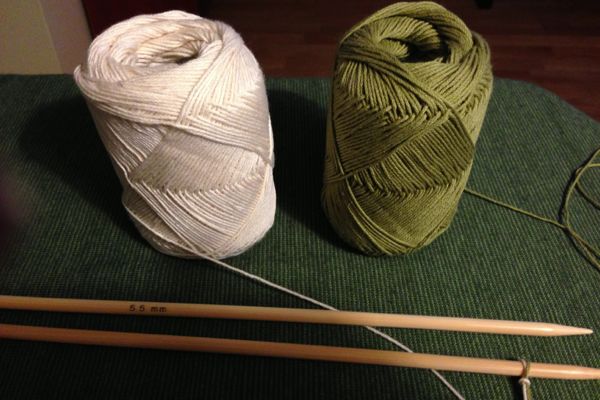
Start with a slip knot. I'm using a nice Japanese organic 4ply cotton here with 5.5mm bamboo needles. I'm using two strands of cotton on this cloth. If you want a loose weave cloth, just use one 4 ply strand.
 The finished cast on row. When you cast on and off, make sure you knit loosely. If you knit too tight, it will pull in those end rows and your knitting won't be square.
If you're a beginner, don't try this until you're a bit more proficient. For someone who has knitted cloths before, use this stitch as your first row after the cast on. It will give you a smooth and firm bottom edge, not the loopy edge you often get with a plain cast on. It's easy - the stitch is the same as a knit/plain stitch but you start it off by putting your right needle into the back of the stitch.
The half completed second row of knitting into the back of the stitch. You can see the neat edge it gives on the right needle.
And here is the first two inches of the new dishcloth and below, a few more inches. This one will take me one or two days to complete, just knitting when I have a spare hour.

All these cloths are simply cast on, a mix of plain and purl, then cast off.

Your cloth can be any design. Let's face it, your dishes don't care if you are a neat knitter or you knit in plain or purl. All they need is for the stitches to be strung together so that makes these dishcloths the best sort of beginners' knitting. Even if your first cloth looks like a dog's breakfast, it will still be able to be used. Your next one will be better.

If you're a knitter but have never knitted a dishcloth before, start by casting on about 30 - 40 stitches in either 4 or 8 ply cotton. Or you can do what I've done in the photos above and use two strands of 4 ply. Knit into the back of the stitch for the second row. That will stop that loopy untidy border that usually happens to a plain cast on row. Do about 5 rows of plain stitch to make the bottom border, then go on to 5 plain at the beginning and end of the row with whatever stitch to make up the middle of the row. In this example I've used stocking stitch. The 5 plain at the beginning and end will give you a nice border. End with five plain rows and cast off.

If you're learning to knit, and I hope this post will encourage you to start, look at this link: it's a good beginners guide to casting on. It's slow and it gives you a good chance to see the stitches and practise on your own needles. This is a follow on link to learn knit or plain stitch. The next is a guide to doing purl stitch. And finally a cast off guide. That's it!  So your pattern will be:

First row: cast on 30 stitiches
Second, third, fourth and fifth row: knit/plain stitch for the entire row.
Next row: 5 knit/plain stitches, then 20 purl stitches, then 5 knit/plain stitches.
Next row: Knit/plain stitches for the entire row.
Next row: 5 knit/plain stitches, then 20 purl stitches, then 5 knit/plain stitches.
Next row: Knit/plain stitches for the entire row.
Keep knitting those two rows until it's almost as long as you need it to be.
Then finish off with knit/plain stitch for the entire row and repeat that row four more times.
Cast off.

If you have any problems, go to the knitting forum here and I'm sure someone will help you.

That will give you a good dishcloth. It's plain but you're a beginner and it doesn't matter if you make a mistake. Hopefully you'll knit a few of these and improve with each cloth. It's a great way to start knitting. If you're confident after a couple of cloths, look for some new patterns on the web and try something a bit more daring.

I really hope you try this. It might feel strange at first to be holding those needles and cotton while trying to loop, slide and pull, but trust yourself and keep going. Learning how to hold the needles and cotton can be tricky but the more you practise, the better you'll get at it. And if you successfully teach yourself to knit, tick off another life skill you've mastered.

If you're knitting dishcloths, or anything else, I'd love to see it. If you can, put a link with your comment so we can see what you're doing or post a photo on the forum. You never know, your knitting might be thing one thing that inspires someone to take up their needles and start.


It's been a big couple of weeks here with preparations, workshops and travel. I'm really pleased to be home and I'm looking forward to a restful weekend. I hope you are able to spend time doing something you love over the next few days. See you next week!

Oprah at Harvard
The most hated online abbreviations
Knitting and crochet abbreviations
What the Pope said about food waste
The Next Green Revolution (This Time Without Fossil Fuels)

FROM THE COMMENTS HERE DURING THE WEEK
The Fawn Times
Mooberry Farm Homesteading Journal
Flowers Lady's Creations

I left Tricia's on Tuesday morning after my nephew Daniel poured warm water on the windscreen to get rid of the ice. It took about an hour to get to Mudgee where I had a couple of cups of coffee with my good friend Susan. We had a lot to catch up on; it's been too long since I've seen her. I spent the afternoon driving to Armidale and arrived there after dark. Having registered at the first motel I found, I showered and fell into bed, and then lay there for a few hours unable to sleep. The overnight temperatures were minus zero again, and again I had to pour water on the windscreen before I set off in the morning. The car was so warm and cozy but outside I could see sheep gazing on frozen grass. I was pleased to see the sun rise. After a long and tiring drive, I drove into our driveway around 2.30pm. Hanno was waiting in the garage and after a long hug, we walked inside to share the happenings of the previous week.

 It was cold outside.
Sunrise just north of Armidale.
Tricia phoned when I was on the road, I pulled over and saw a moving mass in a paddock. It was a few hundred sheep being herded by a dog and a farmer on a quad bike.
 The little town of Merriwa NSW.

I'd been looking forward to seeing Tricia and meeting everyone at the workshops but it turned out to be much better than I'd anticipated. Despite some setbacks with the hall, Tricia organised hot drinks and food for all of us and together with the food brought along by several of the women who came along, we were well fed and satisfied. Thanks Tricia and thank you to everyone who brought food to share.

This is the Sunday group. From left, standing: Brad, Alyce, Ally, Corinne, me, Petra, Virginia, Rhonda, Rose, Lydia, seated from left: Alison, Marilyn, Erin, Joy and Leanne. 

Tricia is really keen for me to organise more workshops in country towns but I'm not sure of the interest. I'd have to have a couple of towns close to each other and there would need to be about 15 people at each event. If you think that would work in your town, email me and we'll see what we can do.


Here we have some of our Saturday group, from left: Michelle, Cathy, Larissa, Christine, Sam, Michelle, Nadia and Chantel. 
 Saturday group again broken up into knitting and crochet groups.
Saturday group, with two ladies not yet named: Allison (Rabbithorns), who is a mod on the Down to Earth forum, with Michelle and Nadia, Michelle is obscured and Dru in the pink stripes.
And Saturday's crochet group: Tessa, who is another mod on the forum (Teekay), Chantel, Sam, Tricia, Cathy is next to Tricia and Larissa is in the foreground with back to camera.
 Concentrating on their crochet: Ally, Alyce and Petra.
Tricia with her crocheters Erin and Rhonda.
A small group didn't need a crash course in crochet or knitting, they watched the composting video: Alison, back to camera Corinne, Marilyn and Brad.
Rhonda in the middle of her very interesting demonstration of spice blending and roasting.

And what can I say about the workshops. Of all the workshops I've done, this weekend was my favourite. There were so many people there whose names I knew, who I felt I'd already met and when I eventually did, I felt an immediate bond. It's there you know, that invisible thread that connects all of us. I felt it very strongly at Blackheath. We share a way of looking at the world that isn't so common nowadays and when we sit and talk there is a common understanding.

Along with around the table discussions about cleaning, preserving, freezing and housework, I made up a batch of laundry liquid and the other Rhonda showed us all how to blend and roast spices for curries. Tricia taught some ladies how to crochet and I taught some how to knit. Those who didn't do either watched a video on how to make compost and operate a work farm.

 This was my view of the Sunday group as we sat around the table discussing this and that.
The as-yet unseen man sitting behind Rose is her husband Tony. Tony helped in various ways during the day and took some photos. Thanks Tony.

Thanks to everyone who presented me with a gift. I appreciate homemade gifts so much and shall treasure those I received at Blackheath. Thanks to everyone who spoke so kindly of me and who whispered such kind words in my ear. Thanks to everyone for sharing their own stories, it was very moving and inspiring. For me, and I'm sure everyone who heard those stories, it brought us closer together and confirmed that we are indeed sharing an enriching and significant life journey.


Hello everyone! I'm still at Tricia's and it's freezing. We had a wonderful weekend meeting some beautiful people at the workshops we ran here. I'm so pleased I decided to hold theses events because I think it did us all good to meet, share, learn and connect. 

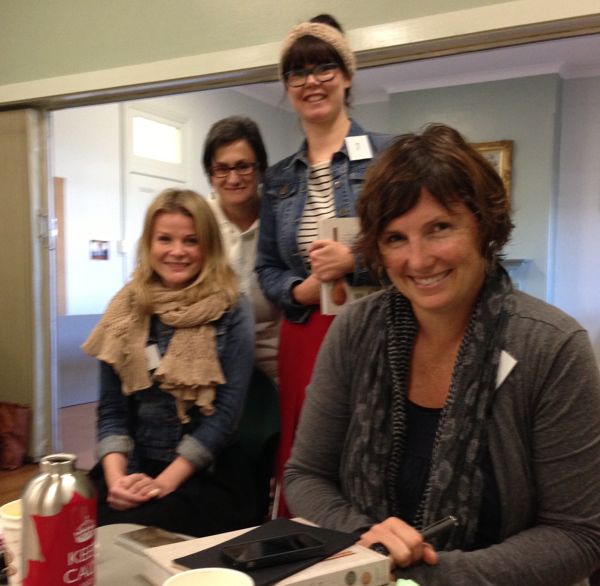
Alyce, Rose, Erin and Ally were among the 14 who came to the Sunday workshop.

I forgot to bring the cable that connects my camera to the computer so I'll have to make do with this photo I took on the camera. It's a bit blurred but you'll get the general idea of it.  When I get home I'll show some more photos, including a group photo taken on the second day. I wish I'd thought of it for the first day as well.

I'm heading home tomorrow and will take photos along the way again. I'll have more time for photos on the way back because I'm not doing the drive in one hit. I'll be overnighting in Armidale and driving home the following day.    :- )

I had such a wonderful time on the 1500km trip from home to Tricia's. I got up at 12.30am, had a cup of tea and a crumpet, organised myself and drove out the driveway at 1.45am, heading south. The trip to the Gold Coast, which usually takes two hours, took only 90 minutes at that hour and by the time I reached the southern end of the Gold Coast it was 3.30. I pulled over and had a walk around and a cup of coffee, then crossed over into New South Wales at around 4am. I drove down the Pacific Highway until sunrise, then turned inland at Grafton and headed for Armidale.

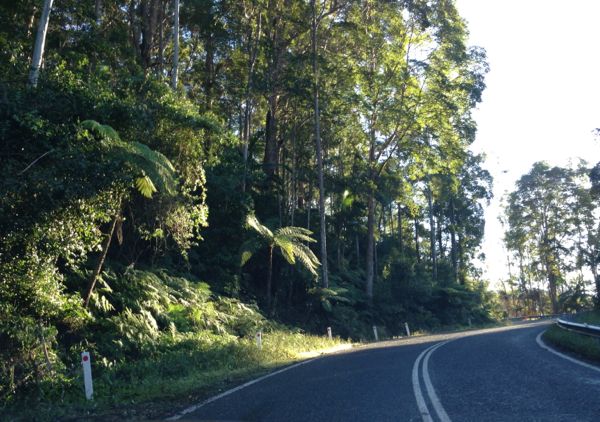
This is the road from Grafton to Armidale. It's lined with thousands of tree ferns and other rain forest species and winds up across the Great Diving Range, overlooking the Pacific Ocean.
Climbing up through the mountains, the long and winding road overlooks some spectacular scenery, and then, out of nowhere, a red light!
This photo was taken at the summit, from a lonely lookout, where the trees parted to give the perfect private viewing of the clouds below, with mountain peaks poking through.

The New England Highway is bordered on both sides by trees with either autumn colours or bare branches; it is spectacular. The countryside is brown, in sharp contrast to home where consistent rain over summer has kept everything beautifully green. I was surprised to see quite a few businesses and shops with closing down signs, and two pubs for sale. I haven't seen that before. A sad sign on the times, I guess.

Lunch was had in Tamworth and I happily drove on with short bursts of loud singing, interesting and  intelligent discussion on Radio National, the window down, then up, and stopping occasionally to take a photo or two. I wanted to reach Tricia's before dark so apart from one stop to fill up on fuel and one for a toilet break in Mudgee, I drove on. Sure enough, I pulled into Tricia's driveway just after five. She was waiting, the fire was blazing and hot soup was ready to be served.

Tricia with Johnathan by the fire.
Lunch with Tricia and David.

Tricia is looking after her grandson Johnathan at the moment. Yesterday, Tricia, Johnathan and my nephew David, all went to the Megalong Tea Rooms for lunch. This little cafe deep in the Megalong Valley has been operating in the same location since the 1940s. The menu is simple, delicious and mostly home-made. After lunch David helped us with the shopping for the workshops and then took the train home.  

I'm not sure what we're doing today, Tricia might be coming down with a cold so it might be a day of knitting in front of the fire. Poor us. LOL


I just realised this post didn't come through as scheduled. Sorry, it was supposed to be published on Monday morning.

I'm off on a solo road trip today. I'm driving down to visit my sister and for a workshop in Blackheath. I'll be meeting several readers and members of the forum while I'm down there so I'm really excited about the trip and what it will bring.  In the next week or so, there will be no regular posts as such, but I'll be posting photos along the way and checking for your comments.

Membership on the forum has been suspended for the time being to try to rid ourselves of spammers. If you are interested in joining the forum, email me and when I come home, I'll arrange it.

I hope you all have a wonderful week. :- )


This is Hanno at the Susan River Homestead near Hervey Bay. We visited there on Tuesday to give a short talk at the Queensland Carers Retreat.


Why bugs aren't the enemy - Michael Pollan

Worm therapy

David Bell's tiny home

How to teach spelling

Thinking of starting a Transition initiative?

How to Make Kombucha Tea at Home

FROM COMMENTS DURING THE WEEK

Frugal Down Under

Scarlet at The Finished Article

Hana at Marmota's Dress Diaries

I had a great time yesterday sewing and organising myself and my work room. You know that I'm visiting my sister, Tricia, next week and I want to take a few things down for her grandson, Johnathan. He is six months old now, they're just coming into winter in a very cold region, so that presents me with many wonderful options to knit cosy cardigans and sew fluffy fleece sleeping bags. I love helping others stay cozy. I'd like to write that on official forms that ask "occupation". (Not that it's anyone else's business what I do and besides, I refuse to be categorised by a single word. "Retired". Pffffft! End of rant.)  I love the cold weather, rugging up and feeling cosy and I take every opportunity to help others do the same. I'll help Tricia start Johnathan on that road early.

While I worked in that little room, rain fell outside, I could see the trees and bushes move in the wind and I was pleased I was in that room.

Warm.


Out in the yard, the wisteria is turning gold and slowly falling, the grass isn't growing so fast and soon the pecan tree will lose its leaves. All signs that winter is nearly here. It makes me think of the alpaca yarn I have here and what I'll make with it. Alpaca is very light but incredibly warm so it's one of the natural yarns that I love to knit. Maybe some gloves for Hanno. Since he had his chainsaw accident, his damaged hand, with compromised circulation, seems to always be cold. It's even worse now in the cold weather. Yes, that's where the alpaca will go.

While I worked in that little room, I could smell chicken casserole slow cooking on the stove. I thought about all the people who have no warm room to tidy up and no casserole to eat.

Fortunate.


Life naturally turns inwards in winter. More chores are carried out indoors, we don't automatically fling open the doors and windows early in the morning to capture the cool fresh air. We keep doors closed  to keep the warmer air inside. More cups of tea are enjoyed, lambswool slippers are on, gloves and scarves have been aired and worn, we've stopped keeping a jug of water in the fridge and ice cubes in the freezer. They'll wait their turn to be enjoyed again later in the year.

While I worked in that little room, I thought about writing this post and the people who would read it from all over the world. Coming here from warm and cold parts, living near country lanes and city highways, being part of my day simply because they read what I write.

Thankful.

I'm convinced we all need a bit of downtime during busy periods in our lives. Having that one day to do this and not worrying about anything else, really cleared my head and helped me prepare for what is to come. It doesn't take a lot, but taking as much time as you can to nurture yourself and slow the pace helps. No one will come along and tell you to take time out, it's something we all have to do for ourselves. I don't do it nearly as much as I should but I'm much better than I used to be. Do you take time to look after yourself?
If you're keeping chickens in the backyard, often you'll reach a point when you have too many eggs. Luckily, eggs are always easy to give away but they're also very easy to use up. Two of my favourite egg-based meals are quiche and creme caramel. Both recipes can be made many different ways, this is how I make them.

Quiche
Don't be put off by making your own pastry. Like everything else, it's a skill that can be learned and when you do, it will open up so many other recipes. I did a tutorial on how to make pastry here, so I hope you are guided by that and make your own pastry case from scratch.


The pastry has to be blind baked first. That's just the cooking term for baking the pastry case without the filling in it. To blind bake, you prepare the pastry in the flan dish, cover it with a sheet of baking paper and pour on some chick peas or beans to weigh the paper down. Bake that in the oven till it's a soft golden colour, then remove it from the oven, take the paper and beans off, add the filling and pop it back into the oven to bake.

Quiche filling
Eggs are always the main ingredient for a quiche filling. I used six eggs in my quiche and a cup of cream. The other ingredients were just what I had in the cupboard. Quiche is a flexible recipe and you can add whatever suits your taste and you have handy in the cupboard or fridge. In addition to the eggs, I added mushrooms, leeks, spring onions, garlic, capsicum/red pepper that had all been pre-cooked and allowed to cool down. When the pastry was blind baked, I poured in the egg mixture and baked the quiche in a moderate oven until it was golden brown.

Quiche is one of those versatile meals that can be served hot or cold. I love it both ways with maybe a slight preference for the cold version. It's a good food to add to lunch boxes and the perfect choice for a light lunch of dinner, with the addition of a salad. Your fillings could also include bacon, ham, celery, eggplant, spinach, kale or potato - all pre-cooked and allowed to cool.

Creme Caramel
I think this might be my favourite dessert although we don't often have it at home, if we dine out and it's on the menu, I usually choose it.


Ingredients ...

...for caramel
¾ cup white sugar
1 cup water

½ cup sugar
1 cup cream
1½ cups milk
1 teaspoon vanilla extract
6 eggs

This dish must be slow cooked in the oven. Preheat your oven to 165C/330F. 

In a heavy based saucepan, place ¾ cup sugar and 1 cup cold water and turn on to medium heat. Stir the mix to help the sugar dissolve and cook for 5 - 10 minutes, until it turns into a golden caramel. Remove from heat and when it stops bubbling, pour into 6 ramekins, dividing the caramel evenly.  Fill up the saucepan with water straight away to help with washing up later.

...for creamy dessert


Fill the kettle with water and put it on to boil. 

Add cream, milk and vanilla to a saucepan and cook over medium heat until small bubbles start to form. 

Whisk eggs and the remaining sugar in a jug until pale and creamy, then slowly add the hot cream mixture to the eggs, whisking while you pour. Pour that mixture through a fine sieve into the ramekins, dividing it evenly between the six of them.

Place the ramekins a large baking dish and pour boiling water into baking dish until halfway up the sides of the ramekins. Bake in a slow oven for 30 minutes or until just set - you want the centre to be firmish but slightly wobbly. 

When cooked, remove the remekins and allow to cool before storing in the fridge overnight. To serve, run a knife around the edge of the custard, put the plate over the top of the ramekin and turn it out onto the plate.

Tasty and versatile egg recipes are like gold when you have chickens roaming in your backyard. What are your favourite egg recipes?

Newer Posts Older Posts Home


My books were all published by Pengiun, and are available at Amazon US, Amazon UK and Amazon Au

Search here

Total Pageviews

Translate


I'm Rhonda Hetzel and I've been writing my Down to Earth blog since 2007. Although I write the occasional philosophical post, my main topics include home cooking, happiness and gardening as well as budgeting, baking, ageing, generosity, mending and handmade crafts. I hope you enjoy your time here.

MY FAVOURITE PLACES

  • Grandma Donna's Place
  • Grandma Donna's YouTube
  • Grandma Donna's Instagram
  • This Simple Day
  • Nicole's Instagram

Give More

Give More

Popular posts last year

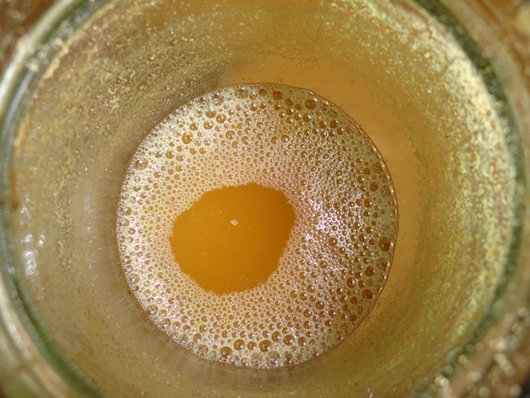
Making ginger beer from scratch

We had a nice supply of ginger beer going over Christmas. It's a delicious soft drink for young and old, although there is an alcoholic version that can be made with a slight variation on the recipe. Ginger beer is a naturally fermented drink that is easy to make - with ginger beer you make a starter called a ginger beer plant and after it has fermented, you add that to sweet water and lemon juice. Like sourdough, it must ferment to give it that sharp fizz. To make a ginger beer plant you'll need ginger - either the powdered dry variety or fresh ginger, sugar, rainwater or tap water that has stood for 24 hours to allow the chlorine to evaporate off. You'll also need clean plastic bottles that have been scrubbed with soap, hot water and a bottle brush and then rinsed with hot water. I never sterilise my bottles and I haven't had any problems. If you intend to keep the ginger beer for a long time, I'd suggest you sterilise your bottles. MAKING THE STARTER In a...
Image

NOT the last post

This will be my last post here.  I've been writing my blog for 18 years and now is the time to step back. I’ve stopped writing the blog and come back a couple of times because so many people wanted it, but that won’t happen again, I won’t be back.  I’ll continue on instagram to remain connected but I don’t know how frequent that will be. I know some of you will be interested to know the blog's statistics. 
Image

How to make cold process soap

I'm sure many of you are wondering: "Why make soap when I can buy it cheaply at the supermarket?" My cold process soap is made with vegetable oils and when it is made and cured, it contains no harsh chemicals or dyes. Often commercial soap is made with tallow (animal fat) and contains synthetic fragrance and dye and retains almost no glycerin. Glycerin is a natural emollient that helps with the lather and moisturises the skin. The makers of commercial soaps extract the glycerin and sell it as a separate product as it's more valuable than the soap. Then they add chemicals to make the soap lather. Crazy. Making your own soap allows you to add whatever you want to add. If you want a plain and pure soap, as I do, you can have that, or you can start with the plain soap and add colour, herbs and fragrance. The choice is yours. I want to add a little about animal and bird fat. I know Kirsty makes her soap with duck fat and I think that's great. I think t...
Image

Preserving food in a traditional way - pickling beetroot

I've had a number of emails from readers who want to start preserving food in jars but don't know where to start or what equipment to buy.  Leading on from yesterday's post, let's just say up front - don't buy any equipment. Once you know what you're doing and that you enjoy preserving, then you can decide whether or not to buy extra equipment. Food is preserved effectively without refrigeration by a variety of different methods. A few of the traditional methods are drying, fermentation, smoking, salting or by adding vinegar and sugar to the food - pickling. This last method is what we're talking about today. Vinegar and sugar are natural preservatives and adding one or both to food sets up an environment that bacteria and yeasts can't grow in. If you make the vinegar and sugar mix palatable, you can put up jars of vegetables or fruit that enhance the flavour of the food and can be stored in a cupboard or fridge for months. Other traditional w...
Image

Cleaning mould from walls and fabrics

With all this rain around we've developed a mould problem in our home. Usually we have the front and back doors open and that good ventilation stops most moulds from establishing. However, with the house locked up for the past week, the high humidity and the rain, mould is now growing on the wooden walls near our front door and on the lower parts of cupboards in the kitchen. Most of us will find mould growing in our homes at some point. Either in the bathroom or, in humid climates, on the walls, like we have now. You'll need a safe and effective remedy at some point, so I hope one of these methods works well for you. Mould is not only ugly to look at, it can cause health problems so if you see mould growing, do something about it straight away. The longer you leave the problem, the harder it will be to get rid of it effectively. If you have asthma or any allergies, you should do this type of cleaning with a face mask on so you don't breathe in any spores. Many peopl...
Image

Five minute bread

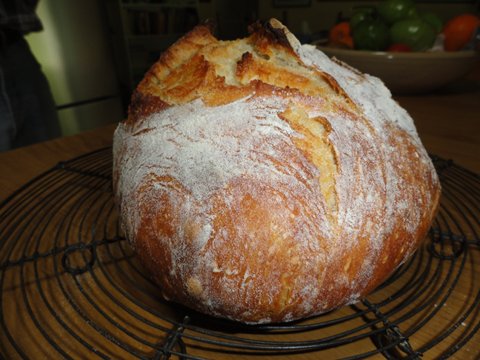
Bread is one of those foods that, when made with your own hands, gives a great deal of satisfaction and delight. It's only flour and water but it symbolises so much. I bake bread most days and use a variety of flours that I buy in bulk. Often I make a sandwich loaf because we use most of our bread for lunchtime sandwiches and for toast. Every so often I branch out to make a different type of loaf. I have tried sour dough in the past but I've not been happy with any of them. I'll continue to experiment with sour dough because I like the idea of using wild yeasts and saving the starter over a number of years to develop the flavour and become a part of the family. However, the loaf I've been branching out to most often is just a plain old five minute bread. By five minutes I mean it takes about five minutes actual work to prepare but it's the easiest of all bread to make and to get consistently good loaves from. If you're having people around for lunch or...
Image

This is my last post.

I have known for a while that this post was coming, but I didn't know when. This is my last post. I'm closing my blog, for good, and I'm not coming back like I have in the past.  I've been writing here for 16 years and my blog has been many things to me. It helped me change my life, it introduced me to so many good people, it became a wonderful record of my family life, it helped me get a book contract with Penguin, and monthly columns with The Australian Women's Weekly and Burke's Backyard . But in the past few months, it's become a burden. In April, I'll be 75 years old and I hope I've got another ten years ahead. However, each year I'll probably get weaker and although I'm fairly healthy, I do have a benign brain tumour and that could start growing. There are so many things I want to do and with time running out, leaving the blog behind gives me time to do the things that give me pleasure. On the day the blog started I felt a wonderful, h...
Image

What is the role of the homemaker in later years?

An email came from a US reader, Abby, who asked about being a homemaker in later years. This is part of what she wrote: "I am a stay-at-home mum to 4 children, ages 9-16. I do have a variety of "odd jobs" that I enjoy - I run a small "before-school" morning drop-off daycare from my home, I am a writing tutor, and I work a few hours a week at a local children's bookstore. But mostly, I cherish my blissful days at home - cooking, cleaning (with homemade cleaners), taking care of our children and chickens and goats, baking, meal-planning, etc. This "career" at home is not at all what I imagined during my ambitious years at university, but it is far more enriching. I notice, though, that my day is often planned around the needs of my family members. Of course, with 4 active kids and a husband, this is natural. I do the shopping, plan my meals, cook dinner - generally in anticipation of my family reconnecting in the evening.  I can't h...
Image

Every morning at home

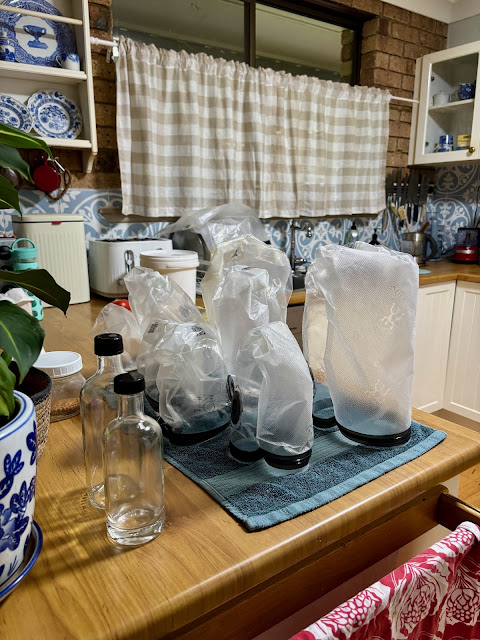
Every morning when I walk into my kitchen it looks tidy and ready for a day's work. Not so on this morning (above), I saw this when I walked in. Late the previous afternoon when I was looking for something, I came across my rolled up Zwilling vacuum bags and decided they had to be washed and dried. So I did that and although I usually put them outside on the verandah to dry it was dark by then. I turned the just-washed bags inside out and left them like this on a towel. It worked well and now the bags are ready to use when I bring home root vegetables, cabbages or whatever I buy that I want to last four or five weeks.
Image

You’ll save money by going back to basics

When I was doing the workshops and solo sessions, I had a couple of people whose main focus was on creating the fastest way to set up a simple life. You can't create a simple life fast, it's the opposite of that It's not one single thing either - it's a number of smaller, simpler activities that combine to create a life that reflects your values; and that takes a long to come together. When I first started living simply I took an entire year to work out our food - buying it, storing it, cooking it, preserving, baking, freezing, and growing it in the backyard. This is change that will transform how you live and it can't be rushed.  
Image


Trending Articles

NOT the last post

This will be my last post here.  I've been writing my blog for 18 years and now is the time to step back. I’ve stopped writing the blog and come back a couple of times because so many people wanted it, but that won’t happen again, I won’t be back.  I’ll continue on instagram to remain connected but I don’t know how frequent that will be. I know some of you will be interested to know the blog's statistics. 
Image

Every morning at home

Every morning when I walk into my kitchen it looks tidy and ready for a day's work. Not so on this morning (above), I saw this when I walked in. Late the previous afternoon when I was looking for something, I came across my rolled up Zwilling vacuum bags and decided they had to be washed and dried. So I did that and although I usually put them outside on the verandah to dry it was dark by then. I turned the just-washed bags inside out and left them like this on a towel. It worked well and now the bags are ready to use when I bring home root vegetables, cabbages or whatever I buy that I want to last four or five weeks.
Image

You’ll save money by going back to basics

When I was doing the workshops and solo sessions, I had a couple of people whose main focus was on creating the fastest way to set up a simple life. You can't create a simple life fast, it's the opposite of that It's not one single thing either - it's a number of smaller, simpler activities that combine to create a life that reflects your values; and that takes a long to come together. When I first started living simply I took an entire year to work out our food - buying it, storing it, cooking it, preserving, baking, freezing, and growing it in the backyard. This is change that will transform how you live and it can't be rushed.  
Image

Creating a home you'll love forever

Living simply is the answer to just about everything. It reduces the cost of living; it keeps you focused on being careful with resources such as water and electricity; it reminds you to not waste food; it encourages you to store food so you don't waste it and doing all those things brings routine and rhythm to your daily life. Consciously connecting every day with the activities and tasks that create simple life reminds you to look for the meaning and beauty that normal daily life holds.  It's all there in your home if you look for it. Seemingly mundane tasks like cleaning and cooking help you with that connection for without those tasks, the home you want to live in won't exist in the way you want it to.  Creating a home you love will make you happy and satisfied.
Image

Time changes everything

I've been spending time in the backyard lately creating a contained herb and vegetable garden. My aim is to develop a comfortable place to spend time, relax, increase biodiversity and encourage more animals, birds and insects to live here or visit. Of course I'd prefer my old garden which was put together by Hanno with ease and German precision. Together, we created a space bursting at the seams with herbs, vegetables and fruity goodness ready to eat and share throughout the year. But time changes everything. What I'm planning on doing now, is a brilliant opportunity for an almost 80 year old with balance issues. In my new garden I'll be able to do a wide range of challenging or easy work, depending on how I feel each day. It’s a daily opportunity to push myself or sit back, watch what's happening around me and be captivated by memories or the scope of what's yet to come.
Image

It's the old ways I love the most

I'm a practical woman who lives in a 1980’s brick slab house. There are verandahs front and back so I have places to sit outside when it's hot or cold. Those verandahs tend to make the house darker than it would be but they're been a great investment over time because they made the house more liveable. My home is not a romantic cottage, nor a minimalist modern home, it's a 1980’s brick slab house. And yet when people visit me here they tell me how warm and cosy my home is and that they feel comforted by being here. I've thought about that over the years and I'm convinced now that the style of a home isn't what appeals to people. What they love is the feeling within that home and whether it's nurturing the people who live there.
Image

Making ginger beer from scratch

We had a nice supply of ginger beer going over Christmas. It's a delicious soft drink for young and old, although there is an alcoholic version that can be made with a slight variation on the recipe. Ginger beer is a naturally fermented drink that is easy to make - with ginger beer you make a starter called a ginger beer plant and after it has fermented, you add that to sweet water and lemon juice. Like sourdough, it must ferment to give it that sharp fizz. To make a ginger beer plant you'll need ginger - either the powdered dry variety or fresh ginger, sugar, rainwater or tap water that has stood for 24 hours to allow the chlorine to evaporate off. You'll also need clean plastic bottles that have been scrubbed with soap, hot water and a bottle brush and then rinsed with hot water. I never sterilise my bottles and I haven't had any problems. If you intend to keep the ginger beer for a long time, I'd suggest you sterilise your bottles. MAKING THE STARTER In a...
Image

An authentic look at daily life here — unstaged and real

Most days Hanno was outside happily working in the fresh air. It may surprise you to know that I started reading my book,  Down to Earth , yesterday - the first time since I wrote it 13 years ago.  I had lent it to my neighbor, and when she returned it, I started reading, expecting to find surprises. Instead, I realised the words were still familiar—as if they were etched into my memory. As I flipped through the pages, I was reminded of how important it was for me to share that knowledge with others. The principles in Down to Earth changed my life, and I truly believed they could do the same for others. After just 30 minutes of reading, I put the book down, reassured that its message still holds true: we can slow down and reshape our lives, one step at a time.
Image