down to earth

  • Home
  • About Us
  • Down To Earth Book
  • Privacy Policy
I've just discovered Green Journey and what a find! It's full of interesting and helpful information and inspiring stories written by people who are living true to their simple values.  It's well worth a visit.

http://www.greenjourney.com.au/
This is a Friday photo feature that anyone with a blog can join. To take part, post a photo on your own blog, write a short caption explaining it, and link it back to here from your blog by saying you're part of "On my mind". Please write a new post, don't link to an older one. When you've done that, come back here and add a comment below, with a link to your blog.


Every so often I receive an email asking if a reader can send me something as a gesture of thanks for this blog. Nicky wrote just after my post on chooks to see if we'd like some fertile eggs to put under one of our broodies. We jumped at the chance. We said "yes please!" to six - three buff Orpingtons and three barred Plymouth Rocks. They arrived yesterday. So, this is a little teaser about what my Monday post will be. It's what is on my mind today and what I've been thinking about all week. Thank you Nicky! It is a beautiful gift.


Dear Down to Earth blog

I've been writing you for a few years now and although you feel like a very close friend, you also keep me on my toes. You make me accountable to myself, you provide a space for me to express my thoughts and the record you provide of the life I'm living with Hanno has been very helpful.

Flowers from Jens and Cathy's garden bought over when they had morning tea with us last weekend.

Having been born in the 1940s, I'm pretty much old school but writing you has given me continuing opportunities to seek out the new, remember the old, and blend it all into our daily lives. You push me on to better things. I doubt I'd have looked into so many cleaners if it weren't for you. And bread, instead of just making it, you made me think about it and keep tweaking until I got it right. I make a really good orange cake now because of you. My old version was okay, but you pushed me to make it better; now my orange cake is a moist and delicious piece of homemade loveliness. So thank you, you should come round for tea one afternoon and try a slice. 

Blog, you really have been life changing for me. If it weren't for you I wouldn't have a book about to be published, I wouldn't be writing for the Women's Weekly and I wouldn't have a New York agent. Even writing that for you now makes me stop and think if it's really true. If I were following my life's pattern, I would be slowing down now, doing less and becoming invisible. You made me do the opposite. I'm busier than ever, becoming involved in a lot of interesting projects, and people I don't know say hello to me now. I'm not sure I like the recognition but I enjoy the new  opportunities to express myself creatively and to share information through you.

More beans picked for freezing. Photo by Hanno.

You've brought a lot of great people my way too and I want to thank you for that. I doubt I'd have met such an intertesting bunch otherwise. When I think about your readers and all the people who comment on you, the wonderful women who help run your forum and the 6000 members there, the writers and readers at the Simple, Green, Frugal Co-op, the staff at Penguin and the Women's Weekly, and all the people who come to the neighbourhood centre for workshops they hear about through you, well, it makes me grateful you whispered in my ear to start you all those years ago.

It makes me humble too.

Thank you for not requiring too much of me - just a few words tapped away on our mutual friend, the computer, most days keeps you happy and functioning. I appreciate that because even though I've grown to love you, the short time I spend with you allows me to do so many other things you've made possible. We make a great team. Keep up the good work.

Sincerely yours,
Rhonda x


PS: Thanks to everyone who left a comment yesterday. I'm fine now; I was not sick, just tired. There is a lot going on here, I had some extra writing work I had to do in a hurry, and I spent the past two days at the neighbourhood centre. Both days were busy and hot. It takes me a while to get used to the hot weather again every year, so on that first very hot day on Tuesday, it really knocked me over. A couple of good long sleeps has put me right and now I'm ready for anything. Thank you for your concern and kind words.

I'm worn out and too tired to write today. I'll be back tomorrow.
Here in Australia, summer is the time for floods, bush fires, severe storms and cyclones. I'm sure everyone remembers the devastating floods we had last year in Queensland and Victoria. Recently we received a free booklet from our state government (Queensland) about preparing for disasters. It's called "Get Ready" and it's given us a lot to think about. It contains four steps of preparation that can be carried out well before, and leading into, an emergency situation:
  1. Prepare your emergency plan
  2. Prepare your emergency kit
  3. Prepare your home
  4. Tune into warnings
It also gives safety tips on how to survive severe storms, tsunamis, floods and cyclones. There is a pdf file of the brochure here.


When we were younger, we probably wouldn't have taken much notice of these types of booklets but now that we can't move as fast as we used to, we read them, store the information away in our brains, and keep the booklet handy. But for younger folk, I guess the recent floods and cyclones and seeing the overseas hurricanes and tsunamis has taught us to never be complacent. There is a role for disaster preparation in every home.

We are lucky here. If there was an emergency that affected food distribution, electricity or water, we'd be able to stay safe in our home for a few weeks. There is enough food and water here to keep us going and although we'd have to build a fire outside to cook, that's easily done and it wouldn't phase us. We would make a quick trip to the shop to pick up fresh batteries for the radio but everything else is taken care of. We keep our mobile phone charged and have a battery charger for the phone in the car so if we needed to, we'd run the car for a while to charge the phone. We have spare fuel here.

However, if there was a bush fire, flood or cyclone close to us  we would leave and drive to a predetermined safer location. In that case we'd need a grab bag - a bag containing those things we wouldn't want to leave behind to potentially be destroyed, as well as all the things we'd have to take to survive some time away. Generally a grab bag would be packed at the beginning of each storm/bushfire season, or left partially packed and added to when needed, and would contain:

Grab bag
  • Important documents in a waterproof container
  • Address book or phone containing addresses, phone charger and spare battery
  • Treasured photos in a waterproof container
  • Laptop computer, a flash drive or portable hard drive containing the files you don't want to lose
  • Medication and tissues
  • Water
  • First aid kit
  • Torch - one for each person, and spare batteries
  • Candles, matches or a lighter
  • Can opener and cutlery
  • Battery-operated radio with spare batteries
  • Cash (if there is no electricity the ATMs won't operate) credit and debit cards, just in case.
In a separate box:
  • Enough food and water for 48 hours. Make sure the food doesn't have to be cooked or refrigerated - sandwiches, cans of beans, fruit, popcorn, chocolate, biscuits, processed cheese, muesli bars etc.
  • If you have babies, the elderly or people with special needs with you, you'll need whatever special food and drinks they require.
  • Nappies, wipes,  baby bottles, sippy cups for the babies. A bucket with lid for waste items.
  • Eye glasses, walking sticks, asthma puffers and any special needs for your family.
  • Clothing and shoes for everyone.
  • Books, games and toys for the children. Books and cards for the adults.
  • Depending on the weather, either sun hats or blankets.
  • Sleeping gear.
Evacuating:
  • If you have to evacuate for any reason, do it early.  
  • Always go directly to the place you specified in your family emergency plan.
  • If you have to evacuate when flood waters are rising, if there is time, firmly plug up all your sink drains to stop water backing up into the house. 
  • If you evacuate due to a bush fire and there is time, close all interior doors as well as the outside doors. Remove the mats from the front and back doors. Cinders may land on them and ignite them creating a fire source at your wooden doors.
Well before anything happens, the whole family should talk about what would happen in an emergency and practise your evacuation plan. If you have teenagers, add the phone number of a trusted friend or relative that they can phone if they're out and can't contact you. Add the same emergency phone number to all phones in the family and ask that person to be your contact point in an emergency. Decide what you'll do with pets, if you want to take them with you, you'll need leads or pet boxes.

In Australia, the State Emergency Service will respond to all large emergencies. Each state has it's own branches and you can find their websites by Googling SES in your state. The SES have a lot of valuable information on their sites so it's worthwhile having a look. This is the Queensland SES site.

I think we often think that disasters only happen to other people but the floods last year proved that anything can happen. Do you have an emergency plan in your home? Do you have any information that I've forgotten, if so, please add your comment.


When our garden is in full production, we have too much food to eat all of it fresh. Often we give some to family and friends but when there is too much beetroot or enough silverbeet or beans to sink a ship, the excess is picked and processed in the kitchen. Recently we had a patch of beetroot that needed to be harvested so it was all pulled out and I made pickled beetroot. This is such a common thing in Australia and there are always tins of it in every supermarket so many people have forgotten that home made pickled beetroot far outweighs the poor tinned cousin for taste and value.

I tried the Women's Weekly Preserves cookbook recipe for these beetroot and they're really delicious. It's one of the easiest pickled vegetables you can make. Wash the beets thoroughly, then cut the leaves off without cutting into the beetroot, boil until tender (about 45 minutes), drain and allow to cool. Reserve ½ cup of the cooking water to mix with the vinegar (recipe below). When they're cool enough to handle, it's very easy to just skip the skins off with your fingers. Cut them up however you prefer, then place in sterilised jars and fill the jars with hot spiced vinegar. The three large jars I made will be stored in the fridge and eaten over summer but could also be stored in the cupboard for six months as long as you're confident with your sterilising and sealing. The high vinegar and sugar content act as a preservative, preventing the growth of bacteria in the sterile jar.

RECIPE FOR 1 KG (2.2 LB)
1 litre/quart cider vinegar (I used malt vinegar)
220g (7.7 oz) sugar
½ cup of cooking water
1 small cinnamon stick (I didn't use that)
8 black peppercorns
4 small dried chillies
1 teaspoon mustard seeds

Put all the ingredients in a saucepan, bring to the boil, and pour it hot over the beetroot in the jars.

It's a very easy job to just slip the skins off with your fingers.  Don't worry, the red stain washes off.
Here are the beets I did last week, some sliced, some quartered, packed in sterile jars and ready for the hot spicy vinegar.
Four bags of blanched fresh beans, out of the garden and in the freezer within the hour. These will be very handy when the beans have finished for the season.

Other vegetables, like beans, silverbeet, spinach, peas and carrots, only need blanching to be stored in the freezer for eating later when the garden isn't producing as much. Always blanch; it slows the action of enzymes on the vegetables which can cause loss of flavour, colour and vitamins.

How to blanch vegetables.

There is no doubt about it, when you have a backyard patch, you need to learn about preserving food too, otherwise you'll end up wasting some of it. But if you do that, if you learn these few basic skills, you'll have a good supply of fresh and frozen food to keep you going. I know my north American friends would generally can beans, carrots and many other vegetables. Here we do it differently, here we have a longer growing period and we generally use fresh most of the year, supplemented by the frozen stores.

Don't forget that you can also use these skills on cheaply bought vegetables that you might find at the market or supermarket. If you have too much of any vegetable, think about the best way to store it for later. If you pickle or freeze it before it loses its freshness and you'll get the full value of your money. I think that once you get a taste for home pickling and you see how easy blanching and freezing are, there will be no going back.
This is a Friday photo feature that anyone with a blog can join. To take part, post a photo on your own blog, write a short caption explaining it, and link it back to here from your blog by saying you're part of "On my mind". Please write a new post, don't link to an older one. When you've done that, come back here and add a comment below, with a link to your blog.


Julie asked to see the yellow apron I made a few years ago so I've been trying to remember to show it. Of course, it's still being used frequently, still serving a purpose. Good luck with your sewing, Julie.

Hanno and I want to thank you for all the kind and wonderful comments and emails sent this week about the book. We're really excited about it and glad you are too. When I have anymore information about it I'll let you know. I hope you take time out over the weekend to relax and connect with your family and friends. Be kind to yourself. See you all next week.
This is Lucy.

We're down to seven chickens now. We have barred Plymouth Rock Lulubelle, buff Orphington Martha, Australorps Cocobelle and Gracie, Old English Game bird Lucy and her two little girls, Mary and Kylie, who give the most beautiful white shelled, golden yolked eggs. Lucy and her brood came to live with us when Shane and Sarndra moved from their rural homestead into the Gold Coast. Lucy had reared a batch of mismatched eggs and although she was smaller than most of her hatchlings, she bossed them around and generally had all the chooks doing exactly what she wanted. Lucy is the first on the feeder every morning. The other chooks know that, we know it too. We have one of those feeders that is closed most of the time and when the chook wants food, she stands and a little step, which drops down and opens the feeding hatch. We put a brick under the step at night to stop rats feeding in the dark. Lucy stands on the step while I remove the brick, she is lowered to the floor of the chook pen - it looks like she's on a stage - and she starts eating before I walk away. All the other chooks stand back and wait, although sometimes Lulubelle might poke her head in to the trough. When she does, Lucy will peck her.

Every Spring, like clockwork, Lucy goes broody, hides somewhere and lays a clutch of eggs.

We have deliberately chosen not to buy Isa Browns and the general run of the mill chooks on sale at produce stores. They're bred for the cage industry, they've had their broodiness bred out of them and generally they will lay eggs almost every day, deplete their systems and then drop dead when they're about seven or eight years old. I know there are a lot of people who don't think there is anything wrong with that. I am not one of them. I want my chooks to live healthy lives and to go broody as nature intended.  When chooks have that natural period of broodiness they stop laying eggs when they feel they have enough under them, and their body has a break from egg laying and replenishes calcium supplies. We have a few old girls now who lay only a few times a year and we're fine with that. We're not going to kill them just because they don't lay eggs. They still catch insects and produce valuable nitrogen droppings. And, like us, they have a right to life simple because they're alive.

Cocobelle, Gracie and Mary above, Lulubelle  and Gracie below.

We'll have to get a few new girls soon. My preference is for either Barnevelders or Wyandotts but whatever we end up with they will be one of the old breeds. Just about any chook would suit our climate and probably an egg laying breed as opposed to a meat breed would be good. But who knows, I have found that chickens have a way of finding their own way to you. I would never have thought that I would have had an Old English Game bird - originally bred for fighting, but we have Lucy and she is such a character, you can't help but love her.


Walking into the backyard and seeing the chickens free ranging over the grass is one of the absolute pleasures of living as we do. They're as much a part of the backyard as the garden is. They help us keep the garden going and the garden produces food to keep them going. The chooks entertain us and produce the best eggs and all we give back is food and a safe haven. I think that's a wonderful exchange.

We all have our speciality dishes - those that we serve at great family celebrations, our favourite foods, meals that hold special memories for us, easy go-to meals that save us time and, of course, those thrifty meals that help us stay on track with our budgets and therefore living true to our values. One of my thrifty meals is this one - chicken and vegetable casserole. It's easy, delicious and it won't break the bank. The added bonus is that it freezes well. 

We bought these chicken drumsticks at Aldi for $3.72 - that is enough to do Hanno and me for two meals. When we see bargains like these, we grab a few packs because they store well in the freezer and we know that sure as eggs, they'll be used for this recipe or others.


The basis of the meal is chicken and vegetables and the vegetables can be anything you have in the fridge. I used onions (I use onions in everything I cook), carrots, celery and mushrooms, but it could just as easily have been parsnips, zucchini,  potatoes and pumpkin/squash.


  1. Remove the skin from the chicken.
  2. Brown the chicken in a pan with olive oil, salt, pepper and paprika - as much or as little as you like. Take time browning the chicken because this is when you'll add a lot of flavour and that rich brown colour. 
  3. When the chicken is brown on all sides, add the vegetables and brown them as well.
  4. When you've got some good colour in the pan, add two level tablespoons of plain/all purpose flour and stir in. When that takes on some colour as well ...
  5. Add 2½ cups of water and stir in well. You can add chicken stock if you like but I tend to think it's a waste in this dish because you're using chicken on the bone - the slow cooking of that makes its own stock.
  6. Bring the pan up to the boil while you're stirring.
  7. When the sauce has thickened, add some herbs - I used parsley but you could use chives or thyme as well.
  8. Pour your meal into an oven-proof dish, put the lid on and put it in the oven.
  9. Cook on 170C/340F for an hour.
  10. Serve with rice.


This meal would have cost about $5.50 to make from start to finish. It is enough for four people, or for us, two meals. That's $1.37 per serve for a nutritious, tasty meal cooked from scratch with no preservatives. It think that's real value for money. If you made up a small pot of rice pudding and served that warm with some canned peaches or apricots, you'd easily feed a family of four a healthy meal for $10.

The trick with these cheap meals is to buy those meat or chicken specials when you see them. You don't have to eat what you buy immediately because it's great having these cheap protein portions in the freezer ready for an afternoon when you have time to make up a delicious casserole.


You often see loofahs being sold in shops; in Australia they're sold at the Chemist. People see them and know they're sponges but often they're mistaken for sea sponges. Of course there are beautiful sea sponges but loofahs are plant sponges and we grow them in our backyard.

I discovered something new about loofahs this year and last. If you don't pull out the vines when you harvest your summer crop, they'll rest over winter, then start producing flowers and loofahs again the following year. At least they do that here in the subtropics. We planted the loofahs late last year - they went in during November, flowered soon after, produced loofahs in March/April, were harvested in August and we left the vines in.  They're flowering again now on very healthy lush vines.

This was taken yesterday. There are about six loofahs growing now.

Loofahs are a member of the vine family of cucurbits, such as pumpkins, squash and zucchini. If you want to grow them, you'll need a warm climate, a large study trellis and about 110 days of warm-hot growing days. They grow well from seeds harvested the previous year so when you pick your loofahs, choose your best ones to collect seeds from.

Loofahs are pollinated by bees but you often see ants on the flowers and vines. They're attracted to the plants and don't usually cause any harm. Plant into rich soil, water in with seaweed tea but don't over-fertilise with nitrogen. A sprinkling of sulphate of potash when planting and another sprinkling when the first flowers appear will keep them producing flowers and fruit. They need to be kept fairly well watered but once the loofahs have grown, you don't want a lot of rain because that will start mould growing in them. The young shoots are suitable for stir frying and the young fruit can be cooked like zucchini but they become hard and fibrous quickly and are then unsuitable for eating but great for washing yourself.


When the flowers turn into fruit and grow, wait until they go brown and start drying out. They can dry out completely on the vine but if you have a prolonged period of rain forecast it's best to pick them brown and not completely dry and leave them in a sheltered position to dry out completely.  When the skin is dry and brittle, you can crack them open, shake the seeds out, remove all the outer skin and soak them in a bucket of water to which you've added about quarter a cup of peroxide or a tablespoon of bleach. That will clean them up nicely and kill of any mould spores they might be hiding.

So these are the loofahs we picked in August. They'd been on the vine far too long so some of them were full of mould and had to be thrown on the compost.  The rest are fine and will keep us in loofahs for the year.


And these are the vines: above is the vine when I picked the loofahs in August, below is the same vine yesterday afternoon.

If you live in a warm climate, loofahs make a great addition to a sustainable and productive backyard. They're multi-purpose, so would make a good choice for a permaculture garden, and they're easy to grow. One crop will keep you in loofahs for the year and they also make a lovely gift with a cake of homemade soap.


I knew this day was coming but I didn't know it would be so soon. Last Friday, I held my book in my hands for the first time. Jo, my Penguin editor, sent it from Melbourne on Thursday, one of two advanced copies, it arrived on Friday. I asked Hanno to check the mail when he went out. He returned home with the shopping, unpacked everything, talked to me a couple of times and I presumed there was no parcel. Not a problem, I thought, it will be here Monday. About half an hour after he came home, he walked into my work room where I was writing my Women's Weekly column, with an express parcel and two little bottles of Grolsch beer. 

When I saw the parcel, I got scared. What if I didn't like what was inside that package! I opened the envelope, saw the familiar cover, opened the book and fell in love with it. It is so beautiful. I'm really proud and happy to call it my own. I flicked through the pages while Hanno poured our beers, then we drank a toast to the book, to the work put into it and to all the people who helped with it. Hanno was my main helper, without him, there would be no book. Thank you Hanno. I can't show you a photo of the book because Penguin is working on the promotion and publicity and I don't want to jump the gun.


For those of you who are new to my blog. I started writing this book many years ago and tried to get it published. No one was interested, so I turned the beginning of that old book into this blog. I thought that what I had written might help others as well as provide a valuable record about what we were doing here. Well, a couple of years after I started blogging, I received an email from Penguin asking if I'd like to talk about the possibility of publishing a book based on my blog. That email was from Jo Rosenberg, who ended up being the editor of my book and who I now consider a friend. Sometimes it's strange how things work themselves out, sometimes you have to wait for the right people to come along.


The book is called Down to Earth - a guide to simple living and although I see my name on the cover, I still don't quite believe it's my book. I guess time will remedy that. Down to Earth will be on sale in Australia in March. I'm not sure about sales in other countries but when I know, I'll let you know. I am hoping to sell some signed copies from my blog.

So, there you have it. Years of work, a different way of living and monumental change, all condensed into a few small paragraphs. I guess I learned something about simplifying along the way.  :- )


There will be some workshops at the Maleny Neighbourhood Centre you may be interested in if you're living close by. Sonya, from Permaculture Pathways, will be presenting a Worm Farming Workshop this Tuesday from 10am. On November 16 and 26, Sonya will be presenting Keeping Chooks in the Backyard.  All these workshop are five dollars each. 

There are also three free workshops focused on frugal living – The Frugal Home, The Frugal Parent and the Frugal Senior.  All these workshops examine how to live well on a budget. Common to all of them is information about monitoring electricity, gas and phone usage, budgeting, homemade green cleaners and laundry liquid. The Frugal Parent also takes in modern cloth nappies, second hand clothing and homemade baby food; the Frugal Senior focuses on topics relevant to our older citizens. 

The next Frugal Parent workshop is on Wednesday November 16 and The Frugal Home will be on Wednesday November 23, both at 10am, both are free.

Bookings are essential. Please phone 54999345 to make a booking.
Newer Posts Older Posts Home

MY BOOKS

MY BOOKS


My books were all published by Pengiun, and are available at Amazon US, Amazon UK and Amazon Au

Search here

Total Pageviews

Translate


I'm Rhonda Hetzel and I've been writing my Down to Earth blog since 2007. Although I write the occasional philosophical post, my main topics include home cooking, happiness and gardening as well as budgeting, baking, ageing, generosity, mending and handmade crafts. I hope you enjoy your time here.

MY FAVOURITE PLACES

  • Grandma Donna's Place
  • Grandma Donna's YouTube
  • Grandma Donna's Instagram
  • This Simple Day
  • Nicole's Instagram

Give More

Give More

All previous blog posts

  • 2026 4
    • February 4
      • First workshops, book by Friday
      • Workshops starting 1 March
      • Planting vegetable seeds and new workshops
      • Back where we belong
  • 2025 7
    • July 1
    • June 2
    • May 1
    • April 2
    • February 1
  • 2024 25
    • December 2
    • November 1
    • October 2
    • September 3
    • August 1
    • July 3
    • June 1
    • May 3
    • April 2
    • March 3
    • February 2
    • January 2
  • 2023 13
    • December 1
    • November 2
    • October 1
    • September 3
    • August 2
    • February 2
    • January 2
  • 2022 17
    • November 3
    • October 4
    • September 3
    • August 2
    • July 3
    • June 2
  • 2021 50
    • December 1
    • November 6
    • October 7
    • September 5
    • August 4
    • July 5
    • June 2
    • May 2
    • April 6
    • March 4
    • February 4
    • January 4
  • 2020 68
    • December 3
    • November 5
    • October 4
    • September 4
    • August 4
    • July 4
    • June 4
    • May 8
    • April 7
    • March 8
    • February 8
    • January 9
  • 2019 66
    • December 2
    • November 4
    • October 5
    • August 3
    • July 4
    • June 6
    • May 8
    • April 8
    • March 8
    • February 11
    • January 7
  • 2018 82
    • December 1
    • September 2
    • August 10
    • July 4
    • June 11
    • May 9
    • April 12
    • March 10
    • February 10
    • January 13
  • 2017 129
    • December 7
    • November 10
    • October 6
    • September 13
    • August 11
    • July 13
    • June 12
    • May 9
    • April 9
    • March 14
    • February 11
    • January 14
  • 2016 125
    • December 7
    • November 13
    • October 10
    • September 11
    • August 11
    • July 8
    • June 9
    • May 9
    • April 12
    • March 10
    • February 13
    • January 12
  • 2015 184
    • December 7
    • November 15
    • October 20
    • September 18
    • August 19
    • July 18
    • June 12
    • May 15
    • April 12
    • March 21
    • February 13
    • January 14
  • 2014 203
    • December 11
    • November 8
    • October 17
    • September 20
    • August 17
    • July 19
    • June 17
    • May 17
    • April 23
    • March 15
    • February 18
    • January 21
  • 2013 225
    • December 13
    • November 17
    • October 17
    • September 17
    • August 21
    • July 24
    • June 20
    • May 19
    • April 17
    • March 22
    • February 17
    • January 21
  • 2012 245
    • December 17
    • November 20
    • October 20
    • September 18
    • August 15
    • July 24
    • June 21
    • May 26
    • April 23
    • March 23
    • February 19
    • January 19
  • 2011 257
    • December 18
    • November 24
    • October 27
    • September 23
    • August 24
    • July 21
    • June 24
    • May 24
    • April 16
    • March 22
    • February 14
    • January 20
  • 2010 283
    • December 20
    • November 18
    • October 18
    • September 19
    • August 25
    • July 24
    • June 25
    • May 26
    • April 25
    • March 22
    • February 29
    • January 32
  • 2009 293
    • December 29
    • November 18
    • October 23
    • September 25
    • August 22
    • July 28
    • June 22
    • May 21
    • April 27
    • March 26
    • February 24
    • January 28
  • 2008 387
    • December 24
    • November 23
    • October 25
    • September 26
    • August 27
    • July 27
    • June 37
    • May 34
    • April 44
    • March 53
    • February 32
    • January 35
  • 2007 372
    • December 37
    • November 40
    • October 55
    • September 51
    • August 49
    • July 63
    • June 49
    • May 28


Trending Articles

NOT the last post

This will be my last post here.  I've been writing my blog for 18 years and now is the time to step back. I’ve stopped writing the blog and come back a couple of times because so many people wanted it, but that won’t happen again, I won’t be back.  I’ll continue on instagram to remain connected but I don’t know how frequent that will be. I know some of you will be interested to know the blog's statistics. 
Image

Every morning at home

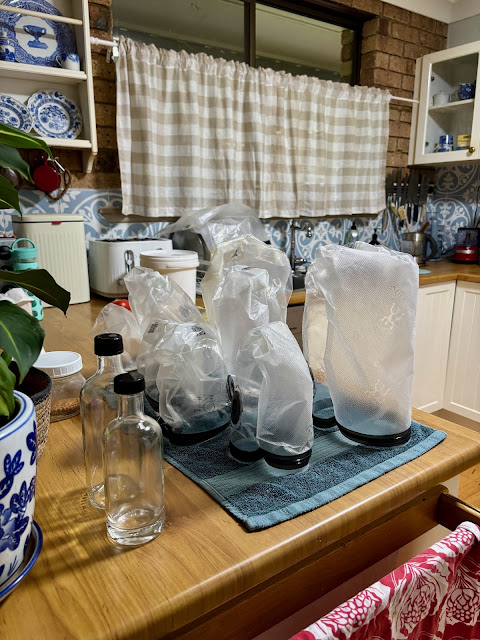
Every morning when I walk into my kitchen it looks tidy and ready for a day's work. Not so on this morning (above), I saw this when I walked in. Late the previous afternoon when I was looking for something, I came across my rolled up Zwilling vacuum bags and decided they had to be washed and dried. So I did that and although I usually put them outside on the verandah to dry it was dark by then. I turned the just-washed bags inside out and left them like this on a towel. It worked well and now the bags are ready to use when I bring home root vegetables, cabbages or whatever I buy that I want to last four or five weeks.
Image

You’ll save money by going back to basics

When I was doing the workshops and solo sessions, I had a couple of people whose main focus was on creating the fastest way to set up a simple life. You can't create a simple life fast, it's the opposite of that It's not one single thing either - it's a number of smaller, simpler activities that combine to create a life that reflects your values; and that takes a long to come together. When I first started living simply I took an entire year to work out our food - buying it, storing it, cooking it, preserving, baking, freezing, and growing it in the backyard. This is change that will transform how you live and it can't be rushed.  
Image

Creating a home you'll love forever

Living simply is the answer to just about everything. It reduces the cost of living; it keeps you focused on being careful with resources such as water and electricity; it reminds you to not waste food; it encourages you to store food so you don't waste it and doing all those things brings routine and rhythm to your daily life. Consciously connecting every day with the activities and tasks that create simple life reminds you to look for the meaning and beauty that normal daily life holds.  It's all there in your home if you look for it. Seemingly mundane tasks like cleaning and cooking help you with that connection for without those tasks, the home you want to live in won't exist in the way you want it to.  Creating a home you love will make you happy and satisfied.
Image

Time changes everything

I've been spending time in the backyard lately creating a contained herb and vegetable garden. My aim is to develop a comfortable place to spend time, relax, increase biodiversity and encourage more animals, birds and insects to live here or visit. Of course I'd prefer my old garden which was put together by Hanno with ease and German precision. Together, we created a space bursting at the seams with herbs, vegetables and fruity goodness ready to eat and share throughout the year. But time changes everything. What I'm planning on doing now, is a brilliant opportunity for an almost 80 year old with balance issues. In my new garden I'll be able to do a wide range of challenging or easy work, depending on how I feel each day. It’s a daily opportunity to push myself or sit back, watch what's happening around me and be captivated by memories or the scope of what's yet to come.
Image

It's the old ways I love the most

I'm a practical woman who lives in a 1980’s brick slab house. There are verandahs front and back so I have places to sit outside when it's hot or cold. Those verandahs tend to make the house darker than it would be but they're been a great investment over time because they made the house more liveable. My home is not a romantic cottage, nor a minimalist modern home, it's a 1980’s brick slab house. And yet when people visit me here they tell me how warm and cosy my home is and that they feel comforted by being here. I've thought about that over the years and I'm convinced now that the style of a home isn't what appeals to people. What they love is the feeling within that home and whether it's nurturing the people who live there.
Image

Back where we belong

Surprise! I'm back ... for good this time. Instagram became an impossible place for me. They kept sending me messages asking if I'd make my page available for advertisers! Of course, I said no but that didn't stop them. It's such a change from what Instagram started as. But enough of that, the important part of this post is to explain why I returned here instead of taking my writing offline for good. For a few years Grandma Donna and I have talked online face-to-face and it's been such a pleasure for me to get to know her. We have a lot in common. We both feel a responsibility to share what we know with others. With the cost of living crisis, learning how to cook from scratch, appreciate the work we do in our homes, shop to a budget and pay off debt will help people grow stronger. The best place to do that is our blogs because we have no advertising police harassing us, the space is unlimited, we can put up tons of photos when we want to and, well, it just feels li...
Image

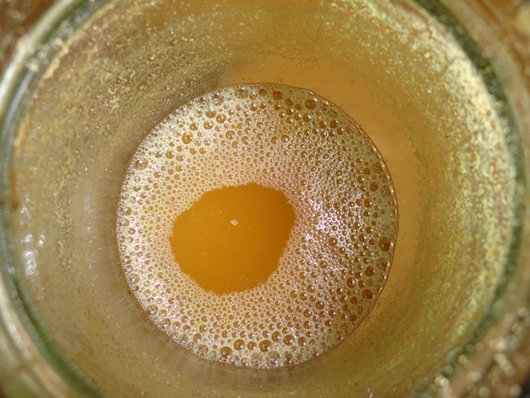
Making ginger beer from scratch

We had a nice supply of ginger beer going over Christmas. It's a delicious soft drink for young and old, although there is an alcoholic version that can be made with a slight variation on the recipe. Ginger beer is a naturally fermented drink that is easy to make - with ginger beer you make a starter called a ginger beer plant and after it has fermented, you add that to sweet water and lemon juice. Like sourdough, it must ferment to give it that sharp fizz. To make a ginger beer plant you'll need ginger - either the powdered dry variety or fresh ginger, sugar, rainwater or tap water that has stood for 24 hours to allow the chlorine to evaporate off. You'll also need clean plastic bottles that have been scrubbed with soap, hot water and a bottle brush and then rinsed with hot water. I never sterilise my bottles and I haven't had any problems. If you intend to keep the ginger beer for a long time, I'd suggest you sterilise your bottles. MAKING THE STARTER In a...
Image