down to earth

  • Home
  • About Us
  • Down To Earth Book
  • Privacy Policy
I grew up in a much slower time.  A time when bread was delivered by horse and cart and a ginger beer merchant sold his product, from a cart, in stone bottles.  Believe it or not, that was the start of the commercialisation of food.  Previously mothers and grandmas had made bread and ginger beer at home.  A few years later we started taking our saucepan to the local Chinese shop, very infrequently I must add, for a treat of takeaway Chinese food - well before any thoughts of plastic or polystyrene containers.  These were slow times with lazy Sunday roast lunches, talking to the neighbours over the back fence and train travel when you'd take a Themos flask of tea and sandwiches to eat en route.   It was a time when you'd often hear: "we'll do it tomorrow.", "it has to cook for three hours.", "let it sit and ferment for a few days.".  Nothing was rushed


I sped up a lot while I was in my twenties, thirties and forties, and I doubt I gained much from it.  I've slowed down again, enjoying life a lot more, and now I'm wondering why we think we should rush through life.  When I was a young mum, I worked full time, studied for a degree, was on the P&C and other committees, had to drive three hours each way to reach the shops, spent time with friends and generally had a good time.  But I never considered myself busy and I always took time to sit with a cup of tea and talk to friends.  If anyone asked me to do something I could usually fit it in and I don't remember ever feeling stressed by the work I had to do.  Now I hear so many people say they're busy and I wonder if it really is busyness or are they rushed and think that is being busy.

Let me say here I mean no disrespect to anyone and I'm not undervaluing the work anyone does, either in the home as SAHMs and WAHMs or in the paid workforce.  This "I'm so busy" thing is a real mystery to me, but you see and hear it all the time in the media too - "everyone is busy".  I don't see any evidence that the workload of parents now is more than it used to be, and family life seems to be pretty similar to how we experienced it all those years ago. I wonder if it's the stresses of keeping a job, worrying about the mortgage or how to pay the rent, rushing to get things done and not taking time out when it's needed.  Does that add up to people being overwhelmed and feeling as if they don't have a spare minute?


Whatever it is, if you feel you are busy or rushed all the time, I encourage you to slow down, and take more time to do your work.  It may surprise you that you get more done and feel better for it.  When I closed down my business to return to my home, initially I rushed through my housework to make sure I got it all done.  I never did, so I felt anxious and inadequate.  Then I had one of my Eureka! moments, realised that housework never ends, I slowed down, took whatever time it took, concentrated on my work and came out better for it.  And I got more work done.  Rushing doesn't facilitate work, it blurs it, making you feel you're constantly behind and you have to hurry. Remember that fable The Hare and the Tortoise?  The tortoise came first.  

This minute is all you have.  Yesterday has gone, tomorrow hasn't happened, you only have now.  If you constantly rush through what you're doing, thinking of what you'll do next, you don't get to truly experience your minutes.  Slow down, think about what you're doing, experience it fully, and get something out of it.  Every thing you do is part of your life.  Make your minutes memorable.  Thoreau wrote: "I went to the woods because I wished to live deliberately, to front only the essential facts of life, and see if I could not learn what it had to teach, and not, when I came to die, discover that I had not lived. I did not wish to live what was not life, living is so dear; nor did I wish to practise resignation, unless it was quite necessary. I wanted to live deep and suck out all the marrow of life, to live so sturdily and Spartan-like as to put to rout all that was not life, to cut a broad swath and shave close, to drive life into a corner, and reduce it to its lowest terms, and, if it proved to be mean, why then to get the whole and genuine meanness of it, and publish its meanness to the world; or if it were sublime, to know it by experience..."  I live by that quote.  When I first read it many years ago it helped change my life.  The way he expresses it might sound a bit over the top now, but what he's saying is we need live deep, think about and really experience everything we do, whether it's good or bad, enjoyable or mundane, so that when we come to die we don't realise, too late, we haven't really lived.

There is a lot to be said for slow and deliberate living.  Let's reclaim our slow lives so we are able to see and genuinely experience what we do and who we spend our time with.  Try slowing down and being in the moment.  If you feel you are always giving and have no energy left to enjoy your home and your life, give yourself the gift of time out.  If you feel you have to rush through your work and that you're always busy, rushing will not help you, slowness will.  When you're more relaxed you'll feel more capable, you'll be able to do what you have to do and you won't get to the end of the day exhausted and wondering what you did all day.  If you've made a commitment to yourself to live a more simple life and you know that will be better for your family, include yourself in on the gift, by slowing down and seeing your work as productive and creative and not just chores to be rushed.
If you were wondering where we were yesterday, Hanno and I were out volunteering.  After an early breakfast of tea and toast, we travelled up the mountain, through mist and an occasional shower, to our neighbourhood centre.  As we arrived, so did Wendy (gee I miss those people I used to work with), then Hanno drove the bus into Brisbane's Foodbank and after our customary early morning talk, Wendy started her work and I printed out my notes for the second part of the soap making workshop.  We'd made bar soap the previous week, yesterday we finished off by making laundry liquid and talking about home made cleaners.  They were a wonderful group of women, all enthusiastic about cutting right back on the amount of chemicals in their homes and coming back for more workshops in the future.

So after the ladies left and I cleaned up, I had lunch with Beverly, heard about how the Bunya Festival went and started talking about the workshops.  Beverly said people have been coming in asking about them so we compiled a list and decided when to start.  Beverly said she'll do two - Crossing Cultures (indigenous awareness) and Bush Foods, a new volunteer will do Vegan Cooking, and one of the ladies at the soap making will do Baby Massage.  These will be in addition to those I'll do on breadmaking and sour dough, jams, sauces and pickles, organic vegetable gardening, chooks, worms, cooking from scratch, fermenting, the fugal home and blogging.  I'm going to phone a lady today to see if she'll do knitting and crochet for beginners.  It looks like it's forming into a very helpful group of topics.  They'll start in May, when the book is finished.

I'd like to thank Nicole, a young lady who surprised me by sending a beautiful box of natural soaps, lips balm, lotions, deodorant and beeswax candles.  Nicole said she has been reading the blog for three years and learned how to make soap from my tutorial.  The gift was her way of saying thank you for what she got from the blog.  Now she has a little Etsy business selling her beautiful products.  Thanks Nicole, I love what you sent.


This is the latest satellite map of the cyclone.  
Photo from the Australian Bureau of Meteorology.

So today I'm back at work on the book and while I write about food, Hanno will be putting my words into action.  We got some free tomatoes yesterday and he's going to make tomato relish and sauce.  More delicious home made goodies for the cupboard!  I'll tell him the recipe but he's is a pretty good cook so I'm happy to leave him to it.  He'll come in and ask if he needs to.  We'll also be keeping an eye on that huge cyclone/hurricane that's off the coast and moving closer towards our state.  It's 500 kms|310 miles wide and is expected to be a category 5 (winds 295 km/hour) when it crosses later tonight.  I have a bad feeling about this and even though people are being evacuated up north, I know many will be unable to leave.  I worry too about all the animals - both wild and pets left behind.  It's been a tough year so far with the weather and it looks like it will be much worse soon.  If you're up north I hope you'll be safe and can move to protected, high ground.  Don't worry about Hanno and I, we're further south (just where that cloud stops half way up the east coast), we'll get the rain but not much else.

Thanks to everyone who helped with the house affordability question last week.  I was heartened to see that many people thought living on one income (even if there are two) is a great frugal strategy, and it is possible to buy a home on one income as long as the house price is low enough and you're prepared to put in some hard work renovating.  I agree.  I hope that post and the comments it drew help not only the girl who wrote to me but many other people as well.  My own children want to buy homes and I know it's not easy.


It feels like the year is really beginning in earnest now the are school holidays over.  Hanno and I are starting to think about our vegetable garden again and next week I hope to get some time to plant up some seeds we have here.  I have some Portuguese cabbage, sent to me by Andrew in Melbourne, that we'll try, we have luffas in, some corn to harvest and fruit growing, but we need a lot more than that.  I have six tomato seedlings in pots as well, grown from seeds of the excellent large cherry tomato that came up wild last year.  That tomato was healthier than any we planted, it was big for a cherry tomato, prolific and absolutely delicious. If it ends up being as good this year, I'll sell some of the seeds in the Etsy shop.  I doubt our shop will open before Easter but we are working towards it.  I was told recently that if I intend selling soap, I have to pay a $400 fee to the government as I'm classified as a "chemical producer".  Pfffffffft.  We're not sure if it's worth it.


More nectarine jam!  We have enough for a year and to give away.  : - )

We had a fairly busy weekend, I worked on the book and other computer related things but didn't have time to go to the Bunya Festival on Saturday.  My friend Beverly, organiser of the event, brought us a message stick last week so I was disappointed we didn't get there.  We'll make sure we go next year.  Hanno worked on the roof replacing screws and he mowed the lawn.  I was exhausted yesterday and although I had every intention of working, I ended up cooking biscuits and a meatloaf, and relaxing with a bit of knitting and cricket in the afternoon.  I wonder how I can become so tired working as I do, with every comfort and Hanno's support.  I guess it's my age and the intensity of the work, whatever it is, a quick sleep is a good pick-me-up and I'm right again.


Today is the start of another busy week.  I have the second part of my soap making workshop to deliver tomorrow and there are just four more weeks before the completed book manuscript is due.  After that there will be two months editing with my Penguin editor, Jo, and the book will be finished. It will be wonderful to have it done, it's been so long in the making, but I think that after a couple of weeks putting things right here, sewing and knitting for the babies and visiting my sister in her new home, I'll be thinking about settling into writing again.  I have been a writer for many years now and it seems to be part of me.  It suits my nature as it's solitary and reflective and it helps me understand the world and how I fit in it.  Even from this tiny dot on the map, writing enables me to connect to you and be a part of a large and significant online community; and that, for me, is the icing on the cake. 

I hope you have a productive and wonderful week ahead.  Thanks for visiting me.


This is a Friday photo feature that anyone with a blog can join. It opens the door to us sharing our lives with these photos and gives us all a new way to discover each other, and maybe form new friendships. Your photo should show something at home that you're thinking about TODAY.  If you're in another country you should join in when you read this, even if it's still Thursday.

To take part in this, all you have to do is post a photo, write a short caption explaining it, and link it back to here. Please write a new post, don't link to an older one.  When your photo is published, come back and add a comment below, with a link to your blog photo. Please visit the blogs that appeal to you and leave a comment.  It's a way of becoming closer as an online community and a way of establishing friendships.


Today, and for the past few days, I've been thinking about this book.  It was sent to me by a lovely friend and it's already become my favourite cookbook.  This book is me.  It's how I cook, so it's wonderful to have it in my hands - a source of some great new recipes.  There are chapters on cooking with leftovers, entertaining on a budget, baking,  weekend meals to cook and keep, lunchbox food and breakfasts, along with many tips and food hints.

If you're Australian, you'll recognise a face on the cover - Margaret Fulton.  It's is written by her daughter and granddaughter.  I love this book.  Any cookbook with recipes for baked peach pancakes, slow roasted lamb shoulder and green pea hummus deserves a space in my home.


I just did a search for this:  reduced from $50 to $13.


I had an email this week from Rebecca who wrote:

I'm about to turn 30 and I live in a rented smallholding in the UK. My husband and I live as simply as possible, rearing nearly all of our own food and spending as little as possible. We are very happpy and love our lives. We're both well educated and work in environmental jobs, which we both enjoy, feeling that they are worthwhile and really contribute something to society. They pay fairly poorly (as is the case with all environmental work) but we don't need much money as we live simply and money simply hasn't been too much of an issue for us in our way of life. The problem is more of a long term one. We are trying to start a family, which will inevitably involve a salary reduction. ... However, ideally we would like to buy a house at some point in the not too distance future. I hope this doesn't just sound a spoilt list of 'wants'. ... We live in a fantastic rural community which we are very much part of and never want to have to leave; but renting is by its nature insecure and obviously we never know when our landlords may want their house back. This is also coupled with the fact that we don't really want to be paying rent in our old age, and have to carry on paid jobs until we die, just to meet rent.

In the UK, as I'm sure is probably the case in Australia and many other countries, house prices have gone through the roof in the last ten years and salaries haven't. You need two reaosnable salaries for a bank to give you a mortgage on the average priced house. As I said, money hasn't been an issue because we live frugally, and have saved a big deposit, but how on earth do you get a round the mortgage issue? Even with a large deposit, it is the mortgage that makes up the bulk of the house value. We work hard, and quite a lot of hours as our work is seasonal, and hard work isn't an issue. However, I don't think moving to take a highly paid, corporate job is an option for either of us - there is no work like that in the area and I think it would go against what we believe in. 

I know that you can't have everything at once. If we want to start a family, we have to accept a reduced income. We can possibly cut back a small amount, but we live very frugally, preparing all our meals from scratch, making as many ingredients as possible and rearing all of our own food. We work form home as much as possible, use the car as little as we can and don't really buy anything.  I know that there are lots of people my age struggling with similar issues and I'm sure there's a sensible way ahead. I'd love to hear what you think.

Hello Rebecca.  Yes, it's a problem here too and probably in many countries.   I hate to keep harping back to the old days but I think we can learn a lesson from our past. Back in the 70s, I lived in Balmain, a suburb in Sydney right on the harbour.  It was definately working class then but now it's been gentrified and a house that would have cost $19,000 in 1970 would now cost between $1 and $2 million.  But back then, $19,000 was an awful lot of money and we didn't think about buying, we kept renting.  I eventually left Balmain but I have friends who stayed and bought a house.  The way they got around it was to buy in an area they liked but the cheapest house they could find.  They then spent the next few years fixing as much as they could on weekends and at night.  Eventually, when the house was in better condition, they sold it and bought another, better, house.  They did that a few times until they had the house they wanted and could afford.  It took a lot of work and time but it was the way it was done then and they were happy to be in their own home, working for their future together.

If you do that, you have to be prepared to work on the house and improve it as you live in it.  It's tough and I'm not sure many people would like doing it but it would be a real challenge and it's a way of getting into the housing market.  Don't aim for the top house, aim the worst house in the best street instead.  When we started out it was common practice to start at the bottom, buying whatever you could afford - that might be an apartment or an old house, and you'd renovate and paint and work your way up. I have heard quite a few young people complain about baby boomers having it all and keeping them out of the property market, but this is how we got what we have.  We didn't think of buying the top of the market, we always started at the bottom, or wherever we could fit in the housing market that was within our budgets. 

In Australia now, ordinary houses in Sydney are selling for $600,000 - $1 million, although here where I live they're half that.  In smaller towns you can get a good house for $150,00 - $200,000.  Can you move to an area where the house prices are lower?  Can you take in a boarder where you are now to help with the rent while you save for a house?

There is an interesting article here about the current over average housing prices in the UK.  Maybe you should keep and eye on this, hold off for a while and see if the prices come down in the next few years.  In Australia, the government pay a first home owner's grant of  $7,000.  Do you have something like that?

I wish I could offer you a definite direction Rebecca, but this is one of those problems that is not so easy to solve.  As you know, our readers offer excellent advice and so I'm hoping we might get some helpful suggestions for you to try.

And now it's over to you.  If you're young and have moved into your own home, how did you do it?  Please share your experiences and thoughts on this as I'm sure Rebecca will be one of many who will benefit.

Let me start this by saying there are many ways to sterilise food by water bath.  This is how I do it and having been doing it for many years. I'm still here to tell the tale, but be warned, you need to do this carefully.

If you're a keen home cook and have ventured into making sauces, relish, chutney, bread and butter cucumbers or pickled beetroot, there will come a time when you might want to sterilise your jarred products so you can store them in your pantry  for eating later in the year.  I've written before about how we in the warmer climates tend to do less preserving/canning than our northern hemisphere friends - our gardens produce food almost all of the year, and here where I live it is quite easy to keep a kitchen garden going all year.  So instead of putting up our beans, carrots, soups and stews, we tend to eat our vegetables fresh, or if there is an excess, we freeze it.


Tomato relish and ginger beer.

Preserving/canning plays a part for us when we make a great pasta sauce or excellent relish, that is much tastier, healthier and cheaper than the store bought varieties, and we want to make a lot of it to use in the following months.  This is when we need to preserve/can what we cook.  Sauces, chutney and relish, in fact most foods with herbs and spices in them, will improve in flavour when preserved and left to develop flavour for a couple of months.  If you've never done it before, or only do a small amount each year, it's probably not financially sound to buy special equipment.  Here is a good way to sterilise your preserves in a water bath, without special equipment and by using what you already have in the kitchen.

Use modern recipe books for preserving|canning, or recipes from a trusted source, don't rely on very old canning books - some of the old methods of preserving|canning were unsafe.   When you first start doing this, use small quantities and small jars; when you know what you're doing, go bigger.  

You'll need a large saucepan like a stockpot, if it's not a stockpot, it has to be a pot big enough for all the jars to sit under the water.  I use recycled jars that have already been used for jam or honey.  You'll need metal lids that have plastic coating inside the lid to stop the food acids reacting to the metal.  Most of these lids have a little metal indent button that will indent when it's sealed correctly. Take a bit of time with the jars, they could be the difference between success and failure.  Check the rims by running your finger around the opening.  Make sure there are no chips or cracks and the lids are not dented or rusty.  Wide mouth jars are best because it's easier to fill them.


To sterilise your jars, wash them in warm soapy water, rinse, then place them in a low oven - 150C|300F for about 20 mintues.  You want to fill hot sauce into the still hot jars so do this while the sauce is cooking.

When you fill the jars, you fill it almost to the top, without spilling over the side.  You want a bit of what is called head space because some foods swell and bubble when they're heated and need this space to expand.  If you don't allow enough headspace the food might force the lid up and you won't get the jar to seal properly.  The general rule is  7mm|¼ inch for jams and jellys and 12mm|½ inch for tomatoes and fruit.

Before you fill the stockpot|saucepan, place either a round cake rack that fits well on the bottom of the pan, a folded tea towel or folded newspaper on the bottom of the pan so the jars don't sit directly on it.  Instead of using a wide mouth canning funnel, scoop the jam up in a medium sized jug to fill the jars.  Instead of canning tongs to lift the jars, you'll have to use the same jug to scoop some of the hot water out of the pot and when the jars are uncovered, pick them up with a tea towel folded a few times.


These are just some of my jars and bottles.  I never throw out wide mouth jars or interesting bottles and I buy some larger preserving jars.

When you finish filling your jars wipe them to make sure they're clean then, with the processing pot sitting on the stove, place the jars in the pot so they fit well without touching the jar next to it. Fill the pot with cold water, using a saucepan filled at the tap, then bring the pot to the boil - this will take 45 to 60 minutes. When it's slowly boiling, hold it at a slow boil for another 45 minutes for small jars and 1 hour for large jars. When the time is up remove the jars to sit on a tea towel on the bench to cool slowly for 24 hours. The prolonged heat will form a vacuum in the jars and you'll notice the lids will be slightly inverted, or you'll hear them pop as they cool down.

And that's it!  You don't need to buy all sorts of equipment, but like most things, if you really get into this you might want to expand on your utensils and equipment if you do a lot of preserving.  The important thing here is to try it and if it's a good fit for you, it's another useful and productive skill you have in your move towards a more sustainable life.

PLEASE BE AWARE: Low acid foods like meat, beans, carrots, peas, soup etc are not suitable for this type of preserving|canning.

Go here to read an older post of water bath processing.

ADDITION: Here our tap water isn't really cold and it's fine to use tap water on hot jars to fill the pot.  If you're in a colder place, you'll have to heat the water in the pot first, then place the jars.


Here in our neck of the woods, summer is a time for stone fruits and jam making.  Hanno found a good bargain at Aldi during the week - premium yellow nectarines for $2.99 a kilo (2.2 pounds)  He bought three trays.  I didn't have time to make the jam so when Hanno said he'd make it, all it took was a quick lesson and now we have the most delicious nectarine jam.


I don't know why more people don't make jam.  It's something all our grannies and great grannies knew a lot about.   If they didn't make their own jam, they went without it.  Unlike us, they didn't have shelves of jam waiting to be bought at the local supermarket.  But I think that jam is inferior to what you make at home and if you look at the ingredient panel, many jams are full of additives and not just the few simple ingredients that make up homemade jam - fruit, sugar and lemon; sometimes, depending on the type of jam, there is pectin as well.  I wonder what it's made from, where the fruit grew, how old it was when it was processed, was it fine fruit or leftovers that couldn't be used for much else, how far did the fruit travel to the jam processor, how far did the jar of jam travel to get to me.  If I can improve on any of those things, I'm ahead.


To make our nectarine jam, Hanno washed the fruit, including quite a few that were under ripe, and cut them into chunks.  He discarded the seeds but used the skins.  You need a wide saucepan for jam making because you want maximum evaporation.  All the fruit went into a big stockpot and weighed - four kilos (almost 9 lbs).  We knew then we had to add half that weight in sugar.  He washed two lemons, cut them in half and threw the half lemons, squeezed of their juice, into the pot with the fruit.  The pot was set on the stove and while he prepared his jars, the jam started cooking.  Frequent stirring is needed because you don't want burnt jam and you want to squash the fruit.  We used the potato masher to get the consistency we wanted.  Thirty minutes later, the jam was ready, the lemons removed and the jars filled.

That four kilos of fruit made two litres of jam - or eight normal sized jam jars.  Now, lets see.  The fruit (4 kg) cost $12, 2kg sugar cost about $2.50, two lemons about $1 and the gas to cook it on and to sterilise the jars, about 50 cents, which comes to $16.  We got eight jars, so $2 per jar for top quality jam.  That's about $3 - $4 less than the premium jams at the supermarket, and we know exactly what's in ours.  We still have a couple of bowls full of nectarines for eating fresh and another tray for more jam.  That will probably happen on Wednesday because today I'm going back to the neighbourhood centre to do a soap making workshop.


Look at the colour of that jam.  Good jam always holds the colour of the original fruit, without added colouring.

We didn't process our jam in a water bath because it will store very nicely in the fridge for at least six months. Had I wanted to keep it longer, I'd have processed it further.  And that's what we'll discuss tomorrow - processing jam in a water bath the frugal way - with no special equipment.

It doesn't matter why you make jam - because it's cheaper, better quality, you know what's in it, it's local or because you want to make as much for yourself as you can and keep your skills up to date - it's a lovely thing to do and it's really easy.  So start collecting old jam jars to recycle for your own jam and when you see fruit that's cheap and so good you can't walk past, grab it, take it home and be a jam maker.  You won't regret it.

In his books, the late John Seymour tells us that in addition to the many foods found in fields and pastures, like rabbits, berries, nuts and fruit, some weeds are also edible.  In the UK, elder trees grow in the wild, are often thought of as weeds, but the berries and flowers are collected to make drinks and relish.  They're not common in Queensland but we have an elder plant and yesterday I pruned it. 


I have never seen an elderberry plant in a plant nursery here and I was surprised to see one being sold, about a year ago, at our local organic co-op shop.  Sitting in there among the unusual herbs they generally sell, I picked it up when I saw the label and brought it home thinking I had found a rare, fragile jewel in a six inch pot.  Well, a year later, I know it's a jewel, but fragile, it is not.  I thought it would take years to grow, and definitely a long time to flower and set fruit, but I didn't care, the thought of elder cordial and champagne kept me going.  A year later this rare and fragile jewel is taller than me and has been covered in flowers for the past six months.

The only thing that disappoints me is that so far it's not set fruit.  There are many flower heads but they just die without setting the dark red berries I was hoping for.  Maybe over our winter, when the weather is much cooler, we'll be lucky.  Then I'll make red elderberry wine about which John Seymour wrote: "Elderberry wine is one of the kings of country wines - it matures well and can almost pass for a claret after 3 or 4 years in the bottle."


When the flowers fade, these reddish-purple skeletons are left.  They're very attractive but I'd prefer the berries.

In the meantime, when I have a bit more time, I'll make the cordial and champagne, which only needs the flowers.  The secret to a good elder cordial, according to John, is to pick the flowers on a hot day, from high up in the tree, and don't put too many flowers into the mix.  I cut our plant right back yesterday, it's still taller than me but I reckon in a few months those flowers, and hopefully some berries, will be just right for picking.

John Seymour's Elder Champagne
12 heads of elderflowers in full bloom and scent, picked on a hot day
1½ lbs|0.7kg sugar - white sugar is best
1 lemon
2 tablespoons wine vinegar

Put the blooms in a bowl with the juice of a lemon.  Cut up the rind of the lemon and put that in (no pith).  Add the sugar, vinegar, one gallon|4 litres water [cover with muslin] and leave for 24 hours.  Strain liquid into bottles, cork, leave for a fortnight and drink the following week.  

I also have Hugh Fernley Whittingstall's recipe and he leaves his  mix until he sees it's fermenting, then he strains it into bottles.

All this talk about fermented drinks - I'm going to start another ginger beer plant today.  Ginger beer, here we come.  Who is making fermented drinks here?  Who is scared of doing it?  Is anyone making elder drinks?

This is a Friday photo feature that anyone with a blog can join. It opens the door to us sharing our lives with these photos and gives us all a new way to discover each other, and maybe form new friendships. Your photo should show something at home that you're thinking about TODAY.

To take part in this, all you have to do is post a photo, write a short caption explaining it, and link it back to here. Please write a new post, don't link to an older one.  When your photo is published, come back and add a comment below, with a link to your blog photo. We will all be able to follow the breadcrumbs in the woods that lead to each new photo. Who know where these trails will lead us.


I'm thinking about my knitting today.  As you can see I have a number of projects underway.  The blue is a jumper for Hanno (Merino pure wool) that was supposed to be finished last winter; the green is one side of a tea cosy (organic cotton); the black is the beginning of a second mitten (Merino pure wool); and the pink is the start of a baby hat (bamboo and cotton).  I have promised myself not to start another project until all of these are finished.

Thank you all for contributing your ideas on how to save money.  I have to confess, we already do most of the things suggested and seeing them as comments validated our frugal choices. I think we'll have to start thinking about our Etsy shop soon or I'll have to find some more writing work.


 I'd like to continue on this theme with some thoughts on being frugal and then I'll go to to using leftover food.

First let me say something about being frugal.  There is a debate in the English newspapers at the moment about penny pinchers and tightwads as if it's a bad thing.  Being frugal with some things so you can buy the things you truly need and want, or to live in a way that is unusual by today's standards doesn't make us mean, cheap or miserly. It simply means we have gone outside what is "normal" and we dare to use our money on what enriches us and not what others think we should have.  If you've been frugal for a long time, or if you're new to the neighbourhood, you're doing a wonderful thing for yourself and for the planet.  Keep doing it.  The peace of mind that comes from paying off debt, living debt-free, and not wasting time in shops so you can spend more time with family or doing what you love, far outweighs any pleasure gained from spending money.  It's sad that most people don't know that but don't let it put you off your path.  Be confident in your frugal choices and march to the beat of your own drum.  It's the only way.

On current estimates, we all waste thirty percent of the food we buy.  Just think!  That's like taking $100 to the shop, throwing away $30 and coming home with $70 worth of goods. It's insane.  Most of us cook too much but that's not a bad way to cook.  I usually cook enough for four meals most evenings, even though there are only two of us living here.  The leftovers are either frozen for the following week or eaten the following night, saving time and money.  If there is only enough leftover for one meal, use it for lunch the following day, or add vegetables or rice to it and serve it up for two. Don't let it sit in the fridge to turn into a science project; don't throw good money away.


I remember my mother baking a leg of lamb for Sunday lunch, that night we'd have toasted lamb and salad sandwiches for tea.  Monday night we'd have lamb curry and if there was any lamb left over, it would be shepherds pie the following night, made by mincing the lamb with one of those manual metal grinders attached to the kitchen table.  I loved that job.  With that in mind, last week, after we had our half lamb leg roast, we had lamb sandwiches and then lamb curry the following night.  This is the recipe for it.

LEFTOVER LAMB|BEEF|CHICKEN|TURKEY|FISH|EGG|VEGETABLE CURRY
This can be made with any leftover meat, chicken or fish, or freshly boiled eggs, or just vegetables.

1 large onion, chopped
1 large carrot, sliced
1 stick celery, sliced
plus whatever other vegetables you want to use
1 tablespoon tomato paste

1 clove garlic
2 tablespoons curry powder or paste
salt and pepper
1 can coconut milk, or stock or plain water if you have neither
a portion of leftover meat or fish cut into cubes. If you have no meat, or are vegetarian, boil some eggs and serve them with the curry sauce.

* Place the onion, carrot and celery in a frying pan with a tablespoon of oil and cook until the onion is transparent.
* When the onion is cooked, add the garlic, salt and pepper and tomato paste and stir for 30 seconds.
* Add the curry powder|paste and stir to allow the curry spices to release their flavours.
* Add coconut milk|stock and meat and stir throughly.
* Bring to the boil, simmer for 30 minutes or until the coconut milk|stock has halved in volume and the sauce is thick.
* Serve with boiled rice.

You could use any cooked vegetables that were in the fridge as well in this and if you had no rice, serve with potato, polenta|cornmeal or a piece of toast or bread on the side.  It's delicious and filling and will make sure you get the full measure of the money you spend on your food.

We have to tighten our belts.  Like many of you, Hanno and I live on a limited and usually fixed amount and with prices rising and new babies on the way, we're looking for ways to save.  We've already skimmed back to the bone on many things: we gave up cable TV, our second car, magazines and newspapers, eating out and buying clothes every year; we stockpile, cook from scratch and make do with what we have; now we're looking to fine tune our savings and make sure that what we have to spend still covers everything we need.


Generally, between the vegetable garden and the eggs our chooks lay, we save quite a bit on the grocery bill.  But we didn't plant any crops over summer and with the floods in this area wiping out many of our vegetable crops, fruit and vegie prices are skyrocketing.  Hanno said he saw tomatoes at $8.90 a kilo the other day!  We'll start planting our main vegetables soon a bit earlier than usual. We'll grow a lot of tomatoes, potatoes and vegetables to store in the cupboard and preserve just in case the prices don't go down again soon.  We'll buy frozen vegetables instead of fresh if the frozen are Australian and cheaper, and when we do buy fresh it will be at a little road side market stall that sells local avocados, pineapples and strawberries, along with other vegetables, not the supermarket.


Luckily we have a fair bit of fruit swelling to luscious ripeness out in the backyard.  At the moment we have lemons, oranges and madarines, a few pink grapefruit, paw paw|papaya, an over abundance of passionfruit, a few blueberries and if we're lucky, some grapes and bananas.  We might even get the first fruit from our avocado tree this year.

We're already baking bread, making soap and laundry liquid, we don't buy shampoo and we make our own dog food. We get by on very little but for the next few months, until our vegetable garden is in full swing again, we'll look for every other small saving we can make.  Don't feel sorry for us, this kind of auditing of our spending and making do is good for us and it helps us stay on track.  We still have a lot of pleasure in our lives and we wake up each day happy for the opportunity to work for what we need rather than buy it.  We have productive work to keep us engaged and to give a purpose to our days and we have ample time to rest and relax.  Life's good and it's getting better this year with two little people to meet and hold for the first time.  You cant get better than that.

But I'm interested to know how you cut back when you need to.  Do you have any good ideas because I think many of us are in this boat with us and it would good to sail into a safe harbour together.

We had a busy day yesterday with Hanno harvesting lawn clippings for the compost (mowing) and me working on the book.  The grass has grown fast with all the rain and the heat but it's all nitrogen or organic matter that will be returned to the soil and will help us grow more vegetables in the coming season.  In the afternoon I took a break from writing to make a half apron from an old dress of mine.


Since I gave up work at the neighbourhood centre in November, I've been out four times.  Some people might be shocked by that but I am by nature a solitary creature and it feels right to me.  My fourth trip out was on Sunday to our next door neighbours' for a BBQ and little rock concert.  Hanno and I were invited, along with other neighbours in our street, to one of the first public appearances of a band.  Lincoln, our 15 year old neighbour, formed a band with a group of boys who have been practising next door for about a year.  The BBQ was a thank you from the boys and their parents to the neighbourhood for "listening".  I quite liked listening to them progress from a few self conscious  plucked strings in the beginning to the full on concert they did on Sunday.  There were about 50 of us there, sitting in the shade around the pool, with the boys up on the back veranda which they used as their stage.


While we were at the concert, I noticed Hanno had a red eye.  It looks like he might have had a bleed into his eye so we're off to see his specialist today.  He's on Warfarin so the likelihood of a bleed is ever-present.   I'll go with him to the doctor and while we're out we'll look at baby things.  We hope to buy a cot for one of the babies on my fifth trip out.  After this, I'll lay low for a while. :- )


There is no doubt that after the south east Queensland floods fruit and vegetable prices will go up.  The Lockyer Valley, one of the main areas hit by flood waters, is the fruit and veg growing area for Brisbane and the south east.  Walking around the garden yesterday I was really happy to see our lemon, orange and mandarin trees full of fruit that will feed us well this winter.  Hanno just planted some loofahs too and I'm hoping they aren't too late in the season to give us a good crop.  The flood and the increasing food prices has made us rethink our vegetable planting for the new season too.  Many of the long term readers will remember that we plant our main vegetable crop in March but this year we might bring that forward a bit.  Our only problem will be the weather because more heavy rain has been forecast for our region and while most crops cope well with continuous light rain, not much survives torrential downpours.  But we'll take our chances with the rain because the alternative is to buy fruit and vegetables at inflated prices from far away places and we'd like to avoid that if possible.


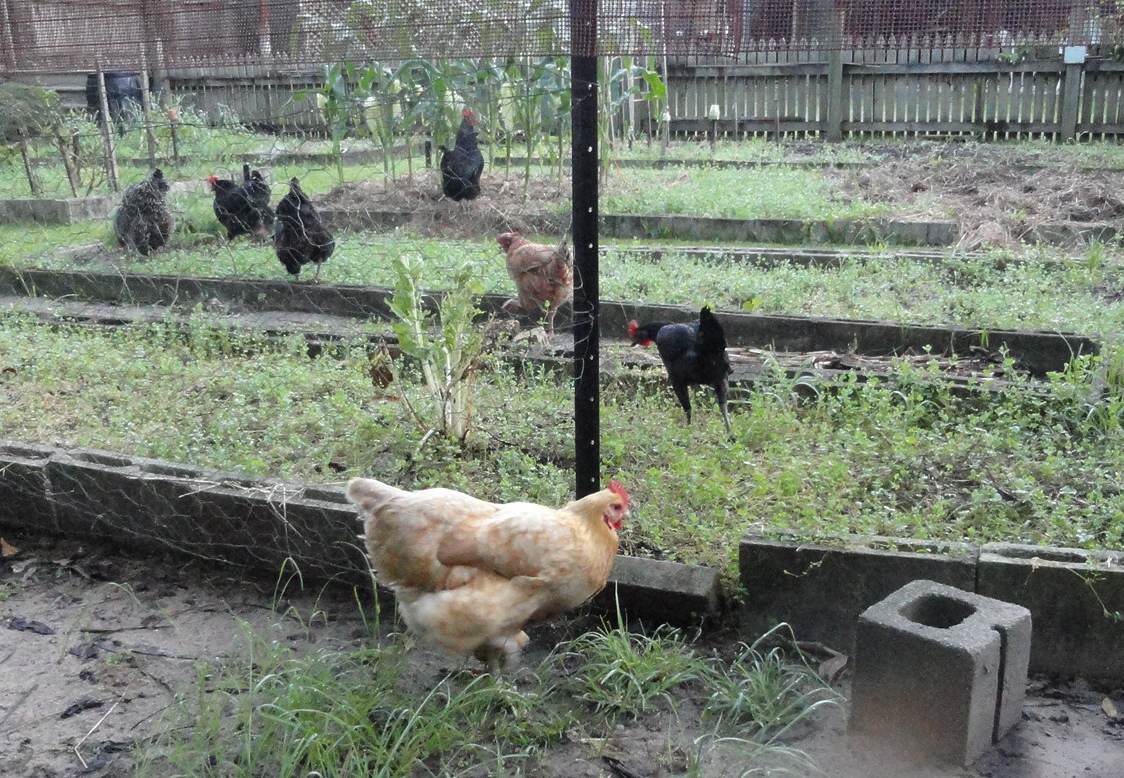
So now that vegetable crops are on our minds again, we've got the chooks working in the garden for us.  They're in there every day now, eating weeds and bugs and scratching in the soil for insect eggs.  They're also turning over the compost.  What good little chickens they are.


How have your vegetables coped with the weather this year?  It seems it's not just this area that is getting weird weather so I'd be interested in reading your experiences.  We're going to grow some vegetables in containers this year so we can move them around if it does rain a lot.  If you have any other tips for growing vegetables in uncertain weather, I love to hear them.

Thanks for your visits and comments.  When we discuss the joys and problems we face living as we do, it shows me that we're not alone in our quest for a more simple life.  I am amazed at the number of new readers who have joined us here lately and it makes my day when someone new says hello.


Newer Posts Older Posts Home

MY BOOKS

MY BOOKS


My books were all published by Pengiun, and are available at Amazon US, Amazon UK and Amazon Au

Search here

Total Pageviews

Translate


I'm Rhonda Hetzel and I've been writing my Down to Earth blog since 2007. Although I write the occasional philosophical post, my main topics include home cooking, happiness and gardening as well as budgeting, baking, ageing, generosity, mending and handmade crafts. I hope you enjoy your time here.

MY FAVOURITE PLACES

  • Grandma Donna's Place
  • Grandma Donna's YouTube
  • Grandma Donna's Instagram
  • This Simple Day
  • Nicole's Instagram

Give More

Give More

All previous blog posts

  • 2026 4
    • February 4
      • First workshops, book by Friday
      • Workshops starting 1 March
      • Planting vegetable seeds and new workshops
      • Back where we belong
  • 2025 7
    • July 1
    • June 2
    • May 1
    • April 2
    • February 1
  • 2024 25
    • December 2
    • November 1
    • October 2
    • September 3
    • August 1
    • July 3
    • June 1
    • May 3
    • April 2
    • March 3
    • February 2
    • January 2
  • 2023 13
    • December 1
    • November 2
    • October 1
    • September 3
    • August 2
    • February 2
    • January 2
  • 2022 17
    • November 3
    • October 4
    • September 3
    • August 2
    • July 3
    • June 2
  • 2021 50
    • December 1
    • November 6
    • October 7
    • September 5
    • August 4
    • July 5
    • June 2
    • May 2
    • April 6
    • March 4
    • February 4
    • January 4
  • 2020 68
    • December 3
    • November 5
    • October 4
    • September 4
    • August 4
    • July 4
    • June 4
    • May 8
    • April 7
    • March 8
    • February 8
    • January 9
  • 2019 66
    • December 2
    • November 4
    • October 5
    • August 3
    • July 4
    • June 6
    • May 8
    • April 8
    • March 8
    • February 11
    • January 7
  • 2018 82
    • December 1
    • September 2
    • August 10
    • July 4
    • June 11
    • May 9
    • April 12
    • March 10
    • February 10
    • January 13
  • 2017 129
    • December 7
    • November 10
    • October 6
    • September 13
    • August 11
    • July 13
    • June 12
    • May 9
    • April 9
    • March 14
    • February 11
    • January 14
  • 2016 125
    • December 7
    • November 13
    • October 10
    • September 11
    • August 11
    • July 8
    • June 9
    • May 9
    • April 12
    • March 10
    • February 13
    • January 12
  • 2015 184
    • December 7
    • November 15
    • October 20
    • September 18
    • August 19
    • July 18
    • June 12
    • May 15
    • April 12
    • March 21
    • February 13
    • January 14
  • 2014 203
    • December 11
    • November 8
    • October 17
    • September 20
    • August 17
    • July 19
    • June 17
    • May 17
    • April 23
    • March 15
    • February 18
    • January 21
  • 2013 225
    • December 13
    • November 17
    • October 17
    • September 17
    • August 21
    • July 24
    • June 20
    • May 19
    • April 17
    • March 22
    • February 17
    • January 21
  • 2012 245
    • December 17
    • November 20
    • October 20
    • September 18
    • August 15
    • July 24
    • June 21
    • May 26
    • April 23
    • March 23
    • February 19
    • January 19
  • 2011 257
    • December 18
    • November 24
    • October 27
    • September 23
    • August 24
    • July 21
    • June 24
    • May 24
    • April 16
    • March 22
    • February 14
    • January 20
  • 2010 283
    • December 20
    • November 18
    • October 18
    • September 19
    • August 25
    • July 24
    • June 25
    • May 26
    • April 25
    • March 22
    • February 29
    • January 32
  • 2009 293
    • December 29
    • November 18
    • October 23
    • September 25
    • August 22
    • July 28
    • June 22
    • May 21
    • April 27
    • March 26
    • February 24
    • January 28
  • 2008 387
    • December 24
    • November 23
    • October 25
    • September 26
    • August 27
    • July 27
    • June 37
    • May 34
    • April 44
    • March 53
    • February 32
    • January 35
  • 2007 372
    • December 37
    • November 40
    • October 55
    • September 51
    • August 49
    • July 63
    • June 49
    • May 28


Trending Articles

NOT the last post

This will be my last post here.  I've been writing my blog for 18 years and now is the time to step back. I’ve stopped writing the blog and come back a couple of times because so many people wanted it, but that won’t happen again, I won’t be back.  I’ll continue on instagram to remain connected but I don’t know how frequent that will be. I know some of you will be interested to know the blog's statistics. 
Image

Every morning at home

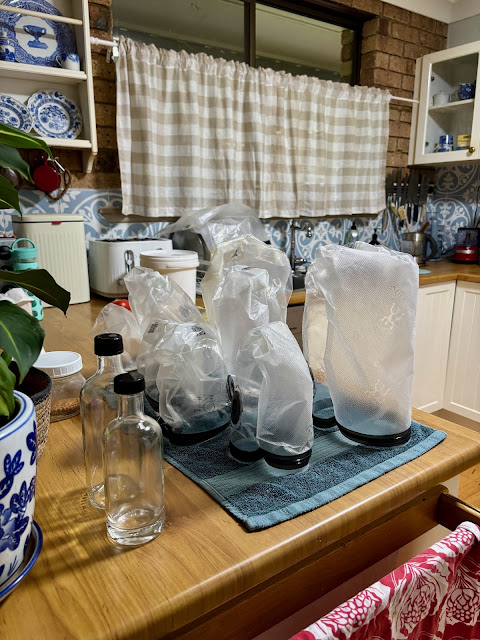
Every morning when I walk into my kitchen it looks tidy and ready for a day's work. Not so on this morning (above), I saw this when I walked in. Late the previous afternoon when I was looking for something, I came across my rolled up Zwilling vacuum bags and decided they had to be washed and dried. So I did that and although I usually put them outside on the verandah to dry it was dark by then. I turned the just-washed bags inside out and left them like this on a towel. It worked well and now the bags are ready to use when I bring home root vegetables, cabbages or whatever I buy that I want to last four or five weeks.
Image

You’ll save money by going back to basics

When I was doing the workshops and solo sessions, I had a couple of people whose main focus was on creating the fastest way to set up a simple life. You can't create a simple life fast, it's the opposite of that It's not one single thing either - it's a number of smaller, simpler activities that combine to create a life that reflects your values; and that takes a long to come together. When I first started living simply I took an entire year to work out our food - buying it, storing it, cooking it, preserving, baking, freezing, and growing it in the backyard. This is change that will transform how you live and it can't be rushed.  
Image

Creating a home you'll love forever

Living simply is the answer to just about everything. It reduces the cost of living; it keeps you focused on being careful with resources such as water and electricity; it reminds you to not waste food; it encourages you to store food so you don't waste it and doing all those things brings routine and rhythm to your daily life. Consciously connecting every day with the activities and tasks that create simple life reminds you to look for the meaning and beauty that normal daily life holds.  It's all there in your home if you look for it. Seemingly mundane tasks like cleaning and cooking help you with that connection for without those tasks, the home you want to live in won't exist in the way you want it to.  Creating a home you love will make you happy and satisfied.
Image

Time changes everything

I've been spending time in the backyard lately creating a contained herb and vegetable garden. My aim is to develop a comfortable place to spend time, relax, increase biodiversity and encourage more animals, birds and insects to live here or visit. Of course I'd prefer my old garden which was put together by Hanno with ease and German precision. Together, we created a space bursting at the seams with herbs, vegetables and fruity goodness ready to eat and share throughout the year. But time changes everything. What I'm planning on doing now, is a brilliant opportunity for an almost 80 year old with balance issues. In my new garden I'll be able to do a wide range of challenging or easy work, depending on how I feel each day. It’s a daily opportunity to push myself or sit back, watch what's happening around me and be captivated by memories or the scope of what's yet to come.
Image

It's the old ways I love the most

I'm a practical woman who lives in a 1980’s brick slab house. There are verandahs front and back so I have places to sit outside when it's hot or cold. Those verandahs tend to make the house darker than it would be but they're been a great investment over time because they made the house more liveable. My home is not a romantic cottage, nor a minimalist modern home, it's a 1980’s brick slab house. And yet when people visit me here they tell me how warm and cosy my home is and that they feel comforted by being here. I've thought about that over the years and I'm convinced now that the style of a home isn't what appeals to people. What they love is the feeling within that home and whether it's nurturing the people who live there.
Image

Back where we belong

Surprise! I'm back ... for good this time. Instagram became an impossible place for me. They kept sending me messages asking if I'd make my page available for advertisers! Of course, I said no but that didn't stop them. It's such a change from what Instagram started as. But enough of that, the important part of this post is to explain why I returned here instead of taking my writing offline for good. For a few years Grandma Donna and I have talked online face-to-face and it's been such a pleasure for me to get to know her. We have a lot in common. We both feel a responsibility to share what we know with others. With the cost of living crisis, learning how to cook from scratch, appreciate the work we do in our homes, shop to a budget and pay off debt will help people grow stronger. The best place to do that is our blogs because we have no advertising police harassing us, the space is unlimited, we can put up tons of photos when we want to and, well, it just feels li...
Image

Making ginger beer from scratch

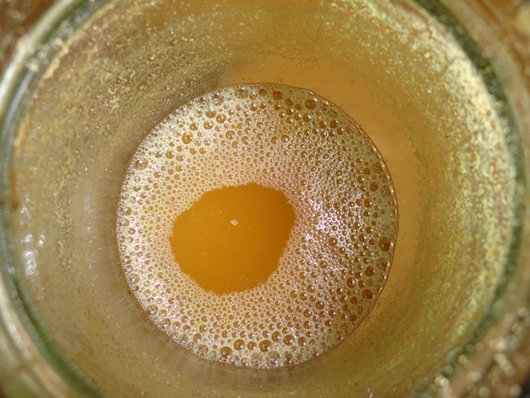
We had a nice supply of ginger beer going over Christmas. It's a delicious soft drink for young and old, although there is an alcoholic version that can be made with a slight variation on the recipe. Ginger beer is a naturally fermented drink that is easy to make - with ginger beer you make a starter called a ginger beer plant and after it has fermented, you add that to sweet water and lemon juice. Like sourdough, it must ferment to give it that sharp fizz. To make a ginger beer plant you'll need ginger - either the powdered dry variety or fresh ginger, sugar, rainwater or tap water that has stood for 24 hours to allow the chlorine to evaporate off. You'll also need clean plastic bottles that have been scrubbed with soap, hot water and a bottle brush and then rinsed with hot water. I never sterilise my bottles and I haven't had any problems. If you intend to keep the ginger beer for a long time, I'd suggest you sterilise your bottles. MAKING THE STARTER In a...
Image