down to earth

  • Home
  • About Us
  • Down To Earth Book
  • Privacy Policy


My friend Bernadette called in on Friday afternoon and while we sat, talking, on the front verandah something caught my eye. I looked to the road and a bunch of pink balloons was making it's way along the street. Our next door neighbour on one side, Angie, was taking the balloons to our next door neighbours on the other side, Rachel and Jude. Their baby had been born!

The next morning, I packaged up a simple little gift - two pure cotton washcloths and some soap, and Hanno and I visited next door. New parents often look a bit bleary-eyed, and Rachel and Jude were no exception. Rachel said hello, then disappeared, returning again with a tiny bundle of pinkness. "This is Jayda," she said, "would you like to hold her?" You all know the answer to that question. ; - )

We sat talking about Jayda's fast arrival (they got to the hospital with only 15 minutes to spare), and all the while I held that beautiful baby girl she slept, made funny faces and reminded me, once again, that new life always brings with it such potential. I wondered how the world would change in Jayda's lifetime and made a silent wish that she would live a long and happy life surrounded by family and friends. I will be over 80 when Jayda is old enough to leave home and if she is still living next door to us then I'm sure I'll remember the day I first held her.


It was my step-son Jens' birthday on Saturday. He and his wife Cathy live on the other side of our town, so early Saturday morning I made him a birthday cake. Cathy was at work so when we arrived Jens made us a cup of tea, sliced the cake and we had a lovely visit with him. Hanno asked me to make him the same cake, and I have to admit is was delicious, so I'll share the recipe with you. I wanted to use some of the walnuts Hanno cracked last week and as Jens loves apple cake, I combined the two.

APPLE AND WALNUT CAKE

Add these dry ingredients to your mixing bowl:
4 cups self raising flour OR 4 cups plain flour + 4 teaspoons of baking powder.
1 cup of brown sugar - the recipe called for a cup of brown sugar and a cup of white sugar but I thought that was too much. I only used the cup of brown. If you like very sweet cake, add the second cup.
1 teaspoon nutmeg
1 teaspoon cinnamon

In a smaller bowl add your wet ingredients:
3 eggs
1 cup of olive oil
¼ teaspoon vanilla extract OR 1 teaspoon vanilla essence
½ cup of milk OR buttermilk OR whey

Mix the wet ingredients together and add them to the dry ingredients. Turn on the mixer and start mixing. You will probably need to add more milk, but mix the batter first before you add it. The amount of milk you need will depend on the weather and your flour. You want a well mixed batter, firmish but not too runny. Mix for about two minutes.

When you're happy with the batter, add 1 cup of crushed walnuts and 1 cup of pre-stewed OR canned apples and mix them in with your spoon or spatula. Then add the batter to a well greased and lined cake tin. Cook in a medium oven 175C (350F) until golden brown and a toothpick or skewer comes out clean.

While the cake is still hot, brush the top with a small amount of butter and sprinkle on a mixture of ½ teaspoon cinnamon and ½ teaspoon of white sugar.

When I make this cake for Hanno, I'm going to use butter instead of oil. I think it would also be great using bananas instead of apples.

The rest of our weekend was quiet, taken up with gentle chores, chasing chickens, knitting, writing, gardening and cups of tea on the front verandah. The vegetable garden is beginning to take shape and once again I can see the potential of it to feed us for another year. The soil is teaming with life, seedlings have been planted, natural fertilisers added and the plants are slowly taking on their own life. Thank you Hanno for all that work. I'll take some photos and do a post about it during the week.

I'm at work today and tomorrow and I look forward to all that will bring. I have a couple of meetings first up with some interesting people, a committee meeting later this afternoon and a meeting with politicians tomorrow (there's an election on). In between all that a million other things will happen. It makes me feel good to be part of such a vibrant and wonderful community. I hope you make your week all it can be.


It seems to be agreed now, we are headed for a few shaky years ahead. Some are saying it will be the same or worse than the Great Depression, but the truth is no one knows what will happen. Some people feel secure because they have superannuation/401k plans, or stocks, but another stock market crash might wipe a lot of the value from those investments. Our governments are trying to keep us calm by offering stimulus cheques. They want us to spend those stimulus cheques on TVs, cars and other products they believe will help boost the economy. I hope anyone who gets one of these payments uses it to build a grocery stockpile, buy vegetable seeds, fruit trees and chooks, or build an organic garden, because no matter what happens, we all know we have to keep food on the table.

In hard economic times, the real currency is life skills.

I'm not sure if our economic conditions now are the same as they were during the Great Depression (GD); my parents lived through it, I didn't, but I do know that almost everything else is different. During the GD almost all women knew how to cook from scratch, make do, substitute ingredients, sew, knit, mend and live without electricity. Now very few do. During the GD, most men could do the repairs in the home, repair a bicycle, hunt, barter, kill and pluck a chicken or skin a rabbit, and would walk miles for a day of paid work. Now very few do. Most families then didn't have cars, no one had credit cards, there were no TVs or computers. The debt ordinary people carried in the GD were mortgages, other kinds of debt were uncommon.

During the Great Depression people were equipped to look after themselves using the life skills most people had then, now those skills are lost to many. They used to support each other, their extended family and the neighbourhood. If the economic conditions are the same now as in the GD, everything else is different.


If I were a young wife now, with children to raise, I would be learning everything I could about how to do the work in my home without modern appliances. I would learn to make bread by hand - good bread not just a get-by loaf; I would work out easy ways to do the family laundry - in case a time came when I didn't want to use electricity - once I worked it out, I'd go back to my washing machine; I would create a stockpile of groceries, and if I had a backyard I would learn to garden and raise chickens. I would teach myself to sew and knit. I would start mending clothes, I'd recycle and reuse everything I could. I'd start cooking from scratch with the intention of learning how to produce the most delicious and nutritious meals for the lowest cost.

If I were a young wife and mother now, I would take it upon myself to save every penny I could to pay off our debt. I would encourage my husband and children to economise, make do and learn to go without. My focus would be on the long-term health and prosperity of my family and I would hope to teach myself enough to give us the best chance in this tough economic climate.


It is often thought that the person who goes out to work has the important job in the family and will be the deciding factor in how well the family lives. And while that bread winner role is still vitally important, the stay at home partner is equally important. It is the person in the home who will feed the family, manage the money and pinch every penny until it hurts. It is an exciting time for homemakers. Our jobs have always been significant, more so than we were ever given credit for, but now we have the added responsibility of stretching our dollars to get the maximum value from them and helping our family get through the next few years while who knows what will happen. And if we come out of this quickly and unscathed, well, we'll have those skills to help us in the future. It's a win/win situation.

There has never been a better time to know how to run a home efficiently. There has never been a more pressing need to know the skills of the homemaker. If you still need to learn a few things, you'd better get cracking, because what you learn soon and what you know now might mean make or break for your family. Don't be scared, be energised by this. There are many ways to learn what you need to know. You could start by reading some of my archives, or visit the co-op, and read through any of the archives of the writers who have links to their own blogs there, or find a blog you relate to and learn from it. Books you might find helpful are Encyclopedia of Country Living, Nourishing Traditions, or (for Australia/NZ) Easy Organic Gardening,

And, as always, I'm happy to answer your questions.

I'm looking forward to a restful weekend, full of knitting and a little writing. For all the knitters in the knit-along, I've just finished my fifth square. I'll take some photos and show them on Monday. I hope you enjoy your weekend and have the chance to relax and unwind. Welcome to the new readers who arrived this week. Please drop a comment and say hello. Thank you for all the kind and generous comments left during the week. Take care, everyone.


Cracking the walnuts.

Caution is in the wind. We're being advised to save our resources, spend our money - for the good of the national economy, and keep our heads down. Keep working, keep spending and don't change anything. Times will get better, they say.

Of course, times will get better but now is the perfect time to change. Change can make your life better while the bad times continue around you. Simplifying your life can make a big difference to how you survive this economic crisis. I'm not saying you should pack up and move to the country, I'm saying that whatever you're doing in your home right now - the way you shop, the way you cook and clean, the way you furnish your home, how you feed your pets, how you think, how you travel to work or school can all be simplified in a way to save you money and eventually, time.

Living simply is a good way to live all the time, not just in hard times. I know many people are coming to it now because it provides an optimistic direction and a light in the window in these cold dark times, but even when the economy turns around again, it will provide that, and more. Simple living is not just about being prudent with money, it provides a gentler way of living that is kinder to the environment and to the people who live it than the way we have come to live our lives now.

Modern life encourages us to be dependent on others. We buy our food, often already cooked, from a shop, we buy our clothes already made, we have someone cut our hair and 'do' our nails, we go to the doctor to ask what is wrong with us, a mechanic fixes our car, a train takes us on our journeys, someone teaches our children, magazines and TV tell us what we should wear and who we should look like; advertising dictates, products dominate, others decide. Obviously we shouldn't give up the convenience of modern life, but we should get back our independence. We should make our own decisions on food, cleaning, clothing, health and how we live. Almost everything you make yourself will be superior to what you buy in a shop. You will take care that what you include in what you make is healthy and not there just to extend the shelf life or make it smell better. Preservatives and flavour enhancers are there to benefit the manufacturers, not us. We do better with fresh, or home made.

This post is not meant to teach you what you might need to know but rather to encourage you towards change. I have written many posts on ways of doing things, recipes, developing yourself and becoming independent. Some older posts on these ideas are here, here, here, here and here. And read 50 simple things, which is here.

I don't expect anyone to change their life overnight. It's a slow process, one thing at a time, day-to-day kind of change. But generally you will find that changing one thing will lead seamlessly to other changes and before you know it your life change is underway. And I don't want to point you in one direction either - this life is different for all of us. Those older and younger, with and without children, working outside the home and working at home will all have different priorities and needs. So the point of this post is to help you think about change, to tell you it's possible no matter what you hear from others, and to encourage you to start. You don't have to live your life the way "normal" life is portrayed on TV or in magazines. Your life will be different to your friends lives, so don't model yourself on them. You and your family are unique, so create a unique life and piece-by-piece, slowly but surely, new possibilities will open up before you. It won't be easy, you'll work harder at first, but the rewards will be there for the taking.

So wake up, dive in, be bold, find beauty, slow down, give more, expect less, breathe deeply, take pride, value yourself, respect your work, do good, learn, grow, develop, lead, teach and become your true self, whatever that may be. Unravel the mystery of what your life can become by starting on that journey today. That first step is the hardest, but it's also the most important.


With two incredibly busy days at work behind me, I'm happy to be home again. I love my work, love the people I work with, and the students at our Flexischool, but as we move closer to our new building, the days get more hectic with more work to cram into the days I'm there. I have to go back for a meeting tomorrow, but today I will appreciate the quiet and familiar here at home.


We've had Shane and Sarndra staying with us for a couple of days. They were organising a few things for the wedding and wanted to make sure Princess (the cat) and their chooks settled in well. It's a slow process, but everything seems to be going well on that front. I helped Sarndra with the wedding invitations on Sunday while we had a nice conversation about her hopes for their special day and our wedding in Hamburg. They left to go to Brisbane on Monday to stay with Sarndra's mum and this morning they're flying to New Zealand. They'll return a couple of weeks before their wedding in late June. Bon Voyage S & S! One of the wonderful things about blogging for me is that my family can read that life is going on as normal here at home, even though they're far away. I have family members and close friends who read my blog most days so I'll take this opportunity to say hello to Kerry, Sunny, Tricia, Danny, Kathleen, Susan, Wendy, Bernadette, Suzie, Nick, Angie, Billie and Zoe.

So today Hanno and I will be here together with all sorts of possibilities on the horizon. We have bread in the freezer so I won't bake bread, but I'll be sweeping, washing, making the bed, and tidying up; all the gentle things that will bring my mind back home again, and I will make sure I talk to Hanno, smile, relax, sew and knit, enjoy myself and get enough sleep. :- )


We have walnuts! We were given a large bag of Tasmanian walnuts last week - 10 kilos (22 pounds) of them! Hanno and I have cracked a few open with the hammer but today I'll have to do something with the bulk of them. Have you frozen walnuts? I hope to freeze most of them in small bags but I wonder if it will affect the taste. At the moment they're really delicious and I don't want to spoil them. If you know of any other ways to store walnuts, please let me know. Which reminds me, I'll check the pecan tree today to see if any are ready to fall. When I last looked, a couple of weeks ago, they were still green.

And this afternoon, after I feel satisfied with the work I've done, I'll sit with my knitting for a while. I haven't knitted at all since last Friday and I've missed it. For those of you knitting along, I've only done three and a half squares so far. Hopefully I'll do another three before the weekend. The square I've almost completed is an easy one, giving a nice textured look.

BASKET WEAVE SQUARE
Cast on 28 stitches.
Rows 1, 2, 3: Knit to end
Row 2: K 5, P 3, K 3, P3, K3, P3, K3, P3, K2
Row 3: K2, P3, K3, P3, K3, P3, K3, P3, K5
And repeat rows 2 and 3 until the right length, making room to end off with three rows of Knit.

I brought home one of the knitting folders from work yesterday and want to look through it for ideas before I take it back again next week. If anyone has a favourite simple square pattern they'd like to share, let me know and I'll include it in a post later in the week.

Welcome to the new readers, including the knitters. It's lovely having you all here. A warm hello to those old friends who continue reading. I love receiving your comments, I read every one of them, and although I don't often have the time to respond to comments, I do appreciate your thoughts and good wishes. And now I'm off to answer a few questions in yesterday's post. Have a lovely day, everyone.


Worms are a mystery to many people but if you have a small bucket of compost worms, you can create a worm farm that will help you get rid of a lot of your kitchen waste and newspapers while giving you a really beneficial end product. Having a worm farm allows us to create very good fertiliser here at home. Used in conjunction with other organic fertilisers like homemade compost, animal and chook manures and herb teas, we can grow whatever we like here without buying commercial chemical fertilisers.

Using worm castings in your garden will improve the structure of your soil, will help it retain moisture and will add microbes which help make the nutrients already in the soil available to the vegetables you plant. You will get better growth, healthier roots and bigger harvests using worm castings.

I have written about setting up a worm farm here, today I want to write about fast worm farm maintenance. The end product of a worm farm, the reason you keep worms, is for the worm casts - this is called vermicompost or vermicasts, which is just another name for worm manure. Once you've had those worms chomping away on food, paper, manure and straw for a few months, you'll want to harvest the castings. My problem was Hanno needed the castings for the garden and I didn't have time to harvest them. I wanted to empty the bathtub, sift the gravel on the bottom, because I know a lot of worms are living in there, reset the filter cloth on top of the gravel and build up the bedding again. No time for that, so I did a bit of fast maintenance.

BTW, you should never hose out your worm farm. Over time, the farm will build up beneficial bacteria, just like yoghurt and sour dough starter does. The longer it stays undisturbed, the better it gets. So your normal maintenance is cleaning the outside, making sure you don't have too many spiders, or rats, and generally checking the worms are healthy, the filter cloth is doing it's job and nothing has made a nest in there. There is little cleaning as such.

I didn't feed the worms for a month, making sure they ate every bit of food and last weekend I divided the farm in two. I wanted to create a pile of worm castings, containing the worms, and a pile of food that will draw them away from the castings side and into the food side.


When I opened the worm farm this is what I saw. You can't see any worms, they hate light and have buried themselves deep within.


I picked up the filter cloth - which is very strong - and tumbled the castings from one side to the other. Then, with my gloved hands, I moved the rest of the castings and a few worms over to that side. In the photo above, you can see the filter cloth on the bottom of the farm. Under that is gravel. Now all I had to do was create a paradise of food and bedding to lure to worms into it.


I used straw to do that, but I could also have used shredded paper, or a combination of potting mix and cow or horse manure. That mix, even without adding "food" is enough to bring them over. Worms love chewing through paper, straw and manure.


The straw must be soaked before hand. I didn't have any animal manure, and the chook poo we had was too fresh, so I added a couple of hand fulls of blood and bone to the straw and put a little worm juice over it to move it in. Last, I picked up the top layer of straw and tipped in the kitchen scraps from the day - a little bit of bread soaked in water, peelings from carrots, chopped up celery, half eaten egg and old cake. I replaced the straw, then covered it with soaked newspaper and an old towel that had been soaked in worm juice.


That is luxury accommodation for worms. I have no doubt they would already be moving from the castings over to the food. In a week or two, most of them will be on the food side and we'll be able to use the castings on the garden. I would estimate there are about 8 buckets of worm castings - the best fertiliser for any vegetable garden. That's not bad for a system sitting in a bathtub and run mainly on kitchen scraps, moist straw and old newspapers.


They look ugly. The dry skin is brown with blotches of mildew, they look heavy but they are deceptively light. Yes, I'm talking about our luffas. We have a very small crop this year, mainly, I think, due to the amount of summer rain we had. But I'm grateful for whatever grows and they'll do Hanno and I, plus our guests for the coming year. There are about 10 luffas almost ready to harvest but two have been waiting for me on the outside table for about a week after dropping off the vine. So today I have photos of what I did with them yesterday. It's a simple thing to skin them, save the seeds and clean them well enough for use. The entire process took me about 10 minutes yesterday.

The trick to easy processing is to allow the luffas to go brown and dry completely before you process them. That can be done either on the vine or picked. Our luffas tend to develop mildew in our warm and humid summer weather, and if that happens to yours too, it's not a problem. Just let them dry naturally. They will be ready for picking and processing when the skin is dark brown and very dry. If you pick one up in your hand, it will be very light, because all the flesh inside has dried up, leaving only a skeleton of fibres. When they're at that stage, pick them and lay them on a table outside in the shade for a day or so to completely dry out.


Break the end off where they were attached to the vine. That little disc will come away from the luffa really easily. When it does, tap the luffa on the table a few times to dislodge the seeds, and tip them out. There are quite a few seeds in each one so keep tapping them until all the seeds are out.


Then squash the luffa in your hand to crack the skin. You will see on the luffa above there is mildew growing on the skin. Sometimes that goes through to the luffa too. If it does, don't worry. We will fix that soon.


When the skin is cracked all over, start peeling. It's easy if you start at the bottom and pull a strip off.


In the photo above you'll see one luffa that has no mildew and one (behind) that has.


I soak all our luffas in a weak bath of bleach water. It kills all the mildew spores, and even though you may not see mildew in some of the luffas, it might still be there. Yesterday I used a ¼ cup of liquid chlorine bleach in about 5 litres (quarts) of water.


And here they are one hour later. The black dots you can see are seeds that didn't come out. When I removed the luffas from the bleach, I soaked them well in clean water and hit the luffas against the wall to dislodge the remaining seeds. They then dried in the sun.

Luffas can be eaten like squash when they're young but we grow them only to use as a sponge in the shower or sometimes I cut them up to use as pot scrubbers. They're a very useful, non-food plant for the sustainable home. I have a few seeds to swap, so if you're in Australia and you're interested in seed swapping, please contact me on rhondahetzel AT gmail DOT com. (I will be at work today and tomorrow, so I might not reply straight away.) Most other countries have strict rules about seeds coming from foreign countries, so I'm sorry but I can't swap with the majority of you. Luffa seeds are usually available from most open pollinated or heirloom seed merchants.

My other luffa posts - luffas and soap, growing luffas, pouring soap inside luffas, harvesting luffas

PS The cyclone has moved closer but it's still out at sea. It is now category 4 but is expected to remain at sea and weaken as it moves down the coast. Hopefully we will get a bit of rain from it but it looks like it won't cross land.


Instead of finding some weekend reading for you, this time I have some music.

Listen ... it's sublime.

This is Australian man Geoffrey Gurrumul Yunupingu singing Bapa. Geoffrey has been blind since birth and he sings in "language". He speaks and sings almost no English. His language is Yolngu from Elcho Island. There are subtitles on this clip so you will know what he's singing about. But the true reason for listening to this is to hear and see his extraordinary talent.

There is a cyclone off the coast heading towards us. Currently a category 3, it is predicted to move up a notch and be category 4 later today. Here is the latest map. We live just under the bottom of the cloud mass, about half way up the east coast of Australia. If tropical cyclone Hamish doesn't move away from the coast, it will move south, towards us. Later today we'll move the sun shade sheets of roofing iron in the chook yard and generally tidy up so there is nothing to fly around in the strong winds. I'll come back on Sunday to let you know what's happening.


SUNDAY @ 4.30 pm

The cyclone is still hovering up the coast. It hasn't rained yet but the forecast is for rain tonight. We are fine. Thanks for all your good wishes. Julia in Mackay, and the other readers up the coast, I hope you're fine too.


I always like doing those simple tasks that connect me with my history - washing up, sweeping, raising chickens, gardening and stitching are all things my great, great grandmas would have done. And they would probably have reflected that the same things they were doing had been done by their many times great grandmothers as well. Many of the things we do in our lives now are far removed from the past, but I rest assured that when I plunge my hands into warm soapy water to wash the dishes, when I pick up my broom and when I stitch, I am doing exactly what's been done by women and men throughout our long history. That makes me feel good.

Knitting is also one of those history-friendly tasks, and it was done by women and men, all through the years, in fact knitting was originally men's work. Men are still knitting now but in far fewer numbers than women. I was hoping one of the men who read here would take up the needles for this knit-along. Maybe one will stand up and represent his gender today. :- )

But even if it is us girls clicking our needles all over the world, it will be a lovely way of showing how knitting not only connects us to our past, but also to each other. There are 27 knitters taking part, with a couple of maybes and a couple of crocheters. I'll make a special section for this on my blog and as we go through the coming months, we can add to our projects with photos, showing our progress. There is no deadline - just knit to your own pace, according to what is happening in your life each week. I expect some weeks I'll get a fair bit done, other weeks I might only manage one square.

This throw/rug/afghan/blanket/blankie pattern will be as simple as you want to make it. You choose the stitches you're familiar with or follow what I'm doing. The stitches I choose will be easy - just a combination of plain and purl - but they'll produce textured squares. I found this list of knitting abbreviations that has many videos of the stitch they're describing, attached. If you're a beginner, look at "K" for the plain (knit) stitch and "P" for the purl. Both have videos attached that show the stitch.


I started off doing one garter stitch square, which is just cast on, plain knit stitch, cast/bind off, and one in stocking/stockinette stitch. That is cast on, one row of plain, followed by one row of purl until the desired square size was reached, then cast/bind off. My squares are using 28 stitches. If you're going smaller or larger, go up or down four stitches, because the textured patterns I'm using work in sets of four. Using 28 stitches gives me 7 sets of 4 stitches. I'm using 8 ply yarn on no.7 needles. You will also need a straight ruler.

Let me say right here that I'm not an expert knitter. There are many very good knitters here though so if you get stuck, make a comment and I, or one of our knitting buddies, will help you.

A couple of the ladies commented that joining the squares together is a bit of a task, so I'm going to join strips together as I go, and then join the strips at the end. Does anyone have a suggestion for how to join the squares? I would like to hand stitch with yarn but I'm not sure how practical that is.

This is the textured stitch I'll be doing today:
MOCK DOUBLE RIB - It looks like rib but doesn't stretch like normal rib.

Abbreviations: p = purl, k = knit (plain)

Cast on 28 stitches
1st row: k to the end
2nd row: p1, k2, p2 and repeat until you get to the last 3 stitches - then do k2, p1.
Keep repeating rows 1 and 2 until you have what looks like a square. Then measure your knitting - whatever the width is, you will need to keep knitting until you reach the same measurement in length.
When you've reached that length and you have a square, cast/bind off.

Everyone will have different tension in their knitting, so our knitting will either be tighter or looser. Your 28 stitches might be 6 inches, mine might be 5.5 inches, someone else's might be 4.5 inches. That is all good - the measurement we are aiming for is a 28 stitch square and whatever size your knitting tension gives you is fine, as long as all your squares turn out the same size.

It's always wonderful starting out on a new knitting project but this one has that added bonus of knitting alongside friends, all doing the same project. I really like that! Thank you for joining me - now let's begin and make up some fine looking blankets.


If I were to write up a list of To Do's everyday, it would go something like this:
  • Sweep floor
  • Wash dishes
  • Talk to Hanno
  • Bake bread and biscuits
  • Make bed
  • Smile
  • Relax
  • Sew and knit
  • Water garden
  • Clean cupboards
  • Harvest paw paws
  • Enjoy yourself
  • Cook two dinners, freeze one
  • Get enough sleep
I don't make a list for myself any more, I used to, but now my daily rhythm sweeps me along. But if there were such a list in my home, every day, in among the housekeeping tasks, without fail, Rhonda-keeping tasks would be listed too. 'Talk to Hanno, smile, relax, sew and knit, enjoy yourself and get enough sleep' have as much to do with keeping my home in order as sweeping the floor and baking bread. Without those elements in my day, it's just a list of chores, and while I find joy in working at home now, it wasn't always so and might not always be. I need to relax, smile, talk, knit and sew to enjoy what I'm doing.


I know I'm in that laid back phase of my life now, and there are many of you who are run off your feet with the work you need to do each day, but my days are also full to bursting at the moment, so I make sure I look after myself as I go. If I don't who will? No one. It's not Hanno's job to walk around with me and make me smile, I have no personal assistant who tells me to sit down and have morning tea while she types up a report for me, or does a couple of pages of book writing. It is my responsibility to do what I can to look after my well being as I work. If I don't do that, my well being will run off down the street screaming "I told you so!"

So every day I make time for morning tea on the front verandah. Hanno and I reconnected out there when we both gave up work. For years we'd worked in our jobs, separated every day, and too busy to talk at night. Those morning teas and the talking that went with them brought us back together again, it reinvented US. That 30 - 40 minutes not only gives us a rest after our early morning work, it also sets us up for the rest of the day, we discuss plans, solve problems and draw closer to each other. It also helps us do an extra 60 minutes work for the investment of that restful 30.


I have written before about not seeing knitting and sewing as a craft, but instead as part of my housework. I love to sew, but when I do, I am producing items for our home, or mending clothes or sheets, making curtains, or sewing on buttons, applying patches or restitching a hem. All things that allow us to keep using what we already own or to create what we need from what we already have. Looking after our clothes and soft furnishings is part of my house work. And so is knitting dishcloths, rugs, tea cosies, hats, mittens and scarves. So I don't feel I'm taking time for myself when I knit or sew, even though I love doing it, it's part of my housework.

Finding joy in daily life is just one of the ways I have made this housework thing work for me. Instead of being the misery it used to be, I look for ways to enjoy my day, I smile, talk, relax and rest when I feel like it. It makes a difference, especially on the busiest of days. But you have to remind yourself to do it when you start, so make a written list, or a mental one, and list what you need to do to enjoy your day. And then, even if it puts you behind a bit, do it - look after yourself so you can look after your family. If you get sick, or if you hate what you're doing, everyone will suffer. So give yourself time to do a few things you enjoy throughout the day. Rest. Sit down with a cup of coffee and talk to the children, or who ever is in the house. If no one is there, email or phone a friend. Look for joy in your day, find happiness in the pantry, reinvent your routines so they work for you, and respect the work you do for you are making a warm and comfortable home, and that is one of the most important jobs there is.


Hello ladies. Start your creative engines now as we are happy to report that all swappers have made contact with their swap buddies and the swap is off and running! This is the first swap in a very long time and we look forward to seeing everyone's work! Sharon and Rose
Although I knit all year long, autumn and winter seem to be the seasons I dive head first into it. I love knitting, not only do I make those things I need around the house and unique gifts for family and friends, knitting keeps me sane. It's like meditation. The repetition, the clicking of the needles, the feel of the yarn between my fingers, and the slowness of it as one by one the stitches form a new creation, all combine to comfort and calm, even on the hectic days.


Since I slowed my life down, and even now as it's trying to speed up again, I've noticed that often, things I need just come to me, right when I need them. I'm not sure why that is. Is it that generosity returns to you, or does opening yourself up to everything allow what you need to find you.? That is a question I'll be thinking about for a long time to come but in the meantime I just accept what I am given and give as much as I can. During the week, while I was at work, bags of knitting patterns, yarn and knitting and crochet needles appeared. A bag of craft items had been donated to us the week before and was sitting there waiting to be put away - we have a learn to knit group that my good friend Bernadette leads. So that had been there, I wanted to look in the bag but didn't have the time, but then a second bag came in - full of yarn and needles. That made me look at exactly what we had and there it was, I discovered my winter knitting project.

In the first bag I came across "The Art of Knitting", a series of booklets for new knitters. They are full of small and easy to knit projects, with clear instructions and good photos. The thing that caught my eye was a reoccuring project that features in every edition - a Shaker-style throw rug. It's made of wool scraps and leftovers from other projects and each edition features a different stitch, colour or decoration. It's like a sampler quilt in that you can be learning a new stitch on the 15cm x 15 cm (6 inch x 6 inch) squares that are all joined together to form the rug. This is the perfect project for me. It's something that is portable, small, easy, yet it will make up into something more complex and very functional. I'm starting on it this week.


Click on the image to enlarge it.

If you can find "The Art of KNitting" at the newsagent, it looks like a good investment to me. If you'd like to join in on this project, I'm happy to share the details of what I'm doing with you. I'm not following their instructions, I'm just going with the idea of it and working with whatever stitch I feel like doing. The squares are made sometimes of textured stitches and sometimes garter stitch or stocking stitch. The textured squares still use plain and purl stitches, but in differing ways that make up textured patterns. You can either make many squares using different patterns in different colours, or find a pattern you like and knit it into squares, just changing the colours. We will be making squares, like patches for a patchwork quilt. The size you make is your decision, it could be a knee rug, a baby's crib rub or a larger queen size bed quilt. All you need to do to make it bigger is knit more squares until you have the size you want. I think it would be a nice idea to show our finished rugs, if you have a blog, you can show your progress and the finished rug on your blog. If you don't have a blog, send me a photo of your finished rug and I'll include it in my final rug post at the end of winter.

I'm starting on a ladder pattern square, but if you have a knitting book of stitch samples (or search online), you could choose any pattern you like the look of and knit it to the 15cm or 6 inch square size. I'm using no. 6 (4 mm) needles with 8 ply acrylic yarn. I usually don't knit with acrylic but I have a fair bit of it here that's been given to me and I'd like to use it up. If you want to use pure wool, or a natural pure yarn or blend, go ahead. As long as you end up with squares the right size, you'll be right. I'll be decorating some of my squares with simple embroidery and backing it with polar fleece, but we can talk about that later.

So, do I have anyone willing to knit along with me?


Autumn is creeping up on us, slowly but surely, it's cooling down at night, and while the days are still hot, I know Autumn is there, waiting. It's my favourite time of year. We don't have pronounced seasons in the sub tropics, some say we have only two - summer and winter, but the subtlety of autumn, and the explosion of spring are there, but they're most noticeable to a gardener. So as I see the leaves yellow on our neighbour's magnificent front yard tree, and veins appear on our wisteria, I prepare myself for the new vegetable garden.


It's taking shape slowly, the way gardens should. One day a mass of weeds, bare patches and old plants hanging on, the next, weeds have gone, perennials transplanted, soil dug and raked. Compost is turned over and moistened. Plans are drawn. Bricks realigned, herbs cut back, vines trimmed.


A pineapple is moved. :- ) A garden inches its way towards a new season.


Hanno has planted corn, bok choi, chives, green onions, red onions, brandywine, amish paste, moneymaker and oxheart tomatoes, Richmond Green cucumbers, green beans, potatoes, capsicums (peppers) and lettuce. Yet to go are leeks, sugarloaf cabbage, kale, peas, carrots, radishes, turnips and white onions. There may be other odds and ends that go in too, but that is the basis of our food for the next few months.


Now they're in and growing, the seedlings will need extra care until they're properly established. If there is no rain, we'll water them every day, the tomatoes have already been mulched right up to their stems to encourage extra roots to grow where we place the mulch. The more roots we encourage along the stem, the more tomatoes we will get. Newly transplanted seedlings have been watered in with a seaweed solution to help with transplant shock, the newly established plants, like the potatoes, are watered with a weak solution of blood and bone and potash. The flowers are slowly arriving, when most of the plants have flowers, we'll give them a good watering, then wait while the potatoes grow big enough to harvest - first with us pinching new potatoes from the sides, and then later, digging the whole garden up and storing what we find. There is always something to do in a vegetable garden. The work is rewarding and interesting and you get paid in the freshest organic produce. No wonder gardening is a big part of us now.

So what are you planting this year?


Newer Posts Older Posts Home

MY BOOKS

MY BOOKS


My books were all published by Pengiun, and are available at Amazon US, Amazon UK and Amazon Au

Search here

Total Pageviews

Translate


I'm Rhonda Hetzel and I've been writing my Down to Earth blog since 2007. Although I write the occasional philosophical post, my main topics include home cooking, happiness and gardening as well as budgeting, baking, ageing, generosity, mending and handmade crafts. I hope you enjoy your time here.

MY FAVOURITE PLACES

  • Grandma Donna's Place
  • Grandma Donna's YouTube
  • Grandma Donna's Instagram
  • This Simple Day
  • Nicole's Instagram

Give More

Give More

Popular posts last year

Making ginger beer from scratch

We had a nice supply of ginger beer going over Christmas. It's a delicious soft drink for young and old, although there is an alcoholic version that can be made with a slight variation on the recipe. Ginger beer is a naturally fermented drink that is easy to make - with ginger beer you make a starter called a ginger beer plant and after it has fermented, you add that to sweet water and lemon juice. Like sourdough, it must ferment to give it that sharp fizz. To make a ginger beer plant you'll need ginger - either the powdered dry variety or fresh ginger, sugar, rainwater or tap water that has stood for 24 hours to allow the chlorine to evaporate off. You'll also need clean plastic bottles that have been scrubbed with soap, hot water and a bottle brush and then rinsed with hot water. I never sterilise my bottles and I haven't had any problems. If you intend to keep the ginger beer for a long time, I'd suggest you sterilise your bottles. MAKING THE STARTER In a...
Image

NOT the last post

This will be my last post here.  I've been writing my blog for 18 years and now is the time to step back. I’ve stopped writing the blog and come back a couple of times because so many people wanted it, but that won’t happen again, I won’t be back.  I’ll continue on instagram to remain connected but I don’t know how frequent that will be. I know some of you will be interested to know the blog's statistics. 
Image

How to make cold process soap

I'm sure many of you are wondering: "Why make soap when I can buy it cheaply at the supermarket?" My cold process soap is made with vegetable oils and when it is made and cured, it contains no harsh chemicals or dyes. Often commercial soap is made with tallow (animal fat) and contains synthetic fragrance and dye and retains almost no glycerin. Glycerin is a natural emollient that helps with the lather and moisturises the skin. The makers of commercial soaps extract the glycerin and sell it as a separate product as it's more valuable than the soap. Then they add chemicals to make the soap lather. Crazy. Making your own soap allows you to add whatever you want to add. If you want a plain and pure soap, as I do, you can have that, or you can start with the plain soap and add colour, herbs and fragrance. The choice is yours. I want to add a little about animal and bird fat. I know Kirsty makes her soap with duck fat and I think that's great. I think t...
Image

Preserving food in a traditional way - pickling beetroot

I've had a number of emails from readers who want to start preserving food in jars but don't know where to start or what equipment to buy.  Leading on from yesterday's post, let's just say up front - don't buy any equipment. Once you know what you're doing and that you enjoy preserving, then you can decide whether or not to buy extra equipment. Food is preserved effectively without refrigeration by a variety of different methods. A few of the traditional methods are drying, fermentation, smoking, salting or by adding vinegar and sugar to the food - pickling. This last method is what we're talking about today. Vinegar and sugar are natural preservatives and adding one or both to food sets up an environment that bacteria and yeasts can't grow in. If you make the vinegar and sugar mix palatable, you can put up jars of vegetables or fruit that enhance the flavour of the food and can be stored in a cupboard or fridge for months. Other traditional w...
Image

Cleaning mould from walls and fabrics

With all this rain around we've developed a mould problem in our home. Usually we have the front and back doors open and that good ventilation stops most moulds from establishing. However, with the house locked up for the past week, the high humidity and the rain, mould is now growing on the wooden walls near our front door and on the lower parts of cupboards in the kitchen. Most of us will find mould growing in our homes at some point. Either in the bathroom or, in humid climates, on the walls, like we have now. You'll need a safe and effective remedy at some point, so I hope one of these methods works well for you. Mould is not only ugly to look at, it can cause health problems so if you see mould growing, do something about it straight away. The longer you leave the problem, the harder it will be to get rid of it effectively. If you have asthma or any allergies, you should do this type of cleaning with a face mask on so you don't breathe in any spores. Many peopl...
Image

Five minute bread

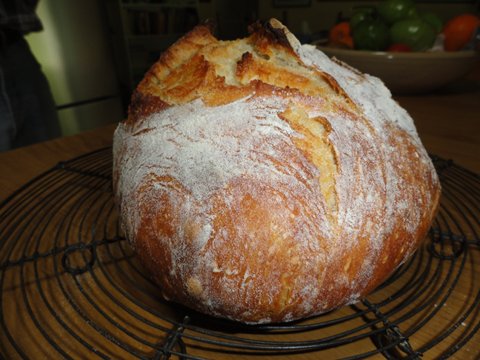
Bread is one of those foods that, when made with your own hands, gives a great deal of satisfaction and delight. It's only flour and water but it symbolises so much. I bake bread most days and use a variety of flours that I buy in bulk. Often I make a sandwich loaf because we use most of our bread for lunchtime sandwiches and for toast. Every so often I branch out to make a different type of loaf. I have tried sour dough in the past but I've not been happy with any of them. I'll continue to experiment with sour dough because I like the idea of using wild yeasts and saving the starter over a number of years to develop the flavour and become a part of the family. However, the loaf I've been branching out to most often is just a plain old five minute bread. By five minutes I mean it takes about five minutes actual work to prepare but it's the easiest of all bread to make and to get consistently good loaves from. If you're having people around for lunch or...
Image

This is my last post.

I have known for a while that this post was coming, but I didn't know when. This is my last post. I'm closing my blog, for good, and I'm not coming back like I have in the past.  I've been writing here for 16 years and my blog has been many things to me. It helped me change my life, it introduced me to so many good people, it became a wonderful record of my family life, it helped me get a book contract with Penguin, and monthly columns with The Australian Women's Weekly and Burke's Backyard . But in the past few months, it's become a burden. In April, I'll be 75 years old and I hope I've got another ten years ahead. However, each year I'll probably get weaker and although I'm fairly healthy, I do have a benign brain tumour and that could start growing. There are so many things I want to do and with time running out, leaving the blog behind gives me time to do the things that give me pleasure. On the day the blog started I felt a wonderful, h...
Image

What is the role of the homemaker in later years?

An email came from a US reader, Abby, who asked about being a homemaker in later years. This is part of what she wrote: "I am a stay-at-home mum to 4 children, ages 9-16. I do have a variety of "odd jobs" that I enjoy - I run a small "before-school" morning drop-off daycare from my home, I am a writing tutor, and I work a few hours a week at a local children's bookstore. But mostly, I cherish my blissful days at home - cooking, cleaning (with homemade cleaners), taking care of our children and chickens and goats, baking, meal-planning, etc. This "career" at home is not at all what I imagined during my ambitious years at university, but it is far more enriching. I notice, though, that my day is often planned around the needs of my family members. Of course, with 4 active kids and a husband, this is natural. I do the shopping, plan my meals, cook dinner - generally in anticipation of my family reconnecting in the evening.  I can't h...
Image

Every morning at home

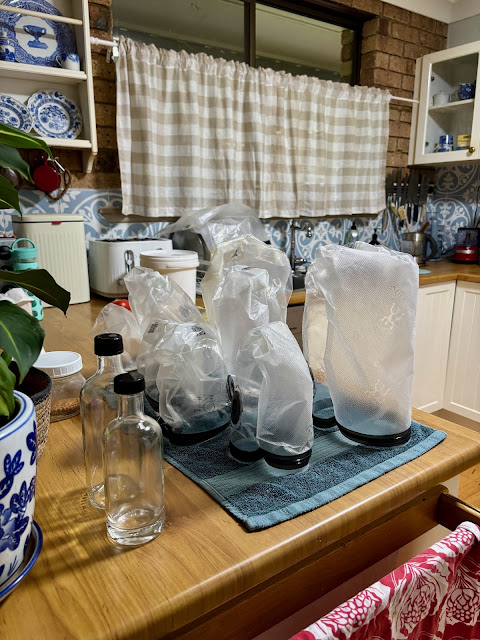
Every morning when I walk into my kitchen it looks tidy and ready for a day's work. Not so on this morning (above), I saw this when I walked in. Late the previous afternoon when I was looking for something, I came across my rolled up Zwilling vacuum bags and decided they had to be washed and dried. So I did that and although I usually put them outside on the verandah to dry it was dark by then. I turned the just-washed bags inside out and left them like this on a towel. It worked well and now the bags are ready to use when I bring home root vegetables, cabbages or whatever I buy that I want to last four or five weeks.
Image

You’ll save money by going back to basics

When I was doing the workshops and solo sessions, I had a couple of people whose main focus was on creating the fastest way to set up a simple life. You can't create a simple life fast, it's the opposite of that It's not one single thing either - it's a number of smaller, simpler activities that combine to create a life that reflects your values; and that takes a long to come together. When I first started living simply I took an entire year to work out our food - buying it, storing it, cooking it, preserving, baking, freezing, and growing it in the backyard. This is change that will transform how you live and it can't be rushed.  
Image


Trending Articles

NOT the last post

This will be my last post here.  I've been writing my blog for 18 years and now is the time to step back. I’ve stopped writing the blog and come back a couple of times because so many people wanted it, but that won’t happen again, I won’t be back.  I’ll continue on instagram to remain connected but I don’t know how frequent that will be. I know some of you will be interested to know the blog's statistics. 
Image

Every morning at home

Every morning when I walk into my kitchen it looks tidy and ready for a day's work. Not so on this morning (above), I saw this when I walked in. Late the previous afternoon when I was looking for something, I came across my rolled up Zwilling vacuum bags and decided they had to be washed and dried. So I did that and although I usually put them outside on the verandah to dry it was dark by then. I turned the just-washed bags inside out and left them like this on a towel. It worked well and now the bags are ready to use when I bring home root vegetables, cabbages or whatever I buy that I want to last four or five weeks.
Image

You’ll save money by going back to basics

When I was doing the workshops and solo sessions, I had a couple of people whose main focus was on creating the fastest way to set up a simple life. You can't create a simple life fast, it's the opposite of that It's not one single thing either - it's a number of smaller, simpler activities that combine to create a life that reflects your values; and that takes a long to come together. When I first started living simply I took an entire year to work out our food - buying it, storing it, cooking it, preserving, baking, freezing, and growing it in the backyard. This is change that will transform how you live and it can't be rushed.  
Image

Creating a home you'll love forever

Living simply is the answer to just about everything. It reduces the cost of living; it keeps you focused on being careful with resources such as water and electricity; it reminds you to not waste food; it encourages you to store food so you don't waste it and doing all those things brings routine and rhythm to your daily life. Consciously connecting every day with the activities and tasks that create simple life reminds you to look for the meaning and beauty that normal daily life holds.  It's all there in your home if you look for it. Seemingly mundane tasks like cleaning and cooking help you with that connection for without those tasks, the home you want to live in won't exist in the way you want it to.  Creating a home you love will make you happy and satisfied.
Image

Time changes everything

I've been spending time in the backyard lately creating a contained herb and vegetable garden. My aim is to develop a comfortable place to spend time, relax, increase biodiversity and encourage more animals, birds and insects to live here or visit. Of course I'd prefer my old garden which was put together by Hanno with ease and German precision. Together, we created a space bursting at the seams with herbs, vegetables and fruity goodness ready to eat and share throughout the year. But time changes everything. What I'm planning on doing now, is a brilliant opportunity for an almost 80 year old with balance issues. In my new garden I'll be able to do a wide range of challenging or easy work, depending on how I feel each day. It’s a daily opportunity to push myself or sit back, watch what's happening around me and be captivated by memories or the scope of what's yet to come.
Image

It's the old ways I love the most

I'm a practical woman who lives in a 1980’s brick slab house. There are verandahs front and back so I have places to sit outside when it's hot or cold. Those verandahs tend to make the house darker than it would be but they're been a great investment over time because they made the house more liveable. My home is not a romantic cottage, nor a minimalist modern home, it's a 1980’s brick slab house. And yet when people visit me here they tell me how warm and cosy my home is and that they feel comforted by being here. I've thought about that over the years and I'm convinced now that the style of a home isn't what appeals to people. What they love is the feeling within that home and whether it's nurturing the people who live there.
Image

Making ginger beer from scratch

We had a nice supply of ginger beer going over Christmas. It's a delicious soft drink for young and old, although there is an alcoholic version that can be made with a slight variation on the recipe. Ginger beer is a naturally fermented drink that is easy to make - with ginger beer you make a starter called a ginger beer plant and after it has fermented, you add that to sweet water and lemon juice. Like sourdough, it must ferment to give it that sharp fizz. To make a ginger beer plant you'll need ginger - either the powdered dry variety or fresh ginger, sugar, rainwater or tap water that has stood for 24 hours to allow the chlorine to evaporate off. You'll also need clean plastic bottles that have been scrubbed with soap, hot water and a bottle brush and then rinsed with hot water. I never sterilise my bottles and I haven't had any problems. If you intend to keep the ginger beer for a long time, I'd suggest you sterilise your bottles. MAKING THE STARTER In a...
Image

Back where we belong

Surprise! I'm back ... for good this time. Instagram became an impossible place for me. They kept sending me messages asking if I'd make my page available for advertisers! Of course, I said no but that didn't stop them. It's such a change from what Instagram started as. But enough of that, the important part of this post is to explain why I returned here instead of taking my writing offline for good. For a few years Grandma Donna and I have talked online face-to-face and it's been such a pleasure for me to get to know her. We have a lot in common. We both feel a responsibility to share what we know with others. With the cost of living crisis, learning how to cook from scratch, appreciate the work we do in our homes, shop to a budget and pay off debt will help people grow stronger. The best place to do that is our blogs because we have no advertising police harassing us, the space is unlimited, we can put up tons of photos when we want to and, well, it just feels li...
Image