down to earth

  • Home
  • About Us
  • Down To Earth Book
  • Privacy Policy


I often write about being a homemaker and the satisfaction I gain from that role. I enjoy being here and making my home a place of comfort and regeneration. I know that if I feel weak and fragile when I'm out and about, that feeling will disappear as soon as I return home. There is a feeling of peace and tranquility here, I feel secure and protected and that all things are possible when I'm at home.


There was a time when I didn't want to be here at all. Before I married, I was either at work or "out" somewhere. Home was merely a place to sleep, bathe and change clothes. For me then, the real action and excitement was far from home. I barely remember that stranger in my past. I live with a softer heart now, I feel that my home made me a better person.


I wonder sometimes if a home has the ability to nurture; surely that is a human quality. But when I think back on how I have changed by being here in my home, I feel there may have been a lot of nurturing going on - while I was homemaking, my home was making me.


The nights are colder here now so we have flannel sheets on the bed. I changed from cool cotton sheets to our cosy flannel ones at the beginning of the week. It's so warm and comfortable in our bed. It's been raining for a few nights and being there, wrapped in our flannel sheets and quilts, listening to the rain, has been a true joy. It is those humble but conscious actions of my days - like changing to warm sheets, that add in small ways to the nurturing I feel.


As I go about my daily chores, as I make the bed and run my hand over the sheets to smooth them out, as I change the sheets to replace them with sun dried clean ones and make sure the bed is just right, I know that those small actions help give us a good night's sleep and make us feel warm and secure while we listen, half awake, to rain falling on the roof. None of those small actions is important on its own but they add up to more than the sum of their parts. Each small step, like the small steps of a simple life, lead to something better.


All the tasks Hanno and I carry out during the course of each day help us in our quest for self reliance. He tends the gardens and does most of the outside work, while I cook and clean and make as much of what we use as I can. When I taught myself how to bake bread and make soap, I knew I would be better for it because it was a healthier alternative to most store bought products, but I didn't know carrying out those tasks would change me. Every day I make our bread I know I'm making a significant contribution to our health, while reducing the costs of feeding us. Every time I make soap, I know I am making a product that replaces shampoo, moisturiser and general cleaning products. Making those two items helps us live with fewer chemicals and helps me focus on our priorities. And every time I make them, they make me.


So as I look in my cook books for new recipes, as I cook our meals with backyard produce, as I sew and knit, while we sip tea and talk on the front verandah, as I make crumpets in the shape of hearts (just because I can), as I harvest and skin luffas, when I sow seeds, and feed the chooks and watch birds and sweep and wash up, I don't feel it happening but at times, like now when I think about it, I know that being here and doing all these things made me the woman I am today. I know now that the tasks of a simple home make us.

And I am more than grateful that I have the ability to write about our home life and that doing it connects me to you. I get up early to write my blog so it doesn't impact too much on my day. I have a lot to do most days so I try to get the blog written before I start my daily tasks. Writing here has given me a reason to reflect on what we do and, no doubt, helps me stay focused on living this way. I feel encouraged knowing there are many others living as we do, working towards a better life every day. Thank you for your comments this week. It is a pleasure to read them. Welcome to all the new readers. I am slowly visiting the blogs who left links and replying to emails sent. Please me patient with me, it takes time but I get there in the end.

You would think that being able to freely choose from a wide variety of things would make a task easier. In fact, for me, I found it very difficult. Yesterday I spent almost all day rebuilding my blog template to make it easier to manage. The template I chose before didn't allow me to do certain things, so I thought I had to bite the bullet and set it up for ease of use. I went looking for a new template, found many hundreds of them, but was confused by having so many choices.

I tried a few, and if you were here while I was doing that, I apologise, but kept discarding what I had because I thought the next one would be better, or what I chose was not as good. In the end I deliberately went back to what I knew and made sure the template I chose had all the bells and whistles I need. I started at 8am, finished at 5.30pm, taught myself a little html along the way and ended up with a page very similar to the one I discarded. I still have a lot of additions to get it back to where it was, but at least the choosing part of the process is over. That, my friends, really stumped me. I am by nature a simple soul and don't like too much fuss. I like plain and simple things but most of the templates are very fancy, with lots of widgets. Anyhow, I found one I like, it has everything I need to facilitate long term, easy posting, so I'm happy.

Having all that choice is a lot like recreational shopping. You go into the store looking for 'stuff' and the choice is so overwhelming, you don't know what to buy. In the end you grab a few things, not really knowing that what you have is what you need or want. I'm glad I'm over that phase of my life.

So today I should be able to finish off the blog and get down to some other work. I have a bathroom to clean, bread to bake, floors to sweep and general tidying up on my agenda. Tasha, I smiled when I read your comment about buying a broom, I understand completely. There are certain tasks in the home that represent a break from your old life. A broom is symbolic of that change for me too.

I'm happy to be able to tell you that Shane got a job in Brisbane! Sarndra is still looking but I'm sure she'll find a job soon. At least Shane is working so he will look after them both and when Sarndra gets her job, they'll be able to save. We've been sharing the house with Shane and Sarndra for a few weeks so I have a little bit of reorganising to do today. They still have a lot of their things here but Sarndra is such a good housekeeper, the room they were in is pristine. :- )

I was really pleased to read that so many of you are tending or planning vegetable gardens. If you have a blog with photos, I'd love to see what you're doing. Please leave your link in the comments and I and a few others might come along to see your handy work. I love looking at vegetable gardens.

And finally today I have recipe for you. It's for a delicious lemon yoghurt cake I made last week. The cake started off being a finely textured light fluffy cake but as I had yoghurt in the fridge I added that for extra flavour. Instead of a fluffy sponge-like cake, it was slightly dense in texture, but still light and intensely flavoured with lemon. I will definitely make this cake again. Even after four or five days, it was still very moist and tasty. If you like a very sweet cake, add other ¼ cup of sugar to the mix.


LEMON YOGHURT CAKE
  • 6 small to medium eggs OR 4 large eggs
  • 1 cup caster sugar
  • 180g (6.5 oz) melted butter, cooled
  • ¾ cup plain yoghurt
  • juice of 3 lemons - take out 3 tablespoons for your icing
  • rind of 3 lemons
  • 1 ½ cups self-raising flour
ICING
  • 3 tbs fresh lemon juice (reserved from cake)
  • 20g (4½ teaspoons) butter
  • 2 ¼ cups sifted icing sugar
METHOD
  • Beat the eggs and sugar together. This is not just mixing, you are beating air into the cake. Keep beating until the mix is a light colour, thoroughly mixed and falls like a ribbon from the beaters.
  • Add the yoghurt and mix in. Take the cake mix off the mixer.
  • Add half the flour and fold in. When you fold, you do that by hand with a spatula or large spoon. Fold the ingredients, don't beat.
  • Fold in the lemon juice and butter.
  • Add the remaining flour and fold in. What you're trying to do with the folding is to keep the air that you beat in the mix, in it. The more air, the lighter it will be.
  • Just before you finish, after everything else is done, add one tablespoon of boiling water to the mix. This will keep your cake moist if it's not eaten in the first day.


Pour the mixture into a round normal sized cake pan and bake in a moderate oven 180C (350F) for about 25 minutes or until a toothpick you insert into the middle of the cake comes out clean.

Allow the cake to cool on a rack and then spread the icing. The icing is made by combining all the ingredients and mixing until they're smooth.

I used a slab pan for my cake but it should be cooked in a round pan. I hope you enjoy it.

I want to thank everyone of you who made a comment yesterday. They added significantly to what I wrote and I'm sure many of those comments will help readers going through difficult times. I am very proud of this little community we have built here, and never more so than yesterday when I read those comments. Thank you.

I will be fiddling with the blog again today as the template is not working as it should. I may have to change it and rebuild the page again. : -|


I haven't shown you our garden for a while. The photos in the vegetables and flowers post were from many different periods in our garden, but we have a new season with us and even though we're a bit late with some of our plantings, it's coming along well. I took these photos yesterday afternoon after I came home from work. Hanno was sitting in the kitchen with a tradesman who was giving a quote on the government-subsidised insulation, so I took the opportunity to wander around with the camera.

\
Celery

We are blessed to have this space to plant our vegetable garden each season. Ours is a year long garden, containing vegetables, fruit, nuts, chickens and water catchment tanks. We use the chook poo to help make compost for the garden and the water we use is always from our rainwater tanks.

Our garden is protected from the wind by a tall fence on one side, rainforest at the back, the house at the front and lots of trees on the remaining side. We are lucky to have around 1500mm (60 inches) of rain fall a year and we catch some of that in our water tanks which hold 15,000 litres (4000 gallons).


Closest to camera are turnips, (right) tomatoes, and at the end Hanno has planted Swiss chard. In between the chard and the turnips, potatoes are coming up, leftovers from a previous crop.

March is our main planting time. It's the first month of the year when the humidity leaves us so there is less chance of powdery mildew on pumpkins, squash and cucumbers. We take the opportunity to grow Winter crops now - celery, cabbages, broccoli, kale, turnips and peas that are impossible to grow at other times of the year here.


Chinese cabbage and lettuce.


The last of the summer corn. I picked most of these last weekend, blanched them and placed them in the freezer for eating during Winter. The few that are left here will be eaten over the next week or so.


This is one of my favourite cucumbers. It's the Richmond Green Apple cucumber which is an Australian heirloom, common during the 50s, but not so much now. It has a very good flavour, and is crisp. You can see a small cucumber below. They grow to about the size of a small orange.


We had to remove all the tomatoes we planted earlier in the season as they were diseased and wilting. We planted some beefsteaks to keep us going and I'll plant up some more Brandywines, Moneymakers and Tommy Toes soon.


Next to the celery at the front, are some of the beefsteak tomatoes.


I love having brassicas growing in the garden. We can grow Chinese cabbage all year but none of the others will grow for us unless we plant them out in these colder months. Even now we choose sugarloaf cabbage, it has a short growing season and will mature into small firm heads in a couple of months. If you're having problems with cabbages running to seed before you have a change to pick them, try one of the smaller varieties.


Sugarloaf cabbages. They've been attacked by caterpillars but the hearts are firm and untouched. We leave the outside leaves there so pests will eat them instead of the heart.

We tend to do two plantings with our sugarloaf cabbage and mini cauliflowers - one very early and another one about three or four weeks after that. Usually, that gives us cabbage and cauliflower over most of the cold months.


Turnips are another one of our Winter crops. They grow surprisingly well here and I use them in soups and stews.


Ever present, our chooks wander the back yard looking though the picket fence at the vegetables. They often patrol the edge of the garden hoping for some old lettuce or cabbage leaves to be thrown their way.


In the corner of the vegie patch sits our composting area. Above you see the grass clippings harvested from the last lawn mowing. They're a valuable resource and they help kick start our compost because the mass of clippings create a fair bit of heat as they decompose. We add dry carbon in the form of shredded paper, chicken droppings mixed with straw as well as old vegetables and kitchen scraps.

So, let's see if I can remember what we're growing now: cucumbers, tomatoes, lettuce, chard, cabbages - sugarloaf and Chinese, potatoes, turnips, celery, parsley, chives, Welsh onions, oregano, marjoram, bay, kale, corn, green beans and mini cauliflowers. We will add carrots, leeks, tigerella tomatoes, more lettuce, peas, squash, capsicum (bell peppers) and garlic soon. We are currently picking lemons, passionfruit, pawpaw (papaya) and pecans, a small number of blueberries, oranges and mandarins (clementines) will be ready in a few weeks. We have bananas, loquats, pink grapefruit and avocados growing but not in fruit at the moment. The chickens lay year long but their output decreases in the colder months.

It's a wonderful little garden that Hanno has put a lot of time and effort into. When it's growing well, we can live off it, but it's never that black and white. There are often times we need to buy from the markets. Hopefully, in the years to come, we will eat more and more from our garden. It is one of the true joys of a simple life to be able to grow fresh organic produce in the backyard. If you have a little bit of ground in the sun but have never tried your hand at gardening, I encourage you to give it a try. There is nothing like the taste of fresh backyard produce and the feeling you get knowing you did it yourself.


The global economic crisis is effecting my family personally. My son Shane and his soon-to-be wife, Sarndra, both left their jobs six weeks ago to travel to New Zealand for a holiday. They're back now and although they've looked everyday, there are no jobs to be found. Online job ads have fallen 50 percent, bankruptcy in America has been predicted to increase 50 percent this year and there are record job losses in most Western countries. My guess is that many people are finding it very tough going at the moment. Just this week I've had four emails asking about living on one income and one from a lady whose marriage fell apart because of the pressure of working to pay a high mortgage. So let's focus on living on less again. With the changing economic climate, there may be new ideas evolving and people willing to share how they're living a good life with less money.

I have written about this subject before and my feelings now are similar to back then but I want to write today about changing attitudes, which I think can be very difficult to change. Difficult but not impossible.

If you are trying to live on less and have decided to live a more simple and frugal life, then do it wholeheartedly. Stop trying to impress with what you own, stop being impressed by what others own. I have to admit, this is easy for me to do. I grew up in an age before products and possessions began to own us. Back then, unless you were born into a wealthy family, you worked hard for what you had and you made much of it yourself. There was usually one bread winner in the family and the other person, usually the wife, stayed at home to raise children, but also to make most of what the family needed. There were no department stores with row upon row of cheap Chinese imports. If you needed a new dress, you either got a hand-me-down from someone in the family or you would go to the haberdashery store and buy cloth to make the dress yourself. There were no skin care products to buy then, and few cosmetics apart from lipstick and foundation, and the only perfume you would smell in the course of the day was when someone had used perfumed talcum powder. Appliances weren't upgraded as a matter of course. You bought the best quality you could afford and repaired it when it broke down.

Back then, if you needed soap - you made it. If you needed bread, you made it. If you needed jam or a meal or curtains or clothes, you made them. When you furnished your first home, you were either given old family furniture or you would make do with shelves made with bricks and planks of wood. Not that you had much to put on the shelves - maybe a small black and white TV in a grey plastic case and some books. Everyone's father had a metal shoe last so he could repair the family's shoes. This would be done by shaping a piece of leather for the sole of the shoe and tacking and gluing it on to reattach the top of the shoe leather to the sole. A worn down heal was built up again with several layers of leather cut to size. Back then, people took pride in their homemaking and repairing skills. Women and men in the neighbourhood swapped tips on how to make do, reuse and repair almost everything. It was a matter of pride to be able to keep the family going on very little money and to still keep them healthy and happy.

Back then, one family member, usually the husband, worked for enough money to live frugally, and the wife worked at home to make most of the family's needs. Now, usually both partners work to make enough money to pay someone else to make what is needed and wanted, and the skills of homemaking, home maintenance, gardening, knitting, dressmaking, and the fine arts of embroidery, lace making and crochet are almost lost.

So you can see that I, and people my age, have grown up with a different set of expectations. We have seen families and communities working together in a more holistic way. We have seen the outside worker bring in enough money to pay for life's necessities that cannot be home produced. We have seen the homemaker in a much more active and significant role than s/he currently enjoys. We know it works. So when I readjusted my own lifestyle to live more simply and to better reflect those old ways, it was easy for me because it was already part of me.

One of the things that is needed now is to overcome this sense of entitlement that many people feel. They see others with fine houses and possessions to fill them, they think that is "normal" and they should have it too. If truth be told those fine houses have probably burdened their owners with a mortgage that they will work their entire life to pay. The house and possessions own those people. The main focus of their lives will be to pay for their possessions. Children who see that take it as being "normal" and do the same thing when they grow up. If you live your life for and through your possessions you will not be living to your potential. You will be constrained by your focus being on paying for your life.

There is another way. You can cut back your desires and live a simpler life.

Change your attitude about what success is. Learn to appreciate a simpler and more gentle way of living. Encourage your family to work together as a team. Working through hardship will make you a stronger unit. Support your partner in their role, particularly if they're learning new skills. Tell them how much you appreciate their hard work and work equally hard beside them to produce as many of your own needs as you can. There is a lot to be said for independence. Learning to do for yourself will give you better quality goods, will allow you to make things to your own liking and will be fresher, more delicious and last longer than anything you can buy ready made.

I don't often directly challenge you towards change but this is important because times are getting tougher. My challenge to you is to make the decision today to start working on your attitude. I know it won't happen overnight, this is a slow and gradual process. Look at those people you want to copy and ask yourself if they are really happy, do they really have the kind of life you want, or are they too weighed down by debt and envy. Try to appreciate what you already have. Value your family, your health and your ability to work hard. Pull back from the outside world a bit and listen to the sound of your own breathing. Take a day off from your normal activities and reacquaint yourself with your family, your home and your thoughts. I wonder if there was a time when all you wanted was to be happy.

There has never been a better time to step back, slow down and simplify. You can step off the merry-go-round and find yourself a less stressful life where your successes are not judged by what you own and what you can buy. True success has a much more complex character than that and you can start to discover what success means to you by realising that possessions don't have much to do with it.

I hope that if you have some helpful advice you will comment. We are all living our lives in different ways and your words might just be the ones that make a difference to someone reading here.


Mmmmm, that flower was delicious! Flowers aren't just for the flower garden, there are quite a few flowers that can be eaten and when planted in the organic vegetable patch, add more than their beauty to your garden. We always have some kind of flowers growing alongside our vegetables. Sometimes they're flowers that can be added to a salad and eaten, like nasturtiums or chive flowers, some times they are planted to attract bees and other beneficial insects.


If you're growing flowering vegetables and fruit, most of them will need to be pollinated. This job is usually done by insects. You'll attract bees to your garden simply by having flowers for them to collect pollen from. They'll go from flower to flower pollinating your flowers as they move along the line.


The flowers that attract bees and beneficial bugs include pansies, alyssum, zinnias, calendulas, marigolds, yarrow, viburnum, daisies, gerberas, sunflowers, linarea, Queen Anne's lace, gypsophila, lobelia, cosmos and flowering herbs like coriander, borage, comfrey, dill, oregano, thyme, sage and chives.


Yarrow

As in all things there are good and bad insects. You want to encourage ladybirds, hoverflies. lace wings and their offspring antlions, you don't want caterpillars, mealy bugs, thrips and aphids. If you encourage predatory insects and small lizards to your garden, they'll know to come back and when they do, they'll be looking for their favourite meal: the pests that eat your vegetables. To keep the beneficial predators around after they have eaten your garden pests, you'll have to supply a safe garden where they can find food and water most of the time. So plant the flowers they like, you'll be giving them plenty of nectar and pollen, and some water in the form of a bird bath or shallow bowl and you'll provide an insect-friendly habitat. When you add water for any sort of insect, bird or mammal, make sure it's not too deep for them. Most creatures like to sit on something while they drink, so pebbles in the water or on the edge give them a safe place to sit. Make sure you change the water frequently to avoid mosquitoes breeding in it.


Adopt a no spray policy. Any chemical pesticides will not only render your garden non-organic, they will kill both the good and the bed insects. Even the organic chilli and garlic sprays you make at home will kill most insects on contact.


Garden friendly insects will also need shelter. They usually find this in a biodiverse garden with all sorts of flowers and vegetables they can rest on and hide in. They love mulch and garden litter, so mulching your plants not only gives them the best chance of survival during hot weather, but it will also give small creatures a place to live.

Green Harvest - good bug mix. (Australia)
Grow Organic - good bug blend (California)
Good Bug Blend (Arizona)
General Advice on wildlife gardening (UK)
Edible flowers - (USA)
Edible flowers chart
Edible flowers - Isabell Shipard

A good Australian book - The Garden Guardians


I guess my favourite vegetable garden flowers are small daisies that grow into a small bush, yarrow, nasturtiums, and sunflowers. It's lovely to be able to pick the flowers you grow and bring them inside, but in this instance it's best to leave them in the garden, to provide food and shelter for those little beetles and bees you need in your vegie patch. So all you gardeners who are planting now, make sure you add a few flowers to your seasonal gardening plan. Just dot them throughout the garden so the insects have places to eat and hide in all your beds. It's another way of creating an organic and natural garden without having to spray or go on a bug chase.


Hanno and I had a day out yesterday. We had a couple of errands to run so we decided to make a day of it, have lunch out and enjoy the day. Oh dear, it was not good. We had to go into Brisbane, which is our state's capital city, and even though we bypassed the main city, we had to deal with a lot of traffic and many trucks driving very close to us. As we went over the Gateway Bridge, with a massive truck only inches from our side, I was really frightened. I've found that as I get older, I don't like travelling as much and I tend toward anxiety when I'm in a car that I'm not driving.

We didn't do everything we wanted to do because we got lost a couple of times so I was really pleased when we headed for home around 2pm. There were still many trucks and a lot of other traffic, but as we got over the river and started driving north, I started feeling better. Soon we were driving through pine forests, we passed the chicken farm with the long grey barn, tall shadows crossed the road and we were back in the Glasshouse Mountains.

Home, there is no place like it.

I'm am looking forward to spending the next four days here with the gate closed. It's been a very busy week so far with work Monday and Tuesday, then again on Wednesday. One of our volunteers was away, our school trainee rang in sick and our other volunteer went home sick. I ended up going in to prepare lunch for 12 ladies who were there doing a parenting course. Hanno came with me so we got through the lunch and the washing up and were home again by 2.30pm but it was a big day nevertheless.


Today will be in sharp contrast to those days. I'll have breakfast when I finish writing, do some laundry, bake bread, plant up tomato and lettuce seeds, plant some cuttings and then relax on the front verandah with my tea and knitting. I think that will be my lot for the day until I cook dinner tonight. It will be a quiet and calm day, spent here among the trees with the chooks and animals out the back. I hope the only noise I hear is the clucking of the chooks or a sacred kingfisher's mad screech as he flies through like a dive bomber.


Luffas drying in the sun.

Over the weekend, I'll do some sewing, skin the remaining luffas and tidy up a few areas in the house. It will be a weekend to potter around with no real chores to do, just bits and pieces to put us right for the week to come. I am looking forward to a few days of relaxation and gentle work. Just the thing to regain my strength and set me up for next week when I start concentrating on my book and working to the timetable I've set for myself.


A winter blanket for our cat Hettie, made last weekend.

Thank you for visiting with me once again. I've enjoyed your comments very much this week. Welcome to all the new readers, I'm not sure where you'll all coming from but thousands more found us this month. There has been an increase of almost 40,000 new readers in the past two months alone. I hope you all find what you're searching for. And to all my old friends, I wish you a restful weekend, at home, with the gate closed.

*

No one would apply for our jobs. We work long hours, have no days off, we have to balance our budgets no matter what the circumstances, we are responsible for the mental and physical health of any number of children as we raise them to take on that responsibility for themselves. We act as role model, advisor, counsellor, guide and friend, we drive them to school, the library and the doctor, we explain boundaries. We support and encourage our partners, or if we're single parents, we take on a dual role. Whether we are single or attached, our job requires that we cook nutritious food that meet guidelines for good health, we clean toilets and faces and everything in between, we sew, mend and repair, we teach and nurture, administer discipline and model kindness and generosity, we are optimistic and brave, we are stewards of our homes, land and assets, guardian of our morals and privacy, and protector of the small and weak.

Position description: Homemaker. Remuneration: Nil.

And yet who would give up this most essential of jobs? There was a time when the job of homemaker, if it was thought about at all, was seen as insignificant and dreary. But as times change and the recession deepens, perceptions change. The homemakers of today are taking care of business. They are developing strategies to get their families through these hard times, they are showing, by example, that hard work, planning and optimism bring their own rewards.

Our jobs as homemakers are more important now than they were before because now we have the extra responsibility of guiding our family through these tough times. You may be in a family with one income, or none. Maybe there are two incomes but the hours have been cut back. Whatever the circumstances, even if there have been no changes yet, you have no way of knowing if you'll ride the recession through without losing some hours or a job, so prudence and planning are needed.

If you've never seen your role as a homemaker as a job before, now is the time to change. It is your job now to modify how you shop and cook so you can save as much money as possible. Whatever your household budget is, it is your job to not just get through the week on that money, but to cut corners and try to save some of that money. Having a little nest egg when the economy is like this is can be quite a comfort if there is a need for new shoes or clothes. It's a great time to teach yourself to sew, mend and knit. There are many blogs and videos on You Tube that will show you how. It is your job to explain what is happening to your children so they too can make a contribution to your family. They might have to do without for the time being, or at least cut back on what they are given or expect. It's a tough time for them as well as the rest of us but they will learn valuable lessons from hardship and you shouldn't try to shield them from this reality.

Many things change when the economy weakens and some of those things are difficult to deal with but it can also be a time of great personal growth. Your family is relying on you to get them through this. Not only will you have to keep food on the table, you'll also have to find entertainment that doesn't cost much, or anything. Now is the time to rediscover your library, garden, local museums and parks. Instead of waiting for life to throw things at you, develop a plan for your family so you're actively working together, learning new skills. If your children are old enough, ask them to help with the extra work you have to do and explain why that work is there - that cooking from scratch is cheaper and healthier, that a vegetable garden contributes fresh food to the family for a small cost, that now, more than ever, your home needs to be kept clean and in good repair. Work actively with your partner too. Set out a new budget, look at your spending together, plan what family outings, grocery shopping and home maintenance you'll do in the next month. If you live alone it's important that you do these things too. Your budget will have to stretch further and give value for every penny you spend.


*

When you take life by the collar and give it a good shake you tend to be more organised and ready for what's in store for you. Don't sit back, scared, waiting for what might come. Make a plan, write up a budget, keep your family close, explain what is happening, learn whatever you need to know to help you save money. These are not bad times, they are just different. We can make them as meaningful as our grandparents made the great depression. That certainly was a time of great hardship, but it also taught people to be self reliant, hard working, innovative and thrifty. And when things got better, those wonderful qualities stayed with them to help build their lives into what they wanted them to be.

As the homemaker in your family, it is your role now to gain the skills you need to save money and keep your family going. Your job is as important as your partner's job to earn money. Your partner earns the money, you stretch every dollar until it screams. Waste is a thing of the past. You make sure you get value for every cent you spend and then use what you buy in the most efficient and economical way. Every period in our history had lessons to teach us. The lessons you learn from this economic crisis have the potential to make your family into a strong, self-reliant unit. And when you come out the other end of this, the sky is the limit.

* From allposters.com


I slept in this morning, on the morning when I have no thought of what to write, but here goes. Let's talk about one of my favourite topics, stockpiling. :- )

I was asked the other day in an email about what kind of food and groceries I thought it wise to have on hand for an emergency situation like the swine flu outbreak. I have to tell you that while our stockpile and backyard supplies (eggs, fruit and vegetables) would come in very handy in an emergency, I stockpile mainly for the purpose of saving money and time, and the convenience of having a little shop sitting in my home. I am really pleased my little shop is full of our favourite foods and has almost all been bought on sale or made here at home. But let me address the question of emergency preparedness here. None of us know what will happen in the future and I for one do not want to rely on anyone else to provide for me unless it's absolutely unavoidable. I am thankful to have been in only one cyclone (hurricane) and no other large scale emergency. I have seen and read reports of plenty of them over my many years and I know one thing to be true: in a large scale emergency until the government organises help on a large scale through the SES, police and army, everyone is on their own. In Australia, when help arrives, it usually comes in the form of shelter, food and medical assistance, but often the help maybe a few days coming, so in those first few days, you'll need to provide for yourself. You all know Hanno and I prefer to be self-reliant and being able to look after ourselves in an emergency is no exception. We want to do it ourselves and we want to offer our help to our family and friends if they need it. And to do that, we must have a stockpile of various goods.

The easy way to answer the question of what we should have on hand in an emergency is to ask yourself: what food do we eat? what do we drink? what is easy to cook and store? how do we cook? how do we stay clean? if there is no electricity or gas how do we provide light and heat? how do we keep the children occupied? I guess that some emergencies will be like the swine flu outbreak and will mean we don't want to go to the shops and risk picking up the virus, other emergencies will be more severe and will cut off water and electricity supplies. There are so many variables, so let's talk about generalities, but please ask yourself the questions above.

The most obvious thing to stockpile is food. Food is what will keep us going through storms, outbreaks of illness or when we lose our jobs. But we all eat different things, so what should we stockpile? Stockpile what your family eats but try not to clog your stockpile space with boxes of prepared food, buy the basics and cook from scratch what you need. You will save money doing that, it's healthier and your food will last longer. For instance, if you buy a box or packet of macaroni and cheese mix, that will feed one, maybe two people. If you buy a few kilograms (pounds) of dried pasta, a bag of milk powder, some cheese and seasonings, you could feed a family for several meals.

If you're building your stockpile from scratch, start with the basics like rice, pasta, beans, lentils, chickpeas, couscous, milk powder, flour, yeast, salt and sugar, then add more specialised foods like honey, tea, coffee, peanut butter, jam, dried fruit, seeds for sprouting, tins of tuna and salmon. Make sure you have a bunch of your favourite spices, as well as pepper, vinegar and oil. Add your homemade sauces, jams, cordials, and some tins of baked beans and soup to that stockpile and you'd be able to feed your family for quite some time without outside help. If you buy large amounts, which I consider to be 5 kg (11 lbs) but others might buy larger packs, you will need to think about containers to store your food in. I have several lidded, food grade 5 kg plastic buckets I got from the local baker and some smaller buckets with lids that hold 1 kilo (2.2lbs). These are wonderful containers as they keep out insects, rodents and moisture. So before you buy large quantities, think about where you'll store it and in what. Don't forget a can opener

Other products worth storing are our old standbys - baking soda (bicarb), washing soda, soap, cheap vinegar (for cleaning), as well as toothpaste, tissues, latex gloves, toothbrushes, deodorant and shampoo (if you're not just using baking soda), razors and razor blades, toilet paper, any medications you need and a well-stocked first aid kit. You'll need a large container of liquid chlorine bleach for sanitation purposes. Make sure you add a dozen knitted dishcloths, some food covers, Tupperware containers or plastic bags, rubbish bags, batteries, candles, kerosene or oil lamps and matches. You should have torches, a battery-driven radio, or a combined torch-radio-siren that can be fully charged by winding. We have one of them and they're very good.


Our little windup torch-radio.

You'll need water too. If you have no water tanks or rain barrels, start collecting plastic drink bottles and fill a number of them with water. You can improve the quality of drinking water by solarising it. Read here and here about the SODIS method of sanitising water.


Wind up torch radio with winder.

If you have a baby or young children you'll need to think carefully about what they need. There are obvious things like nappies (diapers), bottles, sippy cups and toys, but think also about how you'll prepare their food. If they are still on mushy food, you might need to add the means to make it, so add a masher or little food mill as well as their favourite spoon and bowl. Of course, a breastfed baby is prepared for anything if they have their mum. Put in books and games for the older children and they might all like their own torch. It will give them a feeling of security if they have control of their own means of light. The wind-up ones with a little radio are ideal for children (and 61 year old women).

Don't forget your pets. Add dog and cat food and if you have chooks, rabbits or ducks, make sure you have enough food on hand for them.

Talk about your emergency plan and depending on the impending emergency, work out how you'll cope with it. Some emergencies will mean you just stay at home, others will mean you need to leave. There is some additional reading here, it's a wise thing to read all of them and take what you need from each:

SES Australia and the PantryList Australia
Ready America
Emergency Preparedness Canada
UK Resilience

If it takes a potential emergency like swine flu to make you think about stockpiling, so be it, but don't think stockpiling is useful only in emergencies. I believe a stockpile is one of the best tools we have to help us live a more simple and mindful life. I have written about stockpiling here. I'd be very interested to know if you have a stockpile and how you prepare for emergencies. As always, I look forward to reading your shared wisdom.

While there are many elements in a simple life, one of the important and helpful parts of ours, is that Hanno and I have both taught ourselves how to make many of the things we once bought. This wasn't a big stretch for us because we were both brought up in the age before supermarkets and sliced bread, when food was commonly made from scratch and we all made the best of what we had. We tried to forget that heritage and the life skills our past had taught us but now we're back on track and those memories help us almost everyday with what we want to do now.


I think one of our successes is that we have learnt how to combine our garden with our stockpile, pantry and grocery shopping. Now, instead of buying our sauces, mayonnaise, dressings etc, I make them from scratch with our home grown produce and store them for use in the fridge and stockpile cupboard. This not only helps us save money, but it also gives us healthier food with no preservatives. Slowly, we are regaining our independence and becoming more self-reliant.

Last weekend I made enough tomato relish to see us through the next few months. When I say relish, I mean not only a condiment that is used to add flavour on the plate, but also a sauce to add to cooking, on pizza tops, as a quick pasta sauce or to make a very tasty sharp cheese and relish sandwich. There really isn't a recipe for this because I change it every time I make it to suit what is growing in the garden at that time. This time is was:
  • Enough chopped tomatoes to fill a large pot - maybe 3 - 4 kgs (6 - 7lbs)
  • 4 large onions - chopped
  • 2 cloves garlic
  • Fresh oregano
  • 1 teaspoon chilli flakes or one medium chilli - this depends on whether you like a spicy relish. Leave it out if you don't.
  • 1 tablespoon curry powder
  • Salt and pepper to taste.
  • 1 cup sugar
  • 2 cups good quality vinegar - I used red wine vinegar
You will have to taste this as you cook it to make sure you like the taste. Take a tablespoon of sauce out and let it rest in a saucer to cool, then taste it. Learn to rely on your own judgement, changing recipes is one of the true joys of cooking. You might need to add more salt and pepper, more vinegar or more sugar, depending on your taste. You could also add any number of herbs or spices you like. The important parts are the sugar and vinegar, don't change those too much because they help preserve the food.

Put all the above in a large pot and slowly bring to the boil with the lid on. Then take the lid off and let it slowly boil for about 3 -4 hours. You want the volume to reduce by about one quarter. The longer you cook it, the more liquid will evaporate off and the thicker the sauce will be.


When it's cooked down to the consistency you want, remove from the heat and bottle it into clean glass jars or bottles that have been pre-heated. Fill the containers right to the top allowing only a small amount of headspace (this is the space between the top of the sauce and the top of the container). Turn the hot jars upside down and leave to cool overnight, then store in the fridge. Wait for a week for the flavours to develop before eating.

OR ... if you want to store the sauce for a long time, process in a water bath according to the instructions on your unit.

The amount I made in the photo will do us (with two small jars to give away) for about two months and it's fine to store it in the fridge for that amount of time. The addition of the sugar and vinegar help preserve the food.

Lis asked a question last week about whether it is safe to bottle up tomatoes. Lis, the newer varieties of tomatoes tend to be low acid and this poses a problem for the home bottler because successful water bath preserving relies on high acid food. Generally the heirloom tomatoes contain enough acid but the addition of the vinegar in this recipe overcomes that problem anyway. Other tomato recipes you might like to try could be helped with the addition of either lemon juice or citric acid. If you're not sure, just do up enough to last for a couple of months and keep them in the fridge, instead of processing them in the water bath and storing in the cupboard.


I hope you had a lovely weekend. We are a home of four adults again. Shane and Sarndra asked if they can stay here till they get jobs and naturally we said yes. We all did our own thing during the day, each working on our projects, then Shane cooked us a delicious chick pea and vegetable stew last night for dinner. It's a real treat having someone prepare the evening meal, especially one of my sons.

I did some cooking - yoghurt, quark and tomato relish, and as Colleen asked for the quark recipe, I'm happy to share that with you again. Lucky I took photos, Colleen. ; - ) There are a few ways you can make quark, this is how I do it.

First, make the yoghurt. I made this last week. I bought a container of natural organic 'Barambah' yoghurt, the 'use by' date was one month away so I knew it was fresh. Make sure you use natural yoghurt, not vanilla or any other flavour, or anything with gelatin in it. To make yoghurt, I used a litre (quart) of full cream, non-homogensied local milk. This milk is pasturised.

TO MAKE YOGHURT
  • Warm 1 litre (quart) of milk to 80C (180F) and remove from heat. Allow the milk to cool to 45C (110F). This is an important step that kills any bacteria present. You want bacteria to grow, but only the good stuff, this process pasturises the milk again.
  • When the milk has cooled to the right temperature, add half cup of yoghurt. Don't add the yoghurt before it has cooled or you will kill the beneficial bacteria.
  • Stir until the yoghurt has dissolved in the milk.
  • Set in an open wide casserole dish and place in a preheated oven. You want the temperature in the over to be no more than 45 - 50C (115 - 122F). Preheat the oven, then turn it off.
  • The yoghurt mix needs to stay warm for about 12 - 18 hours.
I make this in the early morning so I can monitor it during the day. When the oven temperature goes down, heat it up again, making sure it doesn't get too hot or too cold. If you over heat the yoghurt, you'll kill the beneficial bacteria. Leave the dish of yoghurt mix sit in the warm oven all day but don't stir it, just let it sit. At the end of the day, test it to see if it's thickened. If it has, you've made yoghurt. If it hasn't, reheat the oven and leave it longer. If you need to leave it in the oven overnight, that's fine but if you've used a good quality, fresh, natural yoghurt it will usually set in 12 hours.

TO MAKE QUARK

You need to drain as much whey from the yoghurt as possible.
  • Take a large jug, that you can fit a strainer in. You'll need cheesecloth, if you don't have any, use open weave cotton. I used handkerchief cotton that I bought from Spotlight. Line the strainer with the cotton and pour the set yoghurt into the strainer.

  • Fold in the cotton over the top of the yoghurt and place a small plate on top. Then a tin of something to weigh the plate down.

  • Put the jug in the fridge so the whey can drain while the yoghurt stays cold.
  • This will take between 1 - 2 days.
  • Save the whey for a million other things, don't throw it away. You can see half the whey I collected in the jar above.


  • I divide the quark in two and make one sweet cheese and one savory. On the weekend I added a tablespoon of honey to one half the quark and stirred it in thoroughly. You could also use jam.
  • To make the savory quark, I added a sprinkling of chilli flakes, salt and pepper and sprinkled paprika on top. You could also add either tomato relish, finely chopped cucumber or herbs.


Place the quarks into bowls and store in the fridge. They will keep for at least a month but here they only last a week, if that.

USING WHEY
The whey that drains from the quark contains live lactobacillus acidophilus which is very good for you and can be used in a variety of ways. It can be added to sauerkraut, relish, salsa or pickles. I also use whey in cakes and scones. The bacteria is killed during baking but the taste still comes through.

I hope you try this. It's an easy way to produce yoghurt and simple cheese.


Newer Posts Older Posts Home


My books were all published by Pengiun, and are available at Amazon US, Amazon UK and Amazon Au

Search here

Total Pageviews

Translate


I'm Rhonda Hetzel and I've been writing my Down to Earth blog since 2007. Although I write the occasional philosophical post, my main topics include home cooking, happiness and gardening as well as budgeting, baking, ageing, generosity, mending and handmade crafts. I hope you enjoy your time here.

MY FAVOURITE PLACES

  • Grandma Donna's Place
  • Grandma Donna's YouTube
  • Grandma Donna's Instagram
  • This Simple Day
  • Nicole's Instagram

Give More

Give More

Popular posts last year

Making ginger beer from scratch

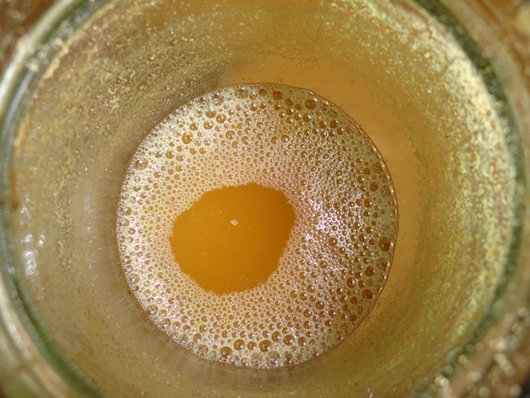
We had a nice supply of ginger beer going over Christmas. It's a delicious soft drink for young and old, although there is an alcoholic version that can be made with a slight variation on the recipe. Ginger beer is a naturally fermented drink that is easy to make - with ginger beer you make a starter called a ginger beer plant and after it has fermented, you add that to sweet water and lemon juice. Like sourdough, it must ferment to give it that sharp fizz. To make a ginger beer plant you'll need ginger - either the powdered dry variety or fresh ginger, sugar, rainwater or tap water that has stood for 24 hours to allow the chlorine to evaporate off. You'll also need clean plastic bottles that have been scrubbed with soap, hot water and a bottle brush and then rinsed with hot water. I never sterilise my bottles and I haven't had any problems. If you intend to keep the ginger beer for a long time, I'd suggest you sterilise your bottles. MAKING THE STARTER In a...
Image

NOT the last post

This will be my last post here.  I've been writing my blog for 18 years and now is the time to step back. I’ve stopped writing the blog and come back a couple of times because so many people wanted it, but that won’t happen again, I won’t be back.  I’ll continue on instagram to remain connected but I don’t know how frequent that will be. I know some of you will be interested to know the blog's statistics. 
Image

How to make cold process soap

I'm sure many of you are wondering: "Why make soap when I can buy it cheaply at the supermarket?" My cold process soap is made with vegetable oils and when it is made and cured, it contains no harsh chemicals or dyes. Often commercial soap is made with tallow (animal fat) and contains synthetic fragrance and dye and retains almost no glycerin. Glycerin is a natural emollient that helps with the lather and moisturises the skin. The makers of commercial soaps extract the glycerin and sell it as a separate product as it's more valuable than the soap. Then they add chemicals to make the soap lather. Crazy. Making your own soap allows you to add whatever you want to add. If you want a plain and pure soap, as I do, you can have that, or you can start with the plain soap and add colour, herbs and fragrance. The choice is yours. I want to add a little about animal and bird fat. I know Kirsty makes her soap with duck fat and I think that's great. I think t...
Image

Preserving food in a traditional way - pickling beetroot

I've had a number of emails from readers who want to start preserving food in jars but don't know where to start or what equipment to buy.  Leading on from yesterday's post, let's just say up front - don't buy any equipment. Once you know what you're doing and that you enjoy preserving, then you can decide whether or not to buy extra equipment. Food is preserved effectively without refrigeration by a variety of different methods. A few of the traditional methods are drying, fermentation, smoking, salting or by adding vinegar and sugar to the food - pickling. This last method is what we're talking about today. Vinegar and sugar are natural preservatives and adding one or both to food sets up an environment that bacteria and yeasts can't grow in. If you make the vinegar and sugar mix palatable, you can put up jars of vegetables or fruit that enhance the flavour of the food and can be stored in a cupboard or fridge for months. Other traditional w...
Image

Cleaning mould from walls and fabrics

With all this rain around we've developed a mould problem in our home. Usually we have the front and back doors open and that good ventilation stops most moulds from establishing. However, with the house locked up for the past week, the high humidity and the rain, mould is now growing on the wooden walls near our front door and on the lower parts of cupboards in the kitchen. Most of us will find mould growing in our homes at some point. Either in the bathroom or, in humid climates, on the walls, like we have now. You'll need a safe and effective remedy at some point, so I hope one of these methods works well for you. Mould is not only ugly to look at, it can cause health problems so if you see mould growing, do something about it straight away. The longer you leave the problem, the harder it will be to get rid of it effectively. If you have asthma or any allergies, you should do this type of cleaning with a face mask on so you don't breathe in any spores. Many peopl...
Image

Five minute bread

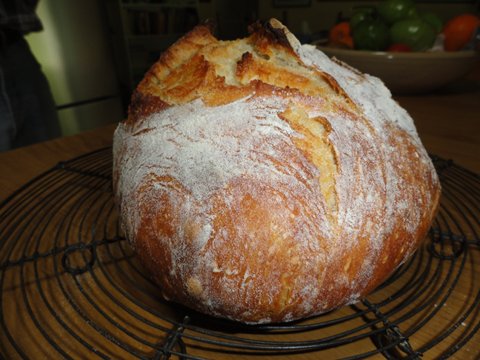
Bread is one of those foods that, when made with your own hands, gives a great deal of satisfaction and delight. It's only flour and water but it symbolises so much. I bake bread most days and use a variety of flours that I buy in bulk. Often I make a sandwich loaf because we use most of our bread for lunchtime sandwiches and for toast. Every so often I branch out to make a different type of loaf. I have tried sour dough in the past but I've not been happy with any of them. I'll continue to experiment with sour dough because I like the idea of using wild yeasts and saving the starter over a number of years to develop the flavour and become a part of the family. However, the loaf I've been branching out to most often is just a plain old five minute bread. By five minutes I mean it takes about five minutes actual work to prepare but it's the easiest of all bread to make and to get consistently good loaves from. If you're having people around for lunch or...
Image

This is my last post.

I have known for a while that this post was coming, but I didn't know when. This is my last post. I'm closing my blog, for good, and I'm not coming back like I have in the past.  I've been writing here for 16 years and my blog has been many things to me. It helped me change my life, it introduced me to so many good people, it became a wonderful record of my family life, it helped me get a book contract with Penguin, and monthly columns with The Australian Women's Weekly and Burke's Backyard . But in the past few months, it's become a burden. In April, I'll be 75 years old and I hope I've got another ten years ahead. However, each year I'll probably get weaker and although I'm fairly healthy, I do have a benign brain tumour and that could start growing. There are so many things I want to do and with time running out, leaving the blog behind gives me time to do the things that give me pleasure. On the day the blog started I felt a wonderful, h...
Image

What is the role of the homemaker in later years?

An email came from a US reader, Abby, who asked about being a homemaker in later years. This is part of what she wrote: "I am a stay-at-home mum to 4 children, ages 9-16. I do have a variety of "odd jobs" that I enjoy - I run a small "before-school" morning drop-off daycare from my home, I am a writing tutor, and I work a few hours a week at a local children's bookstore. But mostly, I cherish my blissful days at home - cooking, cleaning (with homemade cleaners), taking care of our children and chickens and goats, baking, meal-planning, etc. This "career" at home is not at all what I imagined during my ambitious years at university, but it is far more enriching. I notice, though, that my day is often planned around the needs of my family members. Of course, with 4 active kids and a husband, this is natural. I do the shopping, plan my meals, cook dinner - generally in anticipation of my family reconnecting in the evening.  I can't h...
Image

Every morning at home

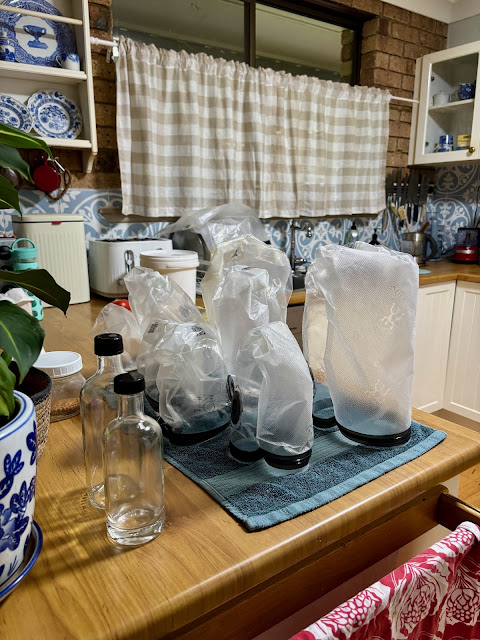
Every morning when I walk into my kitchen it looks tidy and ready for a day's work. Not so on this morning (above), I saw this when I walked in. Late the previous afternoon when I was looking for something, I came across my rolled up Zwilling vacuum bags and decided they had to be washed and dried. So I did that and although I usually put them outside on the verandah to dry it was dark by then. I turned the just-washed bags inside out and left them like this on a towel. It worked well and now the bags are ready to use when I bring home root vegetables, cabbages or whatever I buy that I want to last four or five weeks.
Image

You’ll save money by going back to basics

When I was doing the workshops and solo sessions, I had a couple of people whose main focus was on creating the fastest way to set up a simple life. You can't create a simple life fast, it's the opposite of that It's not one single thing either - it's a number of smaller, simpler activities that combine to create a life that reflects your values; and that takes a long to come together. When I first started living simply I took an entire year to work out our food - buying it, storing it, cooking it, preserving, baking, freezing, and growing it in the backyard. This is change that will transform how you live and it can't be rushed.  
Image


Trending Articles

NOT the last post

This will be my last post here.  I've been writing my blog for 18 years and now is the time to step back. I’ve stopped writing the blog and come back a couple of times because so many people wanted it, but that won’t happen again, I won’t be back.  I’ll continue on instagram to remain connected but I don’t know how frequent that will be. I know some of you will be interested to know the blog's statistics. 
Image

Every morning at home

Every morning when I walk into my kitchen it looks tidy and ready for a day's work. Not so on this morning (above), I saw this when I walked in. Late the previous afternoon when I was looking for something, I came across my rolled up Zwilling vacuum bags and decided they had to be washed and dried. So I did that and although I usually put them outside on the verandah to dry it was dark by then. I turned the just-washed bags inside out and left them like this on a towel. It worked well and now the bags are ready to use when I bring home root vegetables, cabbages or whatever I buy that I want to last four or five weeks.
Image

You’ll save money by going back to basics

When I was doing the workshops and solo sessions, I had a couple of people whose main focus was on creating the fastest way to set up a simple life. You can't create a simple life fast, it's the opposite of that It's not one single thing either - it's a number of smaller, simpler activities that combine to create a life that reflects your values; and that takes a long to come together. When I first started living simply I took an entire year to work out our food - buying it, storing it, cooking it, preserving, baking, freezing, and growing it in the backyard. This is change that will transform how you live and it can't be rushed.  
Image

Creating a home you'll love forever

Living simply is the answer to just about everything. It reduces the cost of living; it keeps you focused on being careful with resources such as water and electricity; it reminds you to not waste food; it encourages you to store food so you don't waste it and doing all those things brings routine and rhythm to your daily life. Consciously connecting every day with the activities and tasks that create simple life reminds you to look for the meaning and beauty that normal daily life holds.  It's all there in your home if you look for it. Seemingly mundane tasks like cleaning and cooking help you with that connection for without those tasks, the home you want to live in won't exist in the way you want it to.  Creating a home you love will make you happy and satisfied.
Image

Time changes everything

I've been spending time in the backyard lately creating a contained herb and vegetable garden. My aim is to develop a comfortable place to spend time, relax, increase biodiversity and encourage more animals, birds and insects to live here or visit. Of course I'd prefer my old garden which was put together by Hanno with ease and German precision. Together, we created a space bursting at the seams with herbs, vegetables and fruity goodness ready to eat and share throughout the year. But time changes everything. What I'm planning on doing now, is a brilliant opportunity for an almost 80 year old with balance issues. In my new garden I'll be able to do a wide range of challenging or easy work, depending on how I feel each day. It’s a daily opportunity to push myself or sit back, watch what's happening around me and be captivated by memories or the scope of what's yet to come.
Image

It's the old ways I love the most

I'm a practical woman who lives in a 1980’s brick slab house. There are verandahs front and back so I have places to sit outside when it's hot or cold. Those verandahs tend to make the house darker than it would be but they're been a great investment over time because they made the house more liveable. My home is not a romantic cottage, nor a minimalist modern home, it's a 1980’s brick slab house. And yet when people visit me here they tell me how warm and cosy my home is and that they feel comforted by being here. I've thought about that over the years and I'm convinced now that the style of a home isn't what appeals to people. What they love is the feeling within that home and whether it's nurturing the people who live there.
Image

Making ginger beer from scratch

We had a nice supply of ginger beer going over Christmas. It's a delicious soft drink for young and old, although there is an alcoholic version that can be made with a slight variation on the recipe. Ginger beer is a naturally fermented drink that is easy to make - with ginger beer you make a starter called a ginger beer plant and after it has fermented, you add that to sweet water and lemon juice. Like sourdough, it must ferment to give it that sharp fizz. To make a ginger beer plant you'll need ginger - either the powdered dry variety or fresh ginger, sugar, rainwater or tap water that has stood for 24 hours to allow the chlorine to evaporate off. You'll also need clean plastic bottles that have been scrubbed with soap, hot water and a bottle brush and then rinsed with hot water. I never sterilise my bottles and I haven't had any problems. If you intend to keep the ginger beer for a long time, I'd suggest you sterilise your bottles. MAKING THE STARTER In a...
Image

An authentic look at daily life here — unstaged and real

Most days Hanno was outside happily working in the fresh air. It may surprise you to know that I started reading my book,  Down to Earth , yesterday - the first time since I wrote it 13 years ago.  I had lent it to my neighbor, and when she returned it, I started reading, expecting to find surprises. Instead, I realised the words were still familiar—as if they were etched into my memory. As I flipped through the pages, I was reminded of how important it was for me to share that knowledge with others. The principles in Down to Earth changed my life, and I truly believed they could do the same for others. After just 30 minutes of reading, I put the book down, reassured that its message still holds true: we can slow down and reshape our lives, one step at a time.
Image