down to earth

  • Home
  • About Us
  • Down To Earth Book
  • Privacy Policy
Christmas Eve morning, Santa will be getting ready to leave about now, so it's a good time to wish you all a very happy Christmas. Whether you're spending tomorrow alone, with a house full of excited children and adults, or with your own true love, Hanno and I wish you all the joy your heart can hold.  We loved reading the good wishes sent our way yesterday, thank you. We'll be here tomorrow with some of our family, enjoying the day through the eyes of four year old Jamie. Today he and I will make biscuits for Santa and he'll probably talk about his plans to leave water and carrots for the reindeer. I am truly grateful I get to spend these hours with him. 

I think next year will be a fairly tough one for all of us as we continue to tackle the complexities of our modern world. Creating a safe and sound home for yourself and learning how to grow, preserve and cook food is one of the best ways to get through those difficult years. As you all know, I'm slowing down a bit but I'll continue to show and tell what we do here in the hope that it strikes a cord with you.
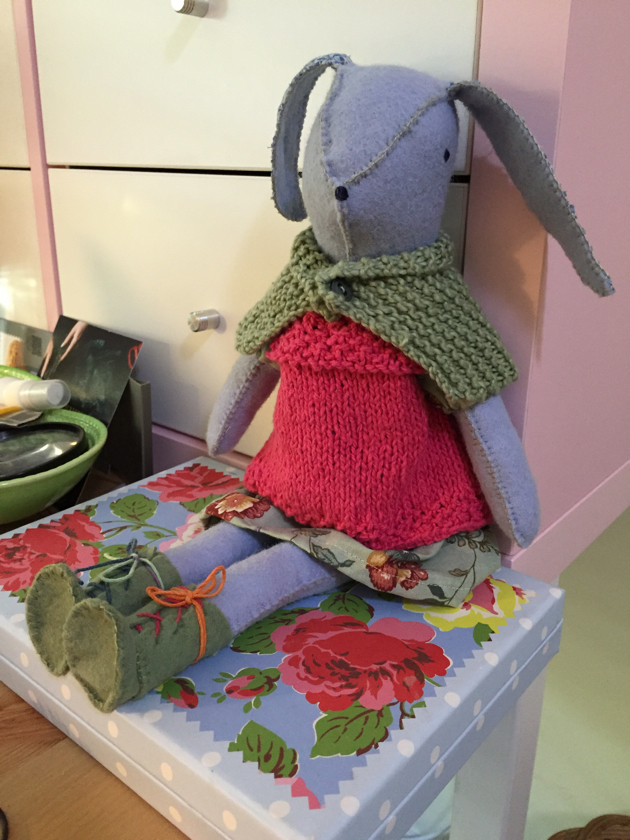
She's finished!

I want to introduce you to a good friend of mine. Morag Gamble is an amazing woman who lives fairly close to me in a house she and her husband designed for their young family. Morag works from home and holds frequent workshops and talks focused on skill building and permaculture. I've encouraged her to start a blog to document her life's journey and make a unique record for her own family. Morag is a permaculture teacher and designer so of course her home is surrounded by a productive garden, she works with young children so she has many ideas about how to raise healthy, adventurous, creative children. She occasionally travels the world advising groups and communities on permaculture and living sustainably. But you might be surprised to find she also makes her own cleaning and skin products, she's a cook and a homemaker with her own unique way of living simply. Have a look at her blog Our Permaculture Life. She's been writing there for a couple of months while she develops her style and finds her rhythm so there's already a good collection of interesting posts. Please leave a comment so she knows we're supporting her. She has a wealth of knowledge and she's eager to share what she does. Share her link on Facebook and Pinterest and put her on your Feedly, or subscribe via email, so you don't miss her posts.

Thank you for visiting me throughout the year and welcome to all the new readers who have found their way here this year. I appreciate the time you spend with me sharing your thoughts or silently reading the words here. Knowing you're there does make a difference. Hanno and I wish you a very happy Christmas. Stay safe, be kind - to yourself as well as others, and come back soon to explore what the next 12 months holds for us.  ♥︎
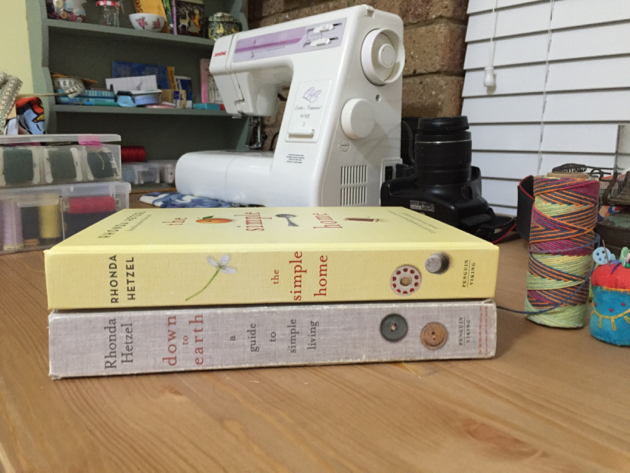
My new book, The Simple Home, was delivered to me a few days ago. I spent time over recent days looking at it and remembering the relentless writing schedule I imposed on myself to get it done for 2016. All that's irrelevant now because here it is, beautifully presented and full of what I think is interesting information. It's the best way to end the year.

The Simple Home is the sister book to Down to Earth. I had a lot more I wanted to say in Down to Earth but the page count meant I could only pack in what I did. This is what I would have added to Down to Earth if I had the space to do it. The book is sectioned into twelve monthly chapters, each dealing with a different topic, at the time it can ideally be done in Australia and New Zealand. There are chapters on organising your year and your finances, the food revolution, food gardening in containers, laundry love, food preserving and storage, simple home bakes, domestic crafts, sewing and mending, the home dairy, spring cleaning, health and wellbeing and celebrating.


I hope I've written well enough to encourage you to try a few things. There are recipes for cheese, bread, soup, biscuits, cakes as well as cold and flu tonic and many of the bits and pieces we use here. There is a section on mending and a few simple craft projects. I write about food and shopping and getting back to basics in the kitchen. And in the finance section, that subject that most people love to hate, I've included action plans to help you over some of the hurdles.


This is the last book I'll write. I feel satisfied that I've said what I wanted to say and I'm grateful I had the chance to do that with the help of a publisher like Penguin. I will retire in the next couple of years and go back to a life of obscurity where instead of writing books, I'll be reading them. Hanno and I will continue to live simply, we'll do the chores we've come to love, we'll collect eggs and pick herbs, we'll garden and cook, but I won't write about it anymore. I've tried my best to write about a way of life that can change people in the most profound way. Often you don't see that at first, you just see a way of cutting back and living well. I've found simple life to be the best it can be when it's at its most basic and peeling back the layers of materialism and conformity not only reveals that but it teaches many significant life lessons as well. I hope my books reflect that.

Publication date for The Simple Home is 1 March, 2016. You can pre-order at Booktopia and at the moment, they have a discounted price.

ADDED LATER: I've sent an email to Penguin to find out if the books will be available for sale on Amazon. I'm pretty sure it will be on the US Amazon but I'm not sure about the UK one.  I'll be back later when I have an answer. One way or another, we'll find a way of getting the books out to you.  BTW, Down to Earth is being reprinted so hopefully both books will be available overseas as well as locally.

It's only a couple of days until Christmas and I hope you've got your menu planned and all your goodies ready, or almost ready. It's always a nice touch to give a nod to our frugal and food loving grannies by adding a couple of homemade items to your yule table. So here are two easy recipes, even for new cooks, that you can make now or over the holidays.


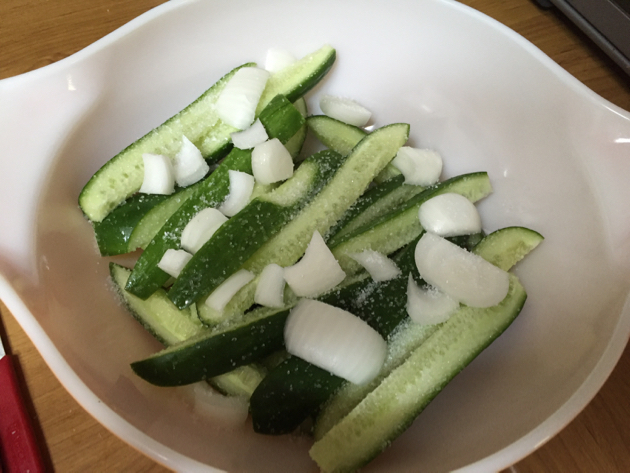
Pickled cucumbers is the easiest pickle you'll make and even though the flavour increases the longer you let it mature, if you made it today you could eat and enjoy it on Christmas day; it's not too late.

Quick pickled cucumber 
  • 4 - 6 young cucumbers or about 15 - 20 baby cucumbers
  • 1 onion
  • 1 tablespoon salt
  • 1 ½ cups of your favourite vinegar (I used malt vinegar)
  • ½ - ¾ cup sugar
  • 1 teaspoon pickling spice OR ¼ teaspoon black peppercorns, ¼ teaspoon coriander seeds and ½ teaspoon mustard seeds.
Cut the cucumbers in halves lengthways, then cut each half into three long pieces. Leave the baby cucumbers whole. Place the cucumbers in a large bowl and sprinkle 1 tablespoon of salt over them, cover and leave for three hours. After three hours rinse the cucumbers to remove the salt and salty water. Leave them in a colander to drain.  If you don't do this step the cucumbers will release all their water into the vinegar and spoil it. You must remember to wash the salt off though.

Sterilise a preserving/canning jar big enough to hold the cucumbers. You can do this in the dishwasher or in the oven for 15 minutes at 150C/300F degrees.

Bring the vinegar, sugar and spice to a boil and let it simmer for 10 minutes.

Meanwhile, lay the sterilised jar on its side and pack the cucumbers in. Stand the jar up and pour in the hot vinegar. Seal the lid and leave the jar on the bench to cool down. When it's cool, store it in the fridge or cupboard. The vinegar and sugar will help preserve the cucumber if you don't eat it all on Christmas day. When you open the pickles, store them in the fridge.

Ginger cordial
This is a ginger cordial that, when added to cold mineral water, tastes like homemade ginger beer. It will take you about 30 minutes all up to make it.


  • thick piece fresh ginger about three inches/8cm long
  • 1½ litres/quarts tap water
  • ¾ - 1 cup sugar
  • rind and juice of one lemon
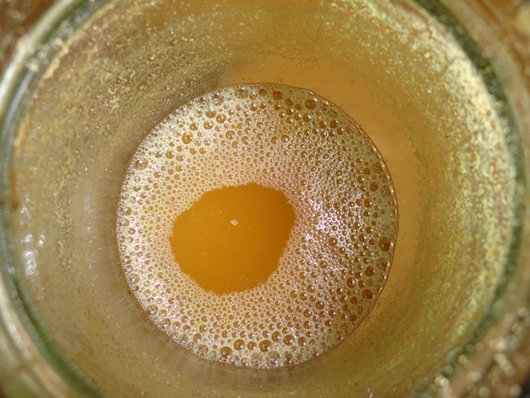
Peel and grate the ginger. Grating is better than slicing because the greater surface area you have, the better the flavour. Place the grated ginger, water, sugar and lemon in a saucepan and bring to the boil. Stir to make sure all the sugar dissolves. Turn off the heat, put the lid on the saucepan and leave on the stove top over night. The next morning, strain the ginger liquid through a strainer, sitting in a jug. Pour the ginger cordial into clean bottles and store it in the fridge. If you want to store the cordial for a while, sterilise the bottle before filling it.

To make up a drink, pour a small amount of ginger cordial into a glass and fill the glass with cold natural mineral water or soda water. Add ice, mint leaves or a lemon slice.

I have some exciting news to share tomorrow.  See you then. : - 0
Hello my friends. I was away longer than I thought I would be. I had a much needed rest, started a new Maggie rabbit, prepared a few things for Christmas, did some gardening and ironing, cleaned the fridge and oven, reorganised my tea towel drawer and had a few afternoon snoozes in my comfy arm chair in the lounge room.  I feel refreshed and ready for anything. Which is good because my god daughter Casey and her partner Kerry have just had their first child, a beautiful baby girl called Marlee.  So it looks like there will be another Maggie soon.

(Above) I took all the tea towels, tea cosies, jug covers and pot holders from the drawer and dumped them on the kitchen bench. (Below) Then sat with Jamie at the table looked at all the older tea towels, moved some to the rag bag and re-folded the rest.

 And now we have a tidy drawer again.

Today and tomorrow I'll be preparing a bedroom for our after Christmas guests, finishing off the second Maggie, wrapping one last gift, hopefully having a haircut and tidying up the front and back verandahs. It's always a busy time of year but one that I look forward to because we get together with family and friends, relax, watch cricket, reflect, plan and wait for another year to start. There is all that time just around the corner waiting for us to fill in the hours and make the most of what it can be. Thinking about what we want to happen and planning for it gives us a map to follow through the months and when life gets busy again, we just have to follow our map.


I finished knitting a pink apron last night and today I'll attach the apron straps, knit the shawl and make the boots.

I hope you're all getting through your Christmas chores or finishing up at work before a couple of week's summer holidays. Soon in Australia, there'll be camping, long trips to visit relatives, cricket, swimming, cold drinks on hot days and plenty of memories being made. I can picture my friends in the northern hemisphere making soup, walking around the house in their slippers and settling down in front of the fire with warm drinks and craftwork. What will you be doing this week? Is there snow falling silently? Are you enjoying the excitement of the season or pretending it's not happening? 

I'll be back tomorrow and Wednesday when I'll have a something exciting to show you. :- )


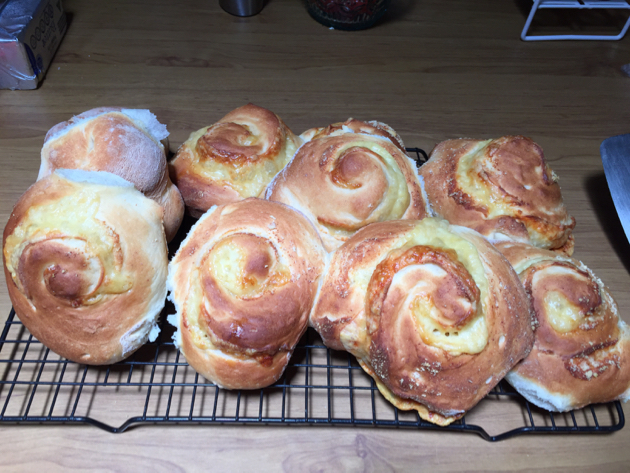
It's been a while since I wrote about bread. We don't eat as much bread as we used to when we had sandwiches for lunch. We have our main meal at lunch time now so I usually only need bread for toast and breadcrumbs. But Hanno loves rolls, especially cheese rolls, and every so often I bake a batch.  These are easy to make and would be a good addition to your lunch boxes or, as a smaller roll, for the Christmas table. I'm linking this to the forum so you can ask questions and, hopefully, share your photos when you've made a batch.

Even if you're a new baker, this should be within your capabilities because the dough is made in a bread maker and then baked in the oven. But you can make them by hand as well. After mixing, you must knead the dough for at least ten minutes. Kneading the dough develops the gluten which helps the bread rise.


  CHEESE ROLLS   - makes ten large rolls

You'll need:
2 heaped teaspoon dried yeast
About 1 ½ cups half water/half milk - warm You might need more but start with this amount and see how you go. It will depend on your flour and the humidity in the air.
2 teaspoons sugar (optional) it adds extra flavour.

2 teaspoons salt
4 cups of baker's flour - also known as high protein flour or strong flour. You can buy this at the supermarket or your local shop selling loose flour and dry goods. I used white flour for these rolls, you can use whatever baker's flour you like. Soon I'm going to do a trial with spelt flour.
2 teaspoons of bread improver. I generally don't use this in my bread but adding the cheese weighs the dough down and it needs some help to rise. Here is information about bread improver. You can buy it at the supermarket. If you don't want to use bread improver, use 2 teaspoons of cornflour, but you won't get the light dough the bread improver will give you.
1 tablespoon soft butter or olive oil

Cheese of your choice - I used eight thin slices of Jarlsberg and a sprinkling of parmesan. You use 1½ - 2 cups of grated cheese and add a sprinkling of ham if you want.

Before you start, warm one cup of half water and milk to blood temperature, then add the yeast and sugar and stir it well. Leave the yeast for five minutes to start blooming. If the yeast is active, after a few minutes, bubbly froth will start developing on the top of the liquid. If that doesn't happen, you'll probably need to buy new yeast.

You can see here how fine the crumb is on these rolls.

In the bread maker bucket and in this order, add the salt, flour, bread improver and butter/oil. Add the yeasty milk and turn the machine on to the dough setting. Wait there and watch it and add more warm water and milk to make a moist, but not wet, dough. You have to judge how much liquid to add, it could be more or less that I've allowed for. Some flour needs more liquid, some needs less, and the weather conditions make a difference too. When you're satisfied that the dough is right, leave it to run through the cycle.

When the dough is ready, remove it from the machine and place it on a floured surface. The dough will be fairly soft and pliable because you added the butter/oil. Knock the dough back by flattening it out with your hands and when you have a rectangle, roll with a rolling pin. If it's easier for you to handle half, cut the dough in two and work with two seperate batches. You want it to be between 1.5 - 3 cm or ½ - 1 inch thick. The rolling process is similar to making cinnamon rolls or a Swiss roll. Sprinkle the cheese over the top of the dough, right up to the edges, and then roll the dough into a big sausage shape. Try to keep the shape together, you may have to add another sprinkle of flour to stop it sticking. With a sharp knife, cut the sausage into 10 even slices and place each slice flat on your baking tray.

Allow the dough slices to rise for about 20 minutes - depending on the temperature of your kitchen, longer if it's cold. Ten minutes before you put the tray in the oven, preheat your oven to 220C/425F.

When the slices have risen, place the tray in the oven and turn the temp down to 200C/395F. Bake for about 15/20 minutes or until the bread is golden brown and it smells like bread.

I didn't think to take a photo when I was rolling the dough out but this photo shows a cold roll cut in half so you can see it's just a simple roll with a cheese layer.

These rolls are delicious and if you use the bread improver, they'll be light with an excellent crumb, even with the cheese layer. Here is the link to our thread at the forum. If you make the rolls and take a photo, add the photo over at the forum and if you have any questions, there are many experienced bakers there to help you along and I'll be in and out during the day to help as well.  I hope you try this.

It's that time of year again when I slow down a lot, think about what I've done this year and consider the worth of what I'm doing. In some years that process has lead to some big changes and in others I made none because the balance was right and life was going along nicely. I feel privileged to live as I do but I don't take it for granted because I know that life can change on a pin head for all of us. So I continue to look at what I do and prepare for change if its necessary.


When I'm in this period of self-evaluation, I like to think again about why I changed the way I live. I remember back to the old days of spending for the sake of it, of mindless shopping and wondering why what I had then didn't make me happy. Simple life is never easy for any of us but in my experience it still beats my old life hands down. Life makes me happy now so at the end of every year I put aside time to decide what is working, what isn't and what needs changing. There is no doubt that most of us make our simple lives easier if we plan and organise and you don't do that once. Life is never static, it's ever changing, and these yearly assessments will help you change as your life changes.


Planning a simple life is like writing a love letter to yourself. You can include what you want to include, you live by your own values, love who and what you love, develop your own usefulness and eventually you become the person you wanted to be in all those private moments of hoping for a life of grace and splendid simplicity. In times of contemplation and reevaluation I always aim for balance. I plan for what I think will happen during the year but I'm realistic enough to know not everything will follow that plan. I try to be flexible and tolerant and I forgive myself if I don't do the right thing at the right time.


Simple life is different for all of us although there are many common elements as well. Don't judge yourself in comparison to others because you'll always be comparing apples with bananas. There are some of us who think baking is symbolic of what we do and others who don't; some who count every penny making sure they pay the least amount for everything and others whose aim is value for money; there are many of us who work our land and think it's a fundamental part of simplifying and many who have no land, no time and no inclination for growing food; there are list makers and those who plan by following patterns and rhythms. I could go on but I'm sure you get my meaning. How you think about your life, what you do on your ordinary days, what you find value in and what you seek sets you apart.

Deciding to take control of what you do instead of being led by advertising and what your friends think is a liberation that will define your days and what you want for yourself. And what elements you control and how you go about it should be the result of understanding your own circumstances and needs rather than anyone, including me, telling you what will work.


I can tell you that for me, the work I do here helps me create a home that satisfies my need for occasional isolation from the outside world. I can tell you that for me, focusing on my work here helps me slow down but still get everything done. I can show you photos of my rooms and where we sit at our kitchen table, I can show you the plants we grow and what I sew and type out old recipes to share with you but all those things should guide you, not force you to do what I do.


Copying what I do or someone else does, or mindlessly following what is in a book or on a website is the same as listening to advertising - it's someone else's version of life based on their own experience. If I can pass on anything of value to you it would be to work hard and live your own experiences, develop a sense of generosity and kindness, build your life with what feels right for you and choose your influencers carefully. The true prize here is living your own authentic life and that's the result, not of advertising or what others value, but what you plan for yourself and what you work towards. So when you write that love letter to yourself, you need to be at the centre of it because you will do all the work to make it happen. The advertisers and all those who think that one size fits all will be long gone then. It will just be you, me and the chooks.  ♥︎

I've shared this poem before, but here it is again for those who didn't catch it the first time.

I have found joy in simple things
by Grace Noll Crowell

I have found joy in simple things
A plain clean room, a nut-brown loaf of bread,
A cup of milk, a kettle as it sings,
The shelter of a roof over my head,
And in a leaf-laced square along the floor,
Where yellow sunlight glimmers through a door.

I have found such joy in things that fill
my quiet days: a curtain's blowing grace
A potted plant upon my sill,
A rose fresh-cut and placed within a vase,
A table cleared, a lamp beside a chair,
And books I have long loved beside me there.
Well, the first week of summer has been and gone and was marked in my traditional way - eating fresh yellow peaches. I think many of us mark the changing of the seasons with different foods and for me, everything about those first golden peaches says summer, heat, knitting and cricket. The heady aroma, the sight of peaches sitting in a bowl, the temptation to buy a tray of them and make peach jam. It's all there to tell me that Christmas is on the way and for the next three months there will be peaches to enjoy.

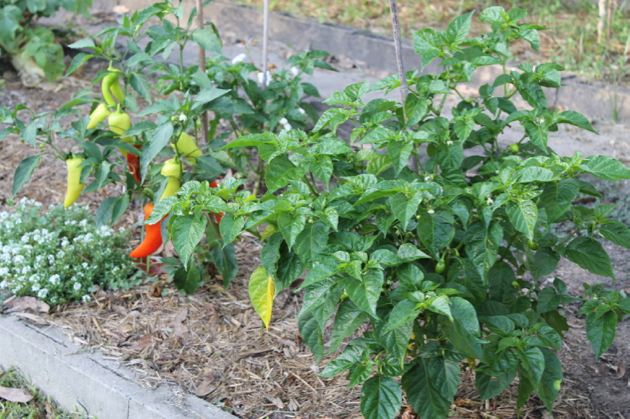
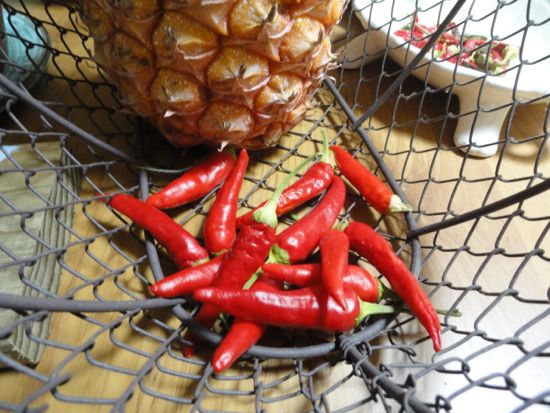
These chillies are the extremely hot and small Trinidad Scorpion and next to them and below, the mild large yellow Hungarian wax pepper. They turn orange when they ripen.

I've been busy with the library talks over the past two weeks and have the last two this week at Caloundra and Maroochydore. It's been a real pleasure to meet so many people interested in creating a simple Christmas for their families. I've noticed a real change this year in the number of people coming along to the talks and the enthusiasm they've taken on their various life changes. Mindsets are shifting and that has to be a good thing. I've taken Maggie the rabbit with me to the talks. She travels inside a calico bag and rides in my red shopping trolley then sits on the table during the talks. She's version 3 now; I changed the shoe laces on her boots from embroidery cotton to hemp string. I've decided to make another one before Christmas for another little girl I know so during this week, I'll gather my materials and then sew and dress her next week. I'm looking forward to going through the process again. I'll take photos so you can see her.


Meanwhile, out in the chook house, the girls are diligently sitting on eggs and refuse to be moved. These are three breeds we won't keep again because of their tendency to brood - Australorps, Wyandottes and this particular Frizzle, which I think is a Rhode Island Red cross. They're wonderful if you intend to raise your own chooks but not so wonderful if you don't.

Outside in our backyard, the hot weather is taking its toll on our vegetable garden and, as usual, there are broody chickens sitting on eggs that will never hatch. The cucumbers have finished and been pulled out, blight has taken hold of the Rapunzel tomatoes, the lettuce in the ground has all bolted to seed in the heat and the flat leaf parsley is forming flowers. But on the other hand, the first of the rosellas are on the bushes, chillies and capsicums are growing like wild fire and the raspberries canes have reached the top of the trellis. And as usual, the rosemary, sage, curly parsley, Welsh onions, comfrey, oregano and kale are all loving the heat and growing strong. There are more than enough blueberries and passionfruit too, they're not quite ready to pick yet, but it won't be long.

 Passionfruit above and raspberries below.

I'm also caring for a trough of baby lettuce in the bush house. When our lettuce go to seed in summer, these troughs keep us going for another six weeks. They only get a couple of hours of sun in the early morning, the rest of the day they're under 80 percent shadecloth. They're a handy crop to have in summer and instead of buying lettuce, I just go outside with my scissors and cut a bowl full of baby leaves.

As soon as these tomatoes are picked, we'll rip out the blight effected vines and let the soil rest for a few months.


Nothing can kill this kale. It will go on and on over summer and still be there in winter. It happily grows alongside the herbs.
The rosellas are flowering but still have a long way to go before we have enough of them for jam, cordial and tea.

After Thursday, I have no engagements, no deadlines, no articles to write. I'm a free agent for a couple of months and I'm looking forward to that a lot. I have a few projects to make, some gardening to do and a little bit of cleaning but apart from that I'll be relaxing along with the rest of you over the summer holidays. I won't write the blog for a couple of weeks over Christmas but will be here when I can be until then.  I hope you're looking forward to the holidays too, and if you're in a colder climate, that you've got your fires burning. How I envy you that time you'll have in front of your fire. But we'll be sitting here clinking our iced drinks, knitting with feet up and watching the Boxing Day cricket test. (Hello Sue.) Good times!

Newer Posts Older Posts Home


My books were all published by Pengiun, and are available at Amazon US, Amazon UK and Amazon Au

Search here

Total Pageviews

Translate


I'm Rhonda Hetzel and I've been writing my Down to Earth blog since 2007. Although I write the occasional philosophical post, my main topics include home cooking, happiness and gardening as well as budgeting, baking, ageing, generosity, mending and handmade crafts. I hope you enjoy your time here.

MY FAVOURITE PLACES

  • Grandma Donna's Place
  • Grandma Donna's YouTube
  • Grandma Donna's Instagram
  • This Simple Day
  • Nicole's Instagram

Give More

Give More

Popular posts last year

Making ginger beer from scratch

We had a nice supply of ginger beer going over Christmas. It's a delicious soft drink for young and old, although there is an alcoholic version that can be made with a slight variation on the recipe. Ginger beer is a naturally fermented drink that is easy to make - with ginger beer you make a starter called a ginger beer plant and after it has fermented, you add that to sweet water and lemon juice. Like sourdough, it must ferment to give it that sharp fizz. To make a ginger beer plant you'll need ginger - either the powdered dry variety or fresh ginger, sugar, rainwater or tap water that has stood for 24 hours to allow the chlorine to evaporate off. You'll also need clean plastic bottles that have been scrubbed with soap, hot water and a bottle brush and then rinsed with hot water. I never sterilise my bottles and I haven't had any problems. If you intend to keep the ginger beer for a long time, I'd suggest you sterilise your bottles. MAKING THE STARTER In a...
Image

NOT the last post

This will be my last post here.  I've been writing my blog for 18 years and now is the time to step back. I’ve stopped writing the blog and come back a couple of times because so many people wanted it, but that won’t happen again, I won’t be back.  I’ll continue on instagram to remain connected but I don’t know how frequent that will be. I know some of you will be interested to know the blog's statistics. 
Image

How to make cold process soap

I'm sure many of you are wondering: "Why make soap when I can buy it cheaply at the supermarket?" My cold process soap is made with vegetable oils and when it is made and cured, it contains no harsh chemicals or dyes. Often commercial soap is made with tallow (animal fat) and contains synthetic fragrance and dye and retains almost no glycerin. Glycerin is a natural emollient that helps with the lather and moisturises the skin. The makers of commercial soaps extract the glycerin and sell it as a separate product as it's more valuable than the soap. Then they add chemicals to make the soap lather. Crazy. Making your own soap allows you to add whatever you want to add. If you want a plain and pure soap, as I do, you can have that, or you can start with the plain soap and add colour, herbs and fragrance. The choice is yours. I want to add a little about animal and bird fat. I know Kirsty makes her soap with duck fat and I think that's great. I think t...
Image

Preserving food in a traditional way - pickling beetroot

I've had a number of emails from readers who want to start preserving food in jars but don't know where to start or what equipment to buy.  Leading on from yesterday's post, let's just say up front - don't buy any equipment. Once you know what you're doing and that you enjoy preserving, then you can decide whether or not to buy extra equipment. Food is preserved effectively without refrigeration by a variety of different methods. A few of the traditional methods are drying, fermentation, smoking, salting or by adding vinegar and sugar to the food - pickling. This last method is what we're talking about today. Vinegar and sugar are natural preservatives and adding one or both to food sets up an environment that bacteria and yeasts can't grow in. If you make the vinegar and sugar mix palatable, you can put up jars of vegetables or fruit that enhance the flavour of the food and can be stored in a cupboard or fridge for months. Other traditional w...
Image

Cleaning mould from walls and fabrics

With all this rain around we've developed a mould problem in our home. Usually we have the front and back doors open and that good ventilation stops most moulds from establishing. However, with the house locked up for the past week, the high humidity and the rain, mould is now growing on the wooden walls near our front door and on the lower parts of cupboards in the kitchen. Most of us will find mould growing in our homes at some point. Either in the bathroom or, in humid climates, on the walls, like we have now. You'll need a safe and effective remedy at some point, so I hope one of these methods works well for you. Mould is not only ugly to look at, it can cause health problems so if you see mould growing, do something about it straight away. The longer you leave the problem, the harder it will be to get rid of it effectively. If you have asthma or any allergies, you should do this type of cleaning with a face mask on so you don't breathe in any spores. Many peopl...
Image

Five minute bread

Bread is one of those foods that, when made with your own hands, gives a great deal of satisfaction and delight. It's only flour and water but it symbolises so much. I bake bread most days and use a variety of flours that I buy in bulk. Often I make a sandwich loaf because we use most of our bread for lunchtime sandwiches and for toast. Every so often I branch out to make a different type of loaf. I have tried sour dough in the past but I've not been happy with any of them. I'll continue to experiment with sour dough because I like the idea of using wild yeasts and saving the starter over a number of years to develop the flavour and become a part of the family. However, the loaf I've been branching out to most often is just a plain old five minute bread. By five minutes I mean it takes about five minutes actual work to prepare but it's the easiest of all bread to make and to get consistently good loaves from. If you're having people around for lunch or...
Image

This is my last post.

I have known for a while that this post was coming, but I didn't know when. This is my last post. I'm closing my blog, for good, and I'm not coming back like I have in the past.  I've been writing here for 16 years and my blog has been many things to me. It helped me change my life, it introduced me to so many good people, it became a wonderful record of my family life, it helped me get a book contract with Penguin, and monthly columns with The Australian Women's Weekly and Burke's Backyard . But in the past few months, it's become a burden. In April, I'll be 75 years old and I hope I've got another ten years ahead. However, each year I'll probably get weaker and although I'm fairly healthy, I do have a benign brain tumour and that could start growing. There are so many things I want to do and with time running out, leaving the blog behind gives me time to do the things that give me pleasure. On the day the blog started I felt a wonderful, h...
Image

What is the role of the homemaker in later years?

An email came from a US reader, Abby, who asked about being a homemaker in later years. This is part of what she wrote: "I am a stay-at-home mum to 4 children, ages 9-16. I do have a variety of "odd jobs" that I enjoy - I run a small "before-school" morning drop-off daycare from my home, I am a writing tutor, and I work a few hours a week at a local children's bookstore. But mostly, I cherish my blissful days at home - cooking, cleaning (with homemade cleaners), taking care of our children and chickens and goats, baking, meal-planning, etc. This "career" at home is not at all what I imagined during my ambitious years at university, but it is far more enriching. I notice, though, that my day is often planned around the needs of my family members. Of course, with 4 active kids and a husband, this is natural. I do the shopping, plan my meals, cook dinner - generally in anticipation of my family reconnecting in the evening.  I can't h...
Image

Every morning at home

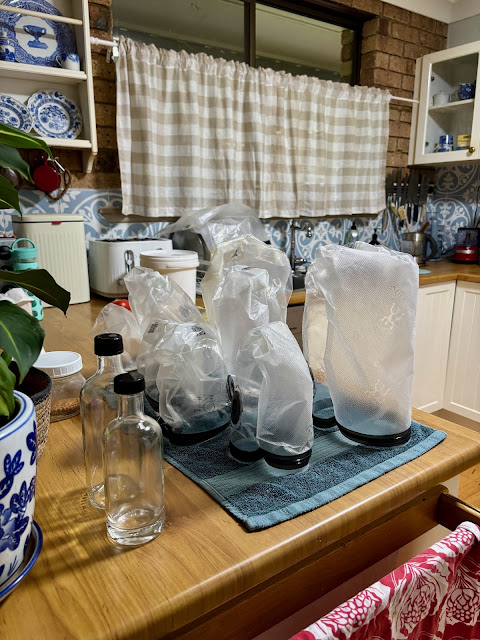
Every morning when I walk into my kitchen it looks tidy and ready for a day's work. Not so on this morning (above), I saw this when I walked in. Late the previous afternoon when I was looking for something, I came across my rolled up Zwilling vacuum bags and decided they had to be washed and dried. So I did that and although I usually put them outside on the verandah to dry it was dark by then. I turned the just-washed bags inside out and left them like this on a towel. It worked well and now the bags are ready to use when I bring home root vegetables, cabbages or whatever I buy that I want to last four or five weeks.
Image

You’ll save money by going back to basics

When I was doing the workshops and solo sessions, I had a couple of people whose main focus was on creating the fastest way to set up a simple life. You can't create a simple life fast, it's the opposite of that It's not one single thing either - it's a number of smaller, simpler activities that combine to create a life that reflects your values; and that takes a long to come together. When I first started living simply I took an entire year to work out our food - buying it, storing it, cooking it, preserving, baking, freezing, and growing it in the backyard. This is change that will transform how you live and it can't be rushed.  
Image


Trending Articles

NOT the last post

This will be my last post here.  I've been writing my blog for 18 years and now is the time to step back. I’ve stopped writing the blog and come back a couple of times because so many people wanted it, but that won’t happen again, I won’t be back.  I’ll continue on instagram to remain connected but I don’t know how frequent that will be. I know some of you will be interested to know the blog's statistics. 
Image

Every morning at home

Every morning when I walk into my kitchen it looks tidy and ready for a day's work. Not so on this morning (above), I saw this when I walked in. Late the previous afternoon when I was looking for something, I came across my rolled up Zwilling vacuum bags and decided they had to be washed and dried. So I did that and although I usually put them outside on the verandah to dry it was dark by then. I turned the just-washed bags inside out and left them like this on a towel. It worked well and now the bags are ready to use when I bring home root vegetables, cabbages or whatever I buy that I want to last four or five weeks.
Image

You’ll save money by going back to basics

When I was doing the workshops and solo sessions, I had a couple of people whose main focus was on creating the fastest way to set up a simple life. You can't create a simple life fast, it's the opposite of that It's not one single thing either - it's a number of smaller, simpler activities that combine to create a life that reflects your values; and that takes a long to come together. When I first started living simply I took an entire year to work out our food - buying it, storing it, cooking it, preserving, baking, freezing, and growing it in the backyard. This is change that will transform how you live and it can't be rushed.  
Image

Creating a home you'll love forever

Living simply is the answer to just about everything. It reduces the cost of living; it keeps you focused on being careful with resources such as water and electricity; it reminds you to not waste food; it encourages you to store food so you don't waste it and doing all those things brings routine and rhythm to your daily life. Consciously connecting every day with the activities and tasks that create simple life reminds you to look for the meaning and beauty that normal daily life holds.  It's all there in your home if you look for it. Seemingly mundane tasks like cleaning and cooking help you with that connection for without those tasks, the home you want to live in won't exist in the way you want it to.  Creating a home you love will make you happy and satisfied.
Image

Time changes everything

I've been spending time in the backyard lately creating a contained herb and vegetable garden. My aim is to develop a comfortable place to spend time, relax, increase biodiversity and encourage more animals, birds and insects to live here or visit. Of course I'd prefer my old garden which was put together by Hanno with ease and German precision. Together, we created a space bursting at the seams with herbs, vegetables and fruity goodness ready to eat and share throughout the year. But time changes everything. What I'm planning on doing now, is a brilliant opportunity for an almost 80 year old with balance issues. In my new garden I'll be able to do a wide range of challenging or easy work, depending on how I feel each day. It’s a daily opportunity to push myself or sit back, watch what's happening around me and be captivated by memories or the scope of what's yet to come.
Image

It's the old ways I love the most

I'm a practical woman who lives in a 1980’s brick slab house. There are verandahs front and back so I have places to sit outside when it's hot or cold. Those verandahs tend to make the house darker than it would be but they're been a great investment over time because they made the house more liveable. My home is not a romantic cottage, nor a minimalist modern home, it's a 1980’s brick slab house. And yet when people visit me here they tell me how warm and cosy my home is and that they feel comforted by being here. I've thought about that over the years and I'm convinced now that the style of a home isn't what appeals to people. What they love is the feeling within that home and whether it's nurturing the people who live there.
Image

Making ginger beer from scratch

We had a nice supply of ginger beer going over Christmas. It's a delicious soft drink for young and old, although there is an alcoholic version that can be made with a slight variation on the recipe. Ginger beer is a naturally fermented drink that is easy to make - with ginger beer you make a starter called a ginger beer plant and after it has fermented, you add that to sweet water and lemon juice. Like sourdough, it must ferment to give it that sharp fizz. To make a ginger beer plant you'll need ginger - either the powdered dry variety or fresh ginger, sugar, rainwater or tap water that has stood for 24 hours to allow the chlorine to evaporate off. You'll also need clean plastic bottles that have been scrubbed with soap, hot water and a bottle brush and then rinsed with hot water. I never sterilise my bottles and I haven't had any problems. If you intend to keep the ginger beer for a long time, I'd suggest you sterilise your bottles. MAKING THE STARTER In a...
Image

An authentic look at daily life here — unstaged and real

Most days Hanno was outside happily working in the fresh air. It may surprise you to know that I started reading my book,  Down to Earth , yesterday - the first time since I wrote it 13 years ago.  I had lent it to my neighbor, and when she returned it, I started reading, expecting to find surprises. Instead, I realised the words were still familiar—as if they were etched into my memory. As I flipped through the pages, I was reminded of how important it was for me to share that knowledge with others. The principles in Down to Earth changed my life, and I truly believed they could do the same for others. After just 30 minutes of reading, I put the book down, reassured that its message still holds true: we can slow down and reshape our lives, one step at a time.
Image