down to earth

  • Home
  • About Us
  • Down To Earth Book
  • Privacy Policy
Every week from now on I'm including links to two regular commenters on my blog in my weekend read post. It helps spread the love around and is a little thank you from me for taking the time to contribute on a regular basis.  This week they are:

Jamie's NGO Farm - a family working towards living off the land

When you visit here, read A Hairy Concern, it contains some wisdom from The Accidental Housewife that I wish I'd written: I will teach them to be wise, so that they can choose their own path. 

Great recipes at the Smitten Kitchen

Just in time for our winter, another great knitting site This was linked to at the forum by Nannyrai during the week and too good not to pass on.

A Farm for the Future - you tube

Charity shops are thriving.

Orang-utans are dying.

And bees are getting lost.

Another week has gone by and we move closer to cooler temperatures down here. And that means it's Spring time for the majority of the world's population. I hope you're all enjoying the change of seasons.  Thank you for visiting this week, enjoy what you do this weekend and be kind to yourself.
Just a short post today because I'm a bit busy, but I do have a few things to update you on. 

Most readers would know that Sharon was very sick last year and a couple of times we thought we might lose her. It was really frightening but thankfully she survived after a long stay in hospital. She's been back helping me behind the scenes here, especially with the apron swap, and on the forum, but she's still sick and may have to go back to hospital. She's also supporting another member of her family in their illness. I would like everyone to give Sharon a cyber hug and let her know how much we appreciate her and her work here. I can honestly tell you that she gives me a lot of support behind the scenes and she really does help keep this place going. Thanks Sharon. I send love and hugs to you and your mob over there! Get well soon.

Sunny and Jamie watching the chooks.  : - )

Okay, now I'll surprise you all by telling you that Jamie will be one year old on Saturday. How fast has that time gone! Sunny's mum, Sunja Cho, is here with Sunny's sister and nephews at the moment, so we'll be having a party on the weekend to celebrate Jamie's first year - it will be our family as well as Sunny and Kerry's friends. We'll catch up with Shane, Sarndra and Alexander too. We're all looking forward to it. 

Our New Hampshire chickens are laying now and giving us an egg a day each.  Chooks are such a joy to watch and when they give you delicious fresh eggs every day, they also play a valued part in the backyard food production.

My column in the Women's Weekly doesn't appear this month. When full page ads come in late, a single page column is taken out to accommodate it. This month is was my turn. I'll be back next month. Make sure you give WW some feedback on their site or on Facebook. Just like all of us publishing on a regular basis, we like to know if what we're producing is worthwhile and helpful.

You all know my Friday post is all links - some to interesting reading somewhere in the web, some to other blogs. I try to send you off to blogs that I find interesting and are well presented, to do otherwise would be misleading. Often when I read blogs I am disappointed they receive so few readers. Both Hanno and I read the comments every day and he often follows the links back to your blogs and tells me when he finds something of interest. I've decided that in addition to the links I already give you, I'm going to check out a lot more of the people who comment here regularly. So from now on, I'll link to a couple of blogs who have commented here during the week. I hope to spread the love around and find some interesting people and ideas in the process.

If you have an Australian Blogger blog and have been struggling to find your editing tools (the little screwdriver and pencil) since they added the "au" to your blog address, there is a solution. Just open your blog, go to the address bar and delete the ".au/". Then type in its place "/ncr". That stand for no country redirect, it will keep your blog just as a ". com" blog and your editing tools will return. But you will have to do it everyday. I haven't worked out yet how to make it permanent.

I washed the hoops yesterday, everything else is ready. 

BTW, I'm busy today because I'm making camembert, yoghurt and sour cream. This is only my second batch of camembert, the first years was ago. I thought it was about time to dive into curds and whey again. I have milk from a local dairy that I bartered for a whole orange cake. :- ) My kitchen dairy will be in full swing after breakfast. Wish me luck. 

After sorting through all the comments, and because some swappers did not communicate with their partners or decided not to participate after all, I have had to update the apron swap list as follows. If you do not find your name on this list, it is because I have had to re-pair several swappers (and in the process remove those that did not communicate). Here's the list:

Jessica jessica.bunneh (at) gmail (dot) com AND Ellen 3kidsanderson@gmail.com
Brenny brendadotseaderatgmaildotcom AND Jacinta jchute3 at bigpond dot com
Bel spiralbel at gmail dot com AND Beulah bfields at gmail dot com
Jacqui rjblhadams(at)y7mail(dot)com AND Rozann rozylass at gmail dot com
Carla moraliaweblog (at) yahoo (dot) ca AND Clarien Clarien at zonnet dot nl
Rozlyn rozlynchidgeyatiprimusdotcomdotau AND Denise shllwbrk at msn dot com

PS. Melissa in Costa Rica, please leave your email in the comments after this post as soon as possible for a possible swap partner.

Sharon
I guess that most people reading here every day would be working people - either out in the wide world earning money and/or at home running the household in ways to save it. I am proudly working class; work is part of my core, it's something I expect to do most days, but most of the work I do nowadays is not for money, it's to maintain the way I love to live. It may sound strange to some but I think that working for what you need and want makes you treasure it more, it has meaning because you know the hours of toil that went into it. And yet it seems to me that we have gone off the rails a bit with work. Many of us will work until we drop because we have too much debt to retire earlier. 


I believe that most of us work to get together our life's assets and to buy a house to live in, or to rent one. We might also buy a car. Once we have our assets, we work steadily to pay off the debt we acquired to buy it all. We hope to stay employed, we cut back and save what we can and if we're lucky, the mortgage is paid off earlier than planned and a few years later the credit card and car are all squared away. This kind of debt management is entirely possible, Hanno and I paid off our 20 year mortgage in eight years and have lived debt-free for many years.

But somewhere along the way, a whole generation fell for the idea that buying everything you want on a credit card is normal; encouraged in that by banks looking for higher profits and advertising promising happiness in a pair of shoes, a flash car, diamond earrings, or a jet ski, etc etc etc. It saddens me that many of these good honest people realise too late that they're in over their heads and they'll be working far into the future to pay for today's must-haves. Long after the bling has lost its shine, it is still being paid for.


There is a better way, although it requires sacrifice and hard work. It requires that we cut back on our desires, stop listening to best friends and focus on slowing down and living well rather than expecting to have it all, and then working to pay for it.

There is only one sure way to financial security. Spend less than you earn. One of the things that can delay paying off debt is paying more for the things you use a lot of, or for convenience foods. And by convenience I mean washed salads, processed food, pre-cooked frozen meals, tinned soups, as well as takeaway and fast food, and a whole array of foods that seemed to be a good idea at the time because they cut down on preparation and cooking time but they cost more and therefore add to the cost of living. When you're paying off debt, you want to reduce your cost of living, not raise it. Get back to basics and buy unprocessed foods, cook from scratch and reap the benefits - both in your health and in the money saved.

There is a decision to be made here. Do you work less so you have the time to do some things yourself or do you work more so you have the money to pay for everything you want? Your answer to that question will depend on whether you want to work your whole life so you can buy every thing you want and need, or whether you see value is cutting back on your wants so you have more time to enjoy life. 


You will never see an advertisement suggesting caution and prudence. On the contrary, they encourage excess and acquisition at any price. So I am going to encourage you to look beyond today, think about all those months you'll be handing over money to pay for what you buy today. Try to cut the cost of living and pay your debts off as fast as you can. Don't be conned into buying too much, expect to work hard for what you have, expect to do your fair share and think about saving rather than spending - not just this week or next, but far into the future too. Because if you can get off the debt roller coaster, if you stop spending just because you can, if you knuckle down and get serious about debt reduction, you will be able to retire sooner rather than later and just live. It may be with less "stuff" but it will be on your own terms and you'll own your life. I hope you find a plan of attack, encouragement and support in my group of budgeting posts here.

It all starts with a commitment to your own future, a clear vision about how you'll reduce debt and then the determination to get back on track and out of the clutches of the bank. I wish you the best and I'd be interested in hearing your story.

Kristen has done a review of my book and is generously giving away a copy of my book to Australians only. You can find her blog here for the details. The giveaway finishes next Monday. 


According to the Wikipedia, value adding refers to "extra" feature(s) of an item of interest (product, service, person etc.) that go beyond the standard expectations and provide something "more" while adding little or nothing to its cost.


I like to think that Hanno and I have added value to our lives simply by the way we live.

I often think back to a young woman who attended one of my workshops at the neighbourhood centre. She listened intently to everything said, then right at the end, she said: "You mean to tell me we don't have to live like this?" "No," I said, "you can live however you see fit." She was astounded. She'd never considered the possibility that life may be lived beyond the consumerist model. There is a choice to be made here. You either go with the flow, do what is expected of you, don't make waves and be the mirror image of all the people your age, or you can step outside that mainstream bubble, make your own decisions, envision the life you want, then work to make it happen.

You can add value to your life and make it better.  Much better.


You will make choices every day you're alive. Will I get up at 7am or 8? Eat breakfast or have a cup of tea?  Get married, or remain single. Spend or save? Live according to your values or go along with everyone else? I have never been a follower, and regardless of the consequences, I've always gone for the interesting option rather than the safe one. I have lived a most remarkable life and I think one of the main reasons for that is that I don't take the easy option and often the paths I walk along are not main roads, they're back streets. I am convinced that those back streets and all I experienced along them, added value to my life.


There are certain questions you can ask yourself and  what you do as a consequence of your answer may help change your life and might also add value to it. 
  • Can I learn how to do for myself or will I continue to buy convenience?
  • Am I strong enough to take on my debt and pay it off as fast as I can?
  • Will I make my own cleaners?
  • Will shopping in a different way and stockpiling save me money and time?
  • Should I grow vegetables?
  • Should I learn how to knit and mend?
  • How can I set up an effective recycling system so I can cut down on the waste products leaving my home?
  • Will I try to become more self reliant?
  • What will make me happy?
  • What can I do today that will make my life better?
Simplifying your life isn't just about the practical things you do every day - although that is a big part of it - it's also about creating a better life for yourself, discovering your own level of "enough" and being prepared to step outside your comfort zone and reconnect with real life again.

One thing is for sure, if you do change how you live, those life changes have the potential to make you content and satisfied. I well remember when I first started working in my home, making soap, cooking from scratch, baking fresh bread every day, it made me feel so alive! Simple things like cleaning the floors and rearranging furniture and appliances to better suit how I worked, made me feel that what I was doing really mattered and that I had regained control of my life. Decluttering opened up my life to let new possibilities in. In the space of one week I went from avoiding housework and thinking it was below me, to being challenged by it, and wanting to make my home a haven for me and my family. Doing what I had believed to be menial work was the making of me. I felt that if I could get my house in order, get back to healthier living, become more self-reliant, and strategise how to shop in a more mindful way, we would all be better for it. I regained the desire to care for my family and we all reconnected and became stronger because of it. That same desire slowed me down enough to let the stress melt away. Here in my home, I learnt how to live well, without many of the modern conveniences that prop us up and that we pay for with our lives.

I am not going to tell you that this is easy, because it's not. It can be time consuming and, at times, difficult. But you know what? It makes you happy, it helps you believe in your own abilities again, it makes you believe you can do almost anything; and maybe you can. I remember when frozen peas first came on the market, and when TV started, those two things went on to convince us all that we would save a lot of time buying convenience foods. Then we all got credit cards and started a whole new form of problematic behaviour. At the time we were told that all these new things would make our lives better. What we weren't told was that we'd have to work more to pay for things to be done for us, work more to pay for clothes and jumpers because we were too busy working to make them ourselves. Now, on top of those things we work to buy, we work more to pay for people to wash our lettuce leaves and cook or partially cook our food, to fabricate and package cleaning rags that we use instead of cutting up our own, we work more to buy chemical cleaners and laundry products that probably add 20 or 30 dollars to the grocery bill when we could use vinegar, bicarb, soap, borax and washing soda that cost a fraction of that.


And the good part is that you don't have to dive into this full-time like I did. If you're younger and don't have the time I have, you can do it your way. Just fit a few of these things into your life around what you're already doing. Do what you have the time to do. Making bar soap will take about 30 minutes to make enough soap for a family of four for about three months. It will take about 15 minutes to make enough laundry liquid to do that same family for 80 machine washes. Cook from scratch on the weekends. Start packing school and work lunches and drinks. Do the small things first and see how it makes you feel and how much you save.


Stepping back from convenience, being content with less and learning a few old skills has the potential to change your life. I know that to be true because that is what happened to me and it added value to my life. I hope you decide to dip your toe in these simple living waters and realise you can add value to yours too.


When we returned from the book tour, I received emails from two readers eager to know what I bought while I was away. I thought it was quite odd to assume I'd bought anything seeing as I write about moving away from a consumerist mindset. And mindset really is the key word here - you need to have thought about your spending and materialism and have turned your back on it for this kind of life to be your new "normal". That is not saying that I will never buy anything frivolous again, it's saying instead that I only buy necessities and what will give me pleasure, and therefore enhance my life.

Bottoms up!

So, where did we shop while we were away for those two weeks? Well, we went to book shops, naturally, to sign books. While I was in two of those book shops I bought a packet of stationery in one and two cards in another. They were for thank you notes to send to people who had gone out of their way to help us during the trip.  We also bought Hanno a new pair of shoes when the ones he brought with him cracked along the sole. We bought food and drinks to sustain us - these were generally bought at small supermarkets and market stalls along the way.

I know what you're thinking - surely she bought more than that! Well, yes, I did, and I'm still not sure what category I'd place these purchases - necessities or pleasure; I think they're both. I need a pair of new slippers for winter. I wanted to buy real Ugg slippers and had already priced them on the Sunshine Coast. Too expensive. I wanted quality but I knew I could get quality at a better price so I was prepared to wait. When we moved here I bought a pair of real Uggs. They lasted me for eight years. Then I bought cheap slippers, and each time I did, they lasted about two years. I wanted to get back to the Uggs - to buy the best quality I could afford - but I wanted the price to be right. I found them at Blue Mountains Uggs at Faulconbridge. We bought a pair of Ugg scuffs for Hanno and a pair of short ankle Uggs for me - I like my slippers to cuddle my feet. Both are real sheepskin and wool. Both pairs together cost the same price I was quoted for one pair here. Well worth the wait.


The other thing I bought was a vintage potato masher. The one I had been using had a very long handle on it, much longer than any person would need. It is uncomfortable to use and doesn't do a great job. I wanted one like my mother used, although I didn't know that until I saw it sitting inside a beautiful vintage glass mixing bowl/jug. It cost $8 and has remnants of the old green paint on the wooden handle. This was made in the days before plastic. When I picked it up I felt like I'd picked it up a hundred times before. I bought it. When we came home, I soaked it in vinegar water for an hour, gave it a good scrubbing with hot water and soap, and added it to my kitchen utensils. It makes the best mash. 

I found this masher treasure in a place called Frou Frou in Springwood. My nephew Danny told me about this shop, I tried to get there last time I was in Springwood at Easter, but they were moving then and the shop was closed during my visit. If you're in the Blue Mountains and like vintage clothes and bits and pieces, it's well worth a visit. Just looking at the stock brought back a few memories for me and made me smile.

And that's it, folks. No big shopping spree, no souvenirs, just cards and a stationery set, shoes for Hanno to wear on the trip, Uggs and a potato masher. All necessities that will bring pleasure too; I reckon that's good shopping. We didn't need anything else and we certainly didn't go walking through shops looking for "stuff" to buy.

Are you having trouble stopping shopping? What are your downfalls? What are you doing to get back to frugality? Maybe you've found not shopping much easier than you imagined it to be. If so, tell me your story.
By now all of you should have contacted your swap buddies. Please be sure to check your bulk mail boxes and your spam boxes. If you have done this and not heard from your swap buddy they will be out of the swap and you will be paired with a new swap buddy. Leave a comment here in this post by tomorrow night so I can rework the buddy list as needs be. Robyn, I will start looking for a new buddy for you. Clarien, have you heard from your swap buddy yet?
Here is a link with ideas and tutorials about aprons for you to have fun looking at:

Have fun with these ideas. Hugs Sharon
My first link is to Gooseberry Jam's blog. Meet Laura, the newest baby born into this lovely family.

And speaking of beautiful babies, look at this swaddling blanket. I have two people very close to me who are having babies later in the year. I'll be making this.

There are a lot of new simple living blogs now, just shows how many people are making this important change. I found this new blog after following a trail. It's English, interesting and recommended.

If you're interested in Waldorf-inspired, simple living families in the UK, check out mamaUK.

You know I have a soft spot for Pickles. Here is their breezy sofa blanket. As usual, it's gorgeous.

Steve Jobs: How to live before you die


Another link suggested by pigsmightfly is gracelinks, but it is American, so best for the American readers.

Thank you for your visits and comments this week. Hanno and I were on two national TV programs this week so there have been a lot of new readers coming to the blog and flowing on to the forum. Welcome to the newcomers, I hope you read back through the archives and find what you're looking for. Have a beautiful weekend, everyone.


It's not just in the kitchen that we can all cook from scratch - we can do it outside too by making our own organic liquid fertilisers. These fertilisers are easy to make, are made using leaves and other organic matter in your own backyard, they're effective and they'll save you money. 

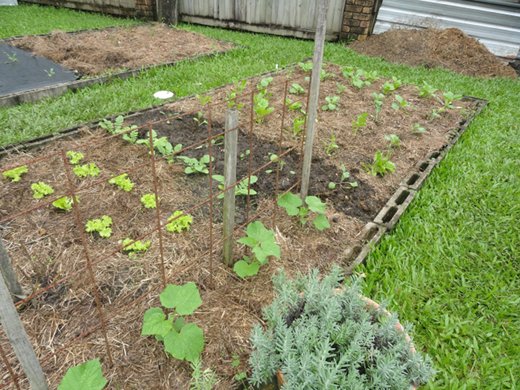
Above and below are the first of our new season gardens. It's been slow going this year because we've had so much rain. At the moment, the soil is too saturated to plant anything.

One of the things you should learn when you start growing vegetables is the nutritional requirements of everything you grow. Basically, leafy greens need nitrogen and fruiting plants need a small amount of nitrogen, potash and potassium. Luckily, making both types of fertilisers at home is easy.

These fertilisers are gentle, just the right thing to give to newly planted seedlings and to apply frequently, in a weak form, to your plants. They're also excellent sprayed over the leaves, not just onto the roots. If you're in a cold area, the nitrogen in the soil will not be available until the soil warms up a bit, so sprinkling liquid fertiliser over the leaves will feed your plants when they need a boost.

This is how the gardens have been looking the past few weeks. We still have these three to be weeded and planted up again. It looks sad now but it doesn't take long for them to spring back to life.

My favourite liquid fertiliser is comfrey tea and as far as I'm concerned it's the star of the homemade fertilisers. We have a clump of comfrey growing near the chook house. At the moment the leaves are huge, and it's standing at about a metre tall. People tell you that comfrey spreads and you have to be careful, but that's not quite right. It doens't spread out like bamboo does but if you plant comfrey in a hole, you'd better make sure that is where you want it to grow forever, because if you try to dig it out later, leaving only the slightest peice of root behind will make it grow again. Choose your spot carefully - either at the edge of your garden or near the compost heap and you'll have your own source of nitrogen, potash, phosphorus (NPK) and calcium for life. Comfrey sends down a long tap root and that root mines the soil for minerals and makes them available in the leaves. Using those leaves in a tea, will give you those minerals and they're the same ones you buy as NPK at the gardening shop.

This clump of comfrey has been growing in our backyard for about 14 years. It hasn't spread out at all but I know that if I wanted to move it to another location it would be almost impossible. Make sure of your spot before you plant comfrey.

To make comfrey tea, cut a clump of comfrey leaves and put them into a large bucket that has a lid. You can put a brick on top of the leaves if you like, so they don't float. Fill the bucket with rain water, put the lid on and leave the brew for two weeks. When you take the lid off, stand back, it will smell.

A lot.


Remove the infused comfrey leaves and throw them onto the compost. What is in the bucket now is comfrey tea concentrate. Make up the tea using about a cup of the concentrate to a bucket of water. You want this tea to be the same colour as a cup of weak tea. Mix it up in your watering can and sprinkle it over your seedlings. Comfrey tea is excellent on tomatoes, potatoes, beans, peppers etc - all the flowering vegetables.


You can make liquid fertiliser using many common garden leaves - if the leaves contain a good concentration of nitrogen, they are suitable. Most liquid fertilisers can be made in the same way. The steps are:
  1. Harvest your leaves, nettles, weeds, seaweed etc and place them in a bucket with a lid.
  2. Fill the bucket with water.
  3. Wait two weeks.
  4. Dilute the concentrate to look like weak tea before you use it.
You can also make compost tea and liquid manure tea. To make these teas, get a hessian bag or an old pillow case and place your materials in there. About a shovel full of compost or any aged animal or poultry manure will do. If you don't have aged manure, you can use poultry manure pellets (Dynamic Lifter) - about a cup full to a bucket.  Tie up the top of the bag so it's like a big tea bag. Place the bag into a bucket with a lid, fill the bucket with water, top on, wait two weeks. Dilute before using it. Easy!

We still buy these fertilisers - trace elements, seaweed concentrate and sulphate of potash - they're all organic. If we had access to seaweed, we'd make that ourselves too but it is illegal to remove seaweed from a beach where I live.

Like almost everything else we do in our lives, these simple fertilisers take a small amount of time and effort but the rewards are evident. It allows us to use what we have here, it is cheaper, we're not bringing in plastic packaging, and we know what is in the products we're using. It certainly makes sense to us to make these things rather than buy them.


We have started planting our new season vegetable garden. We do our main planting in March and continue planting until November. Depending on the weather, we usually keep harvesting until late December. The soils are then left to rest for two months and we start the cycle again in March. Organising our gardening like that gives the soil a chance to rest but it also lets us rest too over the hottest months. This system works well for us.

Every time we replant, be that at this main March planting or during the year with our numerous succession plantings, we enrich the soil with organic matter like compost, manures and worm castings. During the year we also dig in any straw mulch that is still on the surface, that gives the soil good structure. 

This is the most important thing I will write about planting today: you must enrich your soil before you plant and every time you replant. No amount of fertiliser later in the year will make up for not doing this. Placing your plant roots in rich, fertile soil really pays off. If you're digging a new garden, you'll probably spend a week or two getting your soil ready before you plant. This is not wasted time, it is a time honoured way of working with your organic garden and is an investment in your future harvests.

We plant both seedlings and seeds. Most of our root crops are planted as seeds, so this includes carrots, turnips, radishes, beetroot, swedes (rutabaga), parsnips. We plant potatoes and sweet potatoes as sprouting tubers. Garlic goes in now in our climate - I have stored ours in a brown paper bag in the crisper of the fridge for a couple of weeks to mimic a cold winter. When the garlic is planted, it "thinks" it's Spring and grows as if it's coming out of a cold winter. Garlic takes a long time to mature. When the green tops emerge above the soil, you'll see them for a long time until they start going brown and dying back. That is usually when they're ready to harvest.


We plant kale as both seedlings and seeds but most of our leafy greens are grown as seedlings. This includes Chinese greens like pak choi and lombok. We plant many more than we will eat and share because the chooks love them too. They grow fast - eight weeks and they're ready, so there is a constant supply. We replant Chinese greens all through the year. The leafy green category also includes lettuce, silver beet (chard), spinach, cabbage, brussel sprouts.

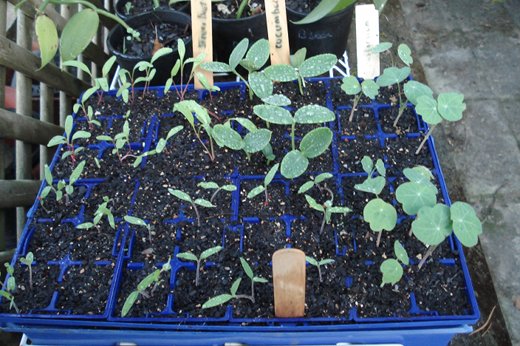
Flowering vegetables and fruit such as tomatoes, beans, peas, cucumbers, cauliflower, broccoli, zucchinis are planted as seeds in trays,  raised as seedlings, and are then planted out in the garden. There is a post about how we plant tomatoes here.  They're an important crop for us and if we take a bit of care with them we reap the benefits. In our climate it's too cold for capsicum, eggplant, corn or pumpkins right now. We keep our capsicum bushes going, but don't expect them to produce anything until it warms up again.


Basically, root crops don't like too much manure, especially not clumps of it, and nothing fresh. Leafy greens like a lot of nitrogen, so they love enriched soil with plenty of manure. Flowering vegetables like sulphate of potash to help with flowering and root structure, but don't give them too much nitrogen because you'll get a lot of leaves and very few vegetables. Most vegetables love being mulched, but they don't like the mulch touching their stems. The exception to this rule is tomatoes - they love mulch touching their stems and a nice thick layer of mulch built up along the lower part of the stem. Make sure the lower leaves on the tomatoes are pricked off.

All seedlings like a good watering as soon as they're planted and if you have some seaweed concentrate, make up a seaweed tea and use that to water in. The plants will love you for it. Tomorrow we'll talk about making your own fertilisers at home. This increases your level of self reliance and also gives you excellent harvest at little cost.

At the moment our vegetable garden is a mess of half-prepared beds and weeds but it won't take long to get it back to full production. It's something both Hanno and I are very excited about this year. We expect to bypass the high prices and often inferior quality in supermarkets and produce our own fresh organic vegetables. And this year, more than ever, it's important that we succeed with every crop. If you have the space I encourage you to do the same. What are your garden plans this year?
Blogger ate some sign ups comments that we are trying to sort out. Here are the additions and changes that we have resolved so far.

Pair (new pairs)
98 Ruth busymummy(at)xtra(dot)co(dot)nz AND Bessy bessyarg at freemail dot gr
99 Becky playsinsoil1 at yahoo dot com AND Joanne joanne.warring at sky dot com


Special messages follow:
1. Myriam (mim), you have a new swap buddy! See below:

Sandra sandra dot mckean at optusnet dot com dot au AND Miriam mad_mim(at)hotmail(dot)com

2. Allsorts (Jacinta) I have a swap buddy waiting for you but I need your information (email address) as quickly as possible so I can get you together.

Please stay tuned for further updates!

Hugs, Sharon
I've had a lot of reasons lately to think about how we live. All the interviews I did to promote the book brought up many different questions and the interviewers asked not only how, but why. Our lives have been put under the spotlight and it caused me to examine again, what we're doing here and to see how these changes effect us on a daily basis.


The most frequently asked question I've been asked lately is if this way of living is only for older folk. I can say with absolute certainty that how Hanno and I live would suit anyone, young or old. I believe the earlier you start living with a frugal mindset, the better off you'll be, but there are entry points at every stage of life and no matter when you start, there are benefits to be gained. Yes, we oldies have more time and we can do more making, mending, baking, recycling and gardening, but if you're younger and you start doing those things, they'll have much more impact on your entire life, not just in the final third of it. 

So what are the entry points? I think you should start with what is most important in your own life. If you're struggling with debt, start by getting serious about paying it off while you stop further spending. If you're a young family who are trying to eat well on a low budget, start by changing the way you shop, then stockpile and cook from scratch. If you're a single person, start by making your own laundry liquid. The recipe for it is here. By doing that, not only will you save a lot of money, you'll be cutting down the chemicals you have in your life.


You could also start by planting a vegetable garden, or if you've already done that, fruit trees. This will give you fresh organic vegetables for a fraction of the cost you'll pay in the shops. If you have a small backyard or a large one, or if you live in a unit and the only soil you have for growing is in a few broccoli poly-styrene boxes full of potting mix on the balcony or porch, use it, grow it and you'll increase your well-being in many different ways. If you have no chance of growing anything, and that may be the case if your time is taken up with children or looking after elders, or your job, take time out on the weekends to look for a good local market, and buy your fruit and vegetables there. Get to know your marketeers, ask them where they grow their produce, or where they buy it. Not all market sellers are genuine, they might just be onselling boxes bought from somewhere else. When you find your idea seller, stick with them, be loyal and I'm sure you'll be rewarded with good quality produce fresh from the farm.


If you're an old chook like me,  (or even a young chook), start knitting dishcloths, teach yourself to make soap, cook from scratch - all those soups and stews based on bone broths we used to have in the old days. They're good for you! Get out grandma's cook books again and fire up the stove.


And while you're doing all this, be kind to yourself. Take time out to have a cup of tea during the day, even if you're really busy. It will make a difference. Reconnect with your family. If you've slipped out of the habit of eating at the kitchen table, start doing it again. That 30 minutes can make a family a stronger unit. That is the time when your children will know they have your attention and they can tell you about their day and what will be happening tomorrow. Take every chance you have to listen to your children, if you stop listening, they'll stop telling. Invite the extended family, or if they're too far away, your friends around for family lunches. This is a good way to socialise and develop friendships without it costing too much. Be a role model for your children, be the person you want them to grow into. There is no good in telling them to be kind and generous, to not smoke or to drink in moderation if you're not doing those things. Children learn what they see, not what you tell them.


There is a lot to be said for a simple life. For me, it has changed me for the better. It has opened up my life so that at a time when I thought I'd be getting quieter and slowing down, I'm doing the opposite. It has given me opportunities to be generous. We have the freedom of being debt-free. I feel content, I look forward to each new day. My life is interesting, it never gets boring, I feel in control. This way of living gives you that. I will never forget the day when I took charge of my home and decided enough was enough, I was determined to get my life in order, to do things the way I wanted to do them, not how my friends were doing it. I wanted to march to the beat of my own drum. When I made a promise to myself that from that day on, my life would be custom made and not conforming to what was expected, I felt a weight lifted, I felt liberated and in control of my own future. I knew then my decisions meant something and I felt I had my life back.

Now that I can look back over this past decade of a more simple and gentle life, I thank my lucky stars that I changed when I did. Had I not faced the truth of my spending and shopping and made those early difficult changes, I would not be where I am now. I have found that very few good things come easy. That's just life I guess. I hope you have the strength to face your own changes and commit to them, even the difficult ones - especially those. It won't be easy but if you can start repaying debt and cutting back your desires, it will lead you to a better life. And from where I sit now, there is no better way to live.


I had to go to Caloundra last week and while I was there I went into Woolworths to buy yeast. Seems simple enough, doesn't it? But I hadn't been into Woolworths for a long time and wasn't sure how their aisles were set up. I walked into the centre of the store and started looking at the signs on the aisles that indicate what is there. I knew they wouldn't have "yeast" up there so I looked for a staple that I knew would be next to it - "Flour". I went up and down and couldn't find flour.  What's going on here! Woolworths has no flour? That doesn't make sense. Then I caught sight of what looked like the baking aisle, I looked up at the sign and the first product on there was "Cake Mix". I kept reading, there was no flour listed.

NO FLOUR!

Cake mix was their header product. Flour is on the shelves but they don't mention it on the shop aisle signs. Have we gone that far down the gurgler?

According to Mediatonic, Woolworths has a 77% market penetration rate in Australia. So 77% of shoppers are being told that cake mix is more important than flour. That is so depressing.

When I came home I decided to do a bit of slueth work online to see if the same craziness was going on there. Yes. It is. They start with cake mixes - pages of them. The first one listed is Donna Hay Biscuit Mix Macaroon @ $8.59 a box! Am I the only one who thinks that's crazy? The cake mixes go on for about five pages, then there are pre-made frostings, nuts, dried fruit etc and on page 18, flour - plain old flour, is mentioned. You can buy 1 kg/2.2lbs of organic plain flour for $3.64. That's enough to make at least a hundred macaroons.


Why am I going on about this? Why is it important? Well, every cake mix you buy will have preservatives in it. They need them so they can sit on the shelves for so long. Flour doesn't need preservatives because it's just flour- ground up grain, usually wheat. But check out a pack of cake mix and see all the artificial flavourings there - if you buy this mix and cook with it, you'll probably add milk and eggs but everything else is already in there - or at least there is additive that will mimic the natural ingredients you would use like butter, vanilla, bananas, orange zest, sultanas or cocoa. 

But the real reason this almost made me weep last week is that we're being dumbed down. They're selling us convenience over health. We are losing our traditional skills for the sake of convenience - the skills that every generation in your family kept going, added to and passed along. Promoting cake mix instead of the ingredients you would buy to make bread, cakes, biscuits and muffins, is telling us that cake mix is better than flour. I suppose the truth of it is that for the supermarkets, mixes are better because they cost more and therefore their profit margin is higher. It doesn't matter that they rob us of our cooking skills, or they're not as healthy as what you make at home from scratch, it doesn't matter that you'll be ingesting all sorts of additives that you probably can't pronounce, the holy grail here is the profit margin. Let's all bow down to the mighty dollar.  Pffffffft

Don't let them do that to you. Don't let them do it to us! We have the power here. Our dollars keep these places open and profitable. Look at your shop signs and if yours says cake mix and it doesn't mention flour, complain. Please complain. This is important. Every supermarket would have an email address. Send an email to the manager telling him/her of your concerns, and tell him/her you expect a reply. We want flour back where it belongs. We want cake mix back there too - as a standby for those busy times, not the leader in the baking aisle.

I see a few things that make me wonder why, but this just made me angry. There are a lot of us working hard to reskill our communities and teach our families. Heading a baking sign with cake mix and leaving flour off it completely might not seem like a big deal but if we don't complain about it, we're saying it's oay. Well, it's not okay. Flour is the base ingredient for almost everything you bake. Common sense tells me that flour should lead the baking ingredients in any shop and if a supermarket doesn't agree with that then they're putting their profit margin ahead of my well being and health. And if that is the case and they won't change their sign, I won't shop there anymore.

Please check out your supermarket and tell me what's happening there. Hopefully this is a minor glitch and the rest of the world is still leading people to the flour.
This week, as well as passing on some links I think you may be interested in, I also want to mark the 5 millionth visitor to this blog. You have all made that happen and I thank you for coming back to read over and over again. We have a really wonderful community of like-minded people here. We're all on a journey towards something better, we're all hoping to live interesting lives with people we love, and we know a simple life will give us that, and more.


By the way, you'll notice two counters on the side bar. One is for visitors, one is for page views. For those who don't know what the difference is: a visitor - you on your daily visit, will increase that number by one. If you read more than one page while you're here, how ever many pages you read will be registered as page views. My page views counter is set to record the number of pages viewed in the past month - you can see it go up and down. The visitors' counter only ever goes up. The numbers don't mean anything in themselves, they're really just a point of interest and maybe they provide new comers with a gauge to show there is interesting information here that many people are reading.

It's been a very big week here and also the culmination of the book promotion. I have to tell you I'm exhausted but I have many days ahead when I know I can relax and do things I love doing, so I'll spring back to normal pretty soon.

~~~*~~~

I sometimes come across a piece of writing that I wish was mine. When structure and meaning is so genuine and balanced, and the words chosen and placed so perfectly, well, I am almost transfixed by the writing and read it over and over again. This letter by John Steinbeck is such a piece.

I thought this article was interesting, but don't click on the gift guide, it's too depressing.

This is so beautiful. I found it on Soulemama's blog during the week. Watch the whole thing. It's ten minutes that will slow you down and make you think. Maybe it will have the power to change you.

Becci's blog has some great ideas and recipes.

Treats for chickens.

Now is the best time to plant potatoes, garlic and strawberries in warmer climates. Green harvest has their new stock really for posting.

Thank you for your visits this week, for your comments and for your good wishes, both here and in emails. I hope you have a beautiful and productive weekend.


Yesterday evening we had the Queensland launch of the book at the Maleny Neighbourhood Centre, hosted by Rosetta's and the lovely Anne and her staff. About 60 people came along and were so generous in their praise and comments that I felt quite humbled. As usual, Hanno was there with me, standing quietly in the background ready to support me and happy to shake hands and say hello.


Today there is a photographer coming to the house to take some shots for a feature. So now I'm going to tidy my desk and get a few things put away so our home looks like the calm oasis I often write about.  I'll be back with you tomorrow.
A pillow from home made an excellent table for me as we travelled along. I had the GPS, the itinerary and the map as well as my knitting. Hanno did most of the driving.

If you're a regular reader here you'll know Hanno and I were off travelling around the countryside to promote the book recently. Penguin paid for my expenses but we were still quite frugal ... because we are. : - ) I was born in Sydney and left there in my late 20s, so I am not city savvy anymore and it was a bit of an eye-opener for me to see so many people drinking from water bottles they'd bought that day and the amount of takeaway food being eaten at all times of the day, not just at mealtimes. But I am only walking in my own shoes, I make no judgements here, I was just surprised by it.

A lunch stop - checking emails and the weather map on the side of the road.
As usual, Hanno and I did our own thing. I had packed a small plastic box full of coffee mugs, a sharp knife, butter knives, forks, spoons, salt and pepper, tea, plates and bowls to take with us. We generally had the breakfast offer in the hotel or motel, but we also took a small package of Weetbix with us, and some milk, in case the breakfast didn't suit us or we had to leave early. Most nights we went to the local Woolworths, bought half a roast chicken and some salads and that was our dinner. It was much easier than finding a restaurant that served reasonably priced good food and we both enjoyed our little chicken picnics.


We also bought sliced wholewheat bread and I usually made sandwiches for our lunch the next day. Every morning we filled our water bottles from the tap before we left and if we were moving from one town to the next, we filled the Thermos flask with boiling water as well.  At one point we hit a town in the early evening and decided to have Red Rooster for dinner. I'd never had it before and Hanno said it was okay. It was not. It was very salty and almost cold. That Red Rooster was a first and last for me. And I guess that's the point of all this. We tried to eat simple food in or from places we trusted, and we wanted it to be portable and fast. The Woolies option worked for us - chicken or ham and salad, eaten for dinner, then using the leftovers for lunch the next day. Two birds, one stone.


While we were away, we also thought about recycling. On several of our breakfast trays we had jams packaged in small glass jars that had pop-top metal lids. Those same lids were on small glass bottles of fruit juice, also on the breakfast trays. We washed the jars and bottles and brought them all home to be used for small storage jars or for little bottles of sauce that I'll probably make up sometime during the year. They were irresistible to me - glass, small and capable of being sterilised in a water bath and sealed for storage in a cupboard. Gold!

One of the country roads near Dorrigo NSW, along this road we found a farmer selling organic potatoes - Dutch creams and Kipflers. We bought a bag for eating and a bag for planting.

I drove a fair distance on the way down because Hanno had a sore knee. When his knee was better, he took over the driving and I was well content because I'd brought along my knitting and something to read. That is always a smart move - take some form of entertainment or craft with you so on those long drives and during the evenings in the hotel, you'll have something to do.

The wonderful old town of Millthorpe above and the beach at Byron Bay below.

We also took lots of photos along the way to help us remember the people we met and places we visited.  Most of all though, we talked. A driving holiday is a great way to slow down and reconnect. Of course we argued too. Hanno's driving didn't come up to my standard and my driving didn't come up to his ; - ) but most of the time, as we wove our way through the countryside, often along back highways and country roads, we got to see the real Australia and each other. It was a lovely way to spend a couple of weeks.

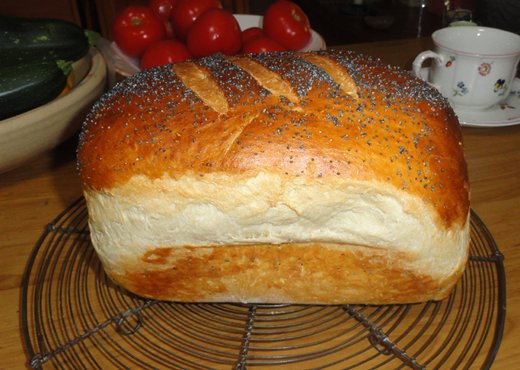
I sometimes get emails from people who have started making their own bread at home but they feel ashamed of using a bread machine. A few people I met on the road said the same thing. I use a bread machine almost every day; I'm not ashamed to tell you that, there is no reason to hide away thinking that "real" bread is only made by hand kneading.  Friends, the truth is that real bread is what you make at home, adding or omitting the ingredients that suit you and your family - the custom healthy loaf. We live in modern times. People keep telling me that there is not enough time to do everything and that they're busy. If you fit that category, or if you're unable to knead bread, or just don't get the same result hand kneading as you do with machine kneading, use a machine. The simple living police will not arrest you.


I use the same bread recipe for almost all my bread now. I add variety to it by changing the type of flour, and sometimes changing from water to milk, or half and half. I also change the additives I put on top. Sometimes it is seeds, sometimes oats, sometimes it's a combination of several things. This same bread recipe can be made into rolls by putting the bread machine onto the dough setting. When the dough is kneaded I shape the rolls and add seeds, then allow them to rise and cook in the oven. The recipe is also good a a fruit loaf - this just needs the fruit added half way through the kneading process, again I bake it in the oven.


The one thing I always do it to mix the yeast and water together to prove before adding it to the other ingredients. You must know that your yeast is fresh, otherwise you might get to the end of the process and find the dough doesn't rise. I think adding the yeast to water before it mixes in with the other ingredients gives a better rise too - the yeast is already dissolved and working before having to work in with the other ingredients.


You will need high protein flour to make bread, this is also known as strong flour or baker's flour. The flour can be white, wholemeal, wholegrain, corn and barley, rye, spelt or any combination of those flours. If you can't find this type of flour, use plain flour and add gluten to it. You can usually find gluten or gluten flour (same thing) at a specialist baking shop, health food shops or sometimes at the supermarket - IGA usually has it. Add one teaspoon of gluten for every cup of plain flour and you will have baker's flour. Don't be afraid of gluten - unless you have an allergy to it - gluten is simply a protein that is part of flour. It helps the bread rise and give that soft fluffy texture. I buy my flour from a bulk food store called Simply Good. They have shops at Morayfield and in Brisbane, details below. You can also buy a 500 gram pack of yeast there as well as nuts, seeds, coconut, cereal, spices, pasta, dried fruit, tea and coffee. I have added these shop details because I'm often asked where I buy my flour. If you know of similar shops selling bulk flour, please add the details in your comment. If might help someone else move closer towards being a home baker.
SIMPLY GOOD SHOPS
9 Samford Road
Alderley QLD
(07) 3856 5000

156 Morayfield Road
Morayfield QLD
(07) 5498 3722


This is my bread recipe - it's tried and true over many years:

Mix the first three ingredients together in a cup to check the freshness of the yeast. When it is frothy and bubbling, add it to the rest of the mix. If, after ten minutes, nothing has happened, your yeast is dead. You have to buy fresh yeast. Once you've opened the packet, pour it into a jar and store it in the fridge.
  1. 2 teaspoons dried yeast 
  2. 1 tablespoon sugar or ½ tablespoon honey 
  3. ¼ cup warm water 
Add the following to your bread machine bucket. It doesn't really matter which order they go in.
  1. 4 cups baker's flour - also called strong flour or high protein flour. It can be any variety - wholemeal, rye, white, whatever. 
  2. 1 tablespoon olive oil - this gives a more tender dough 
  3. 1½ teaspoons salt 
  4. 250 mls warm water + more if necessary, but add it slowly, one tablespoon at a time.
Using this one simple recipe and your bread machine, you'll be making additive-free fresh bread every day. If you get it in the machine by 9am, you'll have hot bread for lunch. It you put it into the machine the night before and set the timer, you'll have hot bread for breakfast and for packed lunches. It's probably wise to bake a loaf on the weekend to test it and make sure you have your water amounts right - then use in the overnight timed machine.

If you bake a double batch, wait until the bread is completely cold before packing it in a large plastic bag, expel as much of the air as you can, then seal it and put it in the freezer. The bread will thaw out on the bench top or can be partially thawed and refreshed in the oven to give you warm bread.

When you sit back with your warm bread and enjoy that first bite, I hope you feel good about what you've done. Don't listen to people who tell you that if you use a bread machine it isn't authentic bread. If you make bread that you choose the ingredients for and make fresh, you, my friend will have just made a good healthy loaf of bread that will feed your family and friends. It will also be healthier and cheaper than the bread you buy in a plastic bag at the supermarket. I think that is something to be proud of.


We had a wonderful mixture of resting, planning and working over the weekend. We're getting ready for our new season vegetable garden and both Hanno and I are excited by the all the possibilities ahead of us this year. We produce food in the backyard almost all year. Our growing year starts in March with empty garden beds, builds up as the cooler days pass by and ends, of a sort, in November. We stop planting then but continue harvesting until it's all gone. That varies every year. Last season we had tomatoes until Christmas and the capsicums/peppers, Welsh onions a few herbs and chillies are still growing now. Hanno went along to the local market on Sunday to pick up some seedlings to get us started. He also bought another orange tree to replace the pink grapefruit that died during the prolonged rain. Next week I'll start planting seeds for later plantings.


Hanno harvested all the loofas growing along the trellis. Now I have the arduous ask of skinning and deseeding them. BUt is gives us plenty of loofas for the year with a few to give away.

Living seasonally as we do, it's quite easy to get into a natural rhythm, helped along by cooler days, fewer bugs and the absolute pleasure of wandering through the garden to pick this and that. I think it's a real shame that in my lifetime we've gone from backyard gardeners to being more reliant on trays of fruit and vegetables in the supermarket that look fresh but might not be. I'm hopeful that more people are returning to home grown vegetables, at least that is what I'm hearing, but I wonder it it's true.

You don't need a lot of land to produce vegetables, in fact you don't need land at all. We have a large backyard but our vegetable garden takes only a small fraction of that available space. If you don't have land, you can produce small amounts of fresh vegetables and herbs on a balcony or verandah. That applies all over the world. If you want to grow your own, do what ever you can with the space you have and see what you come up with and if you can improve each year. All gardening is that. Even seasoned gardeners like us have failures, nothing is guaranteed, we learn something new every year, but when everything goes according to plan, you are rewarded for your efforts in many wonderful ways. Gardening is also an excellent way to get the full value of the land you live on. Why just leave it sit there under grass when it could be making a significant contribution to your food budget and your health.


In addition to all the garden planning on the weekend, I also made my first meal from the CWA Classics book - lentil soup. It is as delicious as it promised to be and I'll certainly be taking some of it in a flask for lunch today at the Neighbourhood Centre.


During the breaks to rest my weary bones, I knitted. I finished off an organic pink cotton cowl scarf for me and I've got Hanno's two year jumper out again ready to finish off to keep him warm over winter. He feels the cold much more than I do and even when we were at Tricia's last month - in summer - he was wearing a woollen jumper and slept under a woollen blanket and a doona. He only has one good jumper so this one will be more for around home on those cold mornings and nights.  I have some lovely alpaca here too so I might knit some long-armed fingerless mittens for him too.


We were visited by Jens and Cathy and their dog Koda and new Airedale puppy Tilly on the weekend. We puppy-sat Tilly late last week so she was in familiar territory on this visit and it was a beautiful thing to see Koda and Tiily hit that golden time of day for Airedales - 4pm - and run around like clowns chasing each other in the late afternoon dappled shade.

What a great response to the swap! There are only three more days to sign up, then it will be closed off, completely. Sharon will pair off partners and post that list on the blog soon. When you have your partner, you can email them and ask about colour and style preferences, or decide to surprise each other. All aprons will need to be made and posted by 17 April. Sharon has asked that you include a family recipe in with your apron and I think that is a wonderful idea. These swaps are not about seeing who sews the best - it's more about fun and friendship, connecting with others who live as we do, fun, improving sewing skills if you're a new sewer, and helping others who may not have done something like this before. So I encourage you to join in, even all those shy people who lurk in the background - both women and men. My only request is that if you do sign up, you honour your commitment and send your apron on time, as promised.

We're having the Queensland launch of the book on Wednesday at the Maleny Neighbourhood Centre. I'd love to see  you if you're close enough to come along. Rosetta's Books in Maleny is organising the event so if you decide to come, please book through them on 5435 2134. Wine and cheese will be provided and the cost is $8. We start at 5.30pm for a 6pm to 7 pm event.

BOOK PAYMENTS - PLEASE READ
If you've paid for a book but haven't received it yet, please email me with your payment details, including the date and your name. Don't worry if you haven't received your book, we paid extra so that all parcels can be tracked. I hope to have all the books sent out this week.   I have a Swift transfer from someone overseas. If you've ordered my book from another country and you haven't received it, please send your payment details as well as the amount and date sent. Also, can Brad Van Hemert email please.

I hope you have a wonderful week ahead.

Newer Posts Older Posts Home

MY BOOKS

MY BOOKS


My books were all published by Pengiun, and are available at Amazon US, Amazon UK and Amazon Au

Search here

Total Pageviews

Translate


I'm Rhonda Hetzel and I've been writing my Down to Earth blog since 2007. Although I write the occasional philosophical post, my main topics include home cooking, happiness and gardening as well as budgeting, baking, ageing, generosity, mending and handmade crafts. I hope you enjoy your time here.

MY FAVOURITE PLACES

  • Grandma Donna's Place
  • Grandma Donna's YouTube
  • Grandma Donna's Instagram
  • This Simple Day
  • Nicole's Instagram

Give More

Give More

Popular posts last year

Making ginger beer from scratch

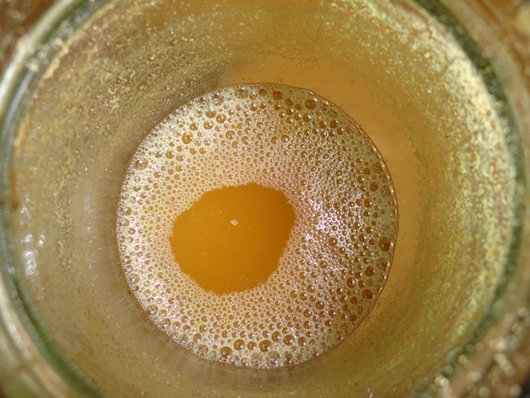
We had a nice supply of ginger beer going over Christmas. It's a delicious soft drink for young and old, although there is an alcoholic version that can be made with a slight variation on the recipe. Ginger beer is a naturally fermented drink that is easy to make - with ginger beer you make a starter called a ginger beer plant and after it has fermented, you add that to sweet water and lemon juice. Like sourdough, it must ferment to give it that sharp fizz. To make a ginger beer plant you'll need ginger - either the powdered dry variety or fresh ginger, sugar, rainwater or tap water that has stood for 24 hours to allow the chlorine to evaporate off. You'll also need clean plastic bottles that have been scrubbed with soap, hot water and a bottle brush and then rinsed with hot water. I never sterilise my bottles and I haven't had any problems. If you intend to keep the ginger beer for a long time, I'd suggest you sterilise your bottles. MAKING THE STARTER In a...
Image

NOT the last post

This will be my last post here.  I've been writing my blog for 18 years and now is the time to step back. I’ve stopped writing the blog and come back a couple of times because so many people wanted it, but that won’t happen again, I won’t be back.  I’ll continue on instagram to remain connected but I don’t know how frequent that will be. I know some of you will be interested to know the blog's statistics. 
Image

How to make cold process soap

I'm sure many of you are wondering: "Why make soap when I can buy it cheaply at the supermarket?" My cold process soap is made with vegetable oils and when it is made and cured, it contains no harsh chemicals or dyes. Often commercial soap is made with tallow (animal fat) and contains synthetic fragrance and dye and retains almost no glycerin. Glycerin is a natural emollient that helps with the lather and moisturises the skin. The makers of commercial soaps extract the glycerin and sell it as a separate product as it's more valuable than the soap. Then they add chemicals to make the soap lather. Crazy. Making your own soap allows you to add whatever you want to add. If you want a plain and pure soap, as I do, you can have that, or you can start with the plain soap and add colour, herbs and fragrance. The choice is yours. I want to add a little about animal and bird fat. I know Kirsty makes her soap with duck fat and I think that's great. I think t...
Image

Preserving food in a traditional way - pickling beetroot

I've had a number of emails from readers who want to start preserving food in jars but don't know where to start or what equipment to buy.  Leading on from yesterday's post, let's just say up front - don't buy any equipment. Once you know what you're doing and that you enjoy preserving, then you can decide whether or not to buy extra equipment. Food is preserved effectively without refrigeration by a variety of different methods. A few of the traditional methods are drying, fermentation, smoking, salting or by adding vinegar and sugar to the food - pickling. This last method is what we're talking about today. Vinegar and sugar are natural preservatives and adding one or both to food sets up an environment that bacteria and yeasts can't grow in. If you make the vinegar and sugar mix palatable, you can put up jars of vegetables or fruit that enhance the flavour of the food and can be stored in a cupboard or fridge for months. Other traditional w...
Image

Cleaning mould from walls and fabrics

With all this rain around we've developed a mould problem in our home. Usually we have the front and back doors open and that good ventilation stops most moulds from establishing. However, with the house locked up for the past week, the high humidity and the rain, mould is now growing on the wooden walls near our front door and on the lower parts of cupboards in the kitchen. Most of us will find mould growing in our homes at some point. Either in the bathroom or, in humid climates, on the walls, like we have now. You'll need a safe and effective remedy at some point, so I hope one of these methods works well for you. Mould is not only ugly to look at, it can cause health problems so if you see mould growing, do something about it straight away. The longer you leave the problem, the harder it will be to get rid of it effectively. If you have asthma or any allergies, you should do this type of cleaning with a face mask on so you don't breathe in any spores. Many peopl...
Image

Five minute bread

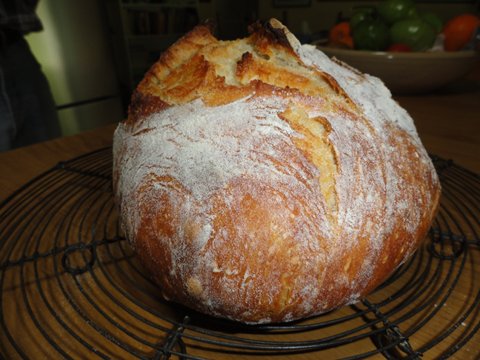
Bread is one of those foods that, when made with your own hands, gives a great deal of satisfaction and delight. It's only flour and water but it symbolises so much. I bake bread most days and use a variety of flours that I buy in bulk. Often I make a sandwich loaf because we use most of our bread for lunchtime sandwiches and for toast. Every so often I branch out to make a different type of loaf. I have tried sour dough in the past but I've not been happy with any of them. I'll continue to experiment with sour dough because I like the idea of using wild yeasts and saving the starter over a number of years to develop the flavour and become a part of the family. However, the loaf I've been branching out to most often is just a plain old five minute bread. By five minutes I mean it takes about five minutes actual work to prepare but it's the easiest of all bread to make and to get consistently good loaves from. If you're having people around for lunch or...
Image

This is my last post.

I have known for a while that this post was coming, but I didn't know when. This is my last post. I'm closing my blog, for good, and I'm not coming back like I have in the past.  I've been writing here for 16 years and my blog has been many things to me. It helped me change my life, it introduced me to so many good people, it became a wonderful record of my family life, it helped me get a book contract with Penguin, and monthly columns with The Australian Women's Weekly and Burke's Backyard . But in the past few months, it's become a burden. In April, I'll be 75 years old and I hope I've got another ten years ahead. However, each year I'll probably get weaker and although I'm fairly healthy, I do have a benign brain tumour and that could start growing. There are so many things I want to do and with time running out, leaving the blog behind gives me time to do the things that give me pleasure. On the day the blog started I felt a wonderful, h...
Image

What is the role of the homemaker in later years?

An email came from a US reader, Abby, who asked about being a homemaker in later years. This is part of what she wrote: "I am a stay-at-home mum to 4 children, ages 9-16. I do have a variety of "odd jobs" that I enjoy - I run a small "before-school" morning drop-off daycare from my home, I am a writing tutor, and I work a few hours a week at a local children's bookstore. But mostly, I cherish my blissful days at home - cooking, cleaning (with homemade cleaners), taking care of our children and chickens and goats, baking, meal-planning, etc. This "career" at home is not at all what I imagined during my ambitious years at university, but it is far more enriching. I notice, though, that my day is often planned around the needs of my family members. Of course, with 4 active kids and a husband, this is natural. I do the shopping, plan my meals, cook dinner - generally in anticipation of my family reconnecting in the evening.  I can't h...
Image

Every morning at home

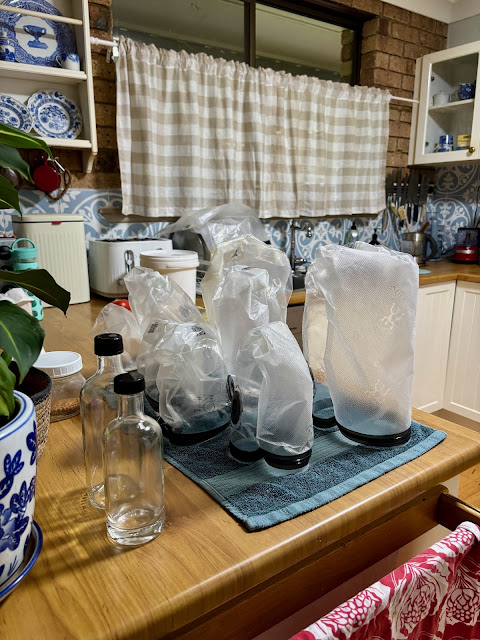
Every morning when I walk into my kitchen it looks tidy and ready for a day's work. Not so on this morning (above), I saw this when I walked in. Late the previous afternoon when I was looking for something, I came across my rolled up Zwilling vacuum bags and decided they had to be washed and dried. So I did that and although I usually put them outside on the verandah to dry it was dark by then. I turned the just-washed bags inside out and left them like this on a towel. It worked well and now the bags are ready to use when I bring home root vegetables, cabbages or whatever I buy that I want to last four or five weeks.
Image

You’ll save money by going back to basics

When I was doing the workshops and solo sessions, I had a couple of people whose main focus was on creating the fastest way to set up a simple life. You can't create a simple life fast, it's the opposite of that It's not one single thing either - it's a number of smaller, simpler activities that combine to create a life that reflects your values; and that takes a long to come together. When I first started living simply I took an entire year to work out our food - buying it, storing it, cooking it, preserving, baking, freezing, and growing it in the backyard. This is change that will transform how you live and it can't be rushed.  
Image

All previous blog posts

  • 2026 3
    • February 3
  • 2025 7
    • July 1
    • June 2
    • May 1
    • April 2
    • February 1
  • 2024 25
    • December 2
    • November 1
    • October 2
    • September 3
    • August 1
    • July 3
    • June 1
    • May 3
    • April 2
    • March 3
    • February 2
    • January 2
  • 2023 13
    • December 1
    • November 2
    • October 1
    • September 3
    • August 2
    • February 2
    • January 2
  • 2022 17
    • November 3
    • October 4
    • September 3
    • August 2
    • July 3
    • June 2
  • 2021 50
    • December 1
    • November 6
    • October 7
    • September 5
    • August 4
    • July 5
    • June 2
    • May 2
    • April 6
    • March 4
    • February 4
    • January 4
  • 2020 68
    • December 3
    • November 5
    • October 4
    • September 4
    • August 4
    • July 4
    • June 4
    • May 8
    • April 7
    • March 8
    • February 8
    • January 9
  • 2019 66
    • December 2
    • November 4
    • October 5
    • August 3
    • July 4
    • June 6
    • May 8
    • April 8
    • March 8
    • February 11
    • January 7
  • 2018 82
    • December 1
    • September 2
    • August 10
    • July 4
    • June 11
    • May 9
    • April 12
    • March 10
    • February 10
    • January 13
  • 2017 129
    • December 7
    • November 10
    • October 6
    • September 13
    • August 11
    • July 13
    • June 12
    • May 9
    • April 9
    • March 14
    • February 11
    • January 14
  • 2016 125
    • December 7
    • November 13
    • October 10
    • September 11
    • August 11
    • July 8
    • June 9
    • May 9
    • April 12
    • March 10
    • February 13
    • January 12
  • 2015 184
    • December 7
    • November 15
    • October 20
    • September 18
    • August 19
    • July 18
    • June 12
    • May 15
    • April 12
    • March 21
    • February 13
    • January 14
  • 2014 203
    • December 11
    • November 8
    • October 17
    • September 20
    • August 17
    • July 19
    • June 17
    • May 17
    • April 23
    • March 15
    • February 18
    • January 21
  • 2013 225
    • December 13
    • November 17
    • October 17
    • September 17
    • August 21
    • July 24
    • June 20
    • May 19
    • April 17
    • March 22
    • February 17
    • January 21
  • 2012 245
    • December 17
    • November 20
    • October 20
    • September 18
    • August 15
    • July 24
    • June 21
    • May 26
    • April 23
    • March 23
      • Weekend reading
      • The milk is waiting ...
      • APRON SWAP BUDDY LIST UPDATE
      • Spend less than you earn and a giveaway
      • Adding value to life
      • Cards, Uggs and a potato masher
      • APRON SWAP UPDATE
      • Weekend reading
      • Make you own liquid fertilisers
      • Saving big bucks in the backyard
      • APRON SWAP - SWAP BUDDY UPDATE - SWAP CLOSED NOW
      • Some thoughts on simple life
      • Dumbed down by cake mix
      • Weekend reading + a milestone
      • Book launch
      • Simple travelling
      • Bread - in the bread machine
      • On the weekend
      • CWA Classics and assorted extras
      • Paying off credit card debt
      • Cleaning mould from walls and fabrics
      • The travellers return
      • Home again
    • February 19
    • January 19
  • 2011 257
    • December 18
    • November 24
    • October 27
    • September 23
    • August 24
    • July 21
    • June 24
    • May 24
    • April 16
    • March 22
    • February 14
    • January 20
  • 2010 283
    • December 20
    • November 18
    • October 18
    • September 19
    • August 25
    • July 24
    • June 25
    • May 26
    • April 25
    • March 22
    • February 29
    • January 32
  • 2009 293
    • December 29
    • November 18
    • October 23
    • September 25
    • August 22
    • July 28
    • June 22
    • May 21
    • April 27
    • March 26
    • February 24
    • January 28
  • 2008 387
    • December 24
    • November 23
    • October 25
    • September 26
    • August 27
    • July 27
    • June 37
    • May 34
    • April 44
    • March 53
    • February 32
    • January 35
  • 2007 372
    • December 37
    • November 40
    • October 55
    • September 51
    • August 49
    • July 63
    • June 49
    • May 28


Trending Articles

NOT the last post

This will be my last post here.  I've been writing my blog for 18 years and now is the time to step back. I’ve stopped writing the blog and come back a couple of times because so many people wanted it, but that won’t happen again, I won’t be back.  I’ll continue on instagram to remain connected but I don’t know how frequent that will be. I know some of you will be interested to know the blog's statistics. 
Image

Every morning at home

Every morning when I walk into my kitchen it looks tidy and ready for a day's work. Not so on this morning (above), I saw this when I walked in. Late the previous afternoon when I was looking for something, I came across my rolled up Zwilling vacuum bags and decided they had to be washed and dried. So I did that and although I usually put them outside on the verandah to dry it was dark by then. I turned the just-washed bags inside out and left them like this on a towel. It worked well and now the bags are ready to use when I bring home root vegetables, cabbages or whatever I buy that I want to last four or five weeks.
Image

You’ll save money by going back to basics

When I was doing the workshops and solo sessions, I had a couple of people whose main focus was on creating the fastest way to set up a simple life. You can't create a simple life fast, it's the opposite of that It's not one single thing either - it's a number of smaller, simpler activities that combine to create a life that reflects your values; and that takes a long to come together. When I first started living simply I took an entire year to work out our food - buying it, storing it, cooking it, preserving, baking, freezing, and growing it in the backyard. This is change that will transform how you live and it can't be rushed.  
Image

Creating a home you'll love forever

Living simply is the answer to just about everything. It reduces the cost of living; it keeps you focused on being careful with resources such as water and electricity; it reminds you to not waste food; it encourages you to store food so you don't waste it and doing all those things brings routine and rhythm to your daily life. Consciously connecting every day with the activities and tasks that create simple life reminds you to look for the meaning and beauty that normal daily life holds.  It's all there in your home if you look for it. Seemingly mundane tasks like cleaning and cooking help you with that connection for without those tasks, the home you want to live in won't exist in the way you want it to.  Creating a home you love will make you happy and satisfied.
Image

Time changes everything

I've been spending time in the backyard lately creating a contained herb and vegetable garden. My aim is to develop a comfortable place to spend time, relax, increase biodiversity and encourage more animals, birds and insects to live here or visit. Of course I'd prefer my old garden which was put together by Hanno with ease and German precision. Together, we created a space bursting at the seams with herbs, vegetables and fruity goodness ready to eat and share throughout the year. But time changes everything. What I'm planning on doing now, is a brilliant opportunity for an almost 80 year old with balance issues. In my new garden I'll be able to do a wide range of challenging or easy work, depending on how I feel each day. It’s a daily opportunity to push myself or sit back, watch what's happening around me and be captivated by memories or the scope of what's yet to come.
Image

It's the old ways I love the most

I'm a practical woman who lives in a 1980’s brick slab house. There are verandahs front and back so I have places to sit outside when it's hot or cold. Those verandahs tend to make the house darker than it would be but they're been a great investment over time because they made the house more liveable. My home is not a romantic cottage, nor a minimalist modern home, it's a 1980’s brick slab house. And yet when people visit me here they tell me how warm and cosy my home is and that they feel comforted by being here. I've thought about that over the years and I'm convinced now that the style of a home isn't what appeals to people. What they love is the feeling within that home and whether it's nurturing the people who live there.
Image

Back where we belong

Surprise! I'm back ... for good this time. Instagram became an impossible place for me. They kept sending me messages asking if I'd make my page available for advertisers! Of course, I said no but that didn't stop them. It's such a change from what Instagram started as. But enough of that, the important part of this post is to explain why I returned here instead of taking my writing offline for good. For a few years Grandma Donna and I have talked online face-to-face and it's been such a pleasure for me to get to know her. We have a lot in common. We both feel a responsibility to share what we know with others. With the cost of living crisis, learning how to cook from scratch, appreciate the work we do in our homes, shop to a budget and pay off debt will help people grow stronger. The best place to do that is our blogs because we have no advertising police harassing us, the space is unlimited, we can put up tons of photos when we want to and, well, it just feels li...
Image

Making ginger beer from scratch

We had a nice supply of ginger beer going over Christmas. It's a delicious soft drink for young and old, although there is an alcoholic version that can be made with a slight variation on the recipe. Ginger beer is a naturally fermented drink that is easy to make - with ginger beer you make a starter called a ginger beer plant and after it has fermented, you add that to sweet water and lemon juice. Like sourdough, it must ferment to give it that sharp fizz. To make a ginger beer plant you'll need ginger - either the powdered dry variety or fresh ginger, sugar, rainwater or tap water that has stood for 24 hours to allow the chlorine to evaporate off. You'll also need clean plastic bottles that have been scrubbed with soap, hot water and a bottle brush and then rinsed with hot water. I never sterilise my bottles and I haven't had any problems. If you intend to keep the ginger beer for a long time, I'd suggest you sterilise your bottles. MAKING THE STARTER In a...
Image